Heidi BoghosianDecember 1, 2025Last Updated: December 1, 2025
1 3 minutes read
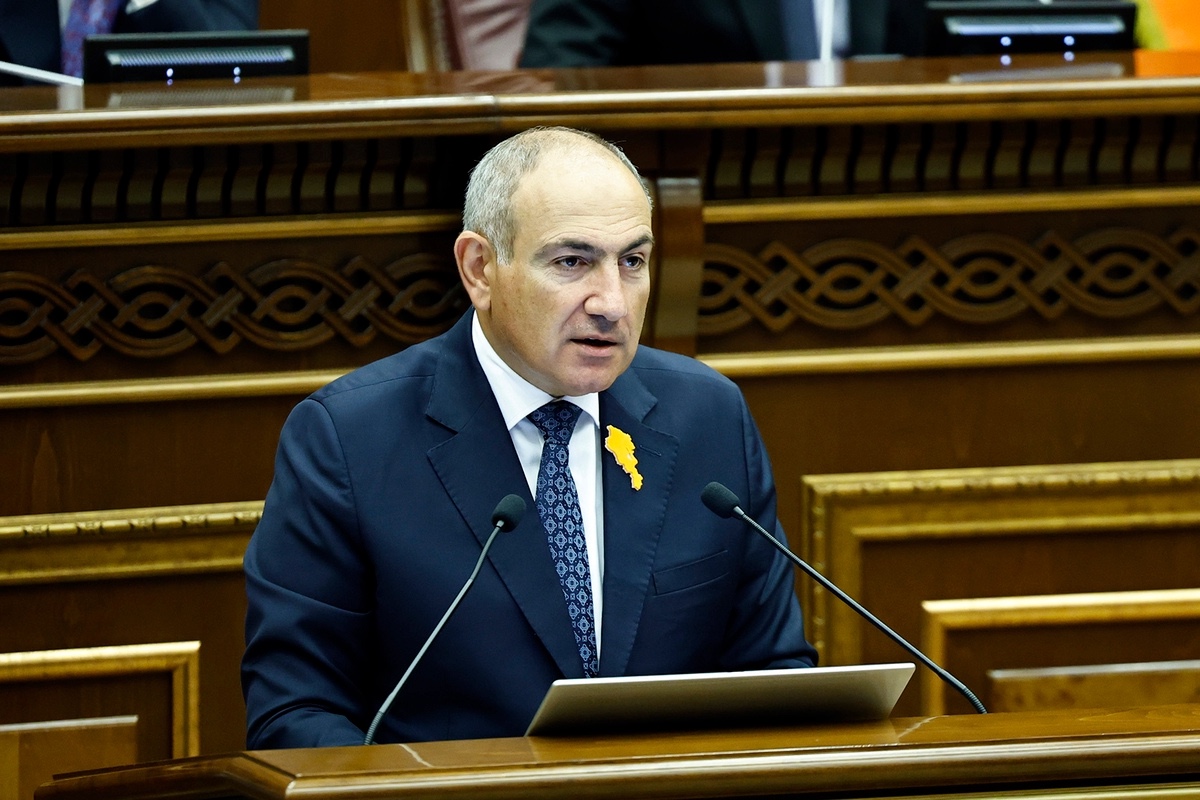
Screenshot from a video depicting a deepfake audio recording allegedly of Armenian Prime Minister Nikol Pashinyan
The “law student” who contacted me online and later joined a Zoom call seemed credible. He said he’d found my email through the Armenian Bar Association, spoke with a light accent and referenced community life. His posture felt stiff, but I chalked it up to nerves. Only after a series of urgent messages did the truth surface: he wasn’t a person at all, but a synthetic construct stitched from fragments of data, voice and likeness — a deepfake engineered to exploit cultural familiarity, name-based trust and ultimately, steal my money.
Research on diaspora communities shows a clear pattern: when a message appears to come from “one of our own,” skepticism drops.
Scammers and disinformation actors understand this and increasingly tailor scripts, accents and cultural cues to mimic belonging. Regulators call this affinity fraud, deception designed to blend so seamlessly into community life that it bypasses rational doubt. Armenian networks, like many diasporas, run on trust — in schools, churches, cultural institutions and philanthropic projects. That trust is a strength, but it can turn into a vulnerability when weaponized.
Heidi Boghosian is a New York-based attorney and activist. She's the author of Cyber Citizens: Saving Democracy with Digital Literacy (2025),
I Have Nothing To Hide (2021) and Spying on Democracy (2013).
One Comment
It’s important to spread this awareness, but as a genealogist, I understand but strongly opposed your urging to remove all genealogical information from the web. That’s like burning our libraries and opportunity to keep track of our history. A scammer can already find your relatives’ names from public records database, newspaper archives, and much more. Also websites like Ancestry allow anyone to upload family trees, so most likely you appear in multiple other trees already that you can’t take down. Your other helpful suggestions such taking it slow and always verifying identity is enough without trying to bring the burgeoning field of Armenian genealogical study to a halt.






It’s important to spread this awareness, but as a genealogist, I understand but strongly opposed your urging to remove all genealogical information from the web. That’s like burning our libraries and opportunity to keep track of our history. A scammer can already find your relatives’ names from public records database, newspaper archives, and much more. Also websites like Ancestry allow anyone to upload family trees, so most likely you appear in multiple other trees already that you can’t take down. Your other helpful suggestions such taking it slow and always verifying identity is enough without trying to bring the burgeoning field of Armenian genealogical study to a halt.