



The poem goes home
Our great grandfather hadn’t crossed the Atlantic Ocean in 112 years — but he was about to. Maybe not all of him, but a piece of him: a poem he had written after his family was massacred and he was driven from Adana in 1909. 11 decades after it was written, and one hundred years after its author died, a poem lost to history boarded a plane this past August and returned home to Armenia. It made this journey with us, his family, nestled in a bookbag at Robert’s feet through all-too-many connecting flights from the United States to Yerevan.
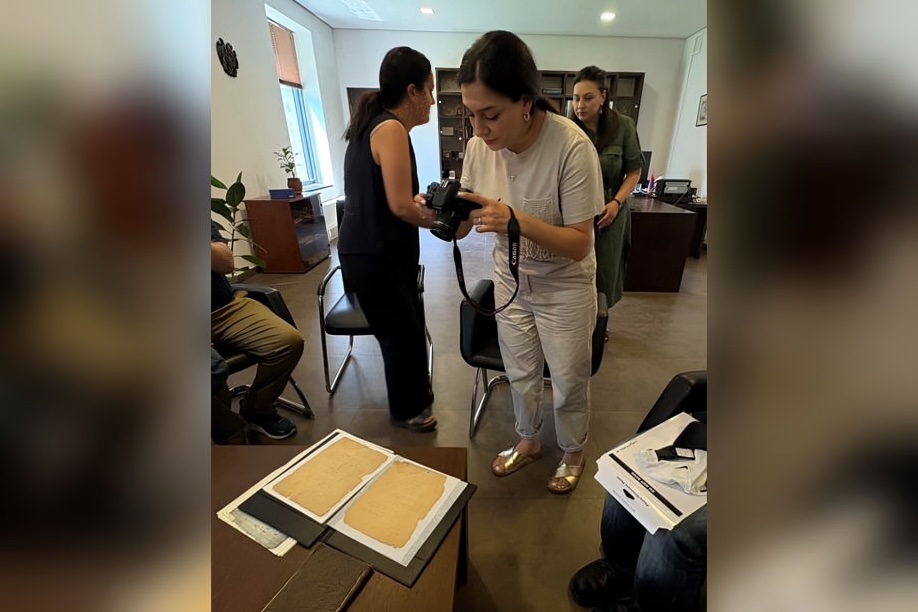
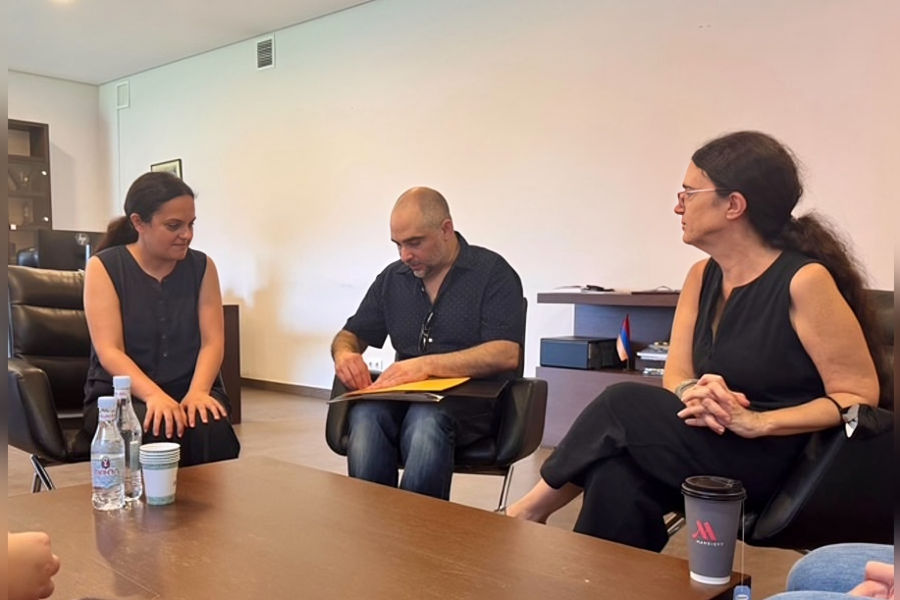
Arriving in the middle of the night, our first stop the next morning was to deliver the fragile pages to the Tsitsernakaberd Armenian Genocide Museum in Yerevan. Our family crowded into the office of Edita Gzoyan, the museum’s director, alongside a photographer and the museum’s archivist, Gohar Khanumian. Representing our family was a contingent of nine: the two of us who are cousins; Jeanne’s sister Liz, husband Chris and their two kids Sophia and Luke; and Jeanne’s brother George and his two kids Sam and Ella.
The 15-page destan, a form of epic poetry common in the Ottoman Empire to chronicle heroic events or lament catastrophes, was yellowed and faded. Our great-grandfather Garabed “Charles” Artinian composed it about five weeks after the Adana massacres (which took his first wife and child) to chronicle what had happened to the city’s Armenians and to call on the world to act. But it was not until Professor Bedross der Matossian, an historian of Adana at the University of Nebraska, translated it from Armeno-Turkish two years ago that our family could grasp its significance. Given its level of detail and its date of writing so close to the events in Adana, Der Matossian concluded that Charles’ destan is likely the earliest literary witness to the Adana massacres from a survivor that exists today.

Having corresponded with Dr. Gzoyan for a year, we couldn’t believe we were actually there. In Yerevan. At the museum. As Robert took the delicate pages from a hardback folder, she and her colleague choked up. “This belongs to all Armenians,” they said. We agreed. That’s why we had come all this way — why the poem had made this final journey home.
Gzoyan told us of her staff’s upcoming trips to archives in Alexandria and Argentina, asking us for more information about our family so that they might do further research on our behalf. We had little more than names: Charles’ siblings — Shami, Thali and Artin — who did not escape from Adana, his older sister Nora who went to the U.S. and Charles, who fled to Argentina, perhaps through Alexandria.

One of the museum’s central missions is to demonstrate that the Armenian genocide was a process, not a discrete event. It unfolded over years and decades; it evolved, it became. Amid the many warning signs and the widespread international disinterest, the resistance of Armenians to escalating Turkish attacks was cast as further evidence of the “Armenian problem.” The destan is a testament to that.
The massacre of 20,000 Armenians in April 1909 in Adana, the rape and kidnapping of women and children, the forced marches and land seizures (including of our great-grandfather’s cotton farm) and the reframing of Armenian self defense (in neighboring villages like Dortyol, which held off the Turks in 1909) as a justification for broader Turkish violence and clampdown. These techniques were previewed and, to some extent, piloted in Adana before they were used on a mass scale in 1915. And in 57 stanzas — each ending with the word “cried” — Charles provided an eyewitness testimony to all of it.
And there we were with his destan. A poem written somewhere in Turkey in 1909 that had journeyed around the Ottoman Empire, took a boat to Argentina in 1913, then another to Boston in 1917, then moved to Detroit in 1918 and waited more than a century to come home to Armenia. When Charles died unexpectedly in 1925, the poem journeyed on without him. It passed into the hands of his only son Frank (our grandfather), who couldn’t read it but left it when he died in 1986 to our Uncle Jim, who decades later gave it to Robert — who finally found a specialist (Bedross der Matossian) eager to translate and publish it.
The destan is an anomaly in our family history — a concrete memento amid the otherwise murky and sometimes contradictory family lore and silences that have made it down to us. Our grandfather was resolute that we understand the atrocities in Adana, repeatedly telling us our land was now part of the modern Adana airport. But we never learned how his father Charles or mother Assanet (Charles’ second wife) met or married, or how they, individually or together, got out of Turkey. What we do know is that they both made their way to Argentina where our grandfather was born in 1914 — and immigrated to the United States a few years later with the help of Charles’s older sister Nora, who was already in the U.S.
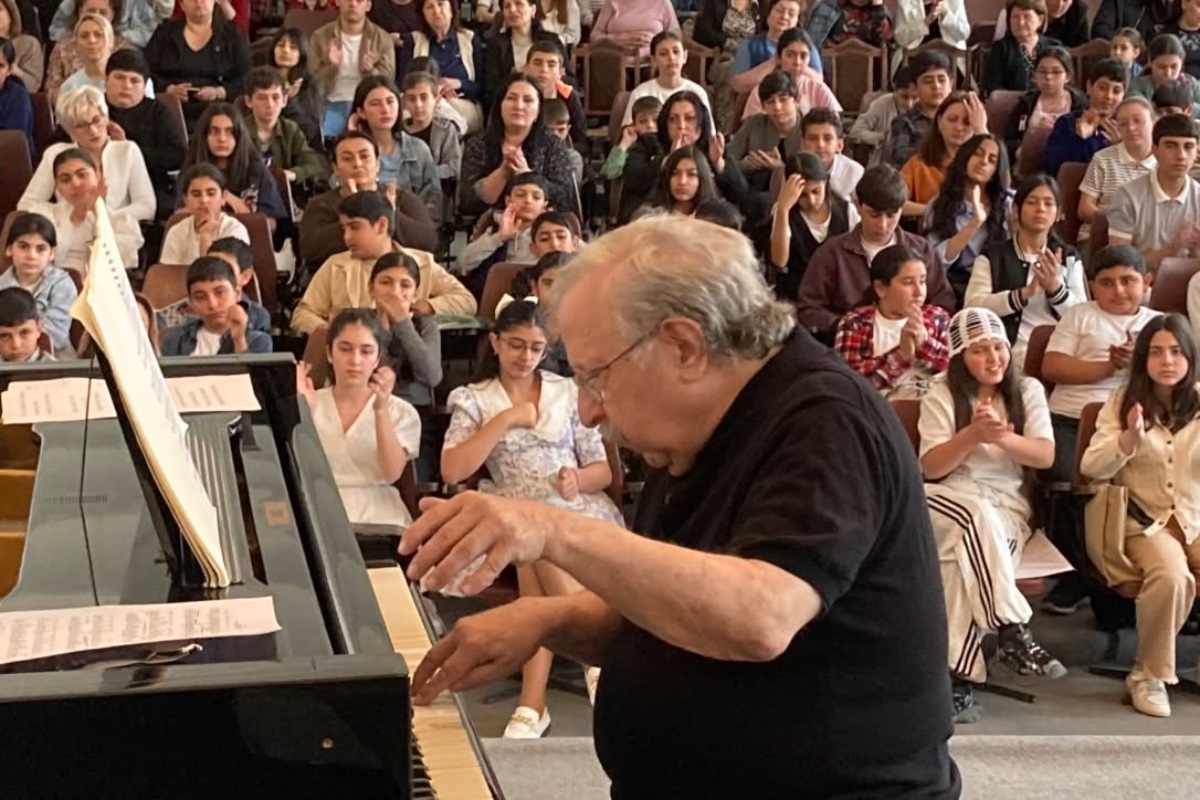
We spent two days going through the museum and talking with Dr. Gzoyan. These silences are common, she said. Many Armenians who survived didn’t want to look back or talk about what happened, what they did to get out, or who might have been left behind. A focus of Gzoyan’s research is the kidnapping, rape and forced conversion of women and children by Ottoman Turks. In his poem, Charles repeatedly recounts scenes of sexual violence — the dishonoring and stealing of women and children. Not unlike our government’s treatment of Native Americans at the time, Gzoyan pointed out that the Ottoman aim was to kill the Armenian, not the woman.
We ourselves had heard stories of a female family member “rescued by a man on a horse.” As Jeanne recounted this bit of family lore, Dr. Gzoyan interjected. I have to stop you. This was not a rescue. Gzoyan recognized the shape of the story immediately, having come across it many times in her research: Turkish men on horseback who “rescued” Armenian women from death marches or starvation were taking them for their own purposes. This was an abduction.
One question we had was about a curious epilogue appended to the poem: “We left Mersin on July 4 and took a ship and returned to Iskenderun and from Iskenderun to Latakia and from Latakia to Tarablus and from Tarablus to Beirut and from Beirut to Haifa and from Haifa to Jaffa and from Jaffa to Beirut and then to Iskenderun.” This passage has puzzled us ever since it was translated. Was this a typical escape route for Armenian refugees leaving Adana in 1909? Were there Armenian refugee communities in these cities or organizations to assist them? What was Charles doing in all these places? Dr. Gzoyan didn’t know. But she picked up her phone to call a colleague who specializes in the history of Adana. She read him the passage, and he said, no, this was not a normal route for an Adana refugee. He didn’t know why Charles had taken such a journey. Perhaps the poem and boat trip might be related.
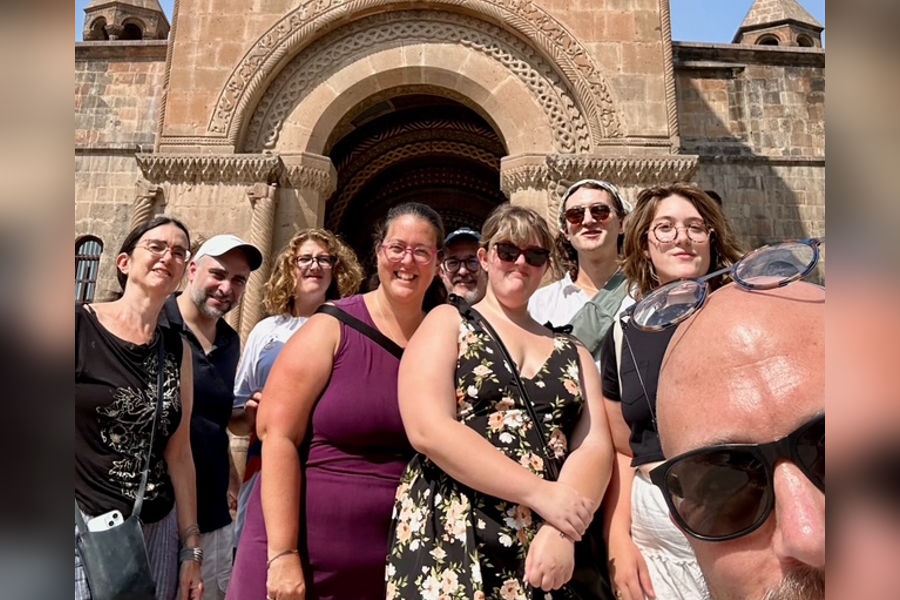
The next day, we had lunch at Echmiadzin with a family friend, Bishop Daniel Findikyan, a scholar of liturgical history and assistant to the Armenian Patriarch. We talked with him about the destan. While insisting this wasn’t his area of expertise, he noted that people of this time often wrote poetry both to keep track of a story themselves (particularly if they didn’t have access to writing materials) and as a way to share it with others who could pass along the story. (Rhyming schemes made stories easier to remember and retell.) He speculated that perhaps Charles chose to compose a destan, a form often sung, as a means to preserve the story for himself and to more easily pass it on to others. We wondered whether Charles was traveling from port to port, sounding a clarion call of what had happened in Adana.
What we do know is that somehow Charles wrote it down and kept the poem with him. As he fled from the Ottoman Empire to Buenos Aires, from Buenos Aires to Boston, and from Boston to Detroit, the poem came with him. When he finally settled with his family in Detroit, the poet became a factory worker in Henry Ford’s sprawling factory in Highland Park. He sold fruit outside that factory to earn extra money for his family. They lived in a flat across the street from that factory. And his poem waited.
During that time, World War I began, the Armenian genocide unfolded and the war ended. Not long after Charles died in 1925, Hitler came to power in Germany and gathered forces. Many of the German officials who had been on the ground in Turkey during the Ottoman genocide of Armenians, as the museum shows, helped plan and carry out the Holocaust against the Jews, gypsies, homosexuals and other minorities in Europe. Those Germans had taken notes. But the world, it seemed, had not.
Beyond the goal of simply remembering the past, part of the Museum’s aim is that such historical documentation provides the tools to recognize and ensure that such human rights abuses don’t happen again. Dr. Gzoyan shared the despair she and her colleagues at the museum had felt over the past few years. “We have failed,” she said, while talking of the genocidal treatment of Palestinians in Gaza and of Armenians in Artsakh. What is the point of marking past atrocities if not to keep the world from committing more of them?
Places like Tsitsernakaberd give the world the chance to hear the words of the victims and the perpetrators. Such institutions provide not just a record of the events but a sense of how they were framed, justified or missed at the time. This gives us, the living, the chance to learn, to recognize and to change. Understanding this history is not a passive thing. It requires action — a bedrock demand, never again for anyone.
Our great grandfather wrote with a “betrayed pen,” understanding the ways that the written word was also being used to demonize and disguise what was happening to Armenians. He indicted the Turkish government for the double-speak they used to obscure their crimes (“We are the army of freedom, they say; do not be afraid”) as well as the complicity of nations who dismissed these atrocities against Adana’s Armenians (“‘You get used to it,’ they say to desperate people like us”). He chose to write in Armeno-Turkish (not Armenian) to document what had happened to his family and neighbors and to call on the U.S. and Europe to act. “What a lamentation is this, hear Europe! What are you waiting for, oh America? We were all sacrificed on the road to freedom.”
116 years later, this clarion continues, powerful and disturbingly prescient. Charles’ poem is now in the Armenian Genocide Museum in Yerevan. And because of people like Edita Gzoyan and Bedross Der Matossian, his words may finally be heard.




Many thanks for a fascinating and meaningful narrative, indeed, an odyssey. Please inform where and when this “destan” will be published in a critical edition, and in what languages. One comment: those who wrote in Armeno-Turkish did so because that was their mother tongue. It could hardly be called a “choice”.