



Podium postures: Two UN speeches, two roads for the South Caucasus
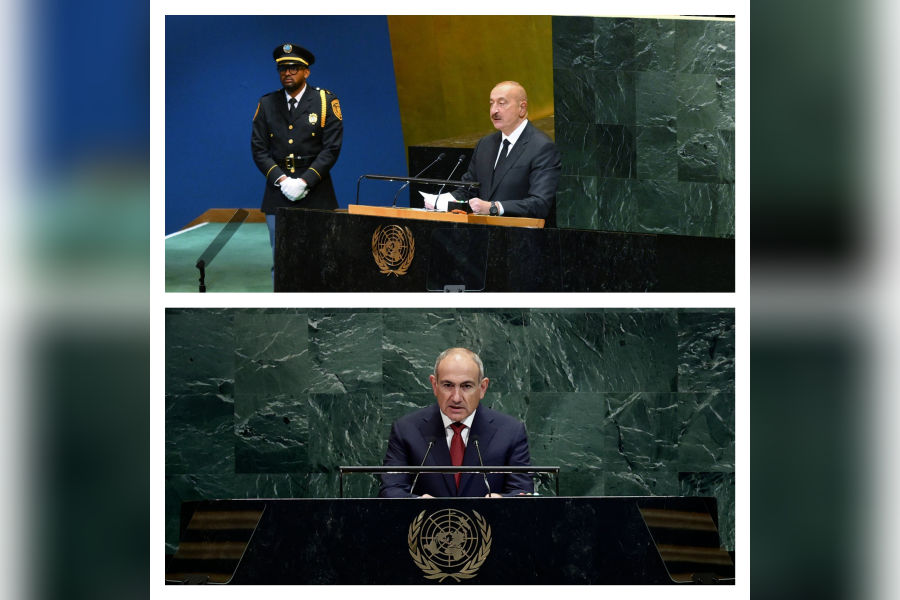
At the United Nations this year, Baku spoke like a state that believes it has already won the war and achieved peace. Yerevan spoke like a state that believes peace can be institutionalized by language, law and logistics. Between triumphalism and pacifism sits the hard question for Armenians: What, exactly, is Armenia’s mechanism of action?
The scripts: Victory vs. reassurance
President Ilham Aliyev’s address was a victory narrative with policy bolt-ons. He recounted “liberation,” a 44-day war fought “in strict compliance with international humanitarian law” and the “capitulation of Armenia,” then pivoted to diplomatic trophies: a peace text allegedly initialed at the White House on August 8; closure of the OSCE Minsk Group; and a branded “Trump Route for International Peace and Prosperity (TRIPP)” guaranteeing access through what he repeatedly calls the “Zangezur corridor.” The speech stitched together military success, diplomatic closure and connectivity as a seamless arc — we won, we rebuilt, we connected, we deterred.
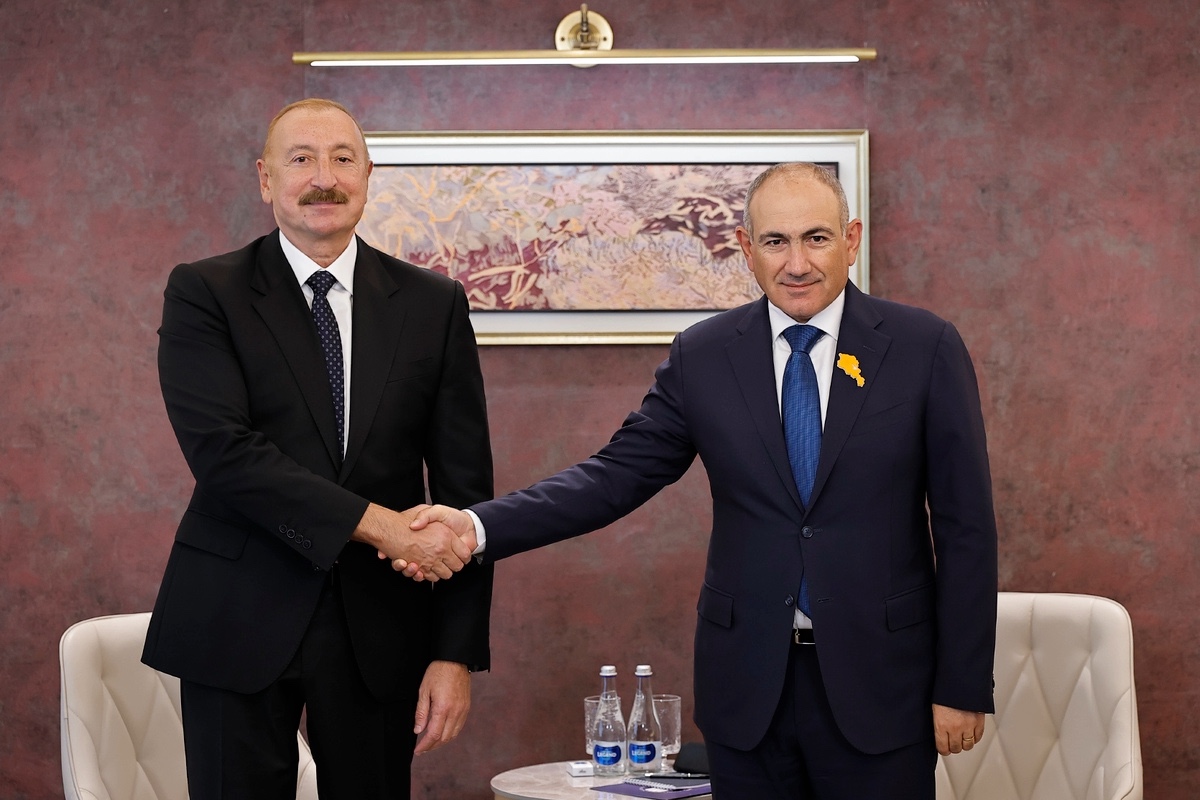
Prime Minister Nikol Pashinyan’s address, by contrast, was a case of reassurance by document. He cited ratified regulations for border demarcation referencing the 1991 Alma-Ata Declaration; a peace text “initialed” in Washington; and a joint declaration with Aliyev, witnessed by the U.S. president. He insisted that the agreed narrative is the Trump Road for International Peace and Prosperity (TRIPP) under full sovereignty and jurisdiction — not a “corridor” — and asked his counterpart to stop using language that implies territorial claims. Pashinyan framed Armenia’s path as democratic reform, EU-standard compliance, open borders with Turkey and a region finally organized by law rather than force. To be clear, President Trump has referred to the two as President Aliyev and “the other guy,” often confusing the country names in subsequent speeches with “bringing peace” between “Aberbaijan” and Albania or Cambodia and Armenia, demonstrating the ascribed seriousness to this deal. The bottom line: Aliyev’s verb is won. Pashinyan’s verb is agreed. The distance between those verbs is strategic space.

Aliyev speaks from a position of force — parading “corridor” language as fait accompli, pointing to rising defense outlays and treating August 8 as a seal on Azerbaijan’s reach — while Pashinyan’s messaging leans on process, photo-ops and careful wording about sovereignty. In the same news cycle, Baku projects inevitability; Yerevan projects hope. One leader frames demands as non-negotiable deliverables; the other frames deliverables as future possibilities. Each repetition of “Zangezur corridor” normalizes extraterritorial expectations, while each reassurance from Yerevan arrives without an enforcement mechanism. The optics match the substance: hard power on one side, soft vocabulary on the other.

Corridors by any other name
Aliyev brandishes “unimpeded access through the Zangezur corridor” as a core outcome of the Washington summit and a pillar of regional peace — the connective tissue tying energy, transport and geopolitics together. He packages this with U.S. deliverables, including the lifting of Section 907 constraints, a new strategic format, presenting Azerbaijan’s position as both lawful and endorsed.
Pashinyan, by contrast, insists that no document uses “Zangezur corridor,” that TRIPP is an Armenian-sovereign project “on the basis of respect for the sovereignty, territorial integrity and jurisdiction of the states,” and that corridor-speak is a territorial claim dressed up as logistics. He warns that such rhetoric doesn’t match the August 8 texts and undermines public faith in peace. Put bluntly, Baku is narrating extraterritorial access; Yerevan is narrating territorial jurisdiction. The semantics encode the real dispute: control.
Power instruments: Hard vs. soft
Aliyev’s toolset is kinetic and material. He talks about reconstruction, returns, mine-clearance and a state that has become an indispensable energy and transit hub: gas exports to 14 countries, a diversified pipeline matrix, the Baku-Tbilisi-Kars railway, nine international airports and a swelling Middle Corridor throughout. He cites COP29 stewardship, sovereign wealth, low debt and investment-grade ratings. The message is deterrence by capacity: pipelines, ports, reserves, ratings.
Pashinyan’s toolset is legal-institutional. He stacks references: the Alma-Ata borders, an initialed peace text, a declaration witnessed by the U.S., compliance with EU standards, opening with Turkey, strategic partnerships from China to India and an upcoming EU Political Community summit in Yerevan. The message is deterrence by norms: documents, forums, processes. The asymmetry is stark: one side points to levers that bite tomorrow morning (control of routes, energy, cash); the other points to levers that may arise over the years, if at all (standards, elections, summits). Armenia’s current budgetary reality: defense outlays trending downward while Azerbaijan continues to invest in hard means — a mismatch that the podium rhetoric does not cure.
Winners and losers (in the fine print)
From Aliyev’s vantage point, the winners are clear: Azerbaijan closed a 30-year file, consolidated territorial claims and wrapped access demands in the ribbon of U.S. mediation and “connectivity.” Even Section 907 is presented as a relic to be discarded. The losers, implicitly, are those still debating borders, mandates or monitors.
From Pashinyan’s vantage point, the “winner” is peace itself. He proclaims it “established,” cautions that peace is “daily work” and celebrates the vocabulary of sovereignty and jurisdiction in the August documents. He nominates the mediator for a Nobel Peace Prize, further demonstrating his lack of depth against a highly polished, authoritarian adversary dripping with Armenian blood — underscoring Armenia’s democratic identity.
But a peace that relies on vocabulary without enforcement mechanisms — no explicit tripwires that suspend cooperation after violations, no third-party monitoring that survives harvest-season shelling, no budgetary backbone — risks being peace by hope, not hardware.
Mentalities revealed
Azerbaijan’s posture is clear: We won; we’re indispensable; the world needs our routes and gas; now, we will shape the regional order. The presumption is that strength confers narrative rights — including renaming access as “corridor,” even when the other side protests.
Armenia’s posture is: We have a text; we have borders by Alma-Ata; we have a route under our law; we are a democracy moving toward EU-level institutions; we reject revanchism and hateful language. The presumption is that law and process can discipline a stronger neighbor, if the narrative is correct and the partners are many.
These are not mirror images. One mentality converts force into facts, then into frameworks. The other converts frameworks into hopes, then into legitimacy. In an environment where one actor keeps expanding its toolset and the other trims its coercive capacity, hope without hard levers becomes a strategic liability.
What Armenians should hear in the speeches
Corridor creep is real: When one leader repeats “Zangezur corridor” on the world’s biggest stage and the other leader formally objects, the gap isn’t cosmetic. It is a live contest over who controls security, customs, cadence and consequences along Armenia’s spine.
Peace needs a trigger, not a toast: If “peace is established,” as Yerevan says, there should be spelled-out triggers: any incursion, POW abuse or attack automatically pauses connectivity and payments; any violation reactivates international legal pressure and third-party monitoring. Absent those triggers, Armenia’s position devolves into appeal, not action.
Budgets back strategies: A state that reduces its defense spine while its neighbor grows theirs is creating a confidence gap that no podium line can fill. Peace is a choice; deterrence is a system.
Narratives are not neutral: Words like “corridor,” “capitulation” or “de facto peace” aren’t decorations; they pre-set the next negotiation. When Baku narrates extraterritorial access and Yerevan narrates sovereign control, only one narrative will govern the barrier, the scanner and the timetable.
Hopes and aspirations, decoded
Aliyev’s aspiration is to lock in Azerbaijan as a hub state and expand its lebensraum at the expense of Armenia and Armenians: energy provider to dozens of countries, transit node for east-west and north-south corridors and a manager of climate-finance optics (COP29) while keeping fossil fuels central “for the foreseeable future.” It is a power state vision — one that translates into leverage over neighbors.
Pashinyan’s aspiration is to lock in Armenia as a lawful, democratic, European-standard state; to open borders and relations with Turkey; to sell TRIPP as a sovereign platform under Armenian law — which it is not — and to convene global forums in Yerevan. It is a weak and meek legitimacy state vision — one that he hopes will translate into reputation, access and, maybe, investment.
The road ahead
Two previous pieces, parts I and II, argued that “Pax-Americana goes to the Caucasus” connectivity, packaged as a diplomatic coup, risks trading Armenian leverage for optics — and that an Armenia-centric alternative must blend deterrence, balanced alliances, education/innovation and resource sovereignty. The UN speeches sharpen that contrast. If Armenia remains a wallflower of peace — rhetorically democratic externally, brutally quashing dissent internally but materially under-armed and unprotected — it invites a reality in which other actors define both the corridor and the country’s future.
Armenia does not have to choose between isolation and acquiescence but it must align words with wires: sovereign language plus enforceable triggers.
Peace is not the absence of threats. It is the presence of systems that make threats unprofitable. In New York this year, one leader described those systems; the other described those hopes. This series argues that Armenia needs both — and fast.

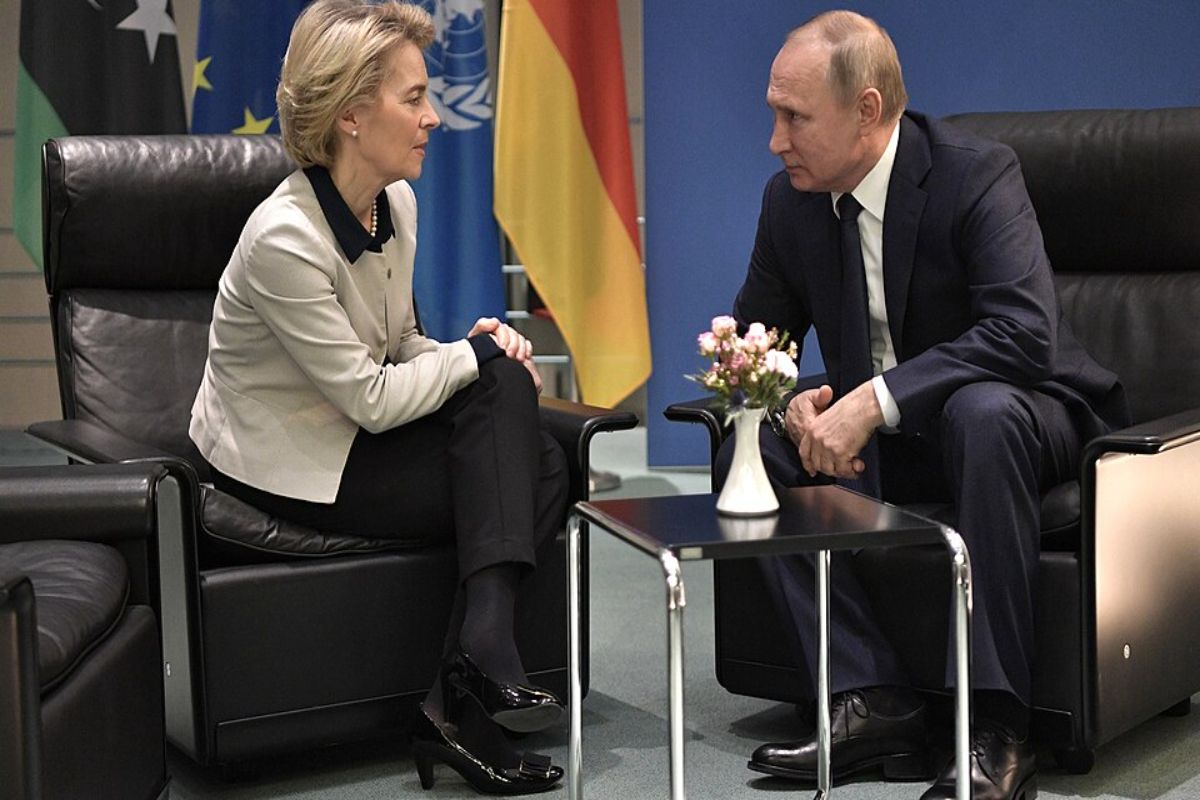
Quite simple really one has the advantage now the other doesn’t anymore