



Armenians in Samtskhe-Javakheti risk losing their identity
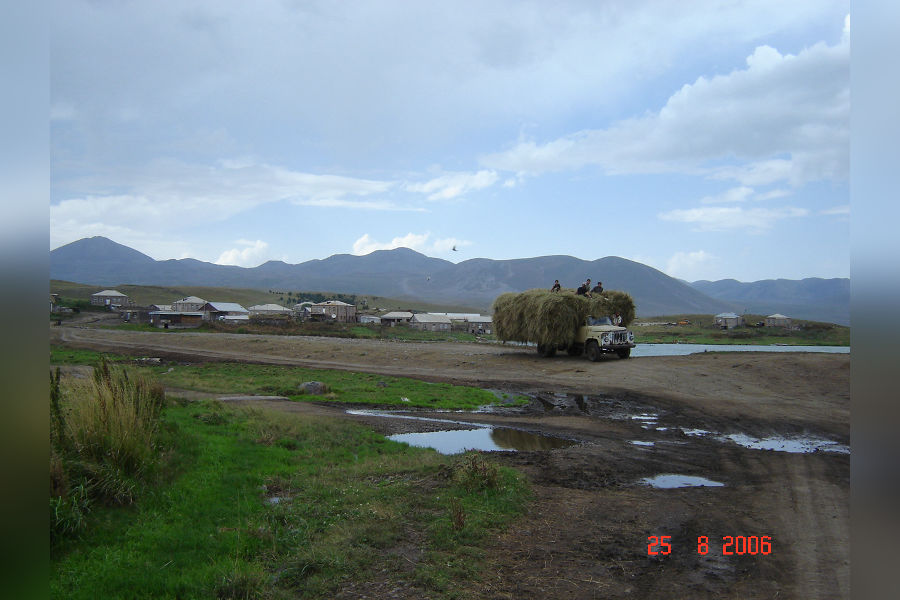
In the shadow of regional and geopolitical battles, a quiet drama of a forgotten diaspora is unfolding in the highlands of Samtskhe-Javakheti, Georgia. Just a few hours’ drive from the Armenian border lives one of the largest Armenian communities outside Armenia itself. Javakhk, as it is called by local Armenians, is a unique corner of the Caucasus.
According to various estimates, 95 to 98 percent of the population is Armenian, whose ancestors settled in these lands centuries ago and were later resettled from Eastern Armenia in the 19th century after the Russo-Turkish wars. But with each passing year, the voice of these people is becoming quieter and their connection to their historical homeland is weakening.
Samtskhe-Javakheti remains one of the poorest regions in Georgia, with unemployment rates sky-high. Residents claim that Tbilisi is deliberately holding back the region’s economic development, fearing that economic independence could become a catalyst for separatist sentiments.
Indeed, key infrastructure projects, such as the construction of the Baku-Tbilisi-Kars motorway, have been implemented with minimal benefits for the local population, sparking protests over land seizures and the lack of jobs. International organizations also allocate certain funds for the development of the region, but distribution is controlled from the center, often without consideration of the Armenian community’s needs.
The Weekly spoke to Zaven Kelindzhan*, a father of two from the city of Akhalkalaki. He stated outright that “Georgian authorities are strengthening their sovereignty within the country. But this is all being done using harsh, often even brutal methods, without regard for minorities and their interests.”


The language issue also remains crucial for local Armenians. Georgian is the only official language, and knowledge of it is mandatory for obtaining citizenship, access to higher education and public service. For many of our compatriots, especially the older and middle generations in rural areas, Georgian remains a foreign language. This creates an insurmountable cultural barrier.
The education system in the region is officially bilingual, but the quality of Georgian-language instruction is often criticized. Many graduates of Armenian-language schools cannot compete with their peers from other parts of the country.
For its part, the Georgian government has stated its desire to resolve these issues through new language and infrastructure programs. However, many residents consider these efforts insufficient and too late.
“They talk about integration, but in reality, they are building a wall,” said Kelindzhan. “My children will not be able to go to university, not because they are stupid, but because they do not have access to quality language teaching. This is systemic discrimination.”
Education and culture remain the main pillars of Armenian identity in the region. Yet, the Armenian-language school system in Javakheti is in deep crisis. A shortage of qualified teachers, especially in Georgian, outdated textbooks and systemic shortcomings leave schools unable to compete with Georgia’s state education system, which many see as a vehicle for assimilation.
The Armenian government allocates grants and sends specialists, but residents say these measures are piecemeal and insufficient. Instead of targeted, large-scale educational support — such as teacher training and the creation of modern curricula — Yerevan has settled for half-measures.
This is a losing battle, which will result in a generation unable to integrate into Georgia or preserve its cultural identity.
It is also important to note that despite their compact settlement, the Armenians of Javakhk have virtually no participation in the region’s political life. The majority voting system and the complex party registration rules effectively preclude the emergence of strong regional movements that could lobby for Armenian interests at the national level. Any attempts to create public organizations advocating cultural autonomy are immediately met with fierce opposition and accusations of separatism.
“Those of us who want to get jobs in administrative or government institutions face widespread rejection under various pretexts,” Kelindzhan asserted.
The Armenians of Javakhk want to be full citizens of Georgia, but with the right to preserve and develop their language and culture. They need roads, jobs and quality education that will open doors to Georgian society — but without renouncing their identity.
Until these questions are answered, Samtskhe-Javakheti will continue to remain not just a geographical periphery of Georgia, but a symbolic zone of deferred discontent and unrealized potential — a ticking time bomb in an already troubled Caucasus.
The blame for this lies not only with the Georgian authorities and their failed domestic policy, but also with the Armenian government. For Yerevan, Javakhk has long remained a “blind spot” on the map of diaspora policy. While resources and attention were directed towards more powerful and wealthy communities in the West, the problems of Armenians in neighboring Georgia — facing real threats of assimilation and marginalization — were considered secondary.
“We all want justice from the Georgian authorities and, at the same time, pray that the Armenian government will pay attention to us and use at least some resources to solve the problems of Javakhk,” Kelindzhan emphasized.
It would seem that all the problems described are obvious, but Prime Minister Nikol Pashinyan’s government, which came to power with slogans about a new, strong and united Armenia, has yet to propose a vision for working with the diaspora — particularly with vulnerable communities like Javakhk.
Yerevan’s inaction has its price. Every year, the cultural and linguistic gap between Armenia and its Georgian diaspora grows wider.
The time for piecemeal measures is over. A state strategy backed by significant resources and political will is needed. Otherwise, very soon, Yerevan will have no one to talk to in Akhalkalaki.
*Surname has been changed for confidentiality.


One enemy at a time.
Armenia has its hands full with the Turks.
It cannot do anything about the Georgians.
Armenia had to give up Javakheti in order to get Lori.
Russia’s impending victory in Ukraine will end Georgia’s dangerous flirtation with then the West and then some kind of “common market” could be arranged between Russia, Georgia and Armenia, a consequence of which will be an improvement in living standards in Javakheti.
Other than that, there’s absolutely nothing that Armenia can do.
If for incompetent Pashinyan and his dysfunctional government there is only one real Armenia and the rest of the Armenian communities across the world outside his real Armenia, the Armenian communities right next door and in the vicinity of Armenia in particular, should according to him handle their issues on their own and they are not the responsibility of his government then not much can be expected from them. As part of historic Armenia for well over a millennium. Javakhk is one of the important cultural centers of the Armenian nation. Many Armenian intellectuals, writers and musicians who played major roles in the shaping and development of our nation over the centuries come from this region. But I guess those things don’t mean anything to this ignorant and unpatriotic ruling party in Armenia. Whatever happened to their so-called Ministry of Diaspora Affairs they apparently advocated and established when they seized power but then they practically shut it down once they realized many of the diaspora communities are not in their camps. I think Javakhk Armenians will have much better chance of improving their dire situation by establishing close ties with affluent diaspora Armenians elsewhere, in North America and the Middle East in particular, who have already been in the same boat as they today find themselves in. We must stop treating each diaspora community as an isolated island by itself and instead we need to work together and look after one another to improve the conditions of our communities everywhere. Our strength lies in our collective unity.
I think it is true that Diasporan Armenians must stop expecting Armenia under Pashinyan to do anything for them at all until such a time he is replaced by a patriot who actually believes in and loves Armenia and Armenians.
Until then, it is time for all those Armenian billionaires and millionaires in America to step in and donate to Armenian communities in need.
Pashinyan’s state administration cannot be trusted.
After the loss of Artsakh in 2023, the Armenians of Javakhk are the only Armenian community left who directly border Armenia. With the exception of Georgia, there are no Armenian communities for hundreds of kilometers around Armenia. I hope that the Armenians of Javakhk don’t disappear as well. Indifference to their problems by Georgian officialdom, poverty and the lack of job prospects facing them, mean that many of them will be or are emigrating to Russia or to the West, for a better future, like so many Armenians in Georgia have in the past decades – a problem which is identical to that of Armenia.
Whilst a bit of a rum deal rocking the boat will likely make things worse. Since Georgia and Iran both have Armenian communities best not agitate and jeopardise this and the community in Georgia does adjoin Armenia.
As for claims about Russia impending victory, whilst is advancing in Ukraine it’s taking strategic losses of refineries and other assets far from the front and this in no way means it’s going to rescue Armenia and teach Azerbaijan some manners it’s far too busy with more pertinent matters and it’s failure to safeguard what remained of Artaskh in 2023 speaks for itself and brought many to a grim realism about fanciful views of Russia
Sill here, Charlie?
What’s the matter?
The Ukrainians don’t want you?
You don’t take the hint that we don’t want you either.
Robert, clearly as an infatuate of Russia although i don’t believe you are resident there any criticism of ones Idol will undoubtedly rankle.
Sometimes truths are necessary indeed perhaps if paying more attention to dispassionate outsiders could and not self gratifying in propoganda about old glories wouldn’t have blundered into disaster in 2020 , although Russia subsequent frustrations in Ukraine have shown the propoganda spouted that had Armenia not been at variance with Russia then it would have been able to brush aside Azeri attacks it also exposed their gross hypocrisy in admonishing Armenia for control of parts of internationally recognised Azerbaijan and mocking Armenia for not even recognising it’s independence when it would go on to invade and declare annexations including over land it hasn’t controlled.
Charlie,
Get it into your head that being pro-Russian is a positive virtue in Armenia.
Robertie ,
Being infatuated with Russia or indeed any other nation is detrimental to any nations self worth. Kremlin lies and soviet ignorance are very pernicious, although since Putin’s has held office the ratio of Armenians with favourable views of Russia has plunged just like other former SSR states as they get to see the wider world beyond the fraud of the Soviet Union and it’s malignant legacy.
Bogos J whatever case you have is lost when you go into insane claims about my wife when I’ve never been married and Tyrone man.
Hear! Hear!
We who are Armenians by birth or, like me, Armenians by marriage, are here to promote and defend Armenia.
What the heck is Charlie here for?
Sadly, this is all pretty much correct. I would add a couple nuances. One, the neglect of Javakheti is symptomatic of the Georgian Dream’s neglect of the country as a whole today. The Georgian government under the UNM – 2004 – 2012 – invested a lot in Samtskhe-Javakheti on all levels – Georgian language teaching, roads, schools, new businesses. I was there in 1995 and other times in the 1990s, and then again after 2006, and the difference was huge. The GD has let it collapse into isolation again. And I agree that it is now even more neglected than other areas in Georgia – which are also deteriorating – because it is a non-Georgian, minority-majority population area. Second – I wouldn’t say that they are completely cut out of Georgian politics. The ruling party always makes sure to recruit local Armenians as parliament list and majoritarian members, and they constitute the top of a local control and loyalty system. One last point – people don’t have to speak Georgian who are born in Javakheti to become Georgian citizens. They are Georgian citizens by birth. I don’t speak Russian or Armenian, but I do speak Georgian: you might be surprised how many people down there speak Georgian. Since they have no other option with me, they “find” their Georgian 😃