3,000 kilometers, countless acts of kindness
Meet Edmond Margaryan, the Armenian adventurer turning a long-distance walk into a mission of goodwill
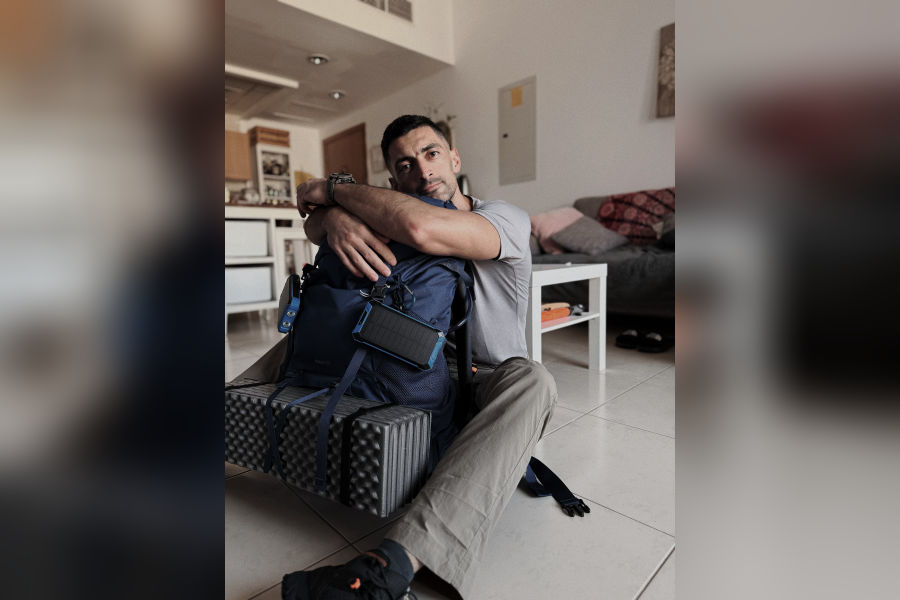
A few months ago, Edmond Margaryan, a young Armenian personal trainer and digital nomad, left his structured life in Dubai and returned to his hometown of Vanadzor, Armenia. Seeking to reconnect with his true self, he decided to strip life down to its essentials and embark on a journey—on foot—from Armenia to Dubai. This is how RAKOSAT was born: Random Act of Kindness, One Step at a Time.
In our conversation, Margaryan opened up about his early life, his experiences in Dubai, the inspiration behind RAKOSAT and his future plans.
This interview has been edited for length and clarity.
Milena Baghdasaryan (M.B.): How did you move to Dubai and why did you become a trainer?
Edmond Margaryan (E.M.): I was a personal trainer for more than 20 years, a career I began in Armenia after returning from Russia. I always enjoyed sports, especially judo, but preferred activities that focused on health rather than violent acts like those in martial arts.
Then, I moved to Dubai. My personal trainer certifications were not recognized there, so I had to start over. I transitioned into content writing and digital marketing and worked as a digital marketer for about a year. I continued some online personal training with former clients, my main job was content writing and marketing.
I had my own company and contracts with clients for digital marketing services. Most of my work was with one main client, but I also took on others when possible. The company still exists, but my contracts have ended, so I currently have no active clients and more free time.
M.B.: What led you to leave Dubai and return to Armenia?
E.M.: I returned for personal reasons, and to be with my mother. I had planned to start my journey on foot from Dubai to Armenia on June 1, but unfinished client contracts delayed it. I am glad it did not happen then, since just days later, a major conflict started between Israel and Iran.
Coming back to Armenia felt right for many reasons. This is my homeland, and if I am to share stories about countries and cultures, I would rather begin here. Starting in Armenia allows me to connect more deeply with my roots and gives my journey a meaningful foundation.

M.B.: What inspired the RAKOSAT initiative?
E.M.: That is a good and complicated question. At its core, it is about adventure. I grew up in the mountains of Lori after the Soviet Union collapsed, and saw war, poverty and economic collapse. I spent a lot of time in nature, searching for food, and learned to love the outdoors. These experiences formed my adventurous spirit.
I was also inspired by stories of explorers like Sir Edmund Hillary and Sarah Marquis. Their journeys made me wonder why I could not do something similar. Eventually, I realized there is no reason to just dream about it—I could actually go for it.
As I looked into others’ adventures, I noticed the focus was often on the kindness they received, and not that much on what they gave. And that made me think: why not go out and give, not just take? I know I will still probably get more kindness than I can offer, but still, I want to try my best.
I can help a farmer, pick up trash and smile at strangers. I spent months reflecting on this idea, and it gradually took shape. I have broken kindness into four areas:
- Being kind to nature and animals (like picking up litter)
- Being kind to loved ones and friends
- Being kind to yourself (enjoying small moments, like a sunrise and coffee)
- Being kind to strangers
This journey is challenging—3,000 kilometers alone, in the heat, with many unknowns. My main goal is to survive, but if I see someone working, why not stop and help? I cannot do huge things, but I believe small, daily kindness matters. I am not pushing this lifestyle on others; it is just how I choose to live: adventure with purpose and meaning.
M.B.: Is there an element of escape for you?
E.M.: Not physically. For me, “escape” is more about breaking free from mental constraints and societal expectations—getting married, having kids, getting a good job, buying a house. People constantly ask why I don’t follow those paths. I’m not saying that everyone should reject these standards, but I want to step away and find myself.
M.B.: Why start now? Isn’t it too hot?
E.M.: I consulted a British-Iranian traveler who walked all of Iran (about 3,000 kilometers). He advised me against starting in the hottest months, as temperatures can reach 50°C (122°F) in some regions in June. That is why I waited; where I am now, it is only about 25°C (77°F), which is manageable. By the time I reach the southern desert areas, it will be September or October, and the weather will have cooled down considerably. The mountainous regions, like Syunik and northern Iran, are also naturally cooler.
I do not have professional training or extensive experience with long-distance hikes—just some local hikes in the mountains near home—but I am not letting a lack of formal preparation stop me. I believe I can learn as I go.
M.B.: How do you plan logistics like food, shelter and safety?
E.M.: I’ve invested a lot in the gear I need—mattresses, tent, backpack, water filters, stove, clothing, first aid kit. I’ll carry only high-energy bars in Armenia and resupply as I go. Some gear will be shipped to Meghri, near the Iranian border, to avoid overpacking.
I use Google Maps to calculate distances between towns and villages. I try to be realistic about how much I will be able to walk daily. I do not think I can plan every second, every minute in detail, because that simply will not work. You just need to be flexible.
M.B.: Have you planned specific acts of kindness?

E.M.: I am a big believer in spontaneous acts of kindness. If I see an elderly woman on the road selling sunflower seeds, it would fill my heart to do something small for her. I’m not the type to just buy out her whole supply to give her money; I do not believe in that approach. Instead, I might pick some wildflowers nearby and give them to her, just wishing her a good day. It is about making her smile, even for a moment.
I also have a bag full of stuffed toys from a friend who was in the trade. Sometimes, I think about stopping by a kindergarten or a place with kids—like Artsakh kids—and giving them those toys. I do not always know where to find those places, especially with my limited Armenian, but I will figure it out as I go. If I see road workers taking a break, I might buy coffee for everyone and sit with them for a while. If someone is chopping wood for winter, I would love to stop and help out.
M.B.: How is the project funded?
E.M.: Everything is self-funded so far. I have enough savings to support myself and my mother for the rest of this project. My website offers merchandise and some of my artwork, which are there strictly to help support and fund this mission. At the moment, I have only had one sale, but as more support comes in, I will be able to do more. I want to expand the project to remote villages where, for example, a single mother with five kids might otherwise go unnoticed.
M.B.: Aren’t you worried about being seen as performing for attention?
E.M.: I understand it could be perceived that way. I use social media trends to attract an audience. But criticism often comes from envy—if people hate, it usually means you’re doing something right.
M.B.: How can others get involved?
E.M.: Links in my social profiles lead to a hub with ways to join:
- A free 30-Day Fitness Program to prepare for outdoor challenges
- A Kindness Calendar with monthly acts of kindness
- The RAKOSAT website, which has merchandise, original art pieces and a donation page to support the journey and its mission
The most important way to support is by sharing the content with people who might appreciate it. I also aim to show others the beauty of places like Iran, focusing on human stories rather than politics.
M.B.: Do you plan to keep the journey solo?
E.M.: I believe it will be a solo endeavor, mainly because, as I see it, not many people are willing or able to leave everything behind and take on such an adventure.
That said, I am not opposed to having company. If someone wants to join for a section of the journey—or the entire trip–they are welcome. I would actually love it if, as the project grows and the acts of kindness reach more people and communities, others feel inspired to join in. The more people involved, the bigger the positive impact could be.
M.B.: Will you ever return to coaching?
E.M.: At this moment, I do not plan to do that. It’s something I devoted over 20 years of my life to. Now, I need to dedicate time to myself. For me, walking is a form of therapy; it helps me slow down, stripping life down to its essentials and going with the flow. It is a rebellion against the fast-paced world.
M.B.: What about your art and writing?
E.M.: After the journey, I will create a series of art collections devoted to this—depending on what comes to my mind. It is more like an abstract collage, like emotions. You can check out some of my artwork on the website and see it for yourself. It is the state of mind I am in; a way of expression through collage and through abstract art.
Writing was for job purposes—and to challenge myself. I thought I would never be able to do it, so I pushed myself to learn. Writing the text copy for the website helped. I will continue writing in the form of blogs on my website. I might even write a book, who knows?
M.B.: Are you afraid of natural disasters?
E.M.: My attitude towards this is perhaps a little naive, but natural disasters have happened for thousands of years and our ancestors survived. I am not afraid because it is part of our nature. I know it will be raining on me. I know it is going to be cold. Those days will come. But hey, we are humans, right? We will survive through it.

M.B.: Is your confidence self-driven or faith-based?
E.M.: I do not think it is bravery. I think it is just stepping out of my comfort zone. Some people might classify that as bravery, but for me, it is about reflecting on life. I keep telling my loved ones that your best life is waiting for you on the other side of your comfort zone. You open the door, and on the other side of fear, there is life.
Perhaps it is curiosity—the little curious kid inside you saying, “Go, see life.” Reading other people’s stories and life experiences makes you ask, “If they did that, why can’t I?” It is more about being out there and trying to live a life.
M.B.: Is there anything you are afraid of, or are you open to whatever life brings?
E.M.:Of course, there is fear of the unknown. There are so many things I do not know and I fear that I might not be able to handle them. But I also believe it is good to acknowledge that fear. Knowing your fears without letting them guide your decisions is essential.
M.B.: What shaped this character and persona?
E.M.: Part of it was living in a tough economic situation after the Soviet Union collapsed. I’m actually looking at those mountains out the window right now. Being able to get your own food and warmth shaped my adventurous spirit and love for nature.
Moving with my family to Russia shaped my curiosity about the world beyond this little town. I learnt that there are other ways of life, and that life is more than repeating the same patterns over and over again.
M.B.: Do you have a coping mechanism for difficult moments?
E.M.: My approach might not be practical for everyone, but it works for me. I talk to myself in the third person, reminding myself of past hardships. “You have been through wars. This is temporary. You can do this. Stay focused. You got this.” I repeat these affirmations, take deep breaths and center myself.
If it still feels overwhelming, I let myself break down and cry. I do not see it as a weakness—just a way to release emotions. Afterwards, I remind myself it will be enough, and I get up and move forward. Life knocks us down, but we have a choice: to stay down or get up. I choose to keep moving, one step at a time, reminding myself, “You are still alive. You can keep going.”
M.B.: How can someone spread kindness without undertaking an adventure like yours?
E.M.: The best place to begin is with yourself. Do something nice for yourself—something you have always wanted to do. It does not have to be a grand gesture or a big goal like traveling to the Eiffel Tower. It could be as simple as treating yourself to a donut you have been craving and just notice how it feels.
Once you feel the positive effect of being kind to yourself, extend that feeling to others. It does not have to be material. Focus on small, meaningful acts: call someone you have been thinking about but have not reached out to, tell your child or parent you love them, thank someone sincerely or simply smile and ask how they are doing—then, really listen to the answer.
M.B.: Anything else you’d like to add?
E.M.: Often, we wait for the perfect moment to do what we want—explore, help someone or do something for ourselves. We wait for college to finish, a job, marriage, or for our kids to grow up. My advice is: just start. That first step is the perfect moment. Go ahead and do it.
All photos are courtesy of Edmond Margaryan


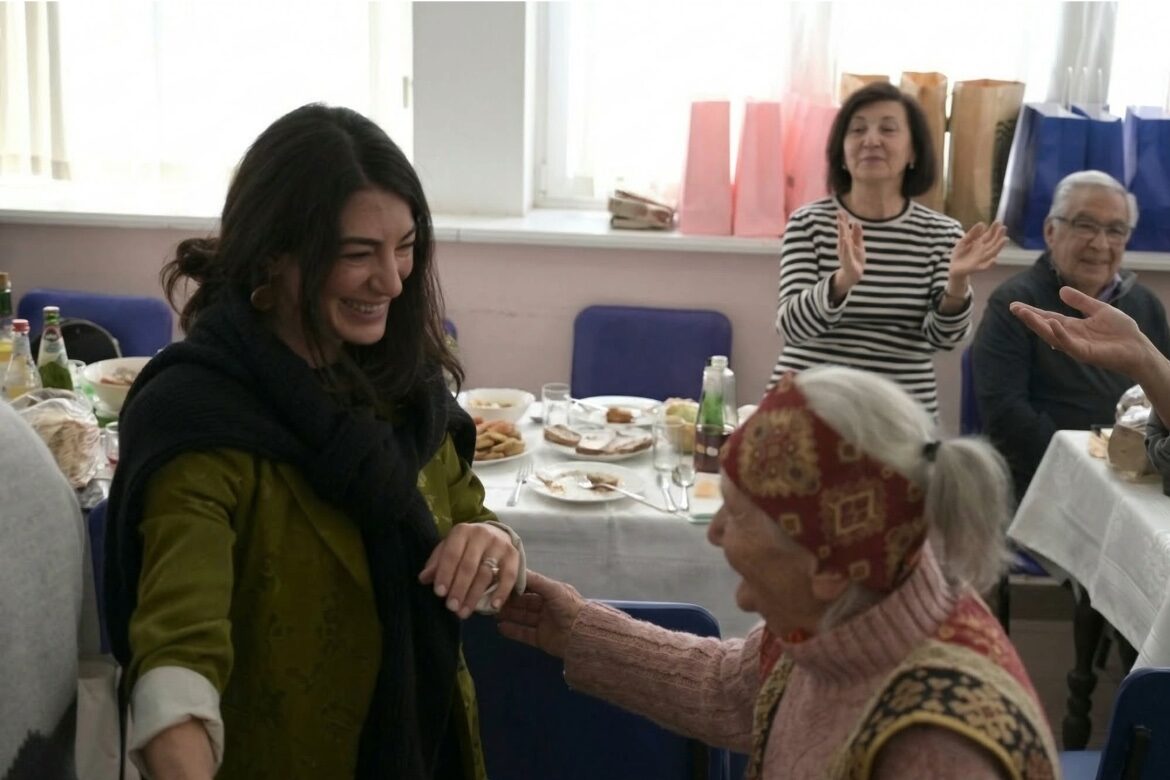
Moments of unexpected generosity that redefine what the trip means
The power of kindness and human connection shines through every mile. It’s a reminder of how simple acts of goodwill can change the world.