


The first neurointensive care unit in Armenia will soon be a reality

The neurological intensive care unit, or Neuro ICU, is a relatively recent innovation in modern medicine. While early pioneers like Dr. Walter Dandy laid the groundwork at Johns Hopkins Hospital in the 1920s and 1930s, the first dedicated Neuro ICUs did not emerge until the 1960s. It was not until the 1980s and 1990s, however, that these units became more widespread in Western countries.
Fast forward to 2025, and these units are now standard in most major teaching hospitals across the world. They are critical to the management of neurological emergencies, from severe strokes to traumatic brain injuries, playing an integral role in improving patient outcomes.
Yet, Armenia has yet to establish a dedicated Neuro ICU.
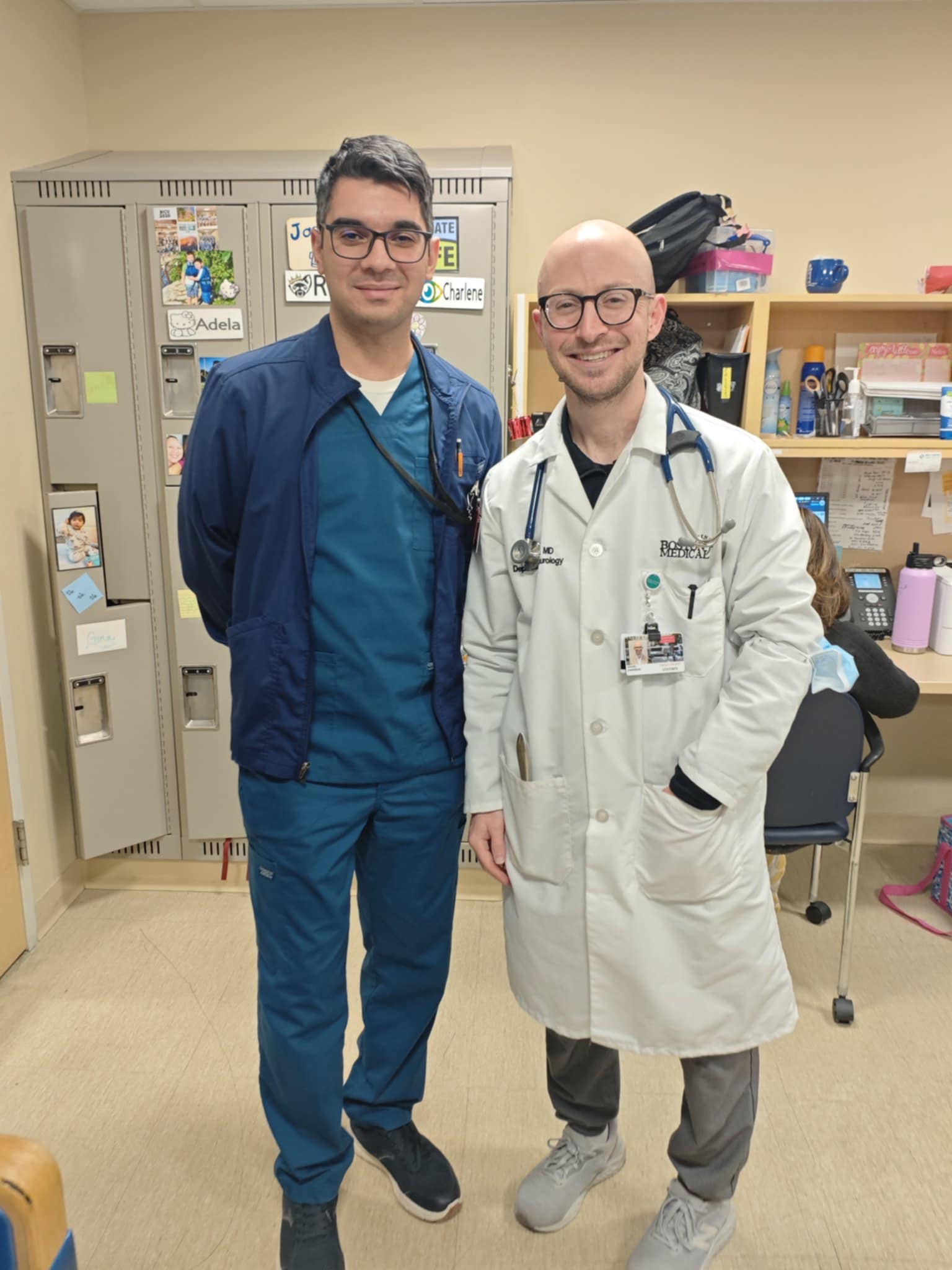
Recognizing this important gap, Dr. Viken L. Babikian, professor of neurology at Boston University and Dr. Aleksey Tadevosyan, assistant professor of neurology at the University of Massachusetts, launched a collaborative initiative to lay the groundwork for Armenia’s first Neuro ICU at Erebuni Medical Center (Erebuni MC).
With approval from the Boston University Chobanian and Avedisian School of Medicine—Armenia Medical Partnership Program (BU-AMP), the project was set in motion two years ago. It has since garnered the support of Dr. Karen H. Antman, Dean of the School of Medicine; Dr. Harutyun Kushkyan, Founding Director of Erebuni MC; and Dr. Alexander Bazarchyan, Director of the Armenian National Institute of Health.
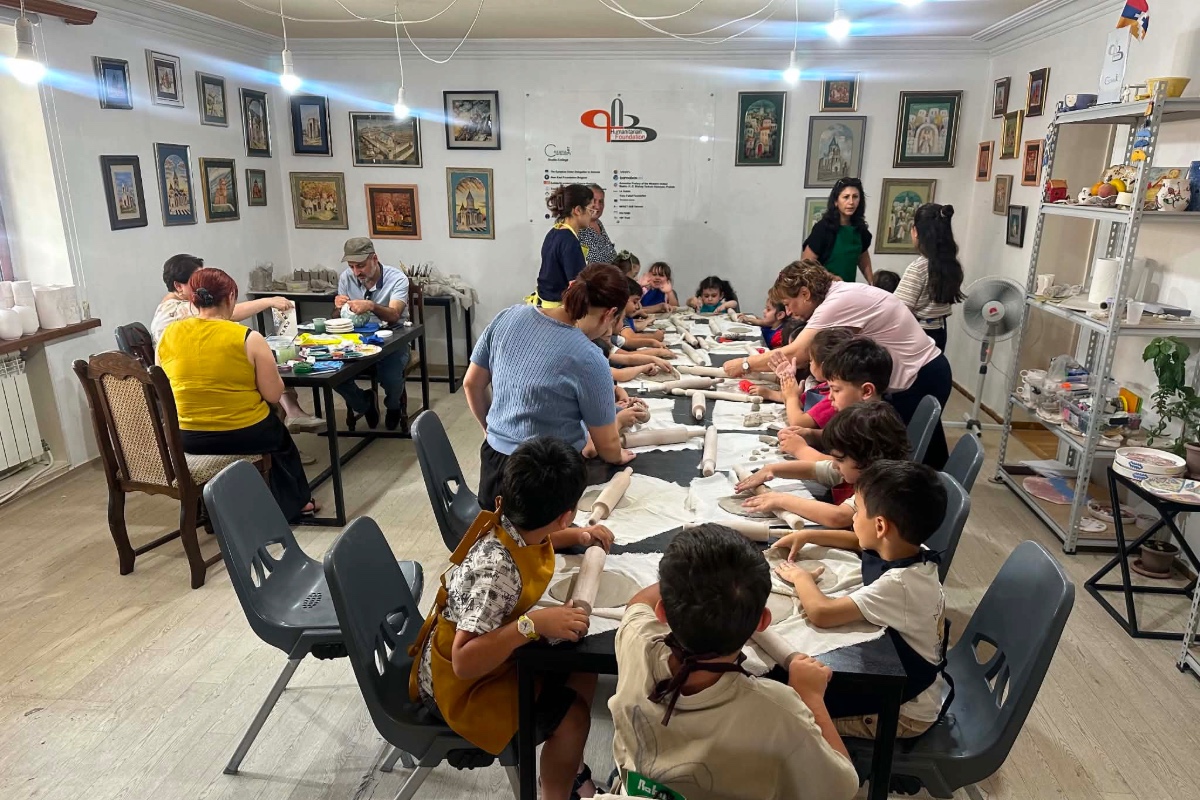

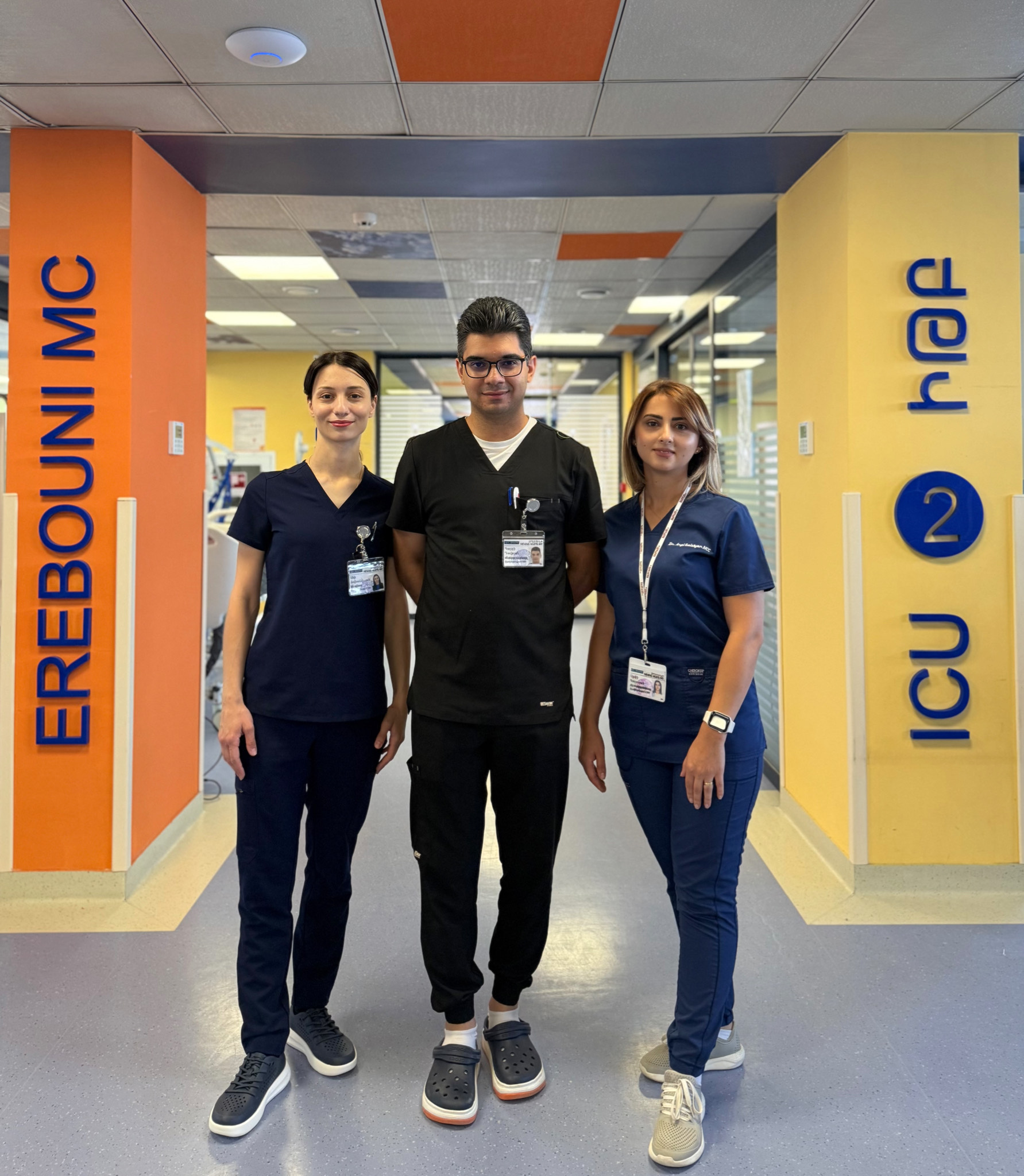
At the heart of the initiative is a commitment to education and training. Over the past year, Erebuni MC physicians—Drs. Arpi Galstyan, Meri Hakhumyan, Ani Shiroyan, Garri Davtyan and Oganes Ezoyan—have participated in intensive training programs in Boston. They aim to bridge knowledge gaps, build local expertise and ultimately transform neurological care in Armenia.
Milena Baghdasaryan (M.B.): What is the current situation with neurocritical care units in Armenia?
Dr. Arpi Galstyan: Currently, in Armenia, there is no widely recognized standalone Neuro ICU. Patients with neurological and neurosurgical disorders are typically managed in general ICUs. Patients who have undergone thrombectomy or thrombolysis are treated in stroke centers, while other patients—such as those after car accidents, with infectious diseases and so on—are cared for in general ICUs.
At our medical center, we have a general ICU that is quite large and spread across two floors. One floor is dedicated to medical patients, including those with pneumonia, stroke, subarachnoid hemorrhage, neuro patients as well as patients with sepsis and neuro-infectious diseases. We also care for patients in a vegetative state. The other floor is for surgical patients—those recovering from traumatic injuries or surgical procedures. Altogether, our medical center has 56 ICU beds.
With regards to neuro patients, we have access to three Tesla MRI, EEG and CT scans. We perform many neurological and neurosurgical procedures, including thrombectomy and plasmapheresis. However, we do lack some advanced technologies, and acquiring them is one of our short-term goals.
M.B.: What factors have prevented the establishment of a neurointensive care unit in Armenia until now, and who is leading the current initiative to create one?
Dr. Viken Babikian: The need for a Neuro ICU has been well recognized by the Erebuni MC administration, and a dialogue has been ongoing for several years. The question was how to create a path forward to realize such a complex endeavor. A significant turning point came when the BU-AMP was reinvigorated after the COVID-19 pandemic. This initiative is primarily focused on medical education and capacity building.
As for why there is still no Neuro ICU in Armenia, there were two main barriers: first, technological limitations. The necessary medical technology was not available or accessible in Armenia. Second, there was a knowledge gap. Neuro ICU care requires a highly specialized team of physicians, nurses and technologists, which was not available in Armenia until recently. This knowledge base is still developing and remains a work in progress.
Dr. Meri Hakhumyan: I agree with the previous points. Neurocritical care requires training that simply was not available in our country until recently. Our experience has always been with general ICUs, where we treat a wide range of patients. We did not have experience with dedicated neuro ICUs, so the concept itself was unfamiliar. Now, after gaining some practical experience, we have a much clearer understanding of how such specialized units can function and what it will take to make them work in our country.
Dr. Garri Davtyan: Our strong connections with other medical specialties, as well as ongoing advances in the broader medical field, made it feasible for us to focus on a specific area like neurointensive care. We decided that the best approach was to start by building up our human resources. We wanted to establish a firm foundation before proceeding to build the unit itself.
M.B.: How did your training in Boston differ from your previous experience in Armenia?
Dr. Davtyan: It was completely different. From the very beginning, everything changed—the environment, the people, the level of professional knowledge, the structure of daily work and the educational system itself. Every aspect was distinct from what I was used to seeing in Armenia. One of the biggest challenges was figuring out how to adapt and adjust everything we observed and learned in Boston to the realities of Armenia. There were so many differences, but the experience gave us a new perspective and a strong foundation to build something new at home.
Dr. Ani Shiroyan: At the Boston Medical Center, I realized just how powerful practical knowledge can be in real-time situations. I saw medical approaches and techniques in action that I had only read about in textbooks. Witnessing these methods firsthand made it clear how directly knowledge and experience can impact a patient’s outcome. To truly create something new or improve care, it is not enough to have a theoretical understanding; you need hands-on experience and practical skills.
Dr. Galstyan: In the United States, neurointensivists typically complete a neurology residency followed by a dedicated fellowship in neurocritical care, after which they are qualified to practice as neurointensivists. In Armenia, however, we complete a residency in Anesthesiology and Intensive Care and become critical care physicians, but there is currently no formal pathway to subspecialize in neurocritical care.
As a result, in our day-to-day neurocritical care practice, we plan to work closely with neurologists to establish a productive multidisciplinary collaboration. Of course, there are many other differences, as we are speaking about different countries and levels of system development. However, the most important aspect of our training was the opportunity to witness these advanced practices firsthand and return home with a wealth of new knowledge and insights. Additionally, during our observership in Boston, we had the privilege of meeting prominent figures in the field of neurocritical care, such as Drs. David Greer and Anna Cervantes-Arslanian, whose guidance and advice on the development of this specialty have been truly invaluable to us.
M.B.: We have discussed sending Armenian doctors to the U.S. for training. Is there any initiative to bring professors from the U.S. to Armenia for an exchange program?
Dr. Babikian: Yes, there is an interest from Boston Medical Center Neuro ICU specialists to travel to Armenia to teach. Although this has not happened yet, we are hopeful it will in the near future. It is important to note that what works in the U.S. is a product of its own environment; we can learn the science and best practices, but we must adapt them to fit Armenia’s specific needs and circumstances.
Dr. Davtyan: Training new staff is essential. While U.S. ICUs rely on large, well-resourced teams, in Armenia, we must focus on building strong, efficient teams by investing in nurses and residents. This is an ongoing, continuous process.
M.B.: What are the biggest problems and most urgent needs in the Erebuni MC, be it in terms of trained personnel, equipment or infrastructure?
Dr. Galstyan: At the Erebuni MC, we are proud of the progress we have made, but several challenges remain and limit our ability to deliver the highest level of care, especially in neurocritical care. First, nurse education. Second, we need more advanced equipment—for example, continuous EEG and intracranial pressure monitoring.
But despite these limitations, our most important goal remains to serve our patients as best as we can. Patients in Armenia deserve the same specialized treatment that patients receive in the U.S. What we do have is the will and determination to improve.
Dr. Babikian: There is an urgent need for some essential medications and equipment. For example, some intravenous medications used in the treatment of acute emergencies in the Neuro ICU are not available in Armenia and need to be imported. These medications are not commonly used, and this creates a financial challenge to maintain their availability.
However, and as is often the case, simply having the equipment or medication is not enough. It is just as important, if not more so, to have doctors, nurses and hospital staff who know how to use this equipment effectively. For instance, MRI machines can generate precise brain images, but you need the neuroradiologists who can accurately interpret these images. Training and experience are, therefore, essential. A medical culture supporting a Neuro ICU is key.
M.B.: Going beyond the scope of Armenia, what have been the biggest advancements in neurocritical care worldwide?
Dr. Aleksey Tadevosyan: Much of the progress in neurology and neurocritical care has focused on stroke treatment. Under the guidance of the Ministry of Health and the Armenia Stroke Council, Armenia was able to help establish several primary and comprehensive stroke centers. These centers are designed to provide patients with the most up-to-date therapies. Remarkably, Armenia, given its size, already has a relatively large number of these stroke centers—more than many neighboring countries or countries of similar size.
As a result, many stroke patients come to the Neuro ICU after receiving these advanced therapies for further care and recovery. For example, in our Neuro ICU at the Lahey Hospital and Medical Center, about half of the patients at any given time are recovering from a stroke.
Another growing area is traumatic brain injury (TBI), which includes injuries from falls, head trauma or other accidents that result in bleeding or damage to the brain. At our hospital, most TBI patients are admitted to the surgical ICU, and neurointensivists provide care for them there. However, at other medical centers, patients with isolated head trauma are managed directly within the Neuro ICU.
M.B.: How do you think artificial intelligence will impact the field?
Dr. Davtyan: AI algorithms are developing very rapidly. We see AI as a valuable tool at our disposal. My vision is that it would be especially helpful in radiology, such as analyzing MRI and CT images and assisting with their interpretation. Personally, I find AI useful for organizing and quickly accessing information—for example, looking up medication dosages or reviewing a step-by-step clinical approach. AI is not going to replace physicians, but it will enhance their work. With the right skills, AI can play an important role in advancing and developing our unit.
M.B.: How do you envision the Neuro ICU evolving in the next five to 10 years?
Dr. Galstyan: Thanks to the support of Drs. Mikayel Manukyan, Harutyun Mangoyan and our diasporan colleagues, the first Neuro ICU in Armenia is scheduled to open before the end of this year. For the immediate future, the primary focus is on developing treatment guidelines specifically tailored to Armenia’s available medications and technological resources.
Dr. Hakhumyan: The Neuro ICU is scheduled to open initially with six beds. The plan is to gradually expand the unit to 25 beds by 2027. Establishing a fully operational Neuro ICU is a comprehensive, long-term endeavor that will unfold over several years.
Dr. Tadevosyan: Just to clarify, it takes a long time to establish a neurointensive care unit in the U.S. as well. For example, when I was a resident at Dartmouth-Hitchcock Medical Center in 2013, they had planned to open an ICU in 2012, but it did not actually open until 2018. Similarly, at the Lahey Hospital and Medical Center, the Neuro ICU was supposed to open in 2019, but it only became operational in 2021, during the COVID-19 pandemic, because there was an urgent need for it. These kinds of projects and policies require significant time and coordination, so achieving progress in just two years is actually quite rapid in this context.
At this stage, we are taking concrete steps toward establishing the Neuro ICU by developing practical, locally relevant clinical guidelines. Arpi, Ani, Garri and Meri are actively working on drafting protocols for treating patients using the medications and resources currently available in Armenia. We are focusing on creating evidence-based treatment pathways that are proven to work and can actually be implemented with what we have on hand.
M.B.: Will the Neuro ICU be limited to the Erebuni MC or expand to the other hospitals in Armenia, as well?
Dr. Babikian: As of now, the project is limited to the Erebuni MC. The Minister of Health, Anahit Avanesyan, has expressed her support for developing Neuro ICUs at other medical centers in Armenia. The plan is to first build a well-functioning unit that will serve as a training ground for nurses and physicians who will later move to staff similar ICUs at other hospitals.
M.B.: In what ways can the Armenian diaspora or international stakeholders get involved and contribute to this initiative?
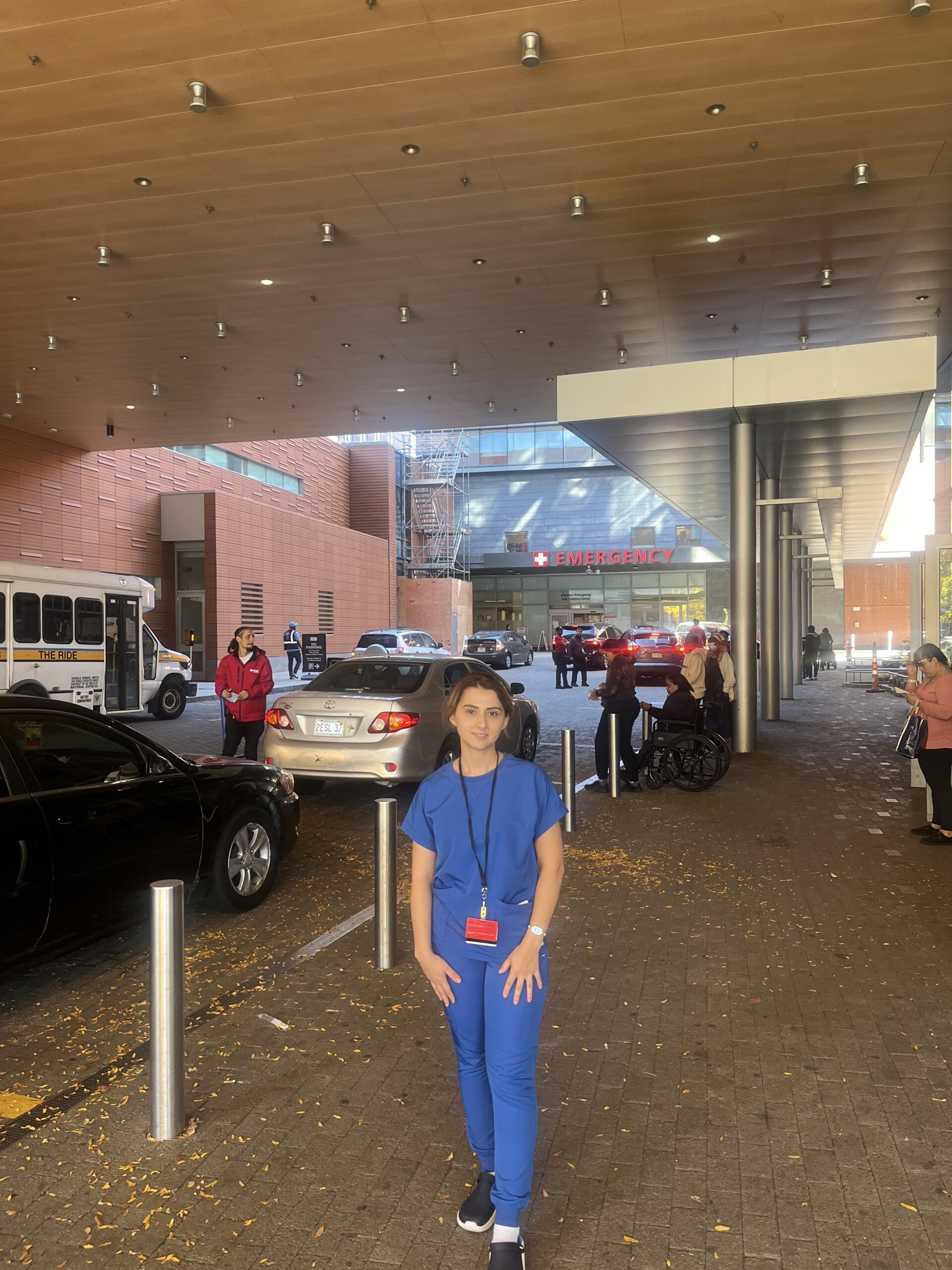
Dr. Galstyan: This program is made possible based on funding from the BU-AMP and the Erebuni MC. It has also received some financial support from the Armenian-American Medical Association of Boston. While in Boston, I also had the opportunity to meet Nancy Barsamian, DNP, assistant professor at the University of Massachusetts Medical School Graduate School of Nursing, who is actively involved in the effort to train nurses for this project. She is guiding us on the best practices for training nurses; her support is truly invaluable. Ms. Barsamian, along with Arlene Dermovsesian, NP, a nurse at the Boston Medical Center, is establishing a training program for Neuro ICU nurses from Armenia. We hope to send nurses from Armenia to Boston for observerships, and also have American nurses come to Erebuni MC to train Neuro ICU nurses in Yerevan.
M.B.: I wanted to ask about neurocritical conditions related specifically to lifestyle choices. What advice would you give on preventing such problems?
Dr. Babikian: By the time a patient is admitted to the Neuro ICU, the medical problem is already serious and life-threatening. A brain hemorrhage is an emergency needing immediate treatment.
Can a brain hemorrhage be prevented? Yes, to some extent. The most common causes of brain hemorrhage are high blood pressure and trauma. If hypertension is treated effectively, and driving laws are better respected, resulting in a reduced number of motor vehicle accidents, fewer patients will need Neuro ICU care to start with.
M.B.: Have you noticed an increase in neurological conditions related to psychological issues after the Artsakh wars, especially considering the many disasters people have faced?
Dr. Galstyan: After the wars, we saw a significant rise in patients with traumatic injuries. At our medical center, we managed many injured soldiers. Not surprisingly, their relatives have also experienced a surge in acute new illnesses following the war.
However, we do not have precise statistics to show whether there has been an increase in specific conditions like stroke or intracranial bleeding. What we can say for certain is that the overall number of patients has increased.
Dr. Hakhumyan: During that time, we saw a significant number of traumatic brain injuries. Reflecting on it now, had we had a dedicated Neuro ICU, we would have provided more targeted support, potentially improving both immediate outcome and long-term recovery for many of those patients.
***
As Armenia takes this crucial step forward, the opening of the first dedicated Neuro ICU at Erebuni Medical Center marks not only a milestone for Armenian healthcare but also a beacon of hope for thousands of patients in need of specialized neurological care.
With sustained investment and expansion, Armenia’s Neuro ICU has the potential to become a model of excellence, improving patient outcomes and inspiring similar advancements across the region. The journey is just beginning, but the foundation is solid—and the possibilities, boundless.