



“I am ashamed to visit my son”
Mother of fallen soldier fights for years to renovate her son's memorial stone

Images by Hayk Harutyunyan
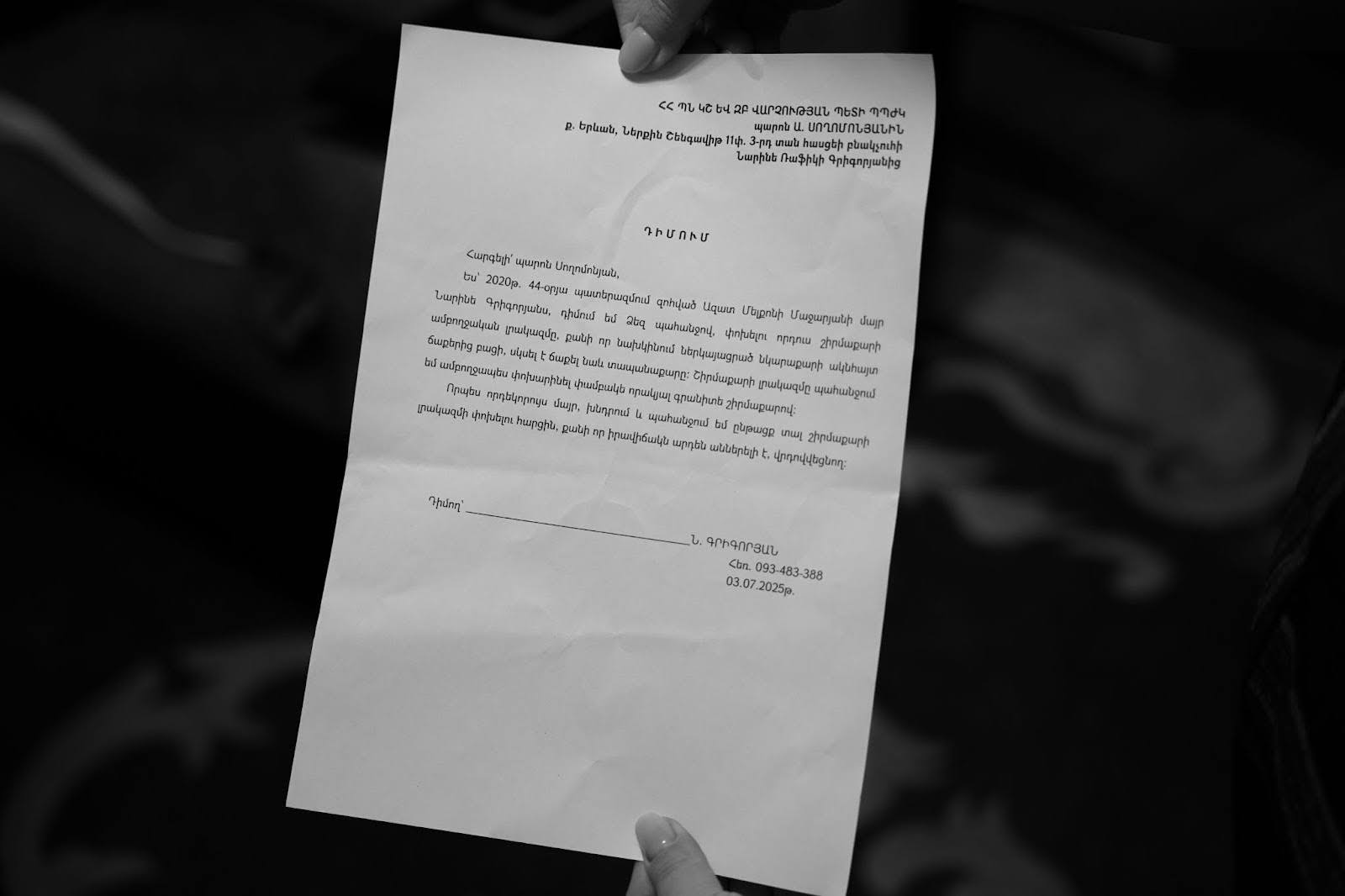
Narine Grigoryan holds another copy of her petition in her hands, demanding the complete replacement of the memorial stone for her eldest son, Azat Majaryan, who died during the 44-day war—just days before his birthday.
“My son was supposed to turn 20 on October 30, but he was killed on the 24th,” she explained. “Only two months remained until he would return home. To this day, they tell me different versions of how my boy disappeared. Then, they say that an anti-tank missile hit the vehicle that was transporting them and everyone died.”
“I only know that my son was transferred from the ‘Martuni 2’ positions to Jrakan in Hadrut,” Narine said.
On October 25, they told her that her son was wounded. “I was looking for Azat in all the hospitals,” she shared. “When I learned he had died, I wanted to bury him in the family cemetery. They came and convinced me to take him to Yerablur. Is this why they convinced me, so that now I am ashamed to visit my son?”

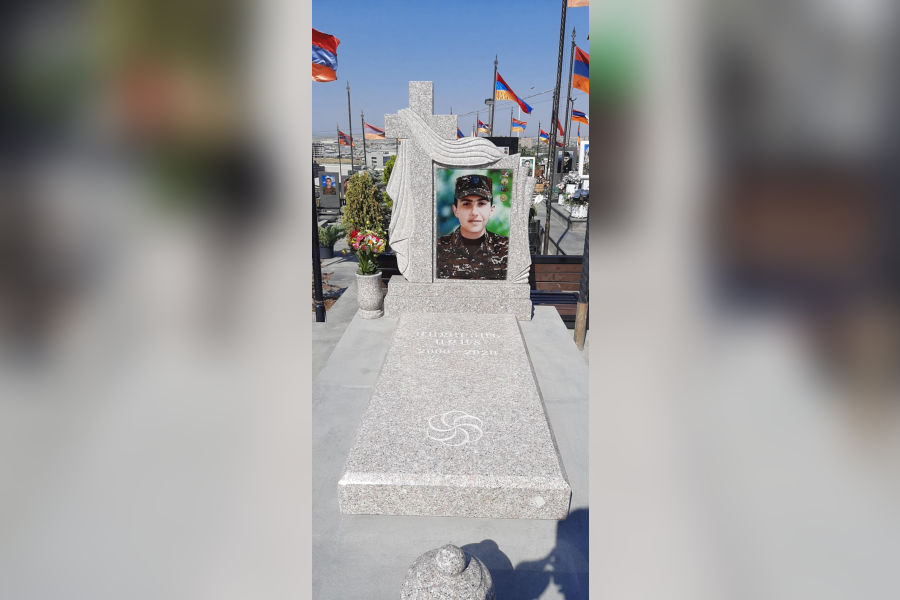
One year after Azat’s funeral, in October 2021, his mother noticed damage on the memorial stone—and his picture was fading. The family has managed to renovate it several times.
However, over the years, the cracks have worsened, and now, if there is no intervention, the gravestone itself is also on the verge of being damaged. Azat’s picture has faded and lost color in some parts.
“They tell me that it was made from poor-quality stone, which is why it is almost crumbling,” Narine explained. “Every month, they say they just won the tender and will begin renovation. The ministry tells us to appeal to the pantheon staff, and vice versa. I do not know what to do. Throughout these years, I have memorized everyone’s phone numbers; often, they do not even answer my calls,” she continued.
Narine says she has written petitions every day since last August. “Now, they have said they will change the stone this month, but I have no hope. I gave a son to the homeland—what I am asking is not a big thing.”
“I can’t go to my son’s grave. I’m ashamed.”
Last August, Narine was assured that the renovation work would be completed by her son’s birthday.
“They told me I am not the only one in this situation—about 50 memorial stones are at risk. They keep saying that the work done by the previous contractor was poor. I do not know when they will approve the new bid and start the renovation work.”
The Ministry of Defense continuously told Narine they were very busy but would begin work on her son’s and others’ memorial stones in December 2024.
“I thought they were very busy, but my son’s turn would also come. December became January, and by March, they stopped answering my calls. Recently, they informed me that I need to write another petition. According to the ministry, the work should be completed by July.”

“No one has heard my voice, but my heart can no longer bear it: what I want is not a big thing.”
Narine reflects on how difficult it was to send her eldest son to the army, since she raised her two sons alone.
“He always told me, ‘Mom, I’ll come back; I won’t leave you to work.’”
She remembers their final phone call on the morning of October 24, 2020. “He told me, ‘Mom, I’m so grateful to you for keeping me here, as I wanted. I love you very much.’”
Now, as Narine fights to have her son’s memorial stone renovated, she says that Azat did not deserve this fate.
“He was a unique soldier. People often came to tell me how well he behaved while serving in the army, and finally, during the 44-day war. I always thought I would go to Yerablur with my head held high, but I can no longer bear to see his grave like that.”

Narine says that she never aspired to be a hero’s mother. “I wanted to be Azat’s mother—that is all.”
“In my worst nightmare, I could not have imagined all of this. They damaged Azat’s memorial stone several times—I still don’t know who did it. I never raised my voice, but my heart cannot take it anymore. I had just buried my son when the picture on the memorial stone was completely damaged. They came and changed it, but this time, they seem unwilling.”
The last time she spoke with Pantheon officials, they informed her that only the memorial stone would be replaced under the new contractor—there was no discussion about the gravestone.
“I do not know how they envision this, but the gravestone is also deteriorating. If work is not carried out, it will soon be beyond repair. They tell me there is no news from the ministry yet—that they are waiting. But how long should I wait?”
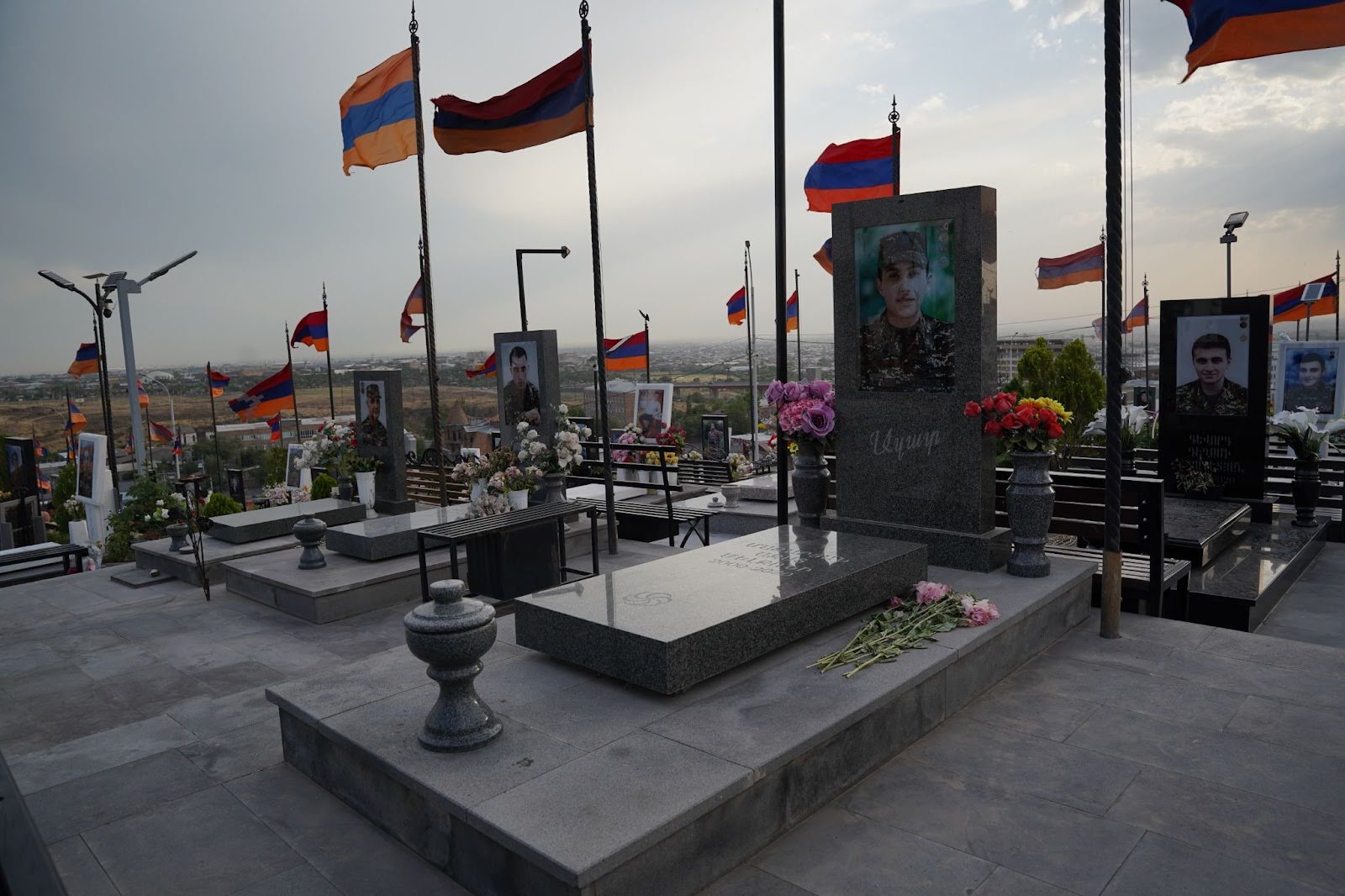
“Can you imagine if I visit my son’s grave and see that it has completely collapsed?”
Narine fears the day she might visit her son’s grave and find the memorial stone has completely collapsed. She says she does not know how she would react in such a situation.
“I gave my son to the homeland, never thinking that one day I would feel so humiliated. Azat was my firstborn, then Rafael was born. I raised both of them alone to be worthy children of the homeland—and now, I feel completely alone with this problem.”

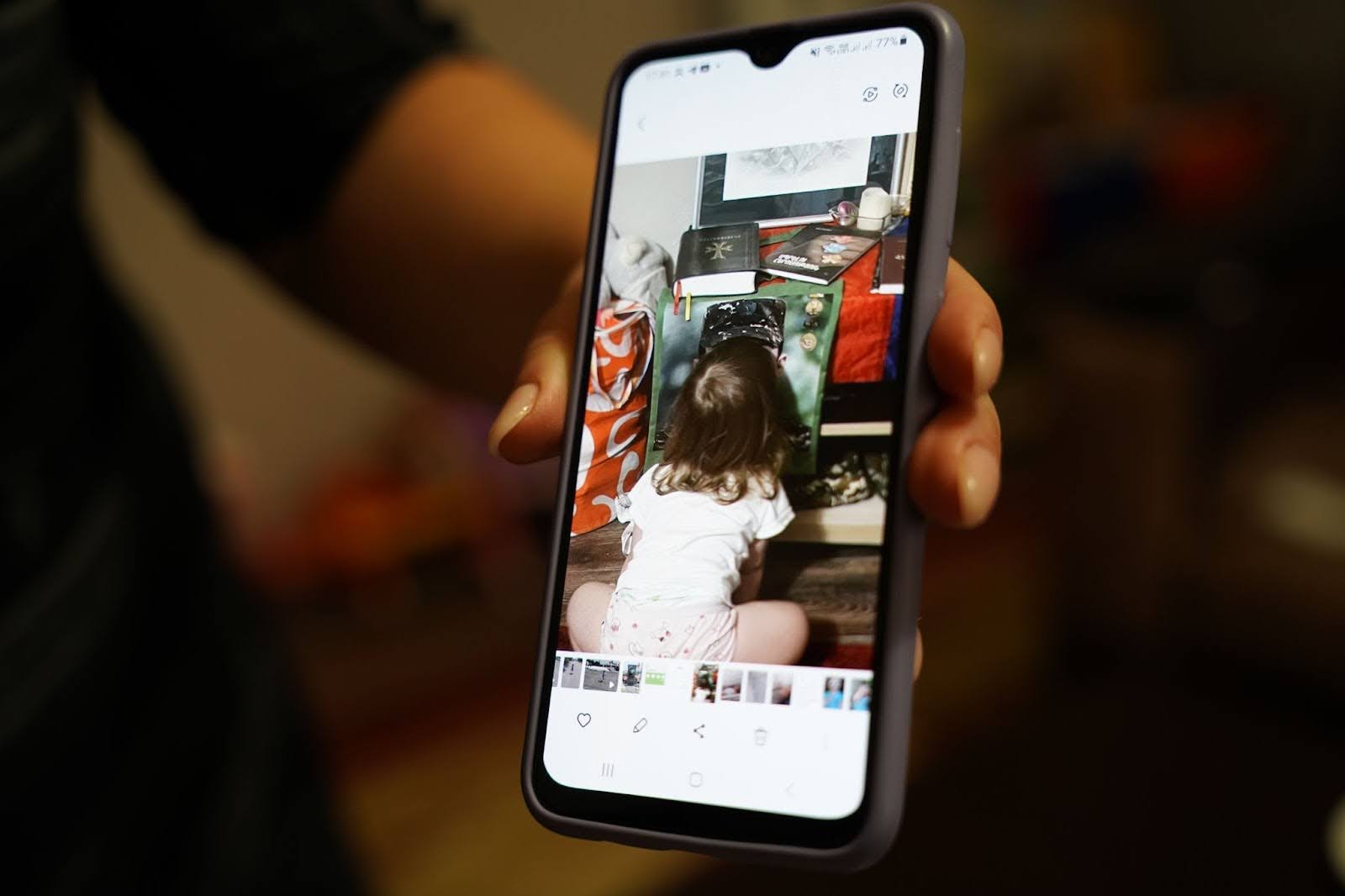
In Azat’s memorial corner is the military uniform he was supposed to wear when conscripted, his military service book and a Bible. Narine keeps the space tidy, arranging and rearranging this part of the house several times—but little Gayane comes in often to play with her brother’s clothes.
“I couldn’t cope with Azat’s loss for many years,” Narine explained. “I could not accept the grief and longing—I was losing my mind. But two years ago, I decided to become a mother again. Now, Gayane is two years old. Azat loved this name very much. He always wanted to have a little sister.”
Narine and Gayane visit Azat’s memorial stone often. The mother cleans her son’s picture, faded from the weather, and points out the damage.
“I have lost myself. I do not know who to turn to so that they fulfill my request.”
Editor’s Note: Since the publication of this article, Azat Majaryan’s gravestone has been fully renovated—a small comfort to Narine’s heart. Family members say that the attention generated by sharing their story helped bring about this long-awaited change.



Poor, heroic lady!
This is very sad but not surprising given the treatment that incompetent Pashinyan and his dysfunctional government, protected by his police force, has shown towards grieving parents who lost their loved ones in the recent war. Worse is the fact that three weeks into the war Pashinyan was given the opportunity to stop the war on October 19, only five days before this grieving mother’s 19 year old son Azat was killed, and with a lot less demands from the enemy at that time than now. More specifically, ending the war at that time required the return of the contested regions to the enemy used as “buffer zones” by the Armenian side as well as the return of the so-called “internally displaced” Azerbaijanis back to Shushi plus a land connection between mainland Azerbaijan (occupied Eastern Armenia) and Nakhijevan (ethnically-cleansed occupied Armenian province) and he refused just because he said he did not want to be called a traitor to the nation. In hindsight, since the end of the war in November 2020 and up until now, he not only has given all that away, most without even firing a shot, has unnecessarily sacrificed the lives of several thousand Armenian soldiers, but that he also has lost Artsakh and displaced and practically made homeless its entire 150K indigenous Armenian population and is considered an enemy agent and traitor to the nation! This grieving mother’s son would have been alive today if he had agreed to stop the war on October 19 with much less loss and still in control of Artsakh and the Berdzor “Lachin” corridor connecting Armenia to Artsakh!