


Reflections

Between bulldozers and groundbreakings: Where is home(land)?

It’s May 26, 2025: Jerusalem Day. 

I’m sitting inside a temporary structure built by the Save the ArQ movement in the heart of the Holy Land. We are in the ‘Cow’s Garden’ (or, as the local Armenians call it, ‘The Parking’). The air outside is heavy with heat and tension. In a few hours, tens of thousands of Israeli celebrants (many of them settlers) waving blue and white flags will provocatively march through the Old City. The threat of violence hangs over everyone’s heads.

Inside, however, it is cool. An air conditioner mounted on the ceiling hums softly. There’s a decent internet connection, and the TV broadcasts the latest news. I am served coffee by one of the young men keeping a 24-hour watch (he stays here full-time while others come and go), a fellow with a magnificent beard whom I met two days ago, but who treats me like an old friend. It’s the warmest day of my brief journey, but while their dogs, Arj (Bear) and Arqa (Monarch), sniff around my legs, this coffee seems to cool my heart.

The temporary structure, which no longer appears temporary, was built with care—much like the movement it represents: care for 1,700 years of history, care for the material and spiritual architecture of Jerusalem’s Armenian Quarter and, perhaps most importantly, care for one another. It’s a strange feeling to be surrounded by such endless generosity in the face of such an existential threat.

Just steps from where I sit, not long ago, massive bulldozers entered, sent by a developer backed by extremist right-wing activists, hoping to seize part of this historic quarter under the guise of a 98-year lease.

This isn’t an ordinary real estate dispute, and ‘The Parking’ isn’t an ordinary lot. It’s the soul of a people.

Related Articles

The ‘Cow’s Garden’ has served in the past as agricultural land, shelter and home. Armenians fleeing genocide found refuge here. Today, it’s the front line: not just for land, but for the struggle for survival.

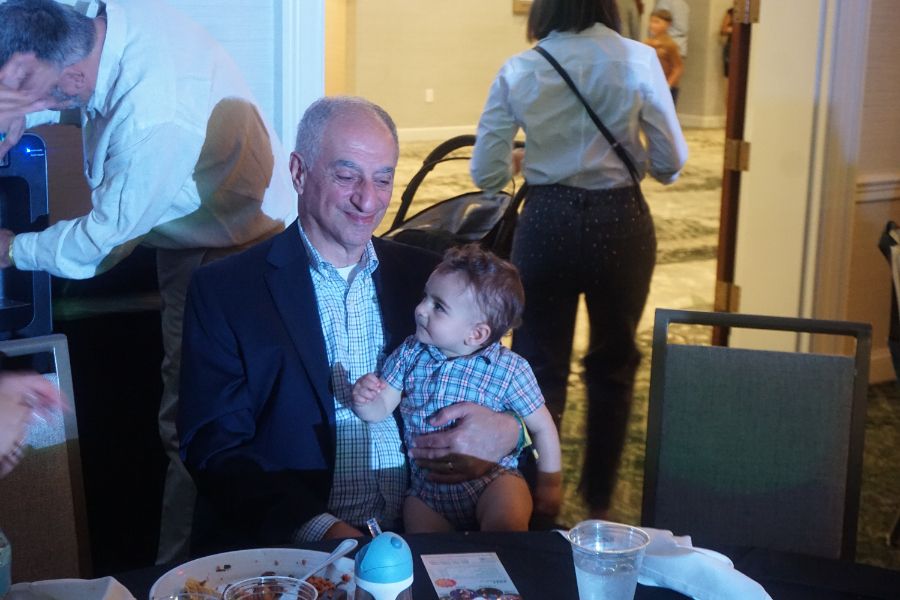
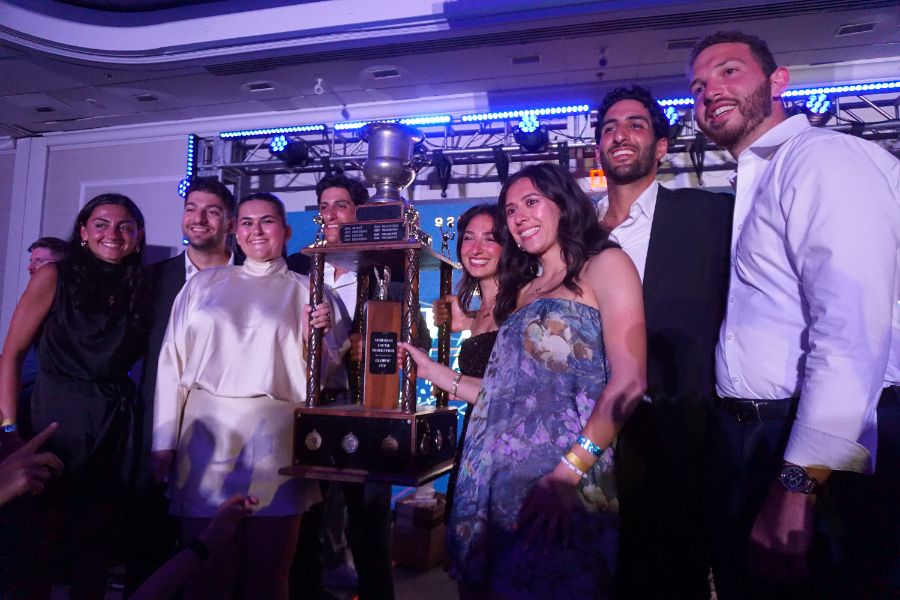
Two days earlier, on May 24, there was a celebration in another Armenian community, but this time, it was the Armenians who were doing the celebrating. While I sat in front of my computer amid the growing tensions outside, my inbox began filling with photos sent from distant Toronto—images from the groundbreaking ceremony for the Armenian Youth Center expansion project. Familiar faces; childhood friends who had become community leaders, following in the steady footsteps of our parents and grandparents. 

The photos reminded me that my friends are now the ones making decisions about the future of the Toronto Armenian community. I felt a familiar wave of pride and longing; as always, I got emotional. Toronto, after all, is my birthplace.

The contrast was stark: one diaspora expanding and prospering, the other clinging hopefully to its existence.

But beneath the surface, the thread is the same: youth mobilizing, elders cheering on, communities believing.

Whether in Jerusalem or Toronto, the struggle is for something greater than simply territory. It’s about permanence, heritage, dignity.

What impressed me most about Jerusalem’s Armenian Quarter—but especially in this little, makeshift structure—was the absolute absence of indifference. These local Armenian youth are outspoken and foul-mouthed, yet pure and kind at heart: selfless and proud to a fault. They resist with mixed feelings of joy and sorrow, but they’re never despairing. I watched these young people (some actually young, others only in spirit) gathered to protect their quarter from provocateurs—driven not by hatred, but by absolute love.

And it made me think about what the diaspora is, if not this kind of dedication, this kind of rootedness, even in so-called ‘exile.’

We often talk about the Armenian diaspora(s) in grand, abstract terms. We measure it by population numbers, donation amounts, political positions and so forth. But the ‘Cow’s Garden’ reminds us of something deeper: that our most important diasporas aren’t the most populous, the loudest or even the most secure, materially or otherwise. They’re the ones that still carry the scent of the soil they left behind. The ones that remain rooted not in nostalgia, but in place, in presence, in resistance.

There’s no romanticism here, just a clear understanding that something is under threat.

As someone who left his beloved birthplace to live in Yerevan, I often find myself divided between multiple versions of the concept of ‘home.’ I sincerely consider Armenia my home, and Toronto will always be the foundation of my being. And now, somehow, Jerusalem is also etched on that complex map.

Why? Because there’s a bitter clarity to being in such a place, especially on such a day. The threats aren’t hypothetical; they’re happening now. The bulldozers aren’t lying. And as I sit in front of my computer, trying to digest all this,

I realize that living in Armenia has taught me how fragile, and how fiercely beautiful, our connections are: to land, to memory, to each other.

I don’t know how this story will end. The legal battle continues. The threats haven’t disappeared. But I know I’ve never felt more certain about what it means to fight for community—whether expanding a youth center in Toronto or keeping a resistance movement alive in Jerusalem, the essence is the same: to belong is to defend.

We in Toronto are fortunate; we have stability, resources and space, but we must never take it for granted. We must ask ourselves: what are we building, and for whom are we building it? Are we creating a community that can withstand the test of time, loss and pressure? Are we a community that remembers its past while preparing for the future?

This experience in Jerusalem reminded me that diaspora isn’t simply where we end up, but what we choose to hold onto.

For the young men around me, far from Armenia,Jerusalem is their homeland. And for the young people in the photos flooding my inbox, Toronto is their homeland. 

And that’s completely natural. ֎

***

This piece was originally published in Torontohye (#214, June 2025) in Western Armenian.

Rupen Janbazian

Rupen Janbazian is the editor of Torontohye Monthly. He is the former editor of The Armenian Weekly and the former director of public relations of the Tufenkian Foundation. Born and raised in Toronto, he is currently based in Yerevan.

2 Comments

  1. Beautiful article. But i wonder why you dont make mention of Palestine at all? After all the armenian community in jerusalem has been part of the palestinian landscape long before the occupation, the struggle is one and the same, and the enemy is one and the same.

    1. Thank you for taking the time to read and share your thoughts. You are absolutely right that the Armenian community in Jerusalem is deeply tied to the wider Palestinian landscape and that our histories and struggles overlap in many ways. Armenians have been part of Jerusalem’s fabric for centuries, long before the current political realities, and the threats to the Quarter cannot be separated from the broader pressures Palestinians face. In this piece, I chose to focus very specifically on the lived reality inside the Armenian Quarter during my visit, what I saw, heard, and felt in that moment, rather than on the full political picture. That was not to downplay or ignore the wider context, but to let one small part of the story speak for itself.

Leave a Reply

Your email address will not be published. Required fields are marked *


Back to top button