



An Armenian in Hong Kong: Discovering Paul Chater
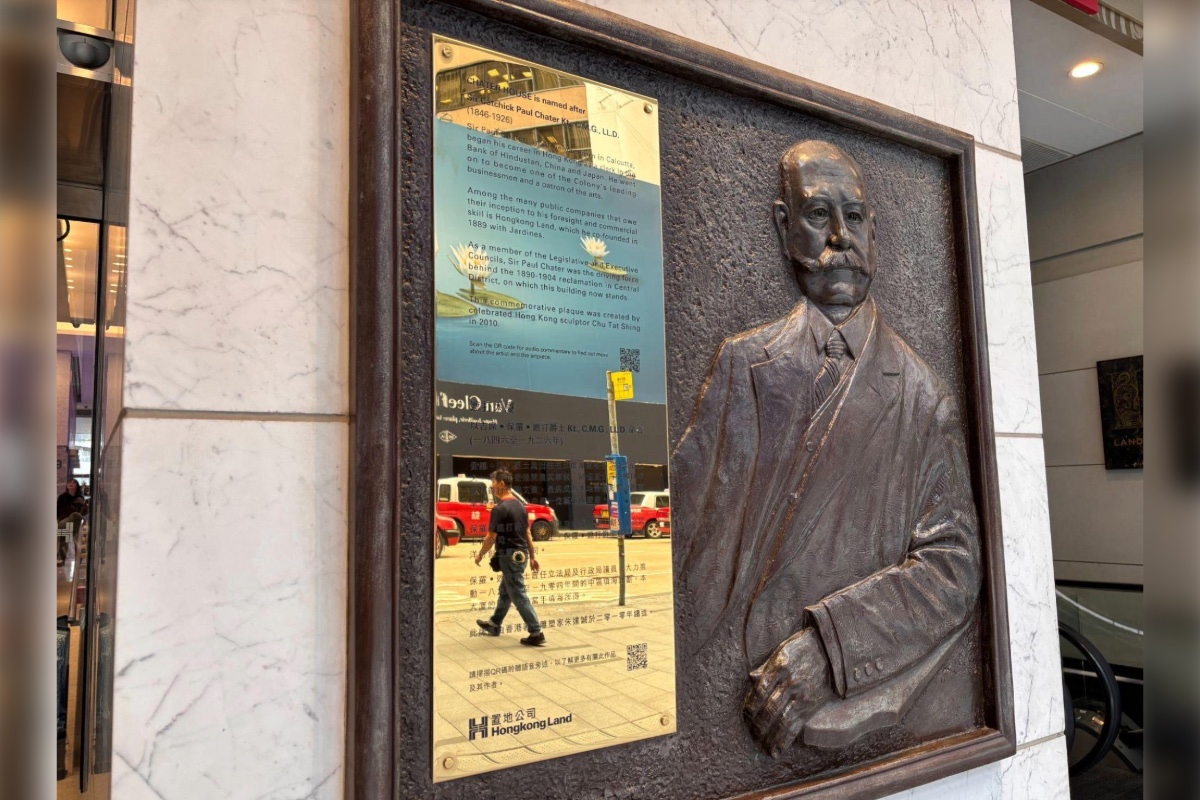
My husband and I recently honeymooned in Japan, Hong Kong and Taiwan — an itinerary that felt equal parts intentional and unexpected. Like many Armenians abroad, we joked that no matter where you go in the world, you will inevitably find another Armenian. True to form, we crossed paths with an older Armenian couple traveling through the same regions. Naturally, our conversation quickly turned all things Armenian — family histories, community connections and, unexpectedly, the name Paul Chater.
They mentioned his name almost casually, without much detail, but with certainty. He was important, they said. We should look for something — anything — a plaque, a building, a street. There were, in fact, traces of him throughout Hong Kong. What struck me immediately was not just that an Armenian had lived and worked there, but that even Armenians passing through knew his name. It felt like a quiet inheritance being passed along midconversation.
What followed was something I did not expect.
As we explored Hong Kong, we began to notice Paul Chater in many places. His name appeared on streets, buildings and public spaces — Chater Road, Chater Garden, Chater House — woven into the city’s geography and daily life. While these markers do not always explicitly state his Armenian heritage, historical records and institutional memory in Hong Kong clearly acknowledge him as an Armenian-born figure of immense importance. There was no ambiguity in the historical narrative, no erasure of origin. His identity remained intact.
I remember laughing as we took photos in front of these markers, fully aware that passersby likely thought we were eccentric tourists obsessing over a regular street sign at a boring intersection. But for us, it was something else entirely. It was recognition. It was visibility. It was the rare experience of encountering Armenian history embedded so visibly in a global city halfway across the world.

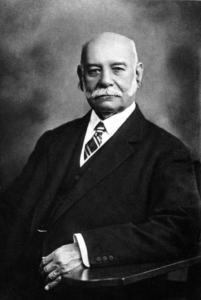
Born Khachik Pogose Astwachatoorean (most likely Asdvadzadourian) on Sept. 8, 1846, in Calcutta, British India, Paul Chater was one of 13 children born to Armenian parents. Orphaned at age 7, he was educated at La Martiniere College in Calcutta before moving to Hong Kong in 1864 to live with his sister and brother-in-law. Like many Armenians of the diaspora, his life followed the contours of global trade, migration and opportunity.
In Hong Kong, Chater rose from modest beginnings to become one of the most influential businessmen and civic leaders of the late 19th and early 20th centuries. He played a pivotal role in land reclamation projects that reshaped Victoria Harbour and laid the groundwork for Hong Kong’s modern commercial districts. By secretly conducting seabed soundings at night, he helped plan reclamation schemes that would permanently alter the city’s coastline.
Chater’s influence extended far beyond business. He co-founded major institutions, including Hongkong Land, the Hongkong Electric Company and Kowloon Wharf and Godown. He served on both the Legislative and Executive Councils of Hong Kong, was knighted by King Edward VII in 1902 and remained deeply involved in civic life until his death in 1926.
One moment stood out in particular during our visit. We rode the Peak Tram, an iconic system whose development and expansion Chater helped finance and support, which today serves both as a functioning mode of transportation and one of Hong Kong’s most recognizable sightseeing attractions. As the tram climbed toward the skyline, I could not help but think about how extraordinary it was that an Armenian played a role in shaping not only the city’s infrastructure but one of its most enduring symbols, and that we were experiencing it during our honeymoon in Hong Kong.
What makes Paul Chater’s legacy especially striking is not just the scale of his contributions, but the fact that his Armenian origins remain clearly documented within Hong Kong’s historical record. Streets bear his name. Institutions trace their foundations to his work. His philanthropy, supporting education in Hong Kong, Calcutta and beyond, reflects a lifelong commitment to public service.
The Armenian diaspora has shaped cities around the world through trade, architecture, philanthropy, education and civic leadership, yet these stories are often fragmented or forgotten. To encounter a place where an Armenian’s legacy is not only preserved but woven into the city’s identity is deeply affirming. Standing in Hong Kong, thousands of miles from Armenia, I felt that connection, reminded that Armenia is not just a place on a map but a living legacy carried across the world through its people and the lasting marks they leave behind.
Our honeymoon came full circle at that moment. What began as a journey across Asia became a reminder of how far Armenian history reaches and how deeply it is woven into places we may never expect. Paul Chater’s story is not just Hong Kong’s story; it is all of ours.



Hi Mrs Ani,
Good you came across Paul Charter, but you missed the Armenian community that we have there called ChinaHay. I worked and lived there from 1984 untill 1997 I left with the British handover. I returned to Shenzhen, China just across the border from Hong Kong in 2007 untill 2017 December. My two daughters are born in HK 1987 and 1992. We opened a small Armenian center Thanks to Jack Maxian. You can always check with ChinaHay site.