



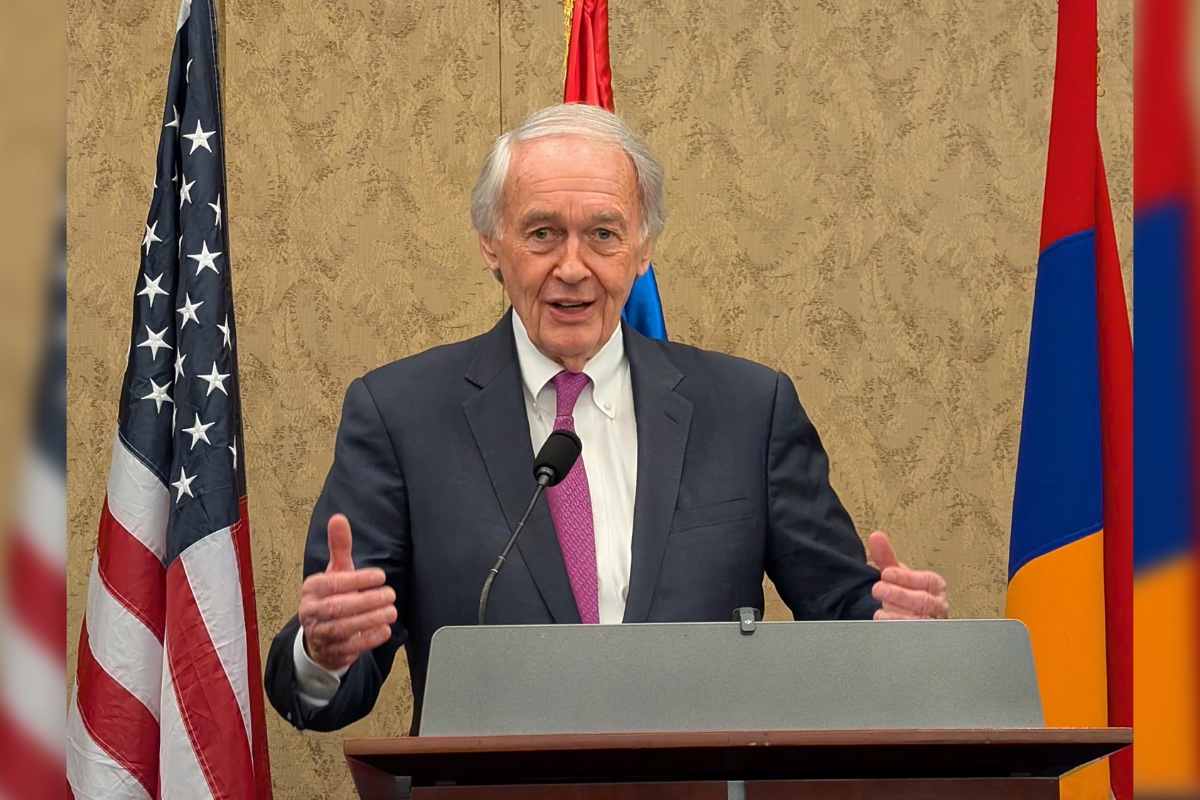
Editor’s note: The Massachusetts 2026 primary elections took place on Sept. 1. Sen. Ed Markey defeated Rep. Seth Moulton in the Massachusetts U.S. Senate Democratic primary. The Massachusetts State Senate Democratic primary for the Middlesex and Suffolk district between Sen. William Brownsberger and challenger Daniel Lander is heading to a recount.
New England’s Armenian American community has been navigating several consequential elections in which the candidates differ meaningfully in their records of engagement with issues important to our community. These elections should not be viewed through a simple Democrat-versus-Republican or progressive-versus-moderate lens. Rather, Armenian American voters should ask a more practical question: When issues affecting Armenia, Artsakh and Armenian Americans required attention, who actually showed up?
That question has mattered in three races in particular: the Massachusetts U.S. Senate Democratic primary between Senator Ed Markey and Congressman Seth Moulton; the Massachusetts State Senate Democratic primary for the Middlesex and Suffolk district between longtime Senator William Brownsberger and challenger Daniel Lander; and the developing New Hampshire U.S. Senate contest involving Congressman Chris Pappas and former Senator John E. Sununu. Massachusetts held its primary on Sept. 1, while New Hampshire’s primary will follow on Sept. 8.
This is not an argument that Armenian Americans should become single-issue voters. We care about healthcare, education, taxes, the economy, national security, housing and all the issues that also concern our neighbors. But our community has legitimate interests that are unlikely to receive sustained attention unless we ourselves make them part of the electoral calculation.
Those interests include recognition and education concerning the Armenian Genocide; the security and sovereignty of the Republic of Armenia; accountability for Azerbaijani aggression; the continuing detention of Armenian prisoners in Baku; the rights and security of Armenians ethnically cleansed from Artsakh, including their right of return; protection of Armenian cultural and religious heritage; appropriate restrictions on U.S. military assistance to Azerbaijan; and the responsiveness of elected officials to Armenian American institutions at home.

The question, therefore, is not simply what candidates say during an election year, but what they have done when Armenian issues were not necessarily politically convenient.
Massachusetts U.S. Senate: A record built over decades
Senator Ed Markey’s relationship with the Armenian American community is unusually longstanding.
His record extends well beyond ceremonial appearances. For years, Markey has advocated for Armenian Genocide recognition. More recently, he has repeatedly pressed successive administrations on Azerbaijan, Artsakh, and Armenian detainees. In 2025, for example, Markey led 26 Senate colleagues in calling on the administration to address the continued detention of Armenian prisoners, as well as the human-rights abuses following Azerbaijan’s military assault on Artsakh.
He has also called for Global Magnitsky sanctions against Azerbaijani officials implicated in abuses, supported restrictions on security assistance to Azerbaijan, co-led a bipartisan resolution requiring examination of Azerbaijan’s human-rights record, and publicly advocated for the right of displaced Armenians to return to Nagorno-Karabakh.
The Armenian National Committee of America (ANCA) has endorsed Markey in the 2026 race and gives him an A+ rating for the current congressional cycle.
It is important, however, to characterize Congressman Seth Moulton’s record accurately. Moulton has not been wholly absent from Armenian American concerns. According to ANCA’s current congressional scorecard, he is a member of the Congressional Armenian Caucus, has co-sponsored the Armenian Genocide Education Act and the Armenia Security Partnership Act, and supported a congressional letter concerning the safe return of Armenians to Artsakh. His current ANCA rating is B+.
The distinction is therefore not between someone who has done everything and someone who has done nothing. It is between degrees of engagement, consistency and leadership.
Markey’s record shows decades of repeated initiative, often taking the lead rather than merely signing onto an effort. Moulton has supported several Armenian priorities, but has not demonstrated the same breadth or sustained leadership. That distinction is part of the record Armenian American voters can consider in assessing the candidates.
William Brownsberger: Why local relationships matter
The Massachusetts State Senate race involving William Brownsberger and Daniel Lander was different. State senators do not determine U.S. policy toward Armenia or Azerbaijan. Their importance to our community lies somewhere else: recognition, education, local institutions and whether Armenian Americans have a genuine relationship with the people who represent them.
Brownsberger’s district includes Watertown, home to one of the most important Armenian American communities in the United States. His engagement with that community extends over many years.
As far back as 2013, Brownsberger publicly rejected efforts to question Armenian Genocide education, stating his support for legislation requiring historical genocide instruction and specifically affirming that the Armenian Genocide belonged within that curriculum.
That relationship has also continued at the community level. In April 2025, Brownsberger participated in the Armenian Cultural and Educational Center and ANC Eastern Massachusetts commemoration marking the 110th anniversary of the Armenian Genocide and highlighting the plight of Artsakh Armenians.
These actions matter because they are local. Armenian American institutions survive and thrive because public officials understand that our schools, churches, cultural centers, social-service organizations and commemorative traditions are part of the civic fabric of Massachusetts.
Daniel Lander was mounting a challenge, largely centered on housing affordability, labor rights, government transparency and a more progressive approach to Beacon Hill, having garnered support from labor organizations. Those are legitimate issues on which voters may prefer one candidate over the other.
Former Boston Mayor and U.S. Labor Secretary Martin J. Walsh endorsed Brownsberger, citing a relationship dating back to their time serving together in the Massachusetts House. Walsh described Brownsberger as someone he regularly relied on to help solve legislative and budget issues, praising his candor, reliability and willingness to work through difficult problems. That endorsement was notable because it came from a prominent Massachusetts political figure with a very different political profile, reinforcing Brownsberger’s reputation as a pragmatic and trusted legislator. This endorsement spoke to Senator Brownsberger’s record of being there when needed, time and again.
For Armenian American voters, the question for candidates seeking to represent Watertown should be: What is your understanding of this community, its institutions and the issues it has spent generations advancing?
Armenian American institutions survive and thrive because public officials understand that our schools, churches, cultural centers, social-service organizations and commemorative traditions are part of the civic fabric of Massachusetts.
Longstanding relationships should not confer permanent entitlement to office. Nor should they be ignored. Political relationships acquire value because communities remember which officials were present before an election became competitive.
New Hampshire: Chris Pappas, John Sununu and an extraordinary ethical question
The New Hampshire Senate race presents perhaps the most unusual Armenian American issue of the three contests.
Congressman Chris Pappas has accumulated a substantial congressional record on Armenian concerns. The ANCA has endorsed him for Senate and cites his support for Armenian American priorities, opposition to arms transfers to Azerbaijan and Turkey, and broader record on Armenia and Artsakh. His previous ANCA congressional ratings have been consistently in the A range.
The situation involving former Senator John E. Sununu deserves careful attention because it goes beyond differences over legislation.
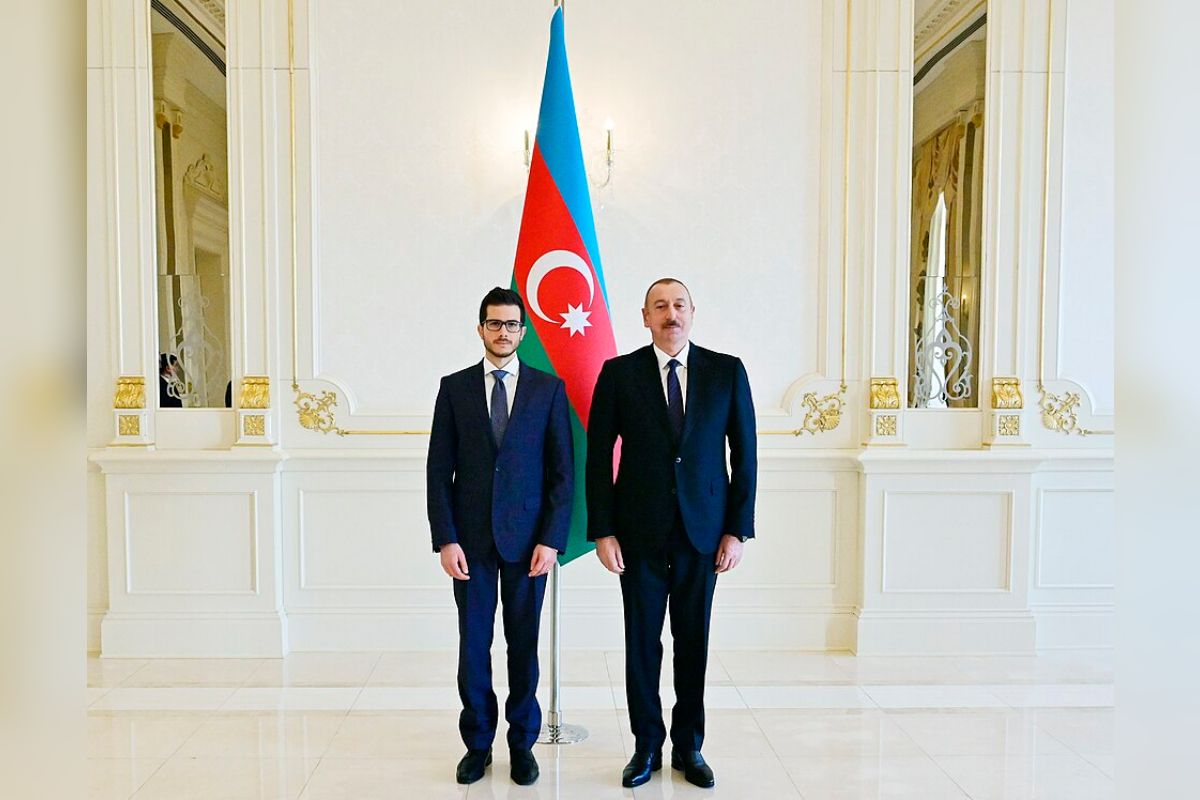
Sununu’s 2026 financial disclosure reported a personal investment of up to $5 million in Anglo Asian Mining. His family investment company, Sununu Holdings, is also the company’s second-largest shareholder, with an approximately eight-percent stake. His father and brother have served as nonexecutive directors of the mining company. These are not allegations from an Armenian organization; they were reported from Sununu’s financial disclosures and company information by E&E News and Politico.
Political relationships acquire value because communities remember which officials were present before an election became competitive.
Why should Armenian Americans care about an investment in a mining company? Because Anglo Asian Mining’s own corporate materials state that it operates mining concessions in Azerbaijan, including Kyzlbulag in Artsakh (Nagorno Karabakh), and that production began at the Demirli copper mine in Artsakh in 2025. Its “Annual report and accounts 2025” describes Demirli as a significant new producing asset.
The report also states that it acquired Demirli in 2022, and obtained access to it in 2024. Extraction activities, therefore, began following Azerbaijan’s ethnic cleansing of the Armenians of Artsakh in 2023. This is where facts and judgments should be distinguished. It is a fact that Sununu disclosed a substantial financial interest in Anglo Asian Mining. It is a fact that the company is developing and producing mineral resources in Karabakh. Armenian American organizations, including the ANCA, have consequently argued that the investment represents financial benefit from economic activity made possible by Azerbaijan’s ethnic cleansing of the Armenians of Artsakh.
Sununu and his supporters are entitled to dispute that characterization or argue that his investments have no bearing on his ability to serve New Hampshire. But Armenian American voters are equally entitled to consider the matter relevant.
Public service is not evaluated only by whether an investment is legally permissible. Voters routinely consider judgment, conflicts of interest and the values reflected by a candidate’s financial relationships. For Armenians whose families watched an indigenous Armenian population lose its homeland in 2023, asking questions about investments connected to the subsequent economic exploitation of that territory is hardly unreasonable.
If Pappas and Sununu emerge from their respective party primaries on Sept. 8, New Hampshire voters will confront that contrast directly. The state’s November general election is expected to be one of the country’s most closely watched Senate contests.
Voting records are also a community memory.
There is a broader lesson in all three races. Armenian American political influence cannot operate only during emergencies in Armenia. It is built gradually by developing relationships with elected officials, educating candidates, rewarding meaningful engagement, and remembering both support and indifference. That does not mean blindly supporting incumbents. It does not mean supporting one political party. And it certainly does not mean allowing Armenian issues to erase every domestic concern. It means making our issues part of the equation.
For Armenians whose families watched an indigenous Armenian population lose its homeland in 2023, asking questions about investments connected to the subsequent economic exploitation of that territory is hardly unreasonable.
When a senator repeatedly raises the plight of Armenian prisoners when the cameras have moved elsewhere, that should count.
When a state legislator spends years participating in Armenian Genocide remembrance and defending genocide education, that should count.
When a member of Congress supports legislation affecting Armenia and Artsakh, that should count.
And when a candidate seeking one of the highest offices in the country possesses substantial financial interests tied to commercial activity in territories from which Armenians were ethnically cleansed, that too deserves scrutiny.
When a senator repeatedly raises the plight of Armenian prisoners when the cameras have moved elsewhere, that should count.
The original purpose of Armenian American political advocacy was never simply to obtain kind words every April 24. It was to make Armenian concerns part of American civic and political decision-making. The material surrounding these three contests demonstrates why looking beyond party labels is necessary.
As New England Armenian Americans consider the candidates and prepare for the November general election, they should evaluate the candidates on the economy, healthcare, education, national security and governance, among other issues. But they should also ask one additional question:
When our community needed a voice, what did this candidate actually do?
That is not partisan politics. It is political accountability.