



FeaturedDiasporaCommunity News
Bared Maronian previews “Genocide 2.0,” a documentary on the Artsakh War and ethnic cleansing
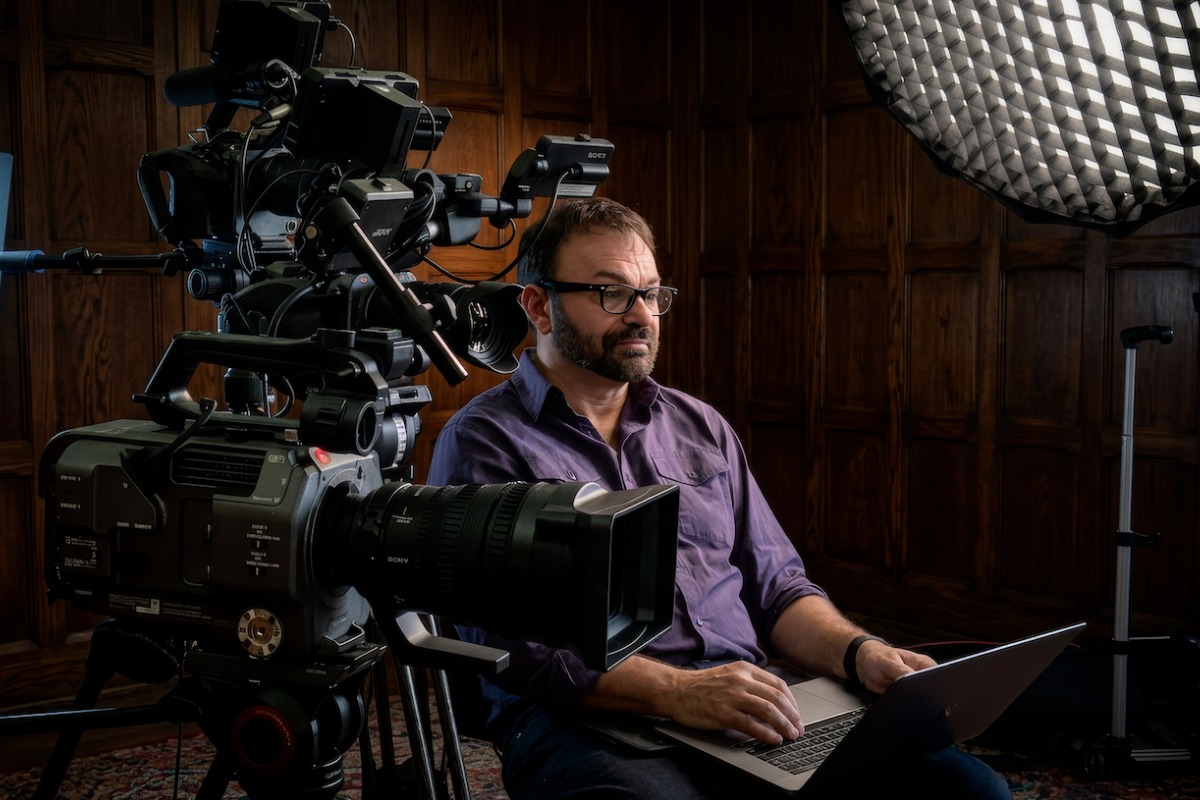
On June 10, filmmaker Bared Maronian hosted a focus group screening for his new documentary “Genocide 2.0.” Gathered at West Newton Cinema in Newton, Massachusetts was the group of about 100 Armenians and non-Armenians with diverse backgrounds, professions and ages.
Based in Florida, Maronian is an award-winning documentary filmmaker whose previous films include “Orphans of the Genocide” and “Women of 1915.” For Maronian, “Genocide 2.0” completes his trilogy of films addressin



Documentaries like these absolutely need to be shown in schools across the US and internationally, because the Armenian Genocide and the other massacres committed against Armenians – the latest being the violent ethnic cleansing of Armenians in Artsakh, are frankly much less known internationally than the Holocaust or the Rwandan Genocide, especially in the US. It is this neverending callous indifference by the so-called “international community”, why genocides and massacres have occurred not only since 1915, but since 1945. Therefore, it is crucial that the Armenian Genocide and other massacres committed against Armenians are taught in schools, like the Holocaust. It is also a necessity in order to fight off and distmantle the Armenian Genocide denying industrial complex of Turkey, Azerbaijan and Israel.
While such documentaries are very important to inform and educate people around the world about what is happening in our region, I don’t think any amount of education can stop such events from happening. A prime example of this was the situation in Artsakh where there was plenty international participation and coverage but ultimately Europe did not even lift a finger to help and stood on the sidelines and let the ethnic-cleansing in Artsakh to occur. Not only that, but they played a major role as an intermediary in dissolving the Artsakh government instead of protecting it while the very same hypocrites, who were saying this conflict can only be solved peacefully and that it can have no military solution, violated the Serbian sovereign territory and invented a state for the Bosnian Muslims (Bosniaks) in the middle of Europe under people’s right to self-determination. Who had more rights to self-determination, Artsakh Armenians with deep roots to the lands where they had lived since time immemorial or those with no connection to someone else’s lands! As if that was not enough, they even rewarded our filthy enemy by increasing their oil and gas exports to Europe by 30% to make up the difference for the sanctioned Russian oil and gas exports into Europe over the Russia-Ukraine war.
We must be the primary guarantor of our security in order to avoid such events and tragedies from reoccurring. We can form alliances with different countries but we must never rely on any country to protect us. When we turn our security over to another entity we are likely to suffer. Politics is a dirty game. In politics, there are no permanent friends and foes. Self-interests determine who your friends and foes are. We must develop a very strong and self-reliant army. We must produce our own weapons internally so we don’t have to rely on others in critical times of need. We are surrounded by enemies and live in an unfriendly and volatile region. We must constantly improve our military capabilities. When you are strong militarily, your enemy will think twice about causing you any harm and if they ever try you must respond with such devastating military force and inflict so many deaths and so much harm on them they won’t be able to recover in decades like the first Artsakh Liberation War. We must ultimately become a nuclear-capable country to put the fear of God in our enemies. That is how you achieve security and avoid such tragedies from occurring ever again.
100%
FYI Bosnia was not in Serbia but in Communist Yugoslavia. It was one of the Yugoslav republics just like Serbia.
About the other aspect of the Armenian Genocide 2.0 in Artsakh, is the ongoing Armenian Cultural Genocide by Azerbaijan.
Azerbaijan destroyed the old multiconfessional Armenian-Russian Cemetery in Shushi between 9-14 May 2026. The cemetery contained medieval Armenian khachkars and 19th century Armenian and Russian tombstones spanning 1810-1871.
Source from the Caucasus Heritage Watch: https://t.co/EyWHrpYcip
Azerbaijan is also now erecting buildings around the Ghazanchetsots Cathedral in Shushi in order to to conceal it, which it disfigured under the guise of “restoration”. I fear Azerbaijan’s malevolent action is a prelude to demolish the cathedral.
Source from the Caucasus Heritage Watch: https://x.com/CaucasusHW/status/2090485905408545253
These cases discovered through satellite imagery, must be the tip of the iceberg, because many more acts of destruction of Armenian heritage in the hermetically sealed Artsakh by Azerbaijan, remain undiscovered and might not be easily discovered by satellite imagery, such as smaller objects and areas, which also might be concealed.
Every act of destruction by Azerbaijan against Armenian heritage in Artsakh, must be reported by Armenian Weekly in separate articles, not just as footnotes. Sometimes such cases are not reported at all in Armenian Weekly, not even as a footnote. Any destruction of Armenian heritage in Artsakh that is identified, must be obligatory reporting in Armenian Weekly.
When you see the photos of Artsakh then and compare to what it is now, you can do nothing but weep.
An entire civilisation has been lost!
The only consolation is the Armenian refusal to live as dhimmis and the choice to defy the Turks, all of which continues to draw admiration and provides inspiration for the future!
It is revolting that Pashinyan makes peace overtures to the genocidal terrorist state Azerbaijan, which is busy destroying Artsakh, and which, along with its big brother and fellow genocidal terrorist state Turkey, want to destroy Armenia.
Armenia’s misfortune throughout its history, has not only been foreign invasions, but traitors who betrayed Armenia and collaborated with the invaders, from Vasak Syuni to Nikol Pashinyan.
As long as appeasing traitors like him rule Armenia and future appeasing traitors keep coming to power, Armenia’s fate will be subjugation, exploitation, territorial mutilation and colonization, just like in the past.