



The Region in Brief
Armenia
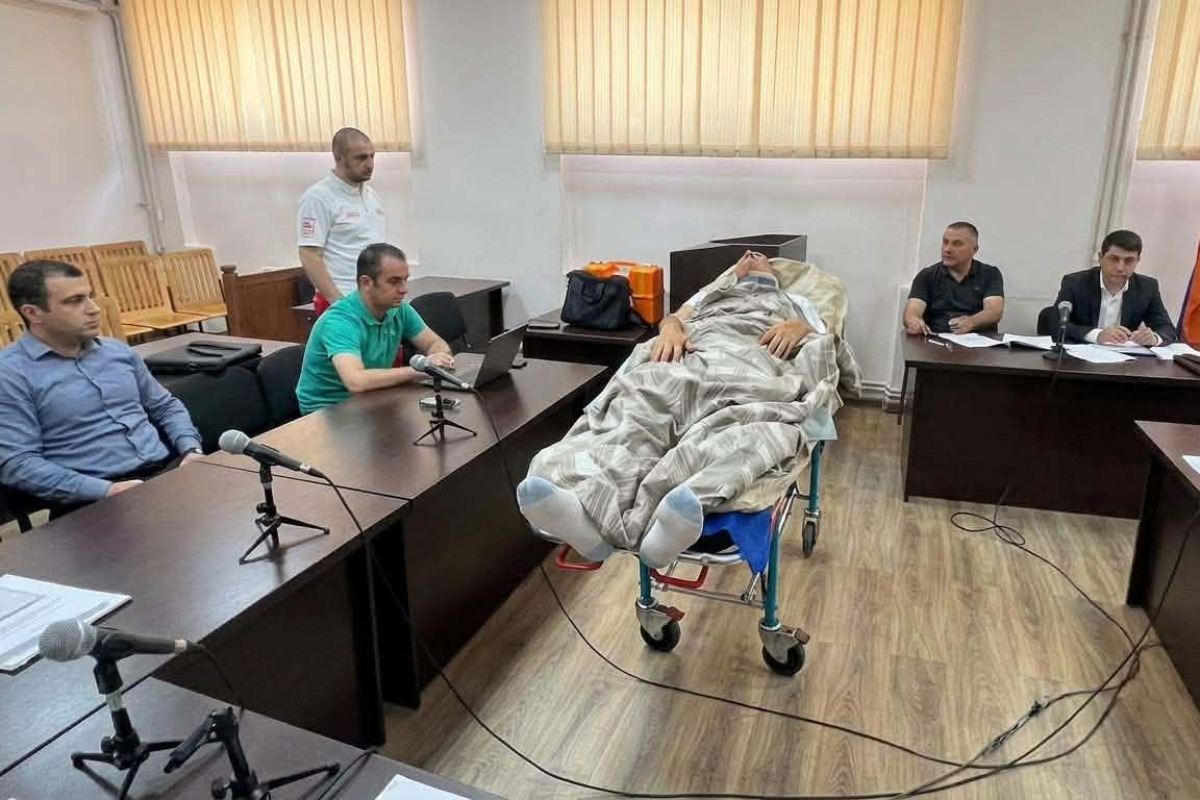
The arrest of former finance minister and State Revenue Committee chief Gagik Khachatryan has triggered a new controversy in Armenia after footage showed the 71-year-old being removed from his home and taken to court on a stretcher while apparently in severe physical distress.
Khachatryan was arrested Sept. 1 as part of a criminal investigation involving allegations of particularly large-scale bribery and money laundering. After an overnight hearing, Armenia’s Anti-Corruption Court ordered him held in pretrial detention for two months.
The images of his detention have nevertheless shifted attention from the charges themselves to the way authorities handled a defendant with longstanding and documented health problems. Khachatryan has severe spinal complications and cervical implants, and his lawyers say he was in significant pain and at times barely responsive as he was taken by stretcher. They say similar attempts to compel his appearance occurred on June 5 and June 7 before the latest episode Sept. 1.
The Prosecutor General’s Office disputes the defense’s assessment of his condition. Authorities say a forensic medical commission concluded that Khachatryan does not require surgery and that his health does not prevent his participation in investigative proceedings. Prosecutors also said he declined an MRI examination that could have helped determine whether surgery was necessary.
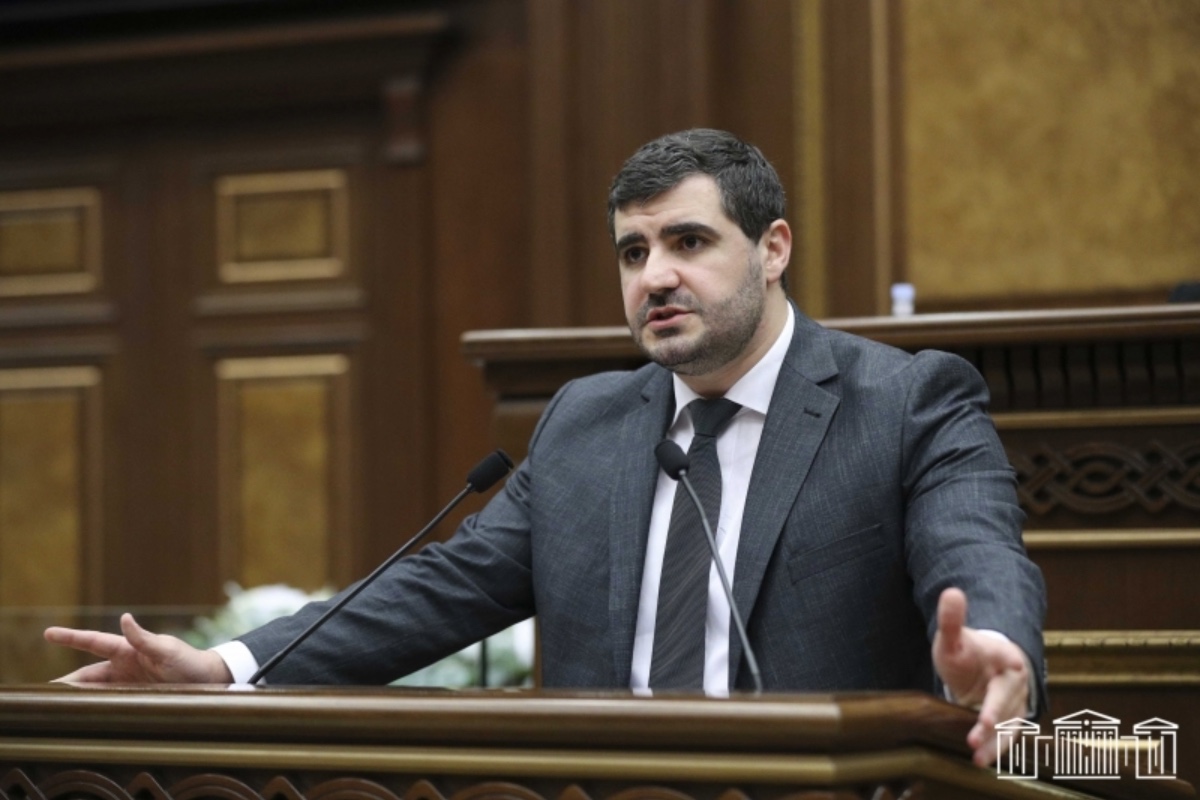
The footage prompted strong criticism from ARF Bureau member and lawmaker Lilit Galstyan, newly elected chair of the National Assembly’s Standing Committee on Human Rights and Public Affairs, who described what was shown as evidence of torture and “inhuman and degrading treatment.”

Galstyan argued that forcing a visibly ill person through a painful transfer required the strictest legal scrutiny, particularly when Armenian law allowed the relevant procedural actions to be conducted at Khachatryan’s location. She stressed that criminal prosecution cannot become a tool for humiliating a person or depriving him of appropriate medical treatment.
Artsakh
The fate of former Artsakh officials and other Armenians imprisoned in Azerbaijan returned to focus this week following a rare interview with Veronika Zonabend, the wife of former Artsakh State Minister Ruben Vardanyan.
Speaking to Forbes Woman, Zonabend said she last saw her husband in Stepanakert in fall 2022, shortly before the blockade of Nagorno-Karabakh began. Zonabend said the family had previously been able to receive periodic video recordings of Vardanyan through the International Committee of the Red Cross, but that such contact ended more than a year ago. She recently managed to send him photographs of grandchildren born while he has been imprisoned.
The concern extends beyond Vardanyan. Roughly 20 Armenians remain imprisoned in Azerbaijan, while independent access to them has become increasingly limited. The ICRC, which had been the principal independent international organization able to visit Armenian detainees, ended its operations in Azerbaijan in September 2025 at Baku’s request. Before its departure, the organization facilitated family contact and monitored detainees’ conditions.
Human rights lawyer Siranush Sahakyan, who represents Armenian detainees before the European Court of Human Rights, has said families have reported serious health problems and injuries among some of those held. Those reports cannot currently be independently verified because outside doctors and international monitors do not have access to the prisoners. Some detainees are reportedly able to speak with relatives only once every 40 days.
Yerevan says it has approached a neutral third country about arranging consular visits to the Armenian prisoners, but the Foreign Ministry has declined to say which country was contacted or whether Armenia has formally sought Baku’s approval for such a visit. The ministry said only that work concerning the detainees is continuing and that, because of the sensitivity of the matter, it does not consider further public disclosure appropriate.
Iran
The U.S.-Iran conflict sharply escalated again this week after nearly a month without direct military exchanges.
The latest round began with a U.S. strike on Larak Island in the Strait of Hormuz on Aug. 30. Washington said it targeted Iranian launchers that posed an imminent threat to commercial shipping and were being prepared to deploy naval mines. Tehran described the attack as a violation of Iranian sovereignty and responded by firing ballistic missiles and drones at U.S. military facilities in Jordan, including King Hussein and Al Azraq air bases. Jordan said it intercepted the incoming missiles, while Iranian authorities claimed the operation damaged American military infrastructure.
The confrontation widened significantly on Sept. 1, when U.S. forces launched a much larger wave of strikes along Iran’s southern coast. Tehran responded overnight with another wave of attacks against American military positions in the region. Iranian forces said they targeted U.S. facilities in Jordan, Bahrain, Kuwait and northern Iraq, using ballistic missiles and drones.
Iranian officials are presenting the retaliation as an exercise of self-defense. President Masoud Pezeshkian, speaking around the Shanghai Cooperation Organization summit in Bishkek, said Iran does not seek war but would respond decisively to attacks on its territory. He also left open a diplomatic exit, saying Tehran would immediately return to its commitments under the June interim agreement if Washington did the same.
Iran’s Foreign Ministry has consequently called on governments throughout the region to prevent the United States from using their territory or military facilities for operations against Iran.
The Strait of Hormuz remains at the center of that strategy. The IRGC said the latest American attacks would only “tighten the lock” on the waterway, while Parliament Speaker Mohammad-Bagher Ghalibaf warned that if Iran is prevented from exporting oil through the Persian Gulf, Tehran will not allow other states to export freely either. Approximately one-fifth of global oil supplies normally pass through the strait, making Iran’s ability to disrupt shipping one of its most consequential forms of leverage. Renewed fighting sent oil prices sharply higher this week.
For now, the military track is again moving faster than diplomacy. The exchanges of the past 48 hours have been the most intense in weeks.