


The Region in Brief
Armenia
Armenia’s ninth National Assembly convened on Aug. 2. The new legislature consists of 105 deputies: 64 representing the ruling Civil Contract party, 29 representing the Strong Armenia Alliance and 12 representing the Armenia Alliance.
The opening session proceeded without an address by Catholicos of All Armenians Karekin II. Under the National Assembly’s Rules of Procedure, both the president of the republic and the Catholicos have the right to deliver welcoming remarks during the first sitting of a newly elected parliament.
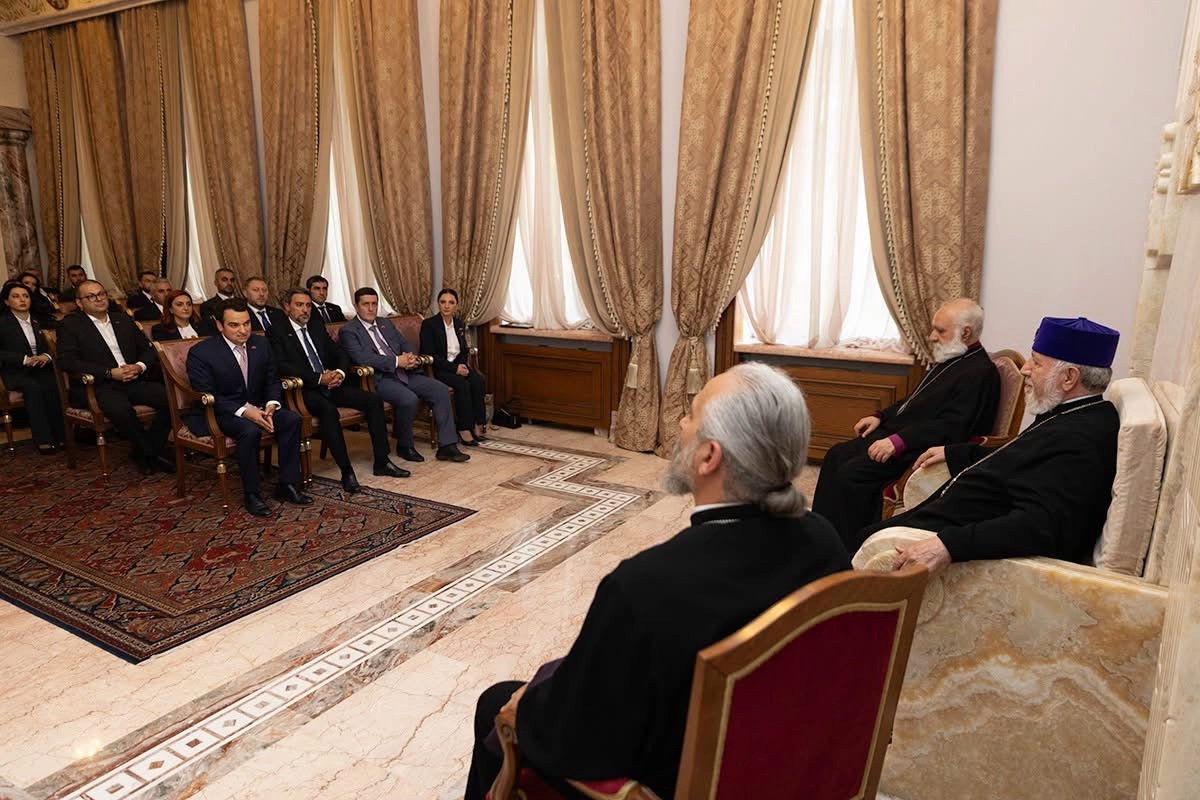
The Mother See said the Catholicos had not been given the opportunity to attend and deliver his traditional address. Later that day, Karekin II received deputies from the Strong Armenia and Armenia Alliance parliamentary factions at the Mother See of Holy Etchmiadzin.
Strong Armenia lawmaker Narek Karapetyan said the deputies had visited the Mother See to receive the Catholicos’s blessing after his address was not included in the parliamentary sitting.
Armenia Alliance lawmaker Anna Grigoryan described the visit as a spiritual duty and criticized the authorities for excluding the Catholicos’s message, prayer and blessing from the opening of parliament.

During the meeting, Catholicos Karekin II said Armenia was facing serious internal and external challenges that required cooperation among state institutions, national organizations and professionals. He also raised concerns about political polarization, social division, the deterioration of public trust and unlawful and unconstitutional actions directed against the Armenian Apostolic Church. The Catholicos called on the newly elected deputies to work for Armenia’s security, the strengthening of its independent statehood and the welfare of its population.
The meeting concluded with a prayer at the Mother See.
Azerbaijan
Azerbaijan is continuing a major modernization of its air force and air defense network. Baku has confirmed the acquisition of 40 JF-17C Block III multirole fighter aircraft jointly developed by Pakistan and China.
The original Azerbaijani order reportedly included 16 aircraft but was later expanded to 40. The broader agreement has been valued at approximately $4.2 billion to $4.6 billion. The package reportedly includes aircraft, weapons, training, logistical assistance and supporting defense infrastructure. Azerbaijan received its first JF-17 aircraft in September 2024.
The JF-17C Block III is commonly described as a 4.5-generation fighter aircraft. It includes an active electronically scanned array radar, modern electronic warfare equipment and the capacity to carry beyond-visual-range air-to-air missiles. The aircraft are expected to replace or supplement Azerbaijan’s ageing MiG-29 fleet. Azerbaijan purchased 16 MiG-29 aircraft, including several two-seat MiG-29UB models, from Ukraine. Deliveries were completed by 2011. The aircraft had been modernized by Ukraine before delivery and were supplied together with air-to-air missiles.
Azerbaijan has also expanded its ground-based air defense capabilities. In November 2025, Baku publicly displayed Chinese HQ-9BE strategic surface-to-air missile systems. The systems supplement Azerbaijan’s existing Russian S-300 and Israeli Barak air-defence systems.
The JF-17C and HQ-9BE acquisitions represent the most significant modernization of Azerbaijan’s air force and air defense capabilities in decades.
The renewed focus on air defense followed a drone incident over Nakhichevan on March 5. Azerbaijani officials linked the incident to the regional conflict involving Iran, although Azerbaijan was not subsequently subjected to further attacks.
Iran
Armenia and Iran are working to strengthen the Iran-Armenia transport corridor and position it as a more significant regional trade route linking the Persian Gulf with the Black Sea.
Financial Tribune reported that recent high-level discussions between Armenian and Iranian officials focused on transforming the corridor from a basic transit route into a broader platform for trade, economic integration and regional connectivity.
Discussions addressed transit capacity, transport fees, border procedures and infrastructure development.
Seyed Hossein Hosseini, acting director of Iran’s Transit and International Transport Office, placed the talks within Tehran’s wider policy of strengthening economic relations with neighboring countries and developing Iran’s role as a regional transit hub. He said the discussions reflected the two governments’ intention to address long standing obstacles and establish more stable economic and transport links.
Several practical challenges remain, including limited road capacity, border-processing delays, infrastructure gaps and the need for additional financing.
The discussions follow Armenian Minister of Territorial Administration and Infrastructure Davit Khudatyan’s working visit to Iran in late July. During the visit, Khudatyan met with Iranian Minister of Roads and Urban Development Farzaneh Sadegh. The two officials discussed construction of the Kajaran-Agarak section of Armenia’s North-South Highway, as well as cooperation in road transport and civil aviation.
The parties discussed a proposal to construct a second bridge over the Araks River. The additional crossing would expand capacity at the Armenian-Iranian border and support the anticipated growth of bilateral and regional freight traffic. The Kajaran-Agarak road, expanded border infrastructure and a possible second bridge are expected to play a central role in efforts to increase Armenia’s transit capacity and strengthen its transport connection with Iran.
Russia
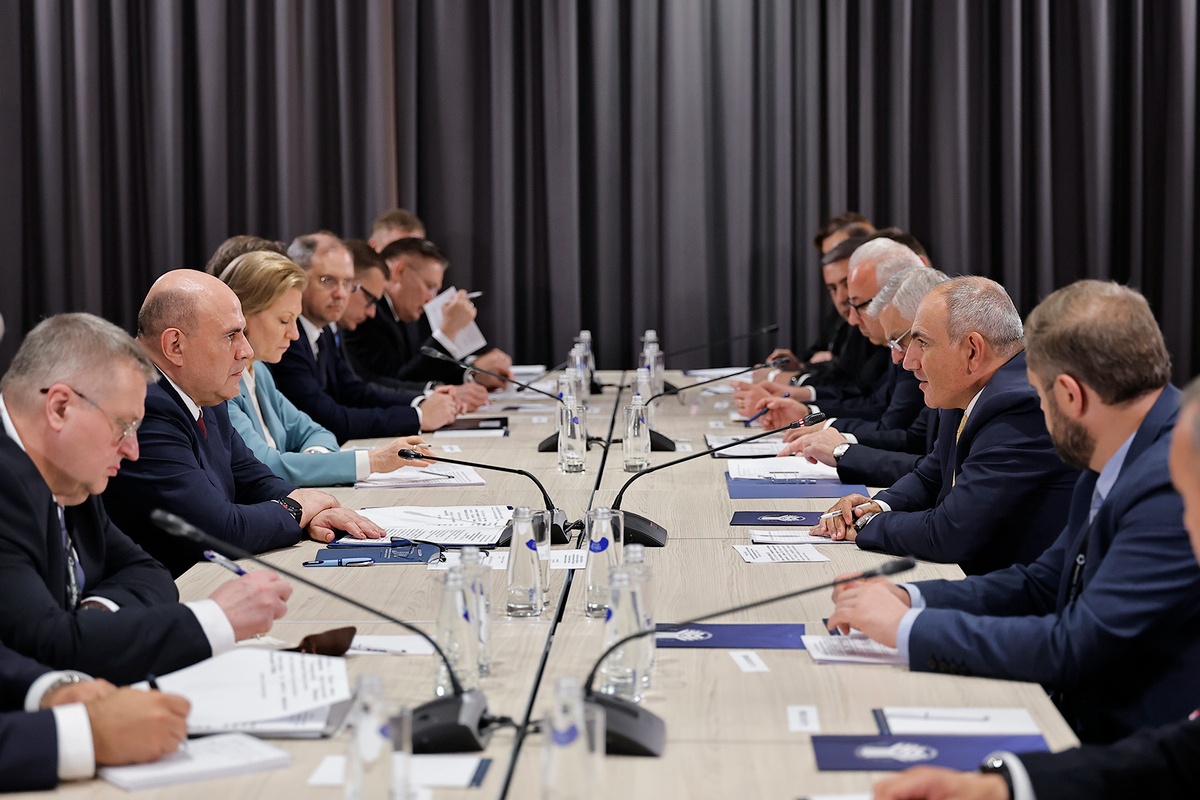
Russian authorities have suspended the sale of more than 70,000 bottles of drinking water and carbonated beverages imported from Armenia. According to the official Russian statement, the producer failed to comply with mandatory regulatory requirements applicable to the products. The measure follows a series of recent Russian restrictions affecting Armenian agricultural goods, food products and beverages.
Russian newspaper Kommersant noted that Pashinyan has rejected calls for Armenia to choose between closer integration with the European Union and continued membership in the Eurasian Economic Union. The Armenian prime minister has maintained that Armenia does not intend to leave the EAEU and has argued that the organization’s rules do not allow a member state to be expelled without its consent.
The newspaper also referred to Pashinyan’s statements concerning the Armenian railway system. The railway network is operated by South Caucasus Railway, a subsidiary of Russian Railways, under a long-term agreement. Pashinyan has raised the possibility of demanding substantially higher annual payments from Russia for the continued operation of the network, including a figure of up to $2 billion per year. Kommersant argued that bilateral relations could continue to deteriorate and suggested that the future of Russia’s 102nd Military Base in Gyumri may eventually become a subject of more direct political debate.
The publication also speculated that the current arrangement allowing Russian citizens to enter Armenia using internal Russian passports could ultimately be reconsidered as Armenia moves closer to the European Union.
Kommersant further addressed Armenia’s energy relationship with Iran, particularly the long-standing gas-for-electricity program. Under the arrangement, Armenia receives Iranian natural gas and supplies electricity to Iran in return. The newspaper suggested that expanded energy cooperation with Iran could help Armenia reduce its dependence on Russian gas. At the same time, it noted the complexity of such cooperation given Iran’s strategic partnership with Russia and Armenia’s growing relations with the United States and European countries.
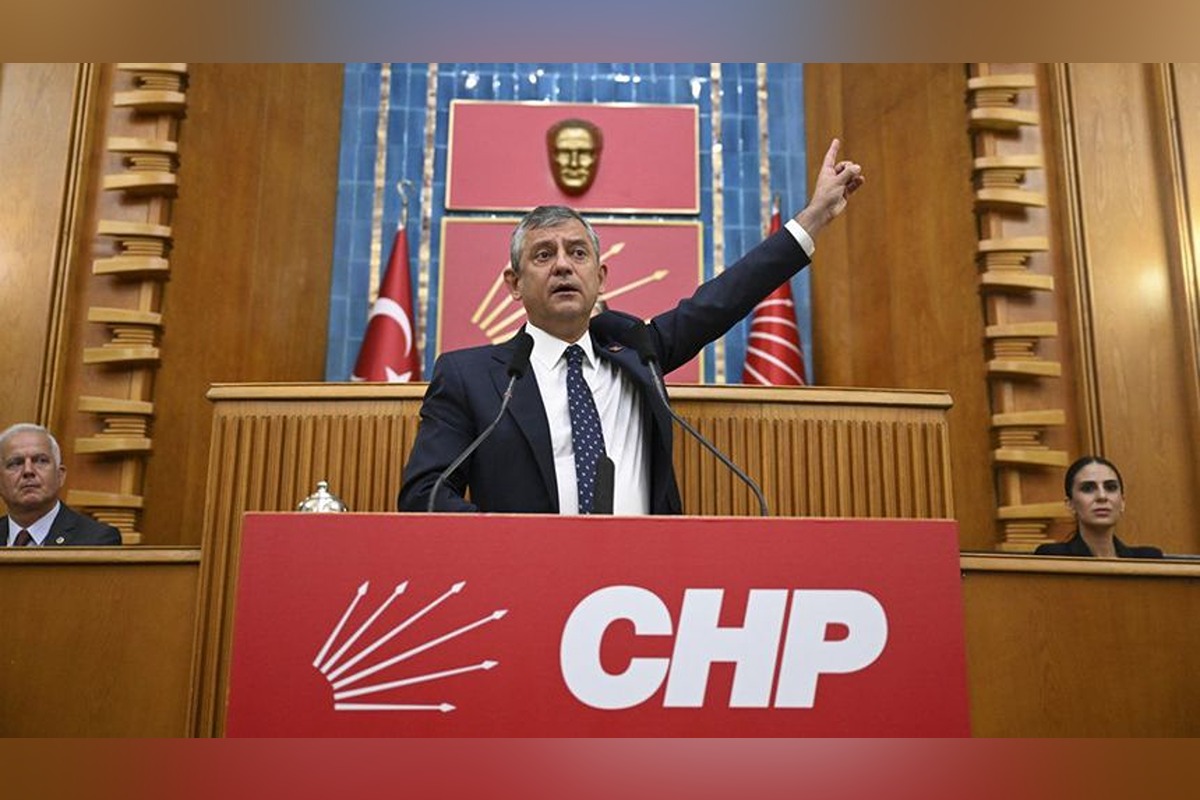
Turkey
The second meeting of the Armenian-Turkish working group responsible for the restoration of the historic Ani Bridge was held in Yerevan. The bridge is situated on the Armenian-Turkish border and historically connected the medieval city of Ani with surrounding trade routes.
The Armenian and Turkish representatives reviewed implementation of the protocol signed in May 2026 concerning the joint restoration of the bridge. The project is one of several technical initiatives under discussion within the Armenia-Turkey normalization process. Other areas under consideration have included the possible rehabilitation of the Gyumri-Kars railway, cross-border electricity infrastructure, direct bilateral trade and the opening of the land border.
In May, Turkey announced that the bureaucratic procedures required for direct trade with Armenia had been completed. Armenia and Turkey continue to have no formal diplomatic relations, and the common land border remains generally closed. An agreement announced in 2022 to open the border to third-country nationals and holders of diplomatic passports has not yet been fully implemented.