The Region in Brief
Armenia
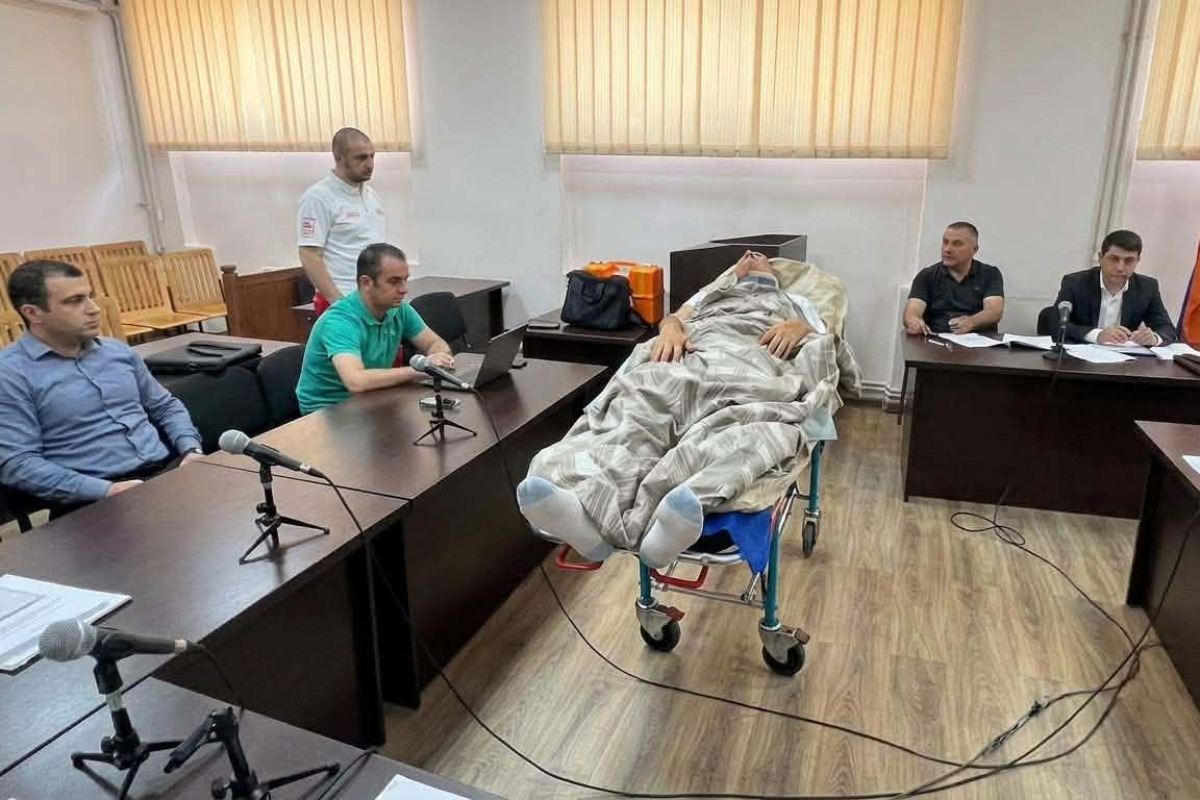
A series of noncombat deaths involving Armenian service members over the past two weeks has renewed concern over conditions inside the armed forces and the military’s ability to protect personnel during peacetime.
On Aug. 13, conscript Grigor Zakaryan was found dead from a gunshot wound at his military post. Four days later, the Investigative Committee announced that another service member had been charged and detained under an article concerning negligently driving a service member to suicide.
Another tragedy followed on Aug. 19, when a civilian-driven GAZ-53 truck struck a group of service members on a road near Chambarak. Suren Vardanyan was killed, and several others were injured. The driver was arrested, and an investigation remains underway.
On Aug. 23, service member Edgar Gevorgyan was found dead from a gunshot wound. Authorities later opened a murder investigation and detained a fellow service member, while reports raised allegations of hazing as a possible factor.
Two further deaths involving contract service members were reported Aug. 24 and 25, with initial media accounts describing both as apparent suicides. The Defense Ministry has said the incidents were unrelated to military service; in the Aug. 25 case, officials said the service member was off duty and died at his residence. However, investigations into the circumstances are continuing.

The succession of deaths has intensified scrutiny of noncombat fatalities in Armenia’s military.
Human rights monitors had counted 33 service member deaths in noncombat circumstances in 2026 as of Aug. 23, before the two additional deaths reported Aug. 24 and 25. The recent cases have renewed calls for greater transparency and for authorities to examine whether recurring suicides, violence and other preventable deaths point to broader institutional problems instead of isolated incidents.
Artsakh
Questions remain about Armenia’s efforts to secure independent access to Armenian prisoners held in Azerbaijan, as the Foreign Ministry has declined to clarify whether Baku has been formally approached about a possible visit by representatives of a neutral third country.
Human rights lawyer Siranuysh Sahakyan, who represents Armenian detainees before the European Court of Human Rights, said the government should provide greater transparency on the process, including whether a third country has agreed to take part and whether Azerbaijan has been formally asked to approve that country’s involvement.
Last year, dozens of Armenian civil society organizations urged the Foreign Ministry to seek the assistance of a neutral state whose representatives could visit Armenian prisoners in Azerbaijan and independently assess their detention conditions. According to Sahakyan, that appeal received no substantive public response.
The Foreign Ministry has acknowledged that Armenia approached a neutral country with a request to facilitate a consular visit to Armenian detainees in Baku. However, it has not identified the country involved, confirmed whether that government has accepted the request or disclosed whether Azerbaijan has been formally asked to approve the visit.
The ministry has said Baku’s consent is required before any such visit can take place.
Sahakyan said that, under standard international practice, both Armenia and Azerbaijan would need to agree on the third country before its representatives could gain access to the prisoners. She argued that if a neutral state has already expressed willingness to participate, its identity and the status of negotiations should be made public.
The lack of clarity comes amid continuing concern over the fate and conditions of Armenian prisoners held in Azerbaijan.
Azerbaijan
Azerbaijani President Ilham Aliyev has offered a new timeline for the cross-border transport link through southern Armenia, saying work on the Armenian portion could begin in late 2026 or during the first months of 2027.
Aliyev made the remarks during a meeting of the Azerbaijan-Uzbekistan Supreme Interstate Council, where he outlined the status of construction across different sections of the route. According to him, Azerbaijan is already carrying out substantial work on its own territory, while infrastructure development also has started in Nakhichevan. He said Baku expects the mainland Azerbaijani section to be completed next year and claimed that preparations for the Armenian stretch also are moving forward.
Aliyev added that Azerbaijani officials are receiving updates on the Armenian side of the project through U.S. counterparts, who, he said, have indicated that physical construction could begin before the end of this year or shortly afterward. The segment crossing Armenia is expected to be relatively short — about 42 kilometers — while the planned railway link through Nakhichevan would extend for roughly 194 kilometers.
Aliyev continues to describe the route as the “Zangezur Corridor,” a formulation rejected by Yerevan because of the sovereignty implications associated with the term. Armenia and the United States instead use the name Trump Route for International Peace and Prosperity, or TRIPP.
Iran
Iranian officials have spent the past several days signaling that Tehran remains open to diplomacy with Washington, but only on terms that revive the framework agreed to earlier this summer.
President Masoud Pezeshkian said the June memorandum with the United States remains the best available path out of the current “neither war nor peace” situation, insisting that the agreement did not amount to capitulation and was consistent with Iran’s national interests.
Iranian lawmakers also have confirmed that Pakistan is carrying messages between Washington and Tehran. Abbas Golrou, chairman of parliament’s Foreign Relations Committee, said Pakistan’s army chief recently delivered a U.S. request for Iran to return to negotiations under the earlier memorandum.
Foreign Minister Abbas Araghchi and other senior officials have expressed dismay at Washington’s approach of demanding negotiations while increasing economic pressure. Tehran says any serious diplomatic process must address sanctions relief and the commitments contained in the June agreement.
Russia
Tensions between Yerevan and Moscow escalated sharply this week after senior Russian officials attacked Armenia’s accelerating European integration agenda, prompting unusually direct responses from Armenian leaders.
Russian Security Council Deputy Chairman Dmitry Medvedev said Armenia could formally apply for European Union membership in the near future. Medvedev predicted that Armenia would never join the EU but would damage its relations with Russia and other Eurasian Economic Union members in the process. He accused Pashinyan’s government of betraying national interests and ended his remarks with a Latin expression meaning “do not cast pearls before swine.”
Armenian Security Council Secretary Alen Simonyan called Medvedev’s language “inappropriate” and “excessively aggressive.” Simonyan stressed that Armenia is not seeking confrontation with Russia but said Yerevan cannot remain trapped in what he described as an economic and military dead end and must diversify its markets and security relationships.
Russian State Duma Speaker Vyacheslav Volodin separately accused Armenia of pursuing a “deceptive” and “cynical” policy by seeking closer integration with the EU while continuing to benefit from preferential access to the Russian-led EAEU. He said Yerevan should make its geopolitical choice openly rather than try to benefit from both systems.
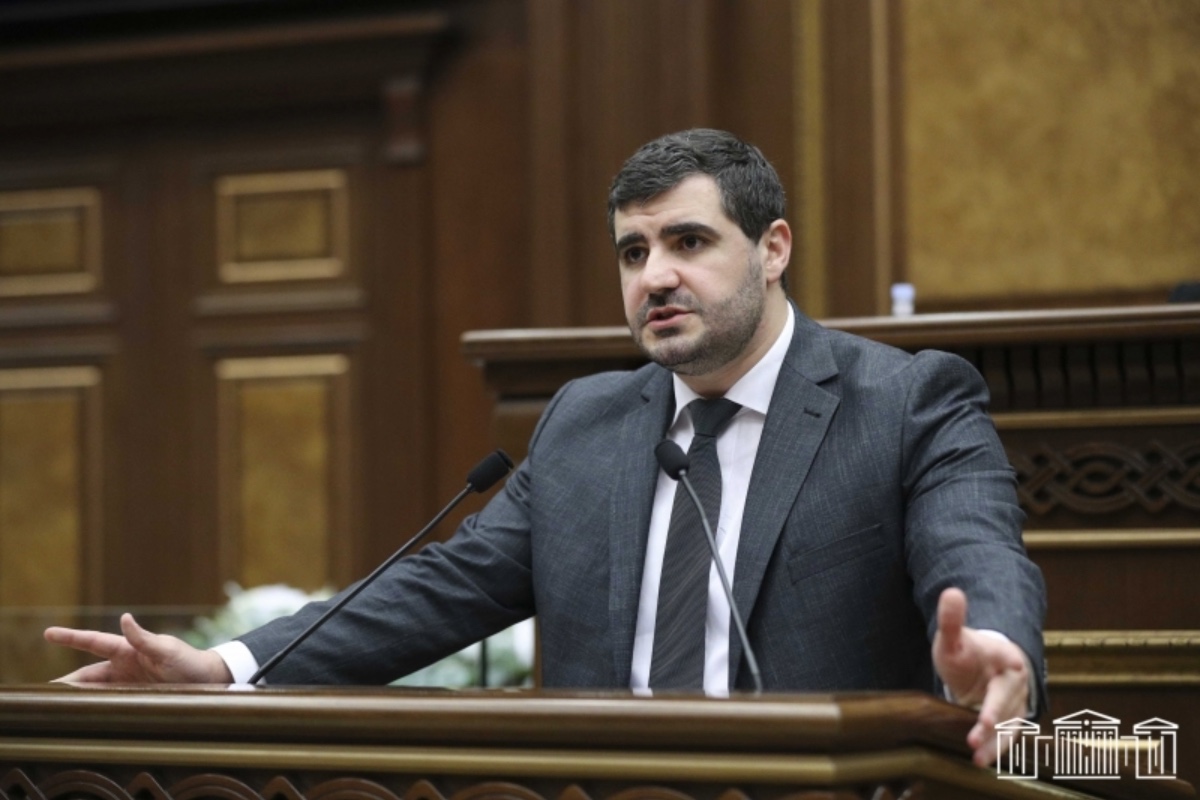
Armenian Parliament Speaker Ruben Rubinyan rejected that accusation, insisting that Yerevan has been transparent with Moscow and has taken no steps intended to damage bilateral relations. He instead pointed to Russia’s growing restrictions on Armenian exporters, arguing that such measures contradict the EAEU’s principle of the free movement of goods. Rubinyan suggested that pressure from Armenia’s EAEU partners is helping drive Yerevan toward greater economic diversification and closer ties with Europe.
The exchange underscores how quickly Armenia-Russia relations are being redefined.