


The Three-Body Problem
When improbabilities coincide, the outcome is unknown

A few things coincided recently, all in the same week, that were very difficult to imagine:
-
-
- The last known survivor of the Armenian Genocide passed at the age of 112.
- The State of Israel recognized the Genocide.
- The Armenian Government didn’t officially welcome the development.
-
- The Last of the Mohicans: Remnants of the Sword
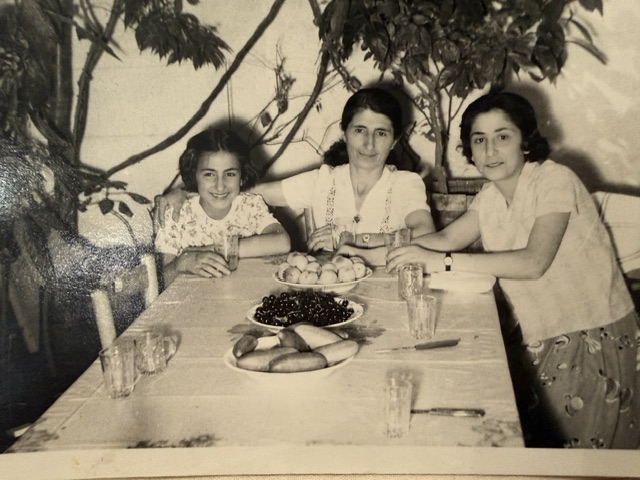
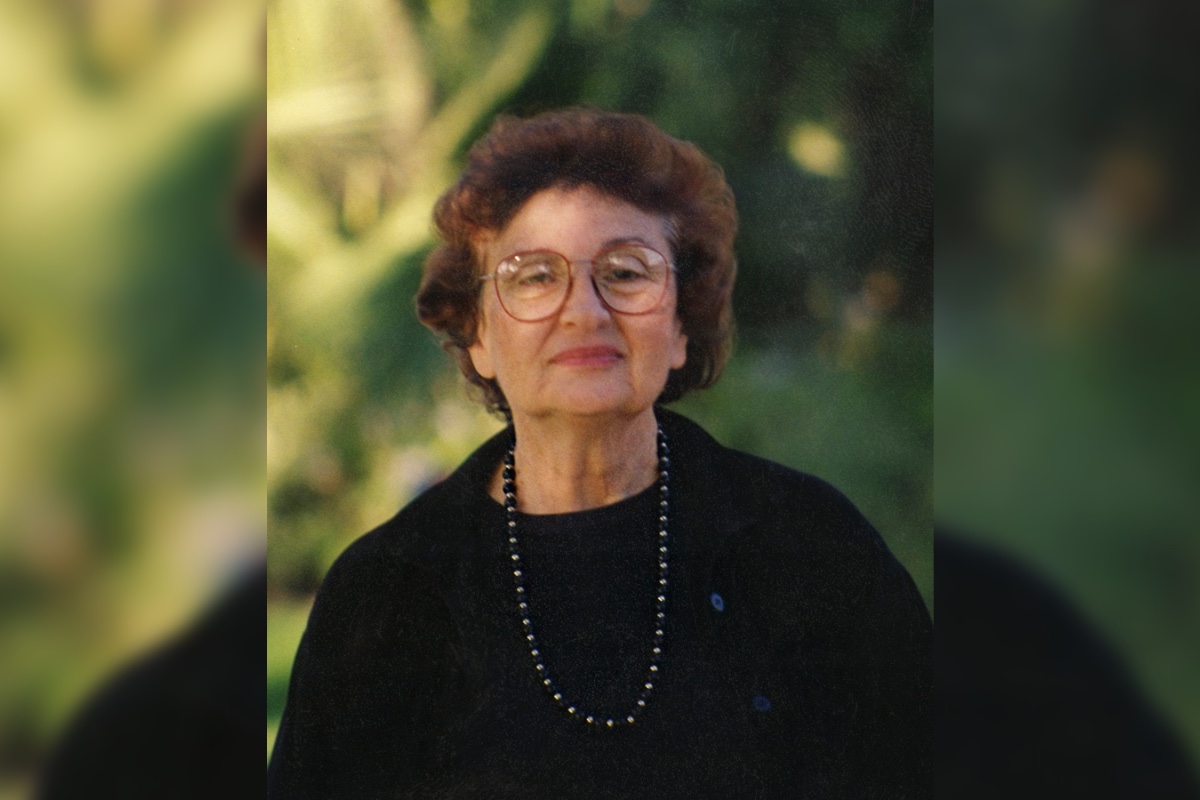
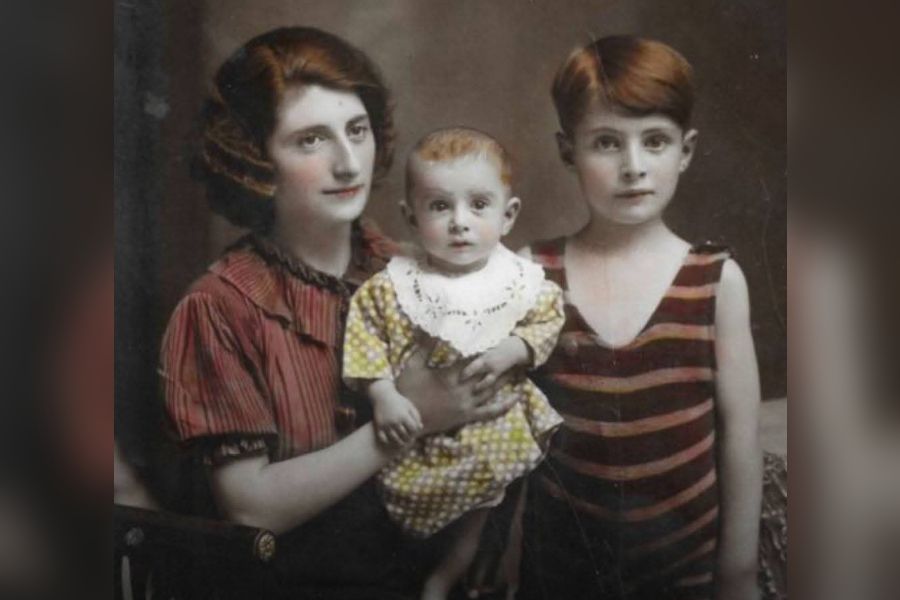
Mary (Ouzghoushian) Vartanian was born on August 17, 1914, in historical Aintep. In modern-day Turkey, the city is known as Gaziantep. Although many locality names were changed to cover traces of the indigenous Armenian population, this alteration was somewhat different, or denoting a Freudian slip: the root was preserved and the prefix “gazi-” was added, which Ottoman rulers used to refer to conquests.
It is a familiar fact that April 24, 1915, marks the official beginning of the genocide, when Armenian intellectuals were rounded up and never seen again. It is also common knowledge that massacres were prevalent even prior to this date. What is less known is that after the most intense phase that lasted throughout 1916, some Armenians eventually returned to their homes in different cities. During the famines and epidemics of world war, death was sometimes as certain in newfound refuge cities.
So, with the slightest hope offered by the victorious powers that the war was ending—and Armenians would not only live in peace, but even gain independence (a promise eventually broken)—many preferred their own roof over their heads. That dream lasted only for a few years and soon Armenians in Sis, where the Catholicosate of Cilicia was based, Aintep and other cities received an ultimatum: leave or face the same fate. When you are considered “remnants of the sword,” the threat must be taken seriously.
Mary’s family first fled and relocated to Syria, then Lebanon and finally, Boston. She was famous for many things, including her needlework, adorning her embroideries with crosses, Armenian symbols and most skillfully with the inscription “Armenians, Never Forget the Genocide.”



Two things stand out.
First, the audience was always Armenians, not the rest of the world – she had witnessed too many broken promises of justice by the civilized world to place any hope there.
Second, the fact that Armenians needed a reminder—shouldn’t that be taken for granted? One of the most confounding facts to a descendant of genocide is learning that some survivors chose to forgo their identity in their new life. This has been recorded in many cases of severe trauma. A first reaction is of judgment: how could one betray memory and justice? This was my own experience, until recently. Armenians today finally understand how that “betrayal” was possible after the 2020 Nagorno-Karabakh war and 2023 exodus. The psychological pain of such events can sometimes be so immense to survivors that suppression becomes the only form of survival. And so, judgment is not an option.
But neither is capitulation. With this understanding, Mary’s embroideries become all the more relevant. Even the most exemplary countries, more often than not, will default to prioritizing their economic and strategic priorities versus pursuing justice for others where there is no benefit. History testifies that the opposite scenario sometimes transpires—this is the exception, but it still inspires hope in humanity.
- Which brings us to our second coinciding improbability: the State of Israel officially recognizing the Armenian Genocide.
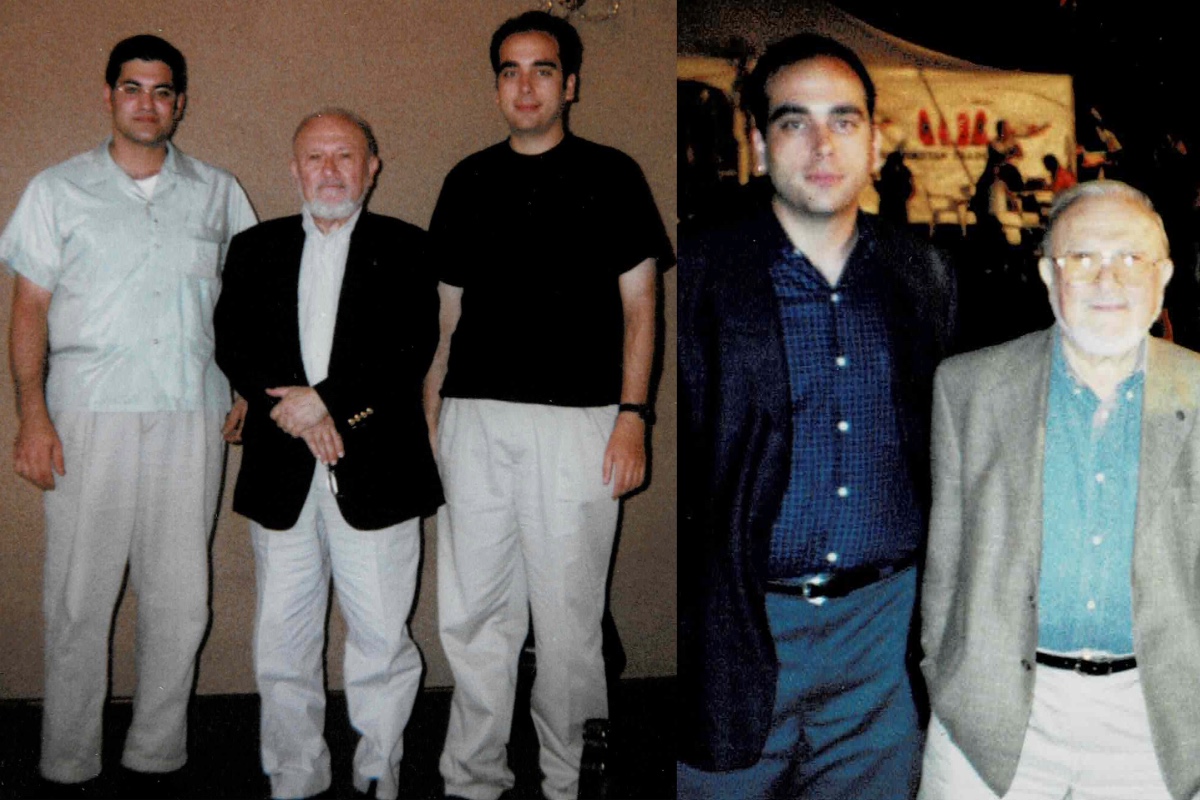
Raphael Lemkin, a Polish Jewish survivor of the Holocaust, coined the term for the crime. When CBS journalist Quincy Howe interviewed him in 1949, asking for some background, he replied: “I became interested in genocide because it happened so many times. It happened to the Armenians. And after the Armenians…Hitler took action.” If a word is neologized based on certain events, that word becomes an accurate description of those events.
As much as any other entity, the State of Israel has always been certain of the historical facts. The delay for an official position wasn’t because of indecision on the veracity of the genocide by Israeli politicians. Rather, the reticence had been “pragmatic,” clearly articulated as prioritizing its relationship with the Republic of Turkey. The rationale proposes that if great powers practice realpolitik, why should a small nation act any differently?
Which is why the Armenian world is divided on how to accept this development. Some have welcomed it, while others have denounced it as politically motivated. Is there a solution to this conundrum? One thing that cannot be denied, politics has always been at play: during past recognitions of the Armenian Genocide, throughout the Nuremberg trials, and while sanctions were in place against the apartheid government of South Africa. In other words, it should be uncontroversial to admit that being apolitical is nearly impossible.
If the politicization of justice renders its pursuit unworthy here, then it would be worthless everywhere and in every circumstance. With the logic of an apolitical barometer, Lemkin should have never toiled to coin the term, nor should he have tirelessly lobbied the United Nations to make the mass destruction of groups a crime under international law. By further extrapolating that logic, all courts would cease to exist, justice would become unapplicable and the most basic of rights, untenable. Thus, we have to accept a priori the uncomfortable presence of politics and that justice late is still justice delivered. Consequently, I would recommend unequivocally welcoming this development. Digin Mary and her generation struggled hard for recognition; they would, as well. (It goes without saying, that if the recess of the Knesset is used as an excuse to pressure Turkey but not finalize the bill, this would bring the issue to a new, and worse, low).
….
Speaking of the inability to be apolitical, this writing would contradict its rationale, were it not to mention two political realities connected to this conversation. The first is the state of the Palestinian people, and the second is the turmoil in the Armenian quarter of Jerusalem. Injustices here are also at play, and while these subjects cannot adequately be addressed in this piece, it can underline a lesson.
The Israeli Government’s statement was, “It is never too late to do the right thing.” This writing in essence agrees with that statement, as did Dr. Martin Luther King Jr., who famously declared during his 1964 speech at Oberlin College: “The time is always right to do what is right.”
Welcoming the courage of one party in overdue recognition should encourage the recipient of justice of the same bravery. Regardless of the inconvenient timing, we appreciate and are inspired by this honorable stance, and attempt to follow the same path, even though the two political circumstances referenced above have been even more challenging topics.
I wonder, what would Lemkin say? Likely, that the outcome will be the litmus test.
October 7 was undeniably atrocious. The war that followed—even if we take for granted the official position, whereas everything is being done to minimize the suffering of the innocent—results on the ground are once again, undeniably, atrocious. Consequently, there is much disagreement on how to qualify the war. Israel has the right to live in peace without fear of terrorism. Palestinians have the right to live in peace without fearing displacement. There are numerous perspectives on what led to October 7th, and what is playing out behind the scenes. No one yet knows with certainty the intentions and outcomes. They will be clear once the dust settles, and that is when Lemkin will pronounce his judgment.
A century ago, Turkey failed the litmus test; for this reason, there was no doubt in Lemkin’s mind: it was genocide, from planning to completion. Aintep is a perfect case study. French and Turkish forces clashed in the city in 1921, with an eventual French victory. Ultimately, due to the signing of treaties, they decided to retreat. The Armenian population of Aintep had witnessed countless attempts to uproot them. Still, they were hopeful that with the end of war and the dawn of a new government, they would finally be offered the same rights as their fellow citizens of Turkish background. Instead, they were offered an ultimatum: “leave (as remnants of the sword) or die (by the sword).” Turkey, once again, and as a final solution towards a state of solely one ethnicity, chose genocide.
- The final coinciding improbability: the victim shrugs recognition of justice
To survivors, every new advocate is a development to cherish, for they are aware that only through proper recognition can future occurrences of the crime be prevented.
This is why the unwillingness of the Armenian Government to welcome the developments from Jerusalem has stunned many.
The same Armenian Government had the courage to recognize Palestinian statehood in 2024. Palestinian authorities officially greeted the move: “This is a victory for rights, justice, legitimacy and the struggle of the Palestinian people for liberation and independence. Thank you, our friend Armenia.” What is noteworthy? Armenia was nevertheless one of the last countries to do so. Imagine if the Palestinian response would have been a cold shrug. The official perspective of the Armenian Government on Israel’s recognition: “Not entering into the issue of the weaponization of the Armenian Genocide is in the interests of the Republic of Armenia.”
This piece earlier established that an apolitical view of the world has no merit. Tangentially, it goes without saying that weaponization of any crime is disgraceful, as it adds insult to injury. On the other hand, it would be in the worst interest of Armenia, if the emancipation of Israel from the master weaponizer of the Genocide, Turkey, leads it to now adopt the role of surrendering truth to realpolitik.
It is painful, but sufferable, when a nation with a similar history and pain doesn’t empathize. It becomes unbearable when a nation does this to itself. Palestine didn’t question Armenia’s motives, knowing full well the decision wasn’t reached in a vacuum and absent political considerations. What gives us the moral ground to be less forgiving?
There is another crucial reason why we should laud this overture: it proves that sacrificing human rights and ethical considerations for strategic ones might bear some fruit temporarily but will eventually always sour. The great lesson is that trying to form alliances by sacrificing at the altar of injustice is a losing battle. Only injustice reigns in the end.
As a small nation, Israel took realpolitik to heart but reached a precipice. Let us not refuse to learn the lesson that has already been taught, and let us not embark on the journey that has already been traversed where the destination is an abyss. Yes, let us pursue the interest of the Republic of Armenia, and if that entails novel relations with genocidal neighbors, so be it. But by God, let us have the iron hearts to never offer up on the negotiation table that which is most sacred.
Conclusion: Mary reminds us of what really matters.
Earlier I spoke of generational trauma and the refuge many find in suppression. Some suffer so unbearably that it becomes their only recourse. Fortunately, most of us won’t have to go down that road. Mary lived the genocide twice, once in 1915 and once again in 1922. But she remained fierce, always. God blessed her with six children, 15 grandchildren, 21 great-grandchildren and two great-great-grandchildren.
She also gave birth to countless embroideries and baptized them Armenian, while simultaneously etching each uniquely beautiful work of art with the trauma of the genocide: “Armenians, Never Forget the Genocide.” Why? Because she believed in the ultimate victory of humanity, and her hope stemmed from witnessing a selfless sacrifice once upon a time on a wooden cross in Jerusalem—a symbol which she meticulously depicted on her embroideries.
Digin Mary, we will continue to remember, even in the midst of unthinkable and newborn challenges, as you so bravely did for over a century. But now, it is time for you to finally rest alongside all the recipients and remnants of the sword.