Why Armenia needs a Museum of Dolls

For years, discussions about cultural development have focused on creating entirely new institutions. Yet cultural policy is about building from scratch and recognizing when an existing initiative has matured into an institution worthy of independence. The case for Armenia’s first Museum of Dolls is such an example.
Over the past decade, Yerevan has witnessed sustained public interest in exhibitions dedicated to dolls. From the Hovhannes Tumanyan Museum and the Yeghishe Charents House-Museum to the National Center of Aesthetics, these exhibitions have consistently attracted visitors, demonstrating that dolls are far more than childhood toys. They are works of art, historical documents, expressions of craftsmanship and carriers of cultural memory.
Around the world, doll museums preserve far more than playthings. Their collections document changing fashions, domestic life, theatrical traditions, artistic movements, gender roles, and concepts of childhood. Dolls occupy a unique position at the intersection of art history, material culture, ethnography, design and social history. They offer an intimate lens through which to understand the everyday lives of past generations and the cultural values embedded in ordinary objects.
Armenia has already laid the foundations for such an institution. In 2017, the Gallery of Dolls opened as a public-private initiative. Although financial and administrative challenges prevented its long-term survival, the idea itself did not disappear and found itself a new home at the Yerevan History Museum.
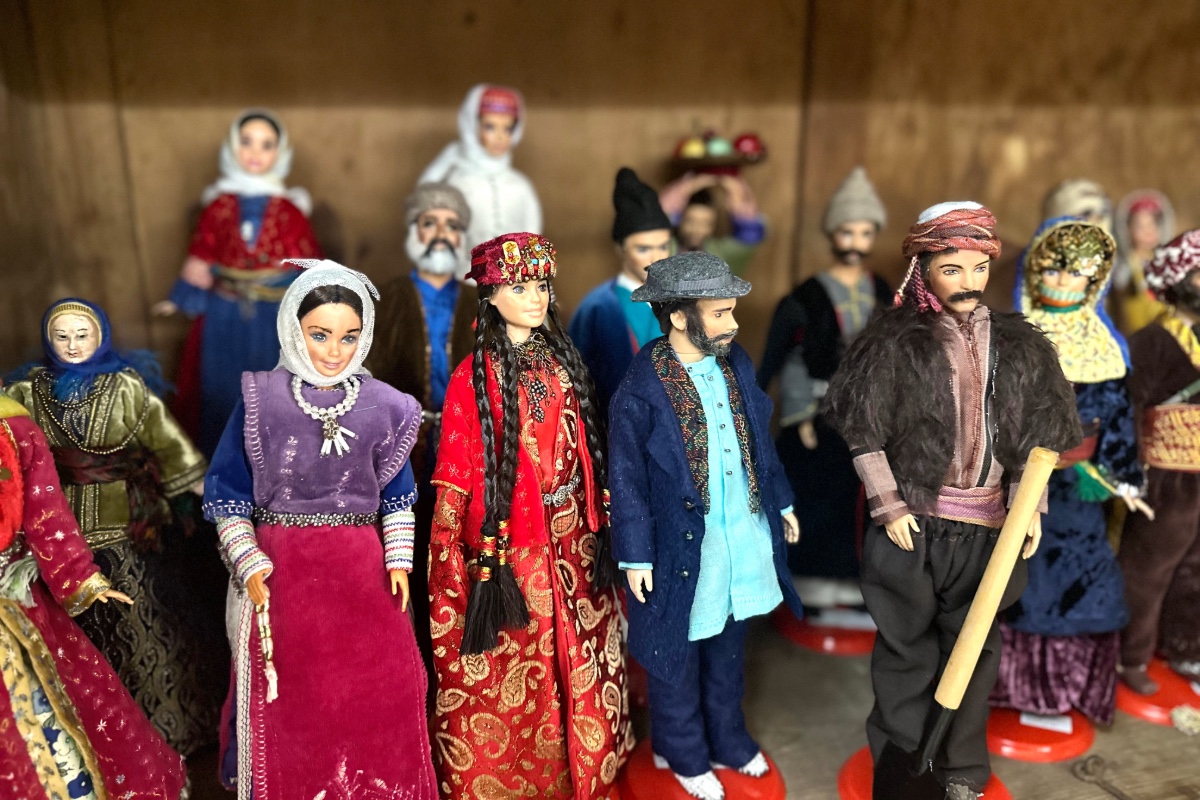
In 2023, the museum established the permanent exhibition Doll Stories, curated by Marina Khachmanukyan around her collection of nearly 1,000 dolls. Rather than functioning as a temporary exhibition, it has evolved into what can best be described as a “museum within a museum” — a specialized collection with its own narrative, identity and growing audience.
The exhibition demonstrates how dolls can enrich museum interpretation. Displayed among authentic late 19th- and early 20th-century furniture, the objects become part of reconstructed historical interiors rather than isolated artifacts behind glass. Visitors encounter the dolls and the social worlds they once inhabited.

Among the highlights is a 115-year-old boudoir doll known as Spanish Woman, once owned by Sofia Akhsharumova of the Armenian nobility in Tiflis. The exhibition also features 96 dolls created by London-based artist Alice Martirosyan, each dressed in the traditional costumes of Armenia’s historic provinces, alongside works by prominent Armenian doll artists, including Mari Yerkat. Together, these objects reflect the richness of Armenian artistic traditions, craftsmanship and historical memory.
Perhaps the strongest argument for a Museum of Dolls lies in public response. Despite limited promotional resources, attendance at Doll Stories has grown steadily, largely through word-of-mouth. This sustained interest demonstrates that the exhibition fulfills a genuine cultural demand.
A Museum of Dolls would do far more than provide additional exhibition space. It would create a permanent center for conservation, research, education and the professional recognition of Armenian doll artists, whose work is too often categorized as handicraft or souvenir production instead of being acknowledged as an important form of decorative and applied art. Such a museum would also strengthen Yerevan’s cultural landscape.
Importantly, this museum would not have to begin from nothing. The collection already exists. Professional curatorial work has already been accomplished. The audience has already been cultivated. In many countries, specialized museums have evolved from successful permanent exhibitions before becoming independent institutions. Armenia now has the opportunity to follow the same path.
Until that vision becomes reality, visitors can already experience its beginnings. Housed within the Yerevan History Museum, Doll Stories offers a compelling glimpse of what a future Museum of Dolls could become. It is more than a permanent exhibition — it is a living argument for why dolls deserve a dedicated institution of their own. Those interested in exploring this remarkable collection can visit the exhibition at the Yerevan History Museum, located at 1/1 Argishti Street in Yerevan, where it continues to welcome visitors throughout the year.
The question, therefore, is no longer whether Armenia needs a Museum of Dolls. The foundation has already been laid. What remains is a cultural policy decision: whether to recognize this successful initiative not merely as a popular exhibition but as a permanent national institution dedicated to preserving an important and often overlooked dimension of Armenia’s cultural heritage.