




YEREVAN — Armenia’s political landscape is growing increasingly contentious ahead of the June parliamentary elections, as the government seeks European Union support to counter potential Russian interference while announcing a pension increase that critics describe as a pre-election incentive.
Prime Minister Nikol Pashinyan recently confirmed that starting April 1, pensions in Armenia will rise, with lower pensions increasing by 10,000 drams and higher pensions rising by smaller amounts. Speaking during an early morning livestream, Pashinyan said the increase does not include additional reimbursements, meaning the effective rise would exceed the announced figures.
The prime minister attributed the timing of the decision to two factors: economic growth recorded in 2025 and the introduction of universal health insurance on Jan. 1. He also thanked citizens who work and pay taxes, saying the measure was made possible by their contributions.
However, the announcement has drawn criticism from opposition figures and political observers, who argue that the pension hike is a strategic move aimed at bolstering support ahead of the elections.
They point to remarks made by Pashinyan during previous budget discussions in parliament, when he questioned how pensioners would meaningfully use a 10,000-dram increase and suggested that such an amount would not significantly impact their quality of life.

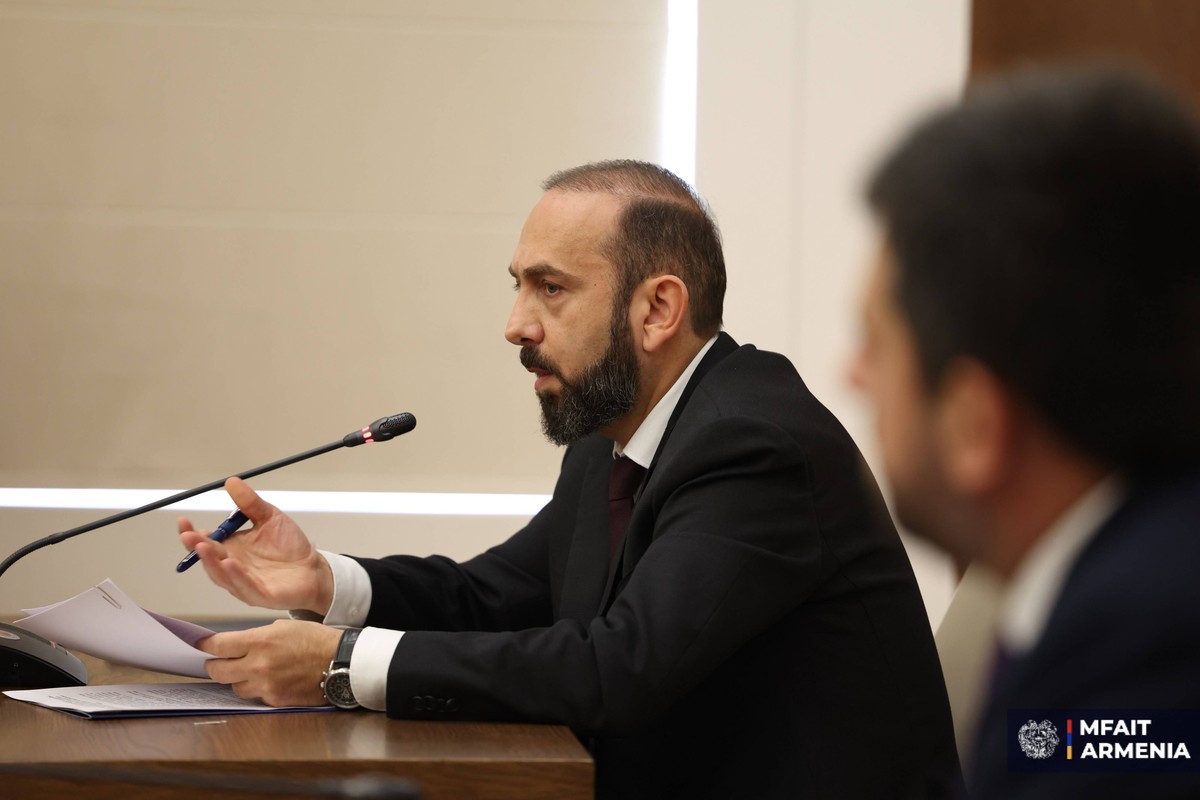
Against this backdrop, the government has also sought assistance from the European Union (EU) to safeguard the upcoming elections from alleged Russian interference. Armenian Foreign Minister Ararat Mirzoyan formally requested the deployment of an EU “hybrid rapid response team” to counter disinformation and other potential destabilizing activities.
The opposition argues that the government is framing its request for EU support as a safeguard against potential foreign interference in the electoral process, a threat that opposition figures say is being overstated to justify such assistance.
Gegham Manukyan, a lawmaker from the Armenia Alliance and member of the Armenian Revolutionary Federation (ARF) Armenia Supreme Council, told Pastinfo that the authorities’ logic effectively implies direct political backing for the ruling party.
“Instead of this approach, the authorities could simply ask the Europeans to send police or other forces to surround opposition offices and detain opposition figures during the elections,” Manukyan said, arguing that the proposal effectively amounts to deploying significant EU resources in support of the government and the ruling Civil Contract party’s campaign.
According to Manukyan, it is difficult to imagine a more overt form of interference in Armenia’s domestic affairs or a more direct influence on the electoral process. He drew parallels with EU involvement in Moldova’s elections, suggesting that a similar scenario in Armenia could unfold on an even larger scale. He further claimed that European engagement could be accompanied by influence from Turkey and Azerbaijan.
Manukyan also argued that European discussions appear to assume not only holding parliamentary elections but also a subsequent constitutional referendum. He noted that no official decision has been adopted by the National Assembly or through any other formal mechanism to initiate such a referendum. In his view, references to a possible referendum reflect prior commitments made by the authorities to Azerbaijan rather than an established domestic legal process.
Political commentator and editor Eduard Saribekyan weighed in on the pension decision, sharply criticizing what he described as a politically motivated shift in the government’s position.
Saribekyan noted that only a month earlier, Pashinyan had publicly argued that a 10,000-dram pension increase would be largely meaningless, suggesting it would not substantially improve pensioners’ living standards.
“Now,” Saribekyan wrote, “the government has decided to grant that very increase after all.” He argued that neither the dram’s purchasing power nor pensioners’ financial literacy had changed in the span of a month, concluding that the measure appears timed for electoral effect.
According to Saribekyan, the April 1 implementation date means pensioners will receive higher payments in early May — weeks before the parliamentary elections — ensuring the increase remains fresh in voters’ minds.
Saribekyan further pointed out that the 2026 state budget does not provide for a pension increase, raising questions about funding sources.
Political analyst Vladimir Martirosyan also criticized the timing and rationale of the pension increase, framing it as a politically driven rather than socially driven decision.
Martirosyan argued that pensions were not raised when retirees most needed support but rather “when the government’s ratings needed it.” According to him, the current system appears to calculate budgetary and social policy decisions based on polling data rather than socioeconomic indicators.
He described both the earlier refusal to raise pensions and the current decision to do so as politically driven moves, suggesting that previously promoted narratives — including those centered on “peace,” a “new Constitution and Fourth Republic,” the TRIPP initiative, opposition to the former authorities, tensions with the Armenian Apostolic Church or claims of “hybrid warfare” — have failed to significantly shift the government’s approval ratings.
Martirosyan contended that the government’s current approval level represents a political floor that is difficult to fall below, arguing that it has exhausted much of its public trust, limiting its ability to expand support through messaging alone. In this context, he characterized the pension increase — rejected a month earlier but now adopted — as a measure of “political self-preservation.”
Martirosyan added that the measure may prove electorally effective. He said many political forces involved in the upcoming elections appear to rely heavily on public relations strategies, social media management, polling data and algorithm-driven analysis rather than substantive political thought or non-linear political strategy. With approximately 100 days remaining before the vote, he argued, direct engagement with voters may ultimately prove decisive.

With the support of the EU and the West in general, Pashiyan’s vote rigging and “win” will be ensured in the upcoming elections. No doubt about that. Such Western-backed vote rigging and “wins” of pro-Western candidates, already happened in Moldova last year. These kinds of interventions from the West used to be covert; now they are happening overtly and blatantly. This is particularly shameful, because of the West’s holier-than-thou arrogance, preachiness and hypocrisy on democracy, free and fair elections, and human rights.
Headlining an article is an expressive as well as a legal art, because it is a fact for a readership, inundated with information, to pre-dispose themselves towards an article by just reading the title and often times even draw a conclusion without dwelling further onto the text.
Having made that statement, I am left with the impression that Hoory Minoyan is saying, without having it stated, that Russia is interfering in the internal affairs of the State of Armenia but that the Armenian government should not seek EU election support to hinder, or counter the pro-opposition Russian interference.
This is yet another iteration of Pashinyan’s election tricks so close to the election time. A coincidence? I think not! Simply put, this is bribe money to secure votes. Assuming his two former elections were not rigged, he won the 2018 election by about 70.5% of the votes casted when he was practically unknown and very few people knew who he was and what he really stood for. They would have voted for anyone to get rid of candidates from former Republican Party led by Sargsyan at the time. In 2021 post-war election, he won by about 54%. This is when voters got to know what a dishonest flip-flopping incompetent and unpatriotic charlatan they had voted for previously. Based on these figures, a downward trend in election results, he realizes he is least popular today than he ever was so he is naturally worried he is going to lose. Losing should be as natural as winning in any election in normal situations. But in this case, for Pashinyan losing the election will have major consequences for his and his party’s future and he will use any trick and tool in his toolbox to avoid this and to make sure he wins. He is in a panic mode making excuses by sounding the alarms ahead of the election. The EU election support is the last thing the country needs. It was the EU for selfish reasons, I’m convinced, that bribed Pashinyan behind closed door meetings to make concessions to the enemy. It was the EU after all that instead of punishing our enemy for ethnic-cleansing of Artsakh, instead increased its energy imports from that terrorist cesspool by 30% to make up for the difference and deficiencies caused by EU sanctions on Russian energy imports in support of Ukraine. In return, the EU ramped up financial support, aka bribe money, for Armenia (2024-2027) significantly by 270 million Euros ($290 USD). In his turn, Pashinyan is trying to secure election results in his favor, not by winning new votes which is an impossibility given all the damages he has caused, but by trying to regain all the votes he has lost over the years from his former loyal supporters who finally woke up and realized Pashinyan had very skillfully pulled the wool over their eyes!
I’m certainly with you, it is fixign the upcoming election, so sad for Armenia
Utterly shameless attempt at bribing the electorate and rigging the June 2026 elections.
France, The UK, and The US are fully mobilized to save Pashinyan’s destiny in June 2026. What are the measures adopted by the “Civilized West” to save the destiny of the autocratic Prime Minister of Armenia?
The European Union in partnership with The US, adopted in 2024 a “Resilience and Growth Plan for Armenia”, and decided to transfer to the Pashinyan regime EUR 270 million in grants over the next 4 years. EU President von der Leyen emphasized the fact that the financial rewards showered on Pashinyan are an integral part of the appreciation the EU has for Pashinyan’s anti Russian policies. In the Berlaymont building, serving as the headquarters of The European Commission, the executive body of the EU, Ms. von der Leyen congratulated Pashinyan for his “Crusade” against Russia and stated:
“I also welcome the measures that Armenia has taken against the circumvention of our sanctions against Russia. In particular, to make sure that lethal equipment and technologies do not end up in the hands of the Russian military. This shows that the European Union and Armenia are increasingly aligned in values and interests.” In othet words, Pashinyan was reassured that as long as he is following like a docile lackey the instructions of The EU, his political survival in June 2026 will be guaranteed by The EU, and more specifically France and The UK.
What is France currently doing to polish the image of Pashinyan?
A French NGO operating under the legal name of Equal Rights and Independent Media (ERIM) is making valuable contributions to Pashinyan’s effort to destroy The Armenian Apostolic Church. A journalist, Davo Barseghyan, who recently wrote an article titled “Pashinyan’s election campaign could lead to a split in Armenian society” made the following valid criticisms of the negative role played by ERIM:
“Thus, a foreign organization designed to strengthen civil society is contributing to its division, together with the government.
An important fact is that this same organization will implement the ProElect project during the parliamentary elections in Armenia, which is intended to counter misinformation and protect participants from various types of electoral manipulation. This fact indicates that Equal Rights and Independent Media, under the guise of an independent organization, will be used by Pashinyan as a weapon to discredit his opponents.”
A visit to the website of ERIM reveals the key missions pursued by the French NGO:
“ERIM promotes a community of human rights supporters and advocates united by shared values. We seek to support human rights activists and organisations so that they can better serve their communities and better advocate for their rights. Our actions include promoting the rights of women, minorities and to combat discrimination against lesbian, gay, bisexual, transgender, and intersex persons. We also work to strengthen international human rights support coordination in France.”
Who finances the activities of ERIM?
On a long list of donors you will find the following names:
– National Endowment for Democracy (NED)
– Open Society Foundations (OSF) or George Soros
– The UK CSSF
– DRL Democracy, Human Rights, and Labor
– USAID
No one has scrutinized the destructive role of NGOs more extensively than Prof. F. William Engdahl. He was born in Minneapolis, grew up in Texas, and pursued an academic career at Princeton University, followed by a graduate study in comparative economics at Stockholm University, where he worked as a lecturer and investigative journalist focused on US and European NGOs and their clandestine activities worldwide. For the last 30 years, Prof. Engdahl has been living in Germany where he wrote and published a book titled “Geheimakte NGOs’“ (Secret File NGOs).
According to Prof. Engdahl, “During the Reagan Presidency very damaging scandals were becoming public about CIA dirty operations around the world. Chile, Iran, Guatemala, the top secret MK-Ultra project, the student movement during the Vietnam War to name just a few. To take the spotlight away from them, CIA Director Bill Casey proposed to Reagan creating “private” NGOs,…doing what the CIA did, but privately.
The money was often channeled via USAID of the State Department to hide its origin. Every major regime attack by the US Government since then including the Solidarnosc in Poland, the Yeltsin CIA-backed Russia coup, the 2004 Ukraine Orange Revolution, the 2008 Tibet riots, the Arab Spring of 2011 to today—all have been done by this group of very select ‘democracy’ NGOs.”
It is a public knowledge that, at a point where Pashinyan’s newspaper Haykakan Zhamanak (Հայկական Ժամանակ) was edging close to bankruptcy in the late 1990s, The National Endowment for Democracy (NED) on behalf of the CIA channeled more than $200,000 over a period of several years to sustain the operations of Nikol’s newspaper. For more details watch the following interview:
Soft-power: Spreading democracy or demagoguery? Novelty with Levon Baronian
https://www.youtube.com/watch?v=E6ynzUyAO-c
What about the British NGO known as CSSF?
It is a the British outlet of what the MI6 cannot do openly and must imp;ement privately. It is managed collectively by various UK government departments, primarily the Foreign, Commonwealth and Development Office (FCDO), and reports to the National Security Council (NSC) where MI6 has a major say in the decision making process, especially when issues at stake address foreign conflicts, pro-British governments’ stability, and security challenges overseas that pose a threat to UK national interests.
CSSF operates globally, and delivers close to 90 programs in over 70 countries, mostly covering activities such as security and justice sector reform, counter-terrorism, and provision of non-lethal equipment. On April 01, 2024 The CSSF was succeeded by the UK Integrated Security Fund (ISF).
What else The UK is doing to enhance Pashinyan’s chances of winning the June 2026 Elections?
Last week a historic announcement was made by The British Embassy in Yerevan. For the first time since the independence of Armenia, British Army officer, Major Thomas Shorland Ball, was appointed as the first resident Defence Attaché to Armenia. His boss, British Minister of State for Defence Vernon Coaker indicated that Major Ball’s duties will include the following responsibilities, without excluding additional future duties:
Defense-sector reforms, personnel training, military education, and cybersecurity meaning neutralizing any attempt made by Russia to use electronic means to undermine Pashinyan’s chances of scoring a major success during the elections of June 2026.
Major Ball will rely heavily on JTRIG-the Joint Threat Research Intelligence Group, which is a branch of the British spy agency GCHQ-Government Communications Headquarters, the UK’s signals intelligence agency, that runs missions similar to the NSA or The Canadian CSE.
Publicly available documents indicate that JTRIG’s primary mission in Armenia will be totally focused on undermining Russian influence by discrediting any and every group or individual who opposes the warped policies of the “Supreme Ruler” of Armenia, Nikol Pashinyan.
What kind of measures will be mobilized by JTRIG to undermine Russian anticipated meddling in Armenian elections of June 2026?
– “Persuasive Communication” such as releasing on YouTube videos designed to discredit, promote distrust, dissuade, deter, delay and disrupt pro-Russian productions surfacing on YouTube.
– Setting up on all social platforms, fake or real paid groups/forums that monitor and discredit discussions favoring opposition groups in Armenia, from The Armenian Apostolic Church, to the smallest Armenian political party that has less than 50 members within its ranks.
– Sending spoof e-mails and text messages from fake persons mimicking real opposition political figures and accusing them of being pro-Russian agents trying to impose the Kremlin’s agenda on Pashinyan’s government.
– Using online resources to establish websites that convey inaccurate information designed to disrupt, delay, deceive, discredit, deter and degrade opposition claims that Armenia has become a one-man rule authoritarian country.
– Interrupting filtering, deleting, creating, or altering the content of communications circulating within the ranks of Armenian opposition groups.
– Launching Denial of Service (DDoS) attacks to shut down websites, especially the ones conveying to the public the views of the Armenian opposition parties.
– Malware Deployment: releasing custom-made viruses to paralyze opposition computer networks.
-Releasing anonymously fake AI doctored photos that will compromise opposition figures without the presence of any electronic crumbs that will tie the activity to a pro-Pashinyan groups or institutions.
The technical jargon for all the operations mentioned above includes names such as:
UNDERPASS, SLIPSTREAM, GESTATOR, SILVERLORD, SPRING BISHOP, CHANGELING, and and and…
In the end we are puzzled and forced to confront the following questions:
What is the difference between Russian intervention in the elections of June 2026 and US-Anglo-French interference pursued in the name of a “Noble Lie” that claims to support the authoritarian regime of a “False Prophet” from Ijevan called Nikol Pashinyan?
Why do we have to condemn Russia’s meddling in Armenia’s elections, but adopt a very tolerant attitude vis-a-vis French-Anglo-US interventions in Armenia’s elections?
Needless to mention that Pashinyan has also two new campaign managers-ERdogan and Aliyev. For more details consult the following article:
The Two Election Campaign Managers Of PM Pashinyan-Erdogan & Aliyev
https://artsakhtheinadequateresponse.blogspot.com/2026/01/the-two-election-campaign-managers-of.html
It’s all politics in 2021 still reeling from the 2020 Arktash defeat which Russia sought in concurance with Azerbaijan to punish Armenia for straying in 2018, and as part of its subsequently failed plan to bring Azerbaijan closer to Russia. Russia actually welcomed Pashinyan reelection as the opposition had stated their intention to redupitate the tripartite agreement..
Israel and USA currently attacking Iran with the intention to end the clerical regime. Prepare for a change of the dynamic and context of the satus quo.