


The Region in Brief
Artsakh
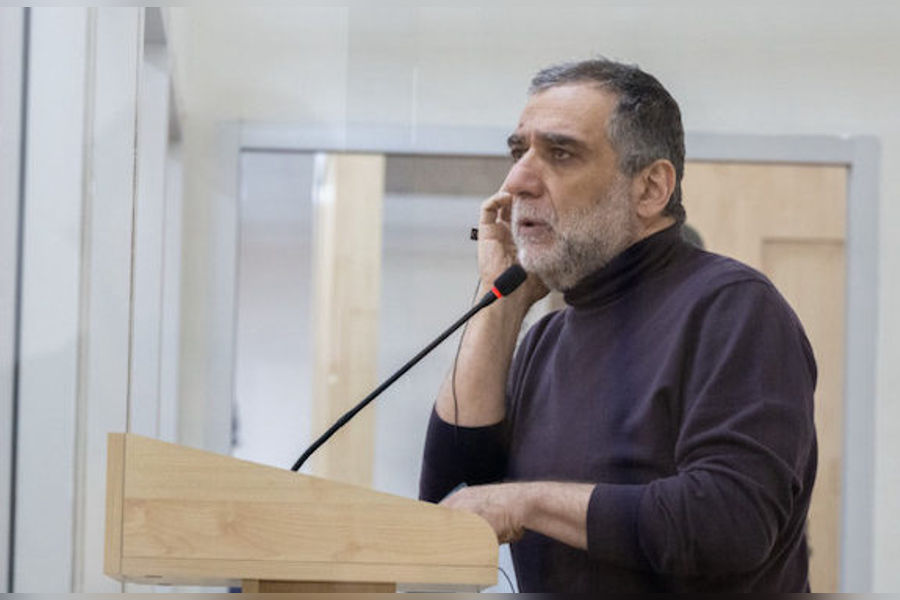
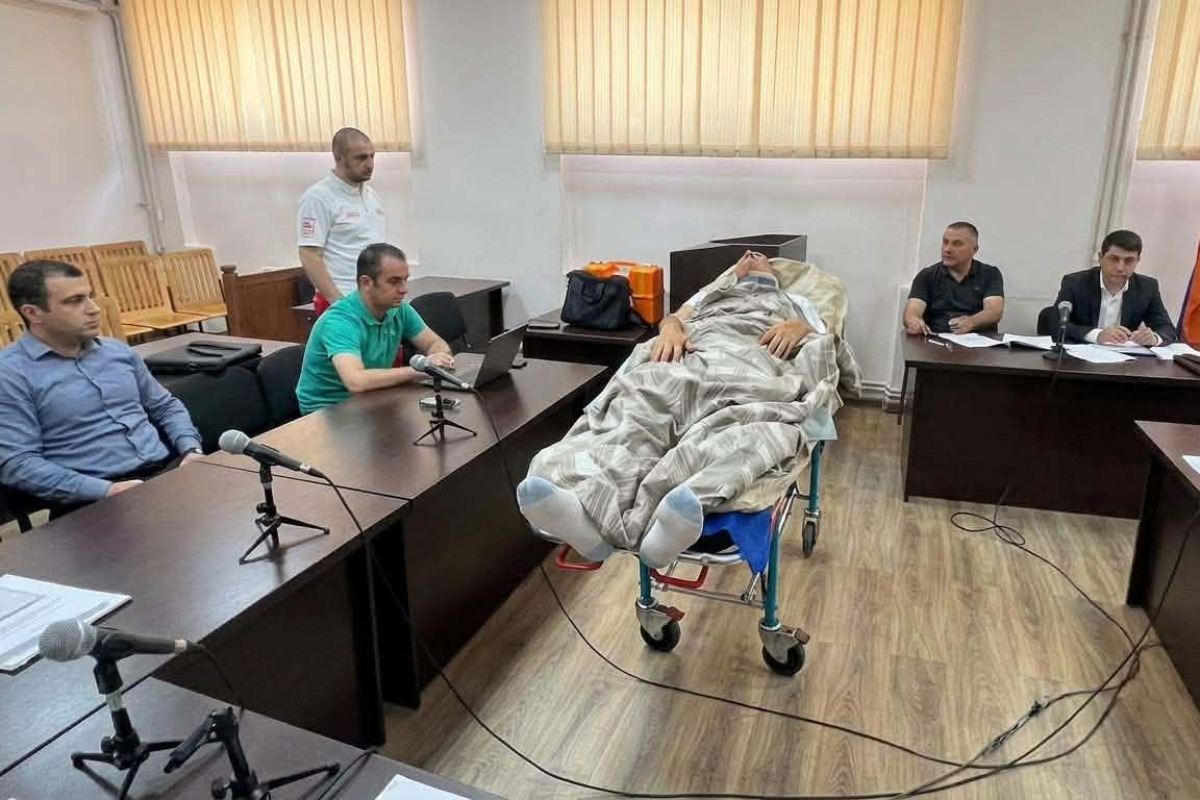
Ruben Vardanyan’s family has disclosed what they describe as his actual remarks during a recent court hearing in Baku, calling the proceedings a “judicial farce.”
According to relatives, Vardanyan shared the substance of his Feb. 10 final statement during a phone call with his family. They said he refused to participate in what he characterized as an imitation of justice, instructing his lawyer not to present defense arguments on the grounds that the proceedings did not constitute a legitimate trial.
In his message, Vardanyan said the process lacked the basic conditions of due process. Despite resistance from the judges, his lawyer refrained from offering legal arguments or justifications. Instead, Vardanyan delivered a brief address focused on dignity, responsibility and the prospect of peace based on equality.
He said he did not wish to repeat points he had made in December but chose to read two poems during the hearing. One, he noted, was particularly meaningful and related more to Armenia than to his place of detention. The poem, written in the early 16th century by Azerbaijani poet Fuzuli and translated into Russian by Vladimir Lugovskoy, reflects on power, truth and freedom of speech.

In the remarks relayed by his family, Vardanyan emphasized that lasting peace in the region can only be achieved between equal neighbors. “If one side is forced into humiliation before the other, there will be no peace,” he said, according to the family’s statement.
He stressed the need for internal renewal and self-respect, arguing that sustainable peace depends on a society’s ability to restore and strengthen itself.
Vardanyan also reiterated a point he said he repeated three times in court despite attempts to interrupt him: “Artsakh has existed, Artsakh exists and Artsakh will exist,” framing the issue as existential rather than legal. He argued that no people can simply be erased.
According to his family, Vardanyan expressed hope that the leaders of the three parties to the conflict would one day jointly lay flowers at the graves of victims of all nationalities and religions and ask forgiveness from the mothers of those who lost their sons. Such a gesture, he said, would demonstrate mutual respect and lay the groundwork for genuine reconciliation.
He further stated that he was not afraid of any verdict or punishment and was prepared to accept the outcome calmly, maintaining that the proceedings were not a true trial but a form of judgment. Vardanyan also criticized the court’s conduct, saying an opportunity to establish a foundation for long-term peace through a fair legal process had been missed.
The family’s statement concluded with Vardanyan reaffirming his commitment to representing the Armenian people during the proceedings.
Georgia
Prime Minister Irakli Kobakhidze announced that construction of nearly all major sections of the highway crossing Georgia from the Turkish border to the borders with Azerbaijan and Armenia is expected to be completed by the end of 2030.
Speaking about infrastructure development plans, Kobakhidze said the government is working to capitalize on Georgia’s strategic geographic position as a regional transit hub.
“One of our primary objectives is to develop the country’s transport and transit functions. Substantial investments are being made in this sector,” the prime minister stated.
Iran
Iranian President Masoud Pezeshkian has called for national cohesion in the face of mounting external pressure while reiterating his administration’s readiness to engage in negotiations over the country’s nuclear program. He delivered the remarks during a public gathering in Tehran marking the 47th anniversary of the 1979 Islamic Revolution.
Hundreds of thousands of people assembled in Tehran’s Azadi Square and in cities across the country to commemorate the anniversary, in what authorities portrayed as a demonstration of public support at a time of significant political and economic strain.
The anniversary comes amid heightened tensions with the United States following renewed discussions over Iran’s nuclear activities. U.S. President Donald Trump has continued to warn of possible military action if Tehran fails to meet Washington’s demands, which extend beyond uranium enrichment to include limits on Iran’s ballistic missile program.
Domestically, Iran is grappling with political divisions and economic hardship. The country is still dealing with the aftermath of a severe crackdown on protests earlier this year. The demonstrations, initially sparked by rising living costs and a sharp currency depreciation, evolved into broader expressions of dissatisfaction with the government. Thousands were reportedly killed during the unrest.
In his address, Pezeshkian urged Iranians to remain united against what he described as foreign efforts to destabilize the country. “We stand together in solidarity against all conspiracies aimed at our nation,” he told the crowd, arguing that national unity strengthens Iran’s position in the face of external adversaries. “We must continue to stand side by side.”
Turning to the unrest, the president acknowledged public grievances and expressed regret over government shortcomings. He said his administration is committed to addressing economic challenges and improving conditions. “We are prepared to hear the people’s voice. We serve the people and do not seek confrontation with them,” Pezeshkian said.
At the same time, he accused Iran’s adversaries of spreading disinformation to inflame tensions and deepen social divisions. “Those who seek to create rifts in our society aim to inflict lasting damage. We must work to heal these wounds,” he added.
Russia
Russia is interested in seeing Armenia develop as a sovereign, strong and self-sufficient state, Russian Ambassador to Armenia Sergey Kopyrkin said during a reception in Yerevan marking Diplomatic Workers’ Day.
“I am convinced that the country’s full participation in our joint integration associations effectively contributes to this goal. For example, during the 10 years of Armenia’s membership in the Eurasian Economic Union (EAEU), the country’s GDP has increased 2.5 times,” Kopyrkin stated.
The ambassador noted that the South Caucasus is feeling the impact of geopolitical instability. “In these challenging conditions, relations between Russia and Armenia have entered a new stage of adaptation to the evolving reality. Overcoming the challenges we face requires long-term political will and strategic wisdom from both sides in order to preserve and expand the accumulated wealth of bilateral cooperation,” he emphasized.
Kopyrkin also expressed hope that Armenian National Assembly Speaker Alen Simonyan’s recent visit to Moscow would provide additional momentum.
“The results of the past year confirmed that, regardless of external shocks, Russia remains Armenia’s leading trade, economic and investment partner, as well as a time-tested guarantor of the country’s energy and food security,” he added.
Turkey
Amid ongoing negotiations to normalize relations between Armenia and Turkey — including discussions on reopening the border for third-country nationals and diplomatic passport holders — M. Fırat Taşolar, the governor of Turkey’s Iğdır province, has visited the long-closed Alican (Margara) border crossing.
During the visit, Taşolar inspected customs facilities and border infrastructure at the site, which has been closed since 1993. The Turkish delegation reviewed renovation and preparatory work currently underway at the checkpoint. The visit was described as part of a plan to put the crossing into operation “in the near future.”