



Op-Eds
A government endorsed by Armenia’s enemies is not sovereign
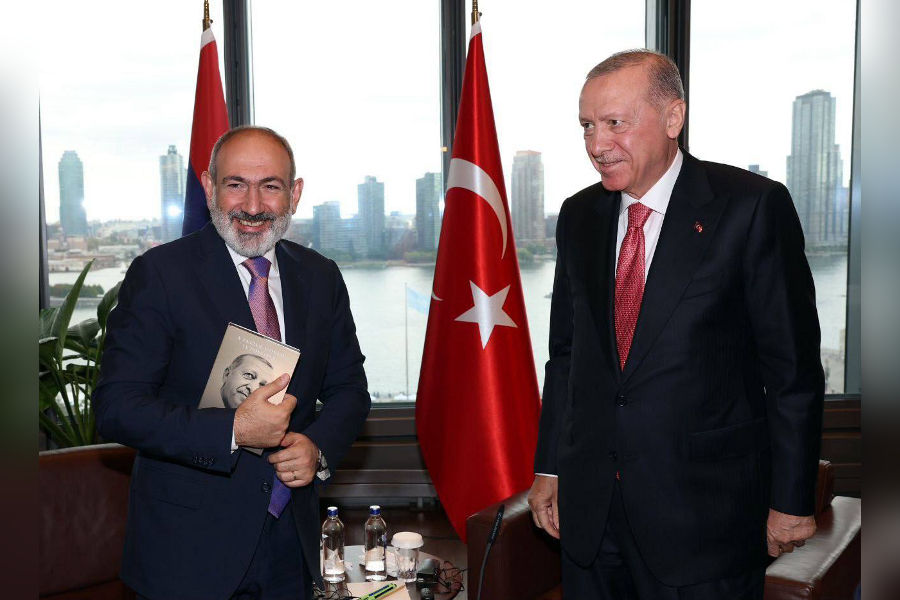
Three months after Armenia’s disastrous defeat in the 2020 Artsakh War, Onik Gasparyan, then chief of the General Staff of the Armenian Armed Forces, joined dozens of senior military officers in issuing a statement calling for Prime Minister Nikol Pashinyan to resign, asserting that the government was no longer capable of making decisions in the country’s best interests.
The extraordinary public rebuke of civilian leadership marked a rare moment in Armenia’s post-Soviet history. At the



A weakened and emasculated Armenia dictated to and controlled by Turkey and Azerbaijan, will resemble the Japanese puppet state of Manchukuo or the Nazi German puppet state of Vichy France, and Pashinyan, who meekly obliges to Erdogan’s and Aliyev’s demands and whims, already resembles the collaborationist puppet emperor of Manchukuo, Puyi (who was also the last emperor of China) or the collaborationist French prime minister Pierre Laval.
Mr Nazarian’s article rests on a dramatic premise: that any statement of support from Turkey automatically transforms Armenia’s government into a puppet regime. It’s an emotionally charged claim but one that collapses under scrutiny. The argument relies on selective history, exaggerated interpretations, and a refusal to acknowledge the basic realities of statecraft in the 21st century.
Nazarian treats a single public comment by Hakan Fidan as if it were a binding political contract.
In reality: states routinely express preferences about their neighbors’ stability.
Such statements do not confer legitimacy, authority, or control. They are often strategic messaging aimed at their own domestic audiences or at third parties.
If Turkey had said nothing, the same critics would accuse Ankara of plotting in silence.
If Turkey had criticized Pashinyan, they would claim it was interference. If Turkey expressed hope for stability, they call it endorsement.
This is not analysis it’s reflexive outrage.
Nazarian’s central thesis is astonishingly simplistic: “If your enemy says something positive about you, you are no longer sovereign.”
By that logic: Israel is not sovereign because Saudi Arabia has occasionally praised its stability. Greece is not sovereign because Turkey sometimes praises its tourism sector.
The United States is not sovereign because China occasionally praises its economic resilience.
Sovereignty is defined by institutions, territorial control, decision‑making autonomy, and international recognition, not by the emotional reactions of diaspora commentators.
Nazarian repeatedly invokes the Genocide and Artsakh to argue that Armenia must reject any diplomatic contact with Turkey.
But here’s the uncomfortable truth:
Every nation with a traumatic past eventually negotiates with its historical adversaries. France and Germany rebuilt Europe together after two world wars.
Japan and the U.S. became allies after Hiroshima and Nagasaki. Vietnam and the U.S. normalized relations despite a war that killed millions.
Diplomacy is not betrayal. Diplomacy is survival.
Armenia is small, blockaded, and surrounded, it cannot afford a foreign policy built on emotional absolutism.
Nazarian paints a picture where refusing all engagement with Turkey and Azerbaijan somehow strengthens Armenia. In reality, the opposite is true: Isolation weakens Armenia. Refusing dialogue cedes the regional agenda to others. Engagement—however distasteful—is the only path to securing borders, trade routes, and long‑term stability.
You cannot negotiate from strength if you refuse to negotiate at all.
The article treats every mention of regional connectivity as proof of Armenian subjugation. But the facts are more nuanced:
Armenia has repeatedly stated it will not accept any extraterritorial corridor.
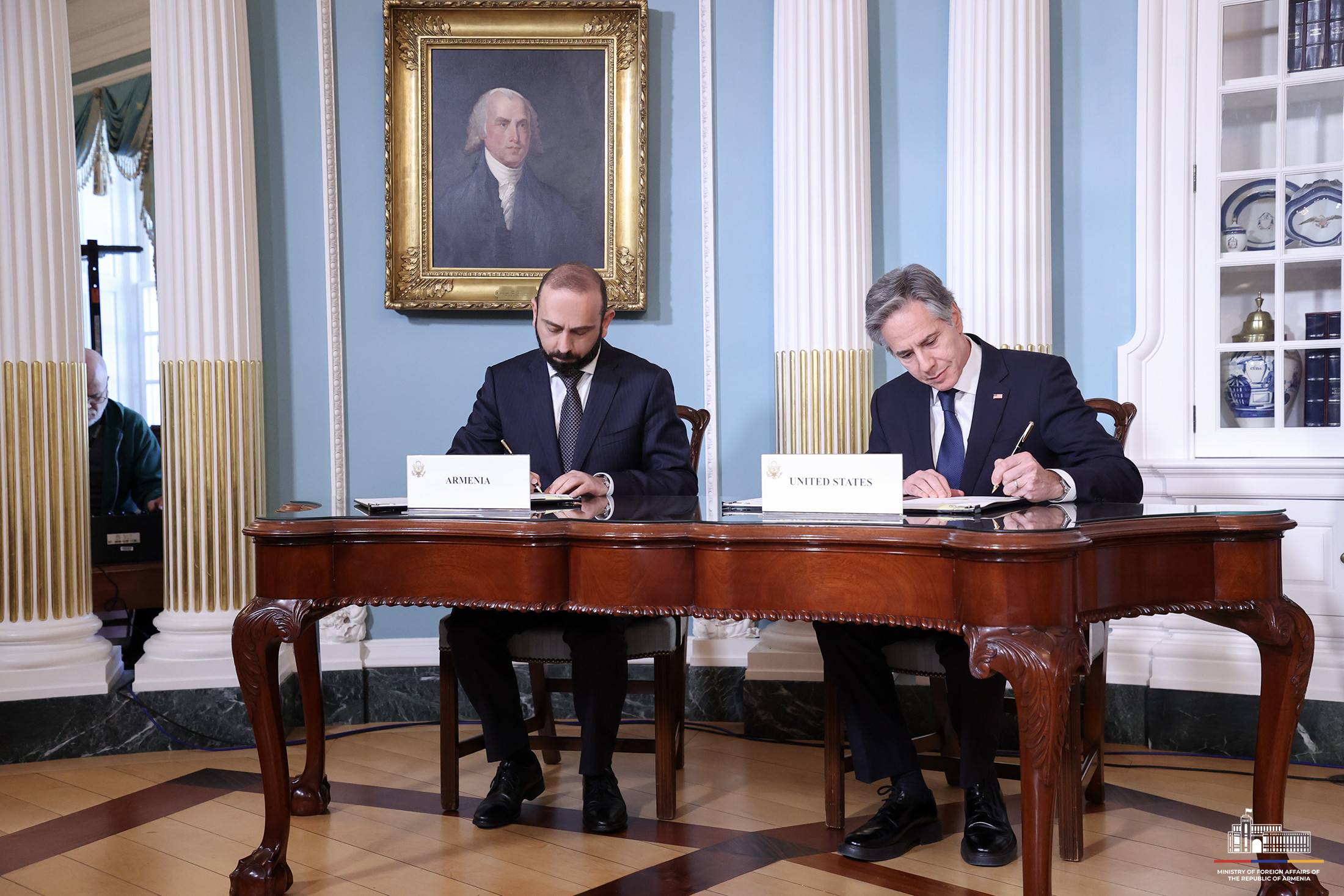
The TRIPP framework explicitly preserves Armenian sovereignty over all roads.
International actors including the EU and U.S. support connectivity only under Armenian jurisdiction.
Nazarian’s framing assumes that any discussion of transit equals surrender.
That’s not analysis, it’s fear‑based absolutism.
The article leans heavily on diaspora sentiment understandable, but not a basis for governing a country facing existential challenges.
Diaspora Armenians often demand maximalist positions because they do not bear the consequences: They do not face closed borders. They do not face economic isolation. They do not face military conscription. They do not face the daily reality of living in a landlocked state surrounded by adversaries.
Armenia’s government must operate in the real world, not in the emotional universe of diaspora politics.
If any positive comment from Turkey delegitimizes Armenia’s government, then:
Armenia must reject all diplomacy. Armenia must reject all negotiations. Armenia must reject all regional integration. Armenia must reject any peace process.
This is not a strategy. It is a recipe for permanent vulnerability.
Nazarian’s argument erases the Armenian electorate entirely. Armenia’s government is sovereign because: It is elected by Armenian citizens. It operates under Armenian law. It controls Armenian institutions. It is accountable to Armenian voters—not to Turkey, not to Azerbaijan, and not to diaspora commentators. No foreign statemen, positive or negative, changes that.
The article tries to frame diplomacy as capitulation, engagement as betrayal, and pragmatism as treason. But Armenia does not need more maximalist rhetoric. It needs stability, economic growth, secure borders, and a foreign policy grounded in reality, not nostalgia, not trauma, and not fear.
Sovereignty is not lost because an adversary says something flattering. Sovereignty is lost when a nation becomes too emotionally fragile to act in its own interests.
Armenia deserves better than what Nazarian is offering as it navigates the complex and evolving geopolitical landscape of the 21st century.
What Nazarian says is reflected by the loss of interest in Armenian issues all over the world caused by the submissive degrading policies of Pashinian’s administration, and the increasing awareness of its Fascist behavior to silence any opposition relying specifically on the support of the nation’s archenemies. Nowhere all over the word history, has an administration who has caused such a disastrous defeat like what happened in Artsakh has been reelected to lead the country. Never in the world history a leader has declared that his defeat was a bonus to his country, like the statement of Pashinian considering the loss of Artsakh as a gain to Armenia. If anything, these indicate the moral degraded level of this man and his followers, and the consequent loss of respect of the Armenians. Recently he in silence assisted the expulsion of around 1000 Armenian citizens from the USA just to please his master Trump. While all along Armenians were highly respected and welcomed anywhere in the world.