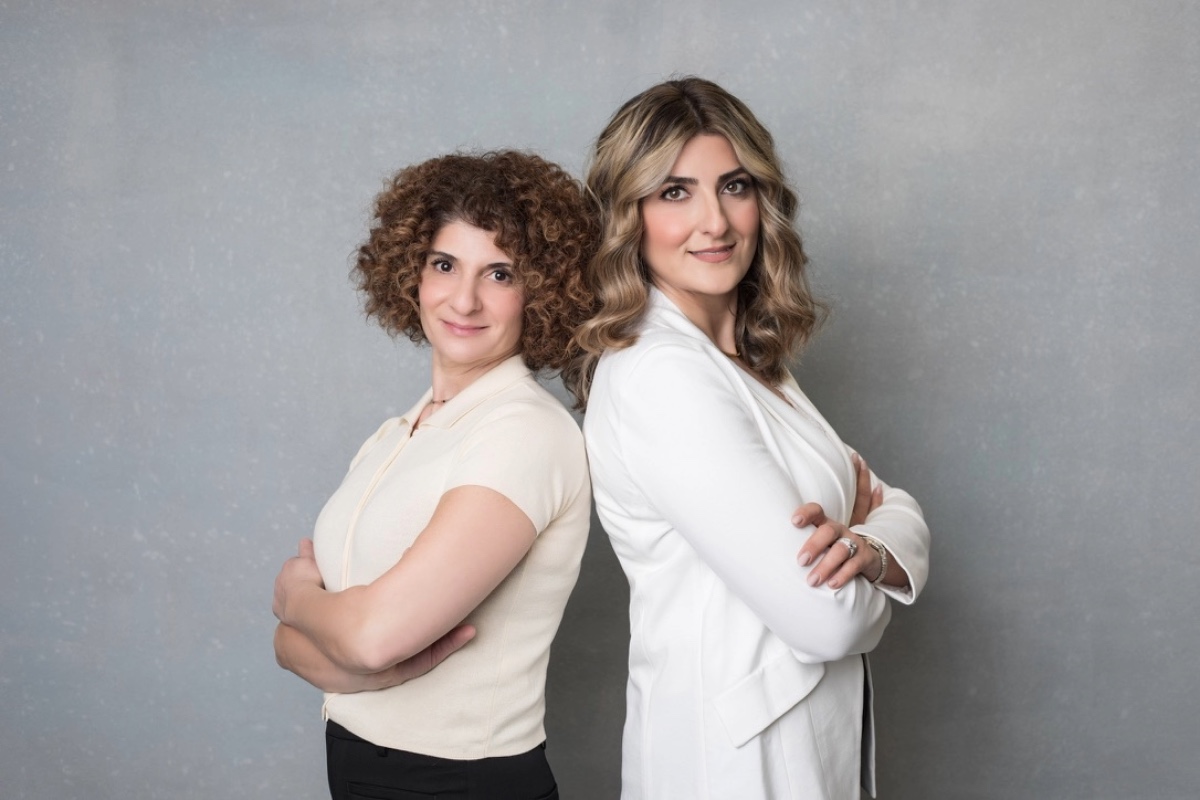
From a failed startup to a thriving agency: The story of SayNine

Some people achieve success thanks to favorable circumstances: wealthy parents, prestigious degrees or lucrative connections. Others carve their path themselves — brick by brick, failure after failure — learning lessons that could have crushed them, but didn’t. Faith, determination and relentless effort prevail where mistakes could have caused collapse.
Writing about such people is both an honor and a pleasure. They deserve recognition because their very character and life trajectory can inspire thousands.
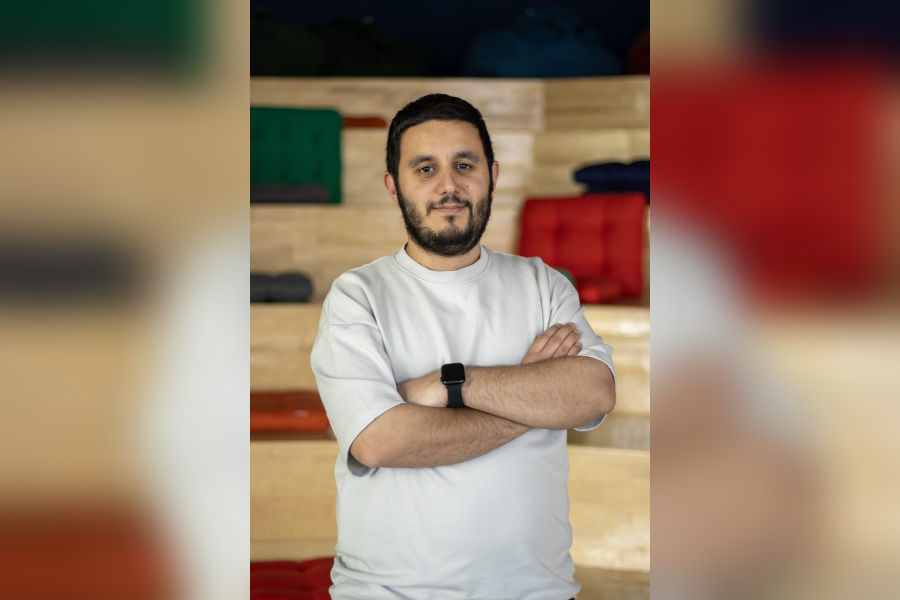
One such person is Georgi Mamajanyan, founder of SayNine, one of Armenia’s leading link-building and Search Engine Optimization (SEO) agencies. After dozens of rejected job applications and three failed startup attempts, Mamajanyan built an agency that has become a recognized name not just in Armenia but globally. With clients across virtually every continent, SayNine now reaches an annual turnover of around $1.4 million in just four years.
But what truly sets SayNine apart isn’t its financial success or international reach — It’s the team. Bright, young professionals who feel more like a family than colleagues. SayNine’s social media showcases warmth and connection: a colorful office with board games, fish tanks, cozy beanbags and a beloved elephant mascot. It’s a workplace where collaboration and camaraderie matter more than competition or backstabbing — a dream environment for anyone seeking growth and adventure.
The conversation with the founder clarified why SayNine has the team it has today. At just 28 years old, Mamajanyan balances knowledge with approachability, commanding respect without intimidation and leading while remaining relatable. Serious when needed, humorous by nature, open and transparent — our conversation mirrored that energy.

Milena Baghdasaryan (M.B.): Let’s start at the beginning. Were there early signs of entrepreneurial ambition in your childhood?
Georgi Mamajanyan (G.M.): Absolutely none. I was never the “business kid,” and it would be a complete fabrication to say I was ever drawn to this world. I was a quiet child, not particularly active. However, I did have one foundational trait that defines how I work to this day: an ability for intense, singular focus. When I dive into something, the rest of the world fades away. I become completely immersed until I understand it from the ground up — whether it’s a video game I’d play until sunrise or a complex problem at work. That focus is the key thread from my childhood that you could trace to today. Five years ago, this entire industry was completely off my radar.
M.B.: If entrepreneurship wasn’t a lifelong ambition, what fuels your motivation now?
G.M.: It’s not the financial rewards; it’s the architecture of growth. I’m fascinated by the process of creating something from nothing and then figuring out how to scale it. If you can make one, why can’t you make a thousand? What are the hidden barriers? The real thrill is in diagnosing those obstacles and redesigning the system to overcome them.
Take link building: on the surface, it’s one of the most tedious, mechanical jobs imaginable. But that’s precisely what makes it interesting. You can take that mind-numbing process, apply automation and transform it into something elegant and powerful. There’s a beauty in finding efficiency in the mundane.
M.B.: How did you find your way into this specific niche?
G.M.: It was a complete accident. I studied marketing at the French University in Armenia for my bachelor’s. After graduating, I applied for every job I could find — from receptionist to marketing director. It was a numbers game. I sent out 149 CVs before one company finally responded. The position was for a “Digital Marketing Intern,” which I soon discovered was SEO, and more specifically, link building.
The funny thing is, I’m convinced I only got the job because the HR manager was out of the office that day. Had she been there, with my zero experience, I’m sure I never would have made it past the screening. But I’m grateful for that job. If they hadn’t given me so many mechanical tasks, I would have never gotten into automation.
M.B.: How important is academic education for entrepreneurs in your field?
G.M.: It’s entirely situational. My younger brother is a perfect example. I encouraged him to learn Python when he was 13. By 18, he was skilled enough to join our office and he’s been with us ever since. For him, a four-year university degree would be pointless. He’s already in a rich learning environment, collaborating with a team of 45 people and attending industry conferences. He’s getting a direct apprenticeship with reality.
My story was different. I had no family or friends in the industry to guide me. For me, university wasn’t for the curriculum; it was for the community. The core of my initial team was built from my university friendships. It provided a network of like-minded people when I had none. So, while it was crucial for me, I believe that for someone who already has a foothold in the industry, spending four years on a traditional degree is an inefficient use of time.
M.B.: Walk us through the origin of SayNine.
G.M.: It began with automation. At my first job, I had automated my workflow to the point where I could single-handedly produce the output of 10-12 people. When I left, I started freelancing. The work scaled unexpectedly fast. A client in Singapore, Raul, loved my approach and hired me to handle his outreach. Then another, Mike from the U.K., asked me to manage two of his businesses.
Suddenly, I was overwhelmed. I started calling my friends for help, beginning with Hayk, and then his brother, Ruben. Soon, other friends who were curious about SEO joined in. The agency wasn’t planned; it was born out of necessity, a response to a workload I could no longer handle alone.
M.B.: You were running an agency while also building a startup. What was that about?
G.M.: In the beginning, the agency didn’t even have a name. It was just a means to an end. My grand vision was a startup called Optify, which aimed to completely automate the link-building process. The agency was simply the cash engine to fund this dream. Every dollar we earned was funneled to outsourced developers to build the product. Our focus wasn’t on growing the agency; it was a tool to fuel the startup.
M.B.: Yet, Optify ultimately failed. What were the critical lessons from that experience?
G.M.: The failure of Optify was a masterclass in everything we didn’t know. We tried three times. The first two attempts burned through smaller amounts, but the third was a year-and-a-half-long effort where we incinerated around $80,000. That was the price of our real education.
The reasons for failure were numerous, but they all stemmed from my inexperience. I lacked the programming knowledge to manage developers effectively. My approach to automation was fundamentally flawed; we tried to build a giant, monolithic “train” that did everything at once, instead of building small, modular and testable components. And frankly, my management skills were weak. I couldn’t spot signs of trouble early enough.
That failure, as painful as it was, became the bedrock upon which SayNine was built. It taught us how to build systems, how to manage projects and how to truly understand the mechanics of automation.
M.B.: Once you accepted Optify’s fate, how did you transition to formally creating SayNine?
G.M.: That was a tough, emotional pivot. Optify had a mascot, a sloth, symbolizing the idea of letting automation do the work. The team was incredibly attached to this character and the brand. Separating the two meant admitting a major failure. But it was necessary. There was confusion in the market: were we a startup or an agency? We had to create a new, clear identity.

M.B.: Debates about the “death of SEO” or its replacement with Generative Engine Optimization (GEO) have been around for years. With the rise of AI like ChatGPT, why do you believe link building is still fundamental?
G.M.: Because it’s woven into the very fabric of the internet. Think about how a search engine discovers the web. It starts on one page and “crawls” by following links to other pages, and from those pages to others. This web of connections is how the internet is mapped. A website without backlinks is essentially invisible; it’s a library with no roads leading to it.
Whether the tool is Google or ChatGPT, they both rely on this network of citations to discover and validate information. As long as the internet is built on links, link building will remain a foundational pillar of digital visibility.
M.B.: How do you see the relationship between Google and new large language models (LLMs)? Are they competitors?
G.M.: They are different tools for different jobs. You use Google for a quick search and rely on ChatGPT for more complex queries. For example, you can use Google to find a coffee shop near you right now. You use ChatGPT for a complex query, like planning a dinner for a group with multiple dietary restrictions. One won’t eliminate the other; they solve different user needs.
We’ve already integrated LLM optimization into our services, but our strategy is a hedge. We ensure that any work we do for LLM visibility also directly benefits a client’s traditional SEO. That way, even if the AI hype cools, the client is left with tangible, lasting value.
M.B.: Has the rise of LLMs forced a change in your content strategy?
G.M.: Yes, it’s caused a significant and very recent pivot. My long-standing principle was to acquire links exclusively from high-quality SaaS companies that don’t sell them. However, LLMs favor user-generated content (UGC), and these top-tier companies are extremely reluctant to publish outside guest posts. This created a new challenge.
So, for the last two months, we’ve made a pragmatic shift. We now have to work with sites that are in the business of selling guest posts to place the kind of content that LLMs are currently prioritizing. It’s a compromise, but in this evolving landscape, adaptation is key.
M.B.: SayNine is only four years old. What do you see as the key to its strong position?
G.M.: I’m hesitant to use the word “success.” I’d call it “compulsory growth.” We’ve often been in a position where the only options were to either scale or go bankrupt. Our growth has been a function of survival.
The foundation of that is a willingness to embrace risk. I believe that risk-averse professionals, like analysts or lawyers, often make poor entrepreneurs because they try to calculate every variable, which is impossible.
In this business, it’s better to move fast, make a dozen mistakes and learn from them, than to be paralyzed by over-analysis.
M.B.: What do you consider your greatest achievement as a leader?
G.M.: My greatest achievement is the sound of the office at 7:00 p.m.: silence. It’s the fact that no one is here on the weekends. This is my definition of success. I implemented this strict work-life balance rule primarily for myself. Like many on my team, I’m a workaholic; I used work to escape from problems. But that leads to burnout and a cycle of making mistakes just to create more work to fix.
This boundary solved my own problem first. Now, I can’t come in on a weekend and work alone, because my job is fundamentally about collaborating with my team. It forced a healthier, more sustainable and, ultimately, more effective way of working for everyone.

M.B.: You mentioned facing financial crises. How do you lead a team through those moments of extreme uncertainty?
G.M.: With radical transparency. Three years ago, we faced what felt like the end: a deficit of 25 million AMD (around $65,000). To put that into perspective, our entire monthly turnover was only about $50,000 at the time. I gathered the team and laid it all out: I told them that I didn’t know if we would survive, that salaries would be late and I offered to personally help (with recommendation letters or anything else) anyone who wanted to leave to find a new job.
What happened next was one of the most absurd and beautiful moments of my life. Four hours after that meeting, money started hitting the company bank account. Several team members had gone out and taken personal loans and deposited them. Others had borrowed from friends and family. The entire 25 million deficit was covered in a single day. I hadn’t asked anyone for anything, but they all did something to help.
That was the day I understood that what we had built was more than a company. It was a community with an unbelievable reservoir of trust and support. That is our real strength.
M.B.: Protecting that environment seems paramount. How is firing people critical to that process?
G.M.: It is the single most critical act of cultural stewardship. I learned a hard lesson once when I delayed firing one person and ended up having to let go of six people down the line. A single individual with a negative attitude can create factions and poison the well for everyone. Protecting the environment from that is non-negotiable.
Sometimes, you have to fire friends to maintain those standards. You have to build a reputation that your decisions are impartial. Closeness cannot be a shield against accountability. In fact, I hold my friends to an even higher standard. To make this clear to everyone, I’ve had to make incredibly difficult decisions. When people see that, they understand that performance and attitude are the only things that matter.
M.B.: How do you maintain a relationship after having to fire a friend?
G.M.: Honestly, it’s never the same. You can remain friendly, but the deep connection forged by being in the trenches together is gone. You’re no longer on that shared, high-stakes journey. The daily conversations disappear, and the relationship becomes more distant and infrequent. That’s an unfortunate but necessary reality.

M.B.: Your team is notably young. Is that by design?
G.M.: It’s less about chronological age and more about professional mileage and mindset. It is incredibly difficult to un-teach the bad habits and hierarchical thinking someone might pick up after 15 years in a toxic or bureaucratic environment, like the public sector. It’s far easier to build a strong foundation on fresh ground with someone eager to learn than it is to demolish an old, unstable structure first.
M.B.: What’s next for SayNine? Any new projects you can share?
G.M.: I’m a believer in doing the work first and talking about it later. However, I can share one new direction. We’re now actively working on LLM optimization, specifically helping our clients get recommended by platforms like ChatGPT. We do this by strategically creating content, like “best of” listicles, that position our clients as the top choice in their niche.
M.B.: Can you give us a snapshot of SayNine today?
G.M.: Today, we are a focused team of 45 people, refined from a peak of 60 to maximize effectiveness. Our annual turnover is around $1.4 million, with over 95% of our revenue coming from outside Armenia, primarily Australia, Canada and the U.K.
We’ve carved out a specific identity in a noisy market: we are the providers of “non-shitty backlinks.”

M.B.: Any parting advice? And what would you tell your younger self?
G.M.: The most impactful advice I’ve learned to live by is this: don’t try to help someone who doesn’t acknowledge they have a problem and doesn’t want to be helped. Trying to force help on someone is a draining and futile exercise.
However — and this is the critical part — it is your absolute responsibility as a leader to create a sanctuary where people feel safe enough to ask for a lifeline. In our office, for example, a team lead is not allowed to ask a struggling employee, “What’s wrong?” Instead, they’ll invite them for a walk, and the lead will share something personal first. This creates an opening, not an interrogation. It gives them the space to ask for help if they need it.
As for my younger self? I wouldn’t give him any advice, because I know that he wouldn’t listen. But if I had to, I’d tell him to get more sleep. I’d tell him that working late into the night isn’t a badge of honor; it’s a mark of inefficiency. Countless people told me that, and I had to learn it the hard way.