


DiasporaStatements

Armenian Bar Association urges U.S. State Department to reject agreement with Turkey
The Armenian Bar Association has prepared and submitted a comprehensive public comment to the U.S. Department of State’s Cultural Property Advisory Committee (CPAC), urging CPAC to deny the proposed renewal of the United States-Turkey Memorandum of Understanding (MOU) on cultural property. The CPAC will convene from September 15 to 17, to review Turkey’s renewal request as well as the effectiveness of other cultural property agreements, pursuant to the Cultural Property Implementation Act (CPIA) (90 FR 38196). 

If the U.S.-Turkey MOU is renewed without the addition of the Armenian Bar’s suggested checks and balances, Turkey may be further emboldened to assert illicitly that Armenian archaeological and ethnological materials dating back hundreds and thousands of years, even those materials with a provenance before the arrival of Turks in the Armenian homeland, belong to Turkey. Equally perverse, Turkey may argue that Armenian cultural property currently located in the United States, which originated on the land mass of current-day Turkey, belongs to Turkey as well and, therefore, must be repatriated. 

Concerns over Turkey’s cultural stewardship 

The Armenian Bar and its co-signatories maintain that Turkey’s request is not consistent with the intent or standards of the CPIA, which was designed to curb illicit trafficking while ensuring public access to cultural heritage for education, research and preservation. Turkey seeks sweeping import restrictions on virtually all categories of archaeological material dating from 1.2 million years ago to A.D. 1770 and ethnological objects from the 1st century A.D. to 1923. This, presumably, would include all items of cultural property which are purely Armenian, Greek, Assyrian, Christian or Jewish in nature because the items happen to be located in what is now known as Turkey. 

“In the case of the MOU, import restrictions have been implemented without adequate mechanisms to distinguish between cultural property belonging to the Turkish state or Turkish heritage and property originating from persecuted religious and ethnic minority cultural communities,” the Association commented. 

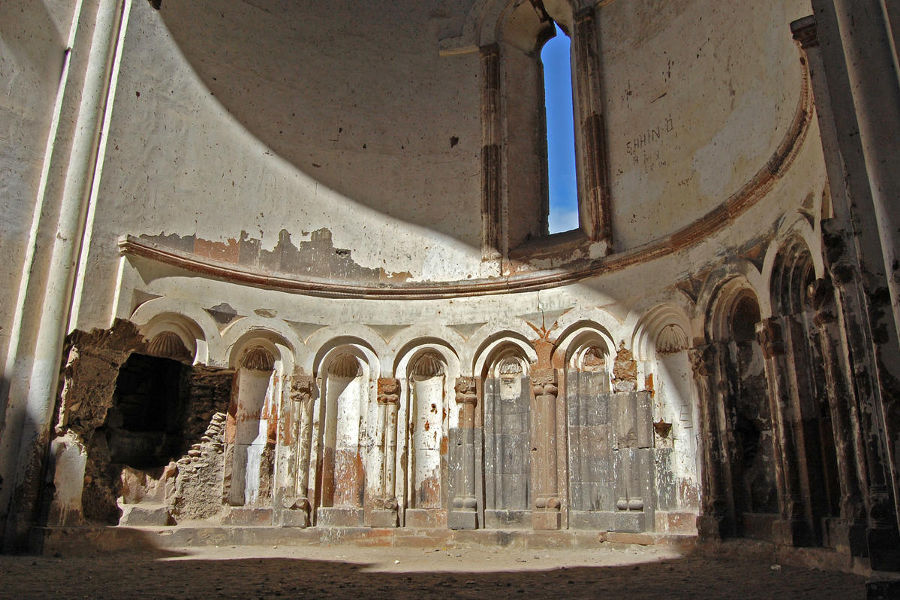
The comment criticizes Turkey’s track record of cultural destruction and appropriation, citing that the patterns of inaccurate attribution and misappropriation are not mere academic abstractions and that state preservation policies routinely exclude Armenian, Greek and Assyrian narratives, often reframing sites to obscure their origins. This troubling pattern aligns with recent actions—such as the restoration of the 11th-century Christian Cathedral of Ani, excluding Armenian narratives—raising concern that Armenian cultural property returned under the MOU could be subject to policies that fail to acknowledge or involve the source communities. 

Turkey’s cultural imperialism vs. Armenian heritage protection 

“The United States should not be in the business of enforcing authoritarian cultural policies abroad,” said Lucy Varpetian, Chair Ex-Officio of the Armenian Bar Association. “Turkey’s cultural property law systematically denies minority communities—Armenians, Greeks, Jews, Assyrians and Kurds—access to their own sacred heritage, while using international agreements to legitimize this exclusion.” 

The Armenian Bar’s submission also exposes Turkey’s tolerance of domestic looting, particularly the widespread online promotion of definecilik (treasure hunting), often targeting Armenian and Greek heritage sites. Despite this, Turkey presents itself as a protector of antiquities, seeking U.S. enforcement power to block the lawful importation of objects long part of global scholarly, museum and collecting networks. 

Implications for U.S. museums, scholars and communities 

The current MOU and its expansive Designated List have had chilling effects on:

  • Academic freedom, as entire categories of research materials become inaccessible
  • Museum exhibitions, which are stalled or canceled due to provenance concerns 
  • Diaspora communities, who are prevented from recovering sacred objects tied to their heritage 
  • Small businesses, including dealers in textiles, coins and calligraphy, who face criminal penalties for trading in items with centuries of legal circulation 

The Armenian Bar Association’s letter proposes a more effective and balanced approach, including targeted enforcement against actual trafficking routes, transparency in museum collections and diaspora pathways for restitution and stewardship of cultural items. 

A call for accountability and fairness 

The Armenian Bar Association urges the Cultural Property Advisory Committee to reject the renewal of the U.S.-Turkey MOU in its current form, and to demand accountability, transparency and cooperation from Turkey as preconditions for any future agreement.

“Cultural protection must not become cultural erasure,” the letter concludes. “To honor the spirit of the CPIA, the United States must not reward states that destroy heritage at home while demanding protection abroad.” 

The Armenian Bar’s letter is supported by a broad coalition of legal, academic, interfaith and human rights organizations, including: 

  • Armenian National Committee of America
  • Churches for Middle East Peace
  • Hellenic Law Society of California
  • In Defense of Christians
  • International Christian Concern
  • National Council of Churches

The letter is also co-signed by prominent scholars: 

  • Prof. Bedross Der Matossian (University of Nebraska–Lincoln)
  • Prof. Barlow Der Mugrdechian (Fresno State University)
  • Profs. Ann Karagozian and Taner Akçam (UCLA Promise Institute of Armenian Studies)
  • Prof. Christina Maranci (Harvard University)
  • Prof. Elizabeth Prodromou (Boston College)

Guest Contributor

Guest contributions to the Armenian Weekly are informative articles or press releases written and submitted by members of the community.

2 Comments

  1. The Armenian Genocide not only eliminated Armenians in Western Armenia and reduced them to Istanbul and to the last Armenian village of Vakifli in Hatay Province, +99% of all Armenian churches, all Armenian monasteries, all Armenian cemeteries (not counting Istanbul and Vakifli), have been thoroughly and systematically destroyed. Except for the individual Armenian churches in Akhtamar, Diyarbakır, Kayseri, Kars and Gaziantep, which have been converted into mosques or museums (except for the functional church in Diyarbakir), there are hardly even recognizable and half standing Armenian ruins left in the whole of Western Armenia, except for the ruins of Ani.

    Many of my friends who visited Western Armenia came back very depressed and in tears. They told me that visiting Western Armenia was like visiting a gigantic Armenian graveyard, except that there are no visible Armenian graves to be found.

    Since Turkey destroyed Armenian tangible heritage so thoroughly (not even the Nazis came remotely close to destroying Jewish tangible heritage in the lands they occupied), is treating what little Armenian heritage is left just like the Taliban and ISIS, and that no Armenian artifacts are displayed in Turkish museums, should have rung alarm bells a long time ago.

  2. Why is the Armenian Bar Association silent when it comes to Nikol Pashinyan and all his treasonous activities?

    The Armenian Bar Association was extremely vocal when Serzh raised bus fares by a nickel…

Leave a Reply

Your email address will not be published. Required fields are marked *


Back to top button