


For diaspora Armenians, Ararat has always been something you feel but cannot touch. Designer Hajk Bagradjans, founder of Gagat Glass, is trying to change that — one glass at a time.
There is a painting on the wall of almost every Armenian home in the diaspora. You know the one. Ararat — its twin peaks rising from the plain, vast and still, the lesser summit leaning into the greater as though in consolation. In Armenian households across the world, from Beirut to São Paulo, this image has presided over meals, arguments, births and silences for generations. Children learn to recognize it before they can name it. They grow up understanding, in some pre-rational part of themselves, that the mountain in the painting is not simply a mountain. It is the fact of an absence — a symbol of what was taken, fixed in pigment so that forgetting is never an option.
And yet, ask any Armenian what it feels like to fly into Yerevan — to press their face to the window and catch that silhouette emerging through the haze, unmistakable, ancient, impossibly familiar — and they will struggle to explain it. It is not only grief. It is pride and grief at once, a surge of belonging so immediate it bypasses language entirely. The mountain holds both at once, and always has.
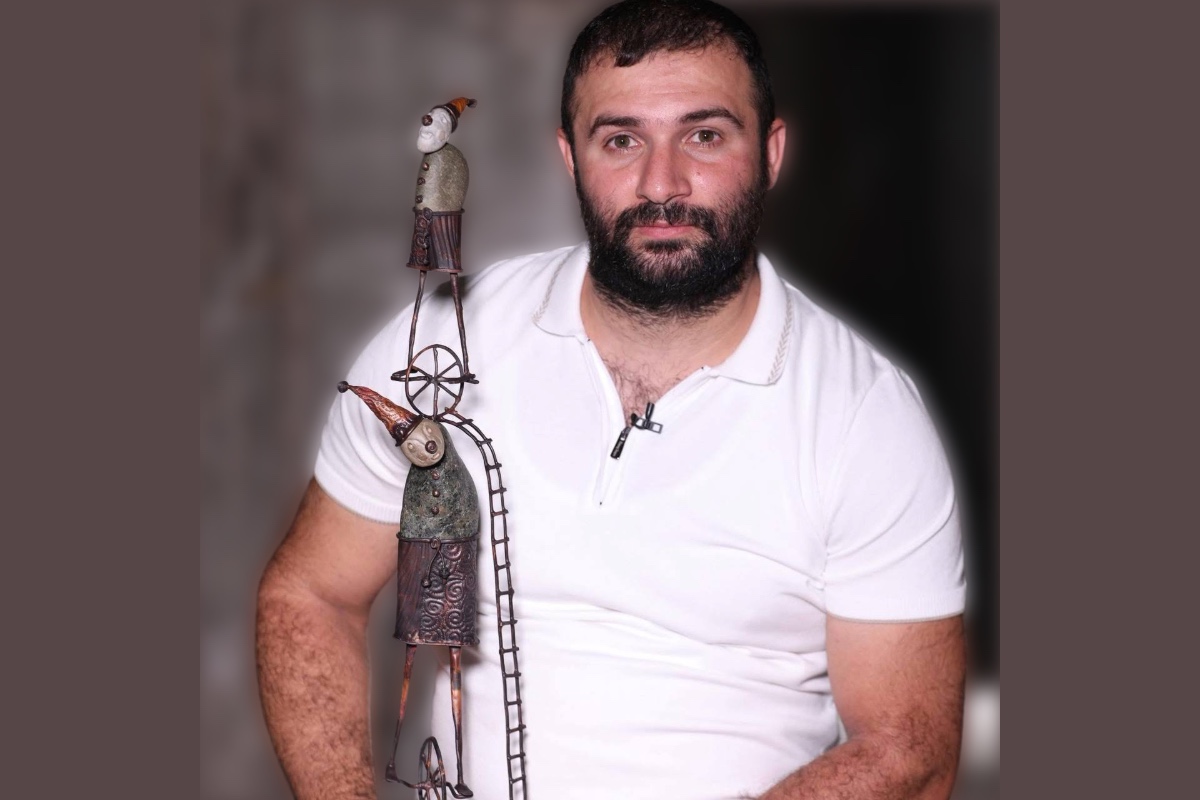
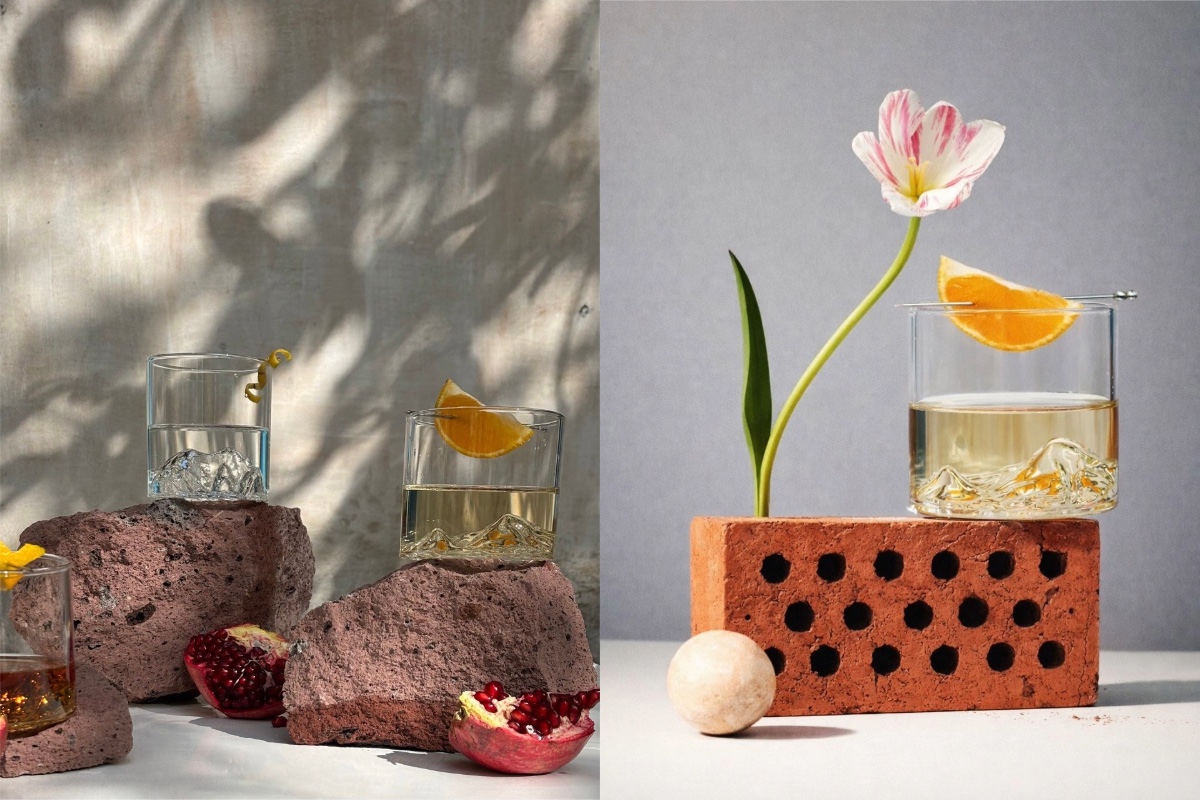
Hajk Bagradjans grew up with that image in Germany, in a home shaped by the density of diaspora life — between cultures, languages, and the country he inhabited and the one he carried within him. He co-founded OQNI, a humanitarian initiative in Yerevan designing custom prosthetic covers for soldiers who had lost limbs in the 2020 Artsakh war. This was followed by Gagat Glass, a design house whose first object is a handmade, high-borosilicate glass formed around the silhouette of Ararat itself. Today, Bagradjans moves between Berlin, London and Yerevan. The thread connecting everything he has made returns, in different forms, to the same question: how to make present what absence has taken.
For most Armenians, reaching Ararat requires crossing a border that is as historical as it is physical. The mountain that defines the nation, visible on clear mornings from Yerevan, lies just beyond reach — within a country that does not recognize the events that displaced a people from its slopes. That distance is something Bagradjans has carried all his life.
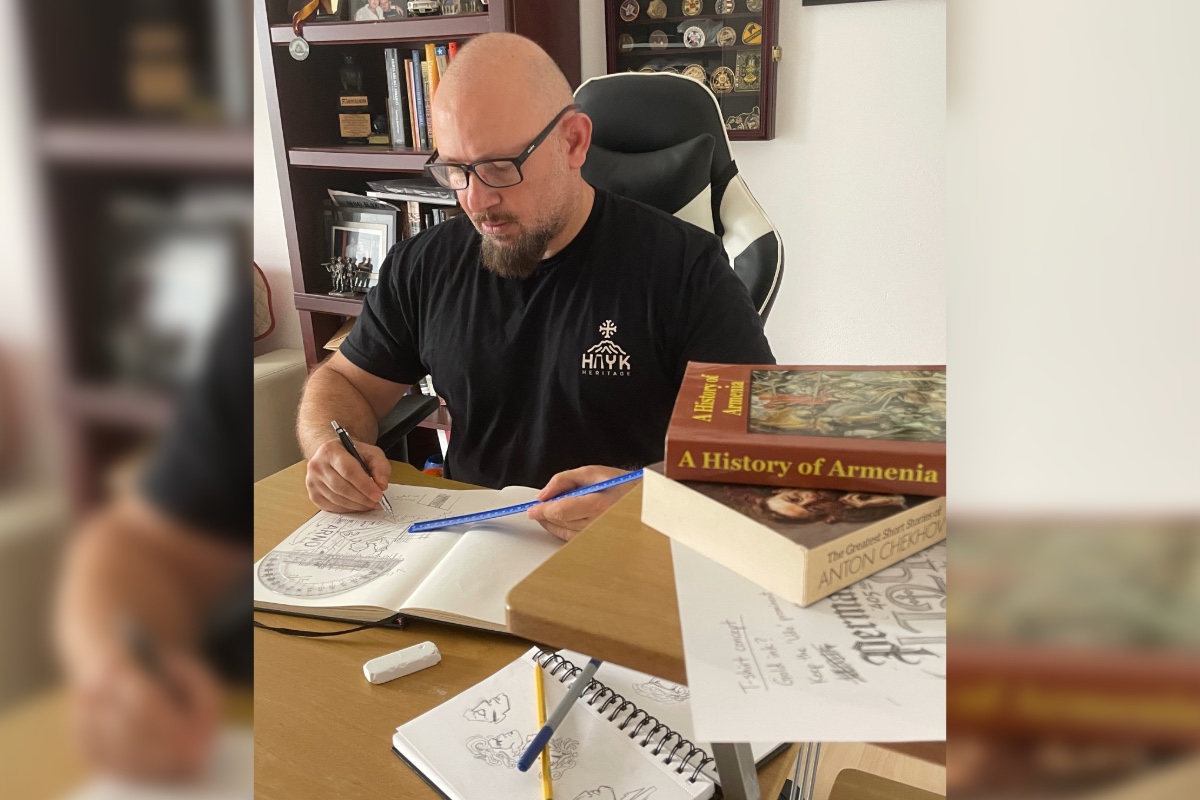
“I didn’t want to repeat Ararat as an image,” he says. “I wanted to turn that feeling into something closer — something you can actually hold. Something that lives with you, not above you.”
The autumn of 2020 intensified a condition that had long defined diaspora life: proximity to rupture without proximity to place.
Bagradjans moved to Yerevan and co-founded OQNI alongside psychologist Haikouhi Oroudjian. The initiative addressed a specific problem. Many injured soldiers could not use standard prosthetics, designed for generic bodies rather than the particular geometry of lived trauma.
OQNI’s response was precise — 3D-scanning the intact limb, mirroring it, producing a cover calibrated to the individual. Yet beneath the technical precision was something more essential.
“With OQNI, it was about self-expression, confidence, and changing how people feel in their bodies after loss,” he says. “The medium is different with Gagat Glass, but the emotional core is similar.”
He recalls the first time he held a prosthetic cover his team had created — and later, the first Ararat glass.
“Both moments felt magical in the same way,” he says. “An idea had become real, and it was making people feel something.”
“Design, at its best, isn’t decoration,” he adds. “It’s a response to a deeply human emotional need.”
Gagat Glass was built to fill a gap Bagradjans felt acutely. “There was a lack of a refined lifestyle or home-decor brand that was Armenia-inspired without being loud or overly symbolic,” he says. The company allows him to pay taxes in Armenia, create employment, and invest in design and creativity there. The first glass carries Ararat’s silhouette, and subsequent pieces extend the language across Armenia’s peaks — Khustup, Aragats.
“Mountains feel timeless,” he says. “They outlast change. They don’t speak loudly, but they’re always present. They represent endurance, stability and depth — a natural foundation for a brand rooted in emotion rather than explanation.”
“Diaspora identity is often abstract — stories, images, inherited emotions. Physical objects change that. When an object becomes part of your everyday life — something you use, share, and live with — the connection becomes embodied.”
For much of the diaspora, Armenian identity has been preserved through objects, rituals and visual codes that have held the culture together across generations of displacement. That labor was essential. But preservation alone is not vitality.
“Culture has to evolve to stay alive,” he says. “Cultural expression shouldn’t freeze symbols in the past.”
Gagat Glass operates from that conviction — not by replicating symbols, but by translating them. “We’re a new generation, drawn to minimalist, contemporary design. I didn’t want to create another symbolic object that feels ceremonial. I wanted something that fits naturally into modern life — refined — while still carrying emotional weight.”
And always, he returns to the same boundary: “Not by denying tragedy, but by expanding the narrative. Armenian identity also contains beauty, confidence and calm strength — not only loss.”
The work first found audiences far beyond its assumed base. When Gagat Glass tested its products on Amazon Germany, the expectation was that most buyers would be Armenian. They were not — Germans, Italians, French, Spanish — responding first to form, and only later to meaning. The very first order arrived before the website even had proper photographs: two Canadians who loved whiskey and had been planning to climb Ararat.
“That moment stayed with me,” he says. “If an object is beautiful enough on its own, it opens the door naturally. The story can come later — quietly, without explanation.”
There is a phrase he rejects without hesitation.
“I don’t really like the phrase ‘giving back,’” he says. “It creates separation. I prefer to think of it as creating with. You don’t give back to your family — you build together.”
His father once told him that children of the diaspora should be bridges — never fully grounded in one place, but moving between worlds and connecting them.
“It’s less about bringing something back,” he says, “and more about creating something together.”
For those who want to follow a similar path, he is characteristically direct.
“Perfection is the killer of most dreams. A good idea is maybe 10% of the story — execution is the other 90%. Impact doesn’t come from intention — it comes from execution.”
His hope extends beyond Gagat Glass itself.
“I hope Armenian creators are seen not only as guardians of history, but as confident contributors to global culture today — contemporary, thoughtful, and uncompromising in quality.”
And for Gagat Glass specifically, he said: “I hope it’s a quiet legacy. Showing that Armenian identity can be expressed with elegance, restraint and depth — without needing to explain itself.”
He grew up with the painting on the wall. He has spent years learning how to hold what it depicts. The mountain has always been there — vast, still, the lesser peak leaning into the greater.
He has found a way to carry it.