CultureFilm

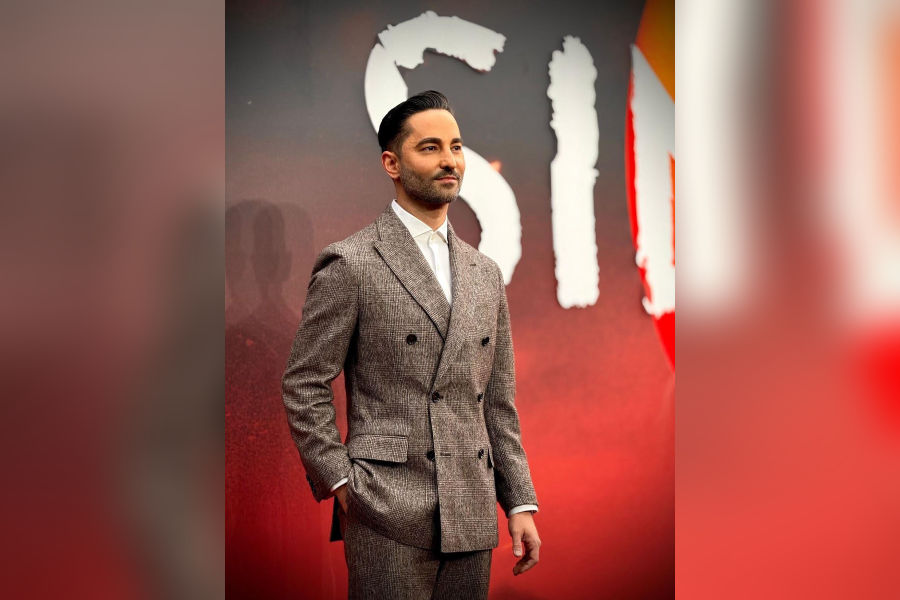
2025: The year of Sev Ohanian

An interview with the Armenian producer of “Sinners”

Almost 20 years ago, a young filmmaker from Glendale premiered his first-ever film. Shot on his dad’s home video camera and featuring his real-life friends and family, the movie offered a funny and heartfelt glimpse into the life of an Armenian-American family. The movie: “My Big Fat Armenian Family.” The filmmaker: Sev Ohanian.

Today, Sev, now an accomplished screenwriter and producer, is best known for his work on hits such as “Searching” and “Run” with his wife and fellow producer Natalie Qasabian; and “Eyes of Wakanda” and “Ironheart” with his frequent collaborators and Proximity Media partners Ryan and Zinzi Coogler.

Sev, Ryan and Zinzi are also the producers behind “Sinners,” one of this year’s biggest movies. “Sinners” has made headlines for breaking box office records, earning high audience ratings and dominating the cultural conversation.

His prolific career has earned him countless accolades, including being named to Variety’s 41 Under 40: The New Leaders Class of 2025 and being inducted into the Armenian Film Society’s Armenian Film Hall of Fame.

The Weekly caught up with Sev to chat about his experience as an Armenian in the film industry, how the community has shown up for him and a confession about “My Big Fat Armenian Family.” 

Advertisement

This interview has been edited for length and clarity.

Rosie Nisanyan (R.N.): We have to start with the big news that just came out—the Armenian Film Hall of Fame induction. Congratulations! How do you feel?

Sev Ohanian (S.O.): I haven’t even had a chance to process it fully. I’ve been really lucky to be working as long as I have in the industry and I hope to be working for decades to come. Awards are never why you do any of this; to me, it is really about the audience and that relationship. But to be recognized by the Armenian Film Society (AFS) is really special because my own relationship with cinema is informed by my Armenian culture. My Armenian parents, of course, exposed me to storytelling and film, especially my father, and I would always watch movies through that lens. In big ways, and even in tiny ways.

One example of a tiny way is when we were doing the mix on “Sinners,” which is a movie set in the 1930s in the American South, with our actors who had beautiful authentic accents and dialects. I would try to think about my dad and every other immigrant parent who would watch this film and make sure like, “Will they be able to hear the story? Not understand every single word per se, but can we mix the sound in a way that the emotion comes through?” 

What the Armenian Film Society represents is absolutely what I connect to when it comes to filmmaking—I am really honored by Armen Karaoghlanian and Mary Karaoghlanian, the two founders. I remember when they were starting it 10 years ago, and I immediately thought, “This is huge!” Because when I was starting as an aspiring Armenian filmmaker, it was so natural to want to look at how I intersected with this industry or this art. And at the time, there were not that many. In truth, there have been a lot of unsung Armenian heroes in cinema over the past 100 years, for sure, but when I was starting up, that information was not readily accessible. They have created this platform that is so pure, so positive and genuinely an incubator for talent, for people to connect and to be recognized by them—it is not something I take lightly. It means the absolute world to me.

R.N.: Who are some of your favorite filmmakers or producers who inspire you?

S.O.: I always have a hard time answering this. There is Thomas Vinterberg, a Danish filmmaker who directed a film called “The Celebration,” or “Festen” in Danish. He co-founded this movement in the ‘90s called Dogme 95, and the idea was that it was trying to eliminate the artificiality of filmmaking between the filmmaker and the audience, so that when you watch a film, you are being more exposed to truth, to cinéma vérité. “The Celebration” is this gorgeous, beautiful movie, so small and maybe not as well-known today, but that really struck a chord in me.

When I made my very first movie, which is a very small movie called “My Big Fat Armenian Family”—and I have said this a million times—I shot it on my dad’s home video camera, with no money, with non-professional actors. While everything about that setup should have made this movie feel that much faker and more artificial, Thomas Vinterberg’s movie really tapped into something within me where I realized I was able to maybe tap into the truth more because they were not real actors, because there was no budget, there was no set. It was shaving off that much more artificiality from it to reach reality. 

I am genuinely and candidly inspired by my peers in so many ways. It is definitely a cheating answer, but Ryan Coogler is someone I have worked with very closely every day. I have also said this about him before: he is no question an enormous talent, a once-in-a-generation talent. But the thing about him that I am really privileged to see first-hand is how hard he works. And not just the hours he puts in, but how much energy he puts into being iterative about the creative process. It is not like he just has a certain idea and we’re going to make it. I see him first-hand in real time, solving, trying, being right, being wrong sometimes, being wrong again and then finally getting it perfect. I find that really deeply inspiring. 

As far as other filmmakers and producers, I can’t help but be inspired by producers in particular, who found alternative ways to make films. There is a really prolific film producer named Roy Lee who is known for really seeking out East Asian films and the rights for those movies. He found a way to bring them to the U.S. to contribute more to this global filmmaking world that we have now, where movies that are successful in one country can lead to more success in other countries.

R.N.: You made “My Big Fat Armenian Family” almost 20 years ago. It looks like you all had a ton of fun making it. What did that mean for you? Did it solidify your interest in making films? 

S.O.: The truth is, if I knew what I was getting into when I sought to make that film, unquestionably, I would not have even gone for it. In my mind, it was, “Let’s just have fun.” There was no business plan, there was no production schedule, there was no distribution idea. 

The cast of “My Big Fat Armenian Family” (Photo by Ramela Ohanian)

It was like, “Hey friends, what are you guys up to on Saturday and Sunday? You want to go to my friend’s house, and I’ll bring my dad’s camera?” I did have a script and I had an idea of the story, but none of it was set in stone. And if any one of my friends were too busy, this movie would have never happened.

Two years ago, Armen Karaoghlanian hosted the 15th anniversary screening at AFS. As we were talking about the film, he made a realization or a connection that I never thought about.

I have been really fortunate that I’ve made something like 20+ movies, but “My Big Fat Armenian Family” was the only time I made a movie that was 100% pure. It was just for the experience of making it, for the fun of making it.

 There was no mind as to making money back or working on it for a studio slate. It was purely, “Let’s just make this art and have fun while we do it.” And I do always think to myself about capturing that feeling because even when you make a big movie, it is obviously super fun and you have more toys, but it is so much pressure and so much responsibility. Ever since Armen made that comment, I have always looked back to try and grab what we were going for.

But yeah, I had no idea what I was doing. Do you know the story that on the very first day, we got guns pulled on us by police officers?

R.N.: What?! Why? 

S.O.: At the climax of the movie, where the father, Robert, is soaking wet because he walked all the way back to their Palm Springs rental home from a house party, he is yelling at the family to come outside and it’s an emotional scene. There is music playing, the mom is screaming, the kids are crying and then they all come together, they hug and then it fades up to the moonlight. 

That was the very first day of filming. I shot a 17-hour day, which is by far violating every California child labor law, which half my cast was. But I did not know any better. We shot that in my very good friend Sebu’s parents’ house in Santa Clarita because I thought that would kind of give the Palm Springs vibes more than Glendale. And we shot that emotional scene at 2 a.m. We did not have a single permit and had not notified any neighbors—and this is not because I was inexperienced; it was also because I was just a fool.

Literally, we were finishing for the night and I was loading up my little car with my one tripod and we saw police cars racing down the street towards us. We were in a cul-de-sac and it was a very scary image because their red-and-blue lights were on, but there were no sirens, so it was just haunting. I thought, “Oh, I’m sure somebody probably told them that people are filming a movie here; tell them to get a permit.” So, I calmly walked out to tell the officers, “Sir, it’s a student film…” And they screeched to a halt and had their guns out over the windows, like in a cop movie. I had never had a gun pointed at me in my life, so I was like, “What’s going on?!”

And they yell, “Get on the floor!” They grabbed my sister, who was 16, and they slammed us onto the hood of a car. And I thought it was a crazy overreaction for a film.

And then, it hit me: we are screaming in Armenian, a foreign language in a city that probably does not have a lot of Armenians; we were not too far removed from 9/11. The neighbors thought there was some crazy stuff going on here. And then, my good friend Ajmin [Baghramian], who at the time was playing the mom role, Rima, comes out with his makeup and fake boobs on and they almost shot him.

We had to explain it was for a film and they said we had no right and could not come back. That was the literal first day of me shooting any movie ever and it was terrifying. We came back the next day and shot some more, but not in the middle of the night.

But yes, we absolutely made that film purely out of the joy of having fun for ourselves and for the audience. And it is something I will always carry with me on everything I do…but we will definitely never do the “middle of the night screaming in a foreign language” without permits again.

R.N.: Two more recent projects for you are both “Black Panther”-related: “Ironheart” and “Eyes of Wakanda.” What’s it like working on Marvel intellectual property that has such a devoted fandom?

S.O.: It feels like I have broken into the bank—it’s crazy. I’m a massive, massive fan. I’m one of those people who, every time I watch a Marvel movie, I’m immediately on the Internet reading all the discourse, looking at Easter egg videos, trying to figure out what the clues are. I read so many of the comics; I love that stuff. 

It is really a testament to Ryan, who has such a great relationship with everyone at Marvel Studios, especially post-“Black Panther,” and to Kevin [Feige] and Lou [D’Esposito] and everyone who brought us in to help make these projects. 

“Ironheart” was the first one we did, and it was amazing! Being on Zoom calls regularly with everyone at Marvel, including Kevin, where he is imparting not just incredible notes on the scripts and the projects, but also general wisdom that I, to this day, still take with me. And working with Brad Winderbaum on those shows was amazing. “Eyes of Wakanda” just came out a few days ago, but because it is an animation, it was written years ago. 

It was honestly a dream come true, and hopefully, we get to work with them again! In any case, it is something that I will take with me, for sure. I know Ryan, Zinzi [Coogler] and I, in starting Proximity Media, one of our inspirations was Marvel and the way they operate.

R.N.: Speaking of Ryan and Zinzi, we have to talk about “Sinners.” It is an amazing film and a victory for original stories. What does the film’s success mean to you? How did your experience as an Armenian influence the production?

S.O.: I think it is an accurate statement to say it is the single hardest movie I have ever worked on by far, and I imagine a lot of the people involved in the film would probably agree. It’s because we had aspirations for something incredibly great. Just like with any movie, your schedule is never on your side, your budget is never on your side. For this movie, even the elements were not on our side—it would be raining and then our set became muddy and we would have to wait multiple days and figure something else out. I mean, it was all of the typical challenges of filmmaking, but I really am so proud of the community that we built, again with Ryan’s leadership, but with all of us.

Sev Ohanian on the set of “Sinners” (Photo by Wai Wing Lau)

Everyone brought their absolute A-game on this one. Zinzi, my partner, killed it especially and she is not a traditionally trained filmmaker the way that Ryan and I are—Ryan and I both went to USC film school, as did my wife Natalie [Qasabian] and my writing partner Aneesh [Chaganty]. Zinzi had a different life, but she brought everything to this project. Our DP [Autumn Durald Arkapaw] brought everything to this project. Really, everyone on the crew did. Our actors, oh my goodness, Michael B. Jordan, who I have worked with for so many years, was unbelievable in these parts. And of course, Miles [Caton], our discovery. It truly was an experience where everyone came together under this united goal. Every day on that set, Ryan would walk around and say, “Big movie, big movie!” making sure everyone knew we were not here to make a movie; we were here to make a big movie. And the fact that audiences have connected with it—you just never know what is gonna happen, especially with original movies. It’s a dream come true!

I have said this before, but I think I was the second person to read the script after Zinzi, and the last page of the script, where Michael’s character talks about,

“For a few hours, we were free,” immediately evoked for me the idea of being an Armenian descendant, of everything our people have gone through.

I remember, I said to Ryan that that’s what this movie represents to me: that people who were subjugated and have faced all sorts of horrific oppression and devastation, they don’t party and enjoy life despite those things; it’s actually quite the opposite. You have no choice but to enjoy life because of those things. 

I feel like I see that in our culture every time we come together. We are obviously known for drinking and eating and having fun and dancing, so I am able to see that direct connection. The fact that Ryan—in a story that is on the surface about fighting vampires—found an incredible way to say the same thing about his community, which connects to mine, too. I think it speaks to how universal the story is, and I suspect that part of why the movie has worked for so many people across the world is that people can see so much of what Ryan is saying in there. When I mentioned that to Ryan, he agreed, “Yes, let’s lean into that. Let’s make that what the movie is.” So, it’s really meaningful to me.

It was also my first time traveling to a movie when Natalie and I had our first kid! We have a son named Aren, and we had him with us in New Orleans. That made that movie that much more challenging, but also that much more special.

Sev Ohanian and Ryan Coogler on the set of “Sinners” (Photo by Zinzi Coogler)

And on the topic of being an Armenian in the industry, I am enormously lucky that I do not have to do it alone. Not only do we have this growing, beautiful, amazing community, anchored very much by AFS, but I really get an extra lucky dose of getting to do all of this with my best friend Natalie.

The cheesy thing is, yes, we have one child together, but as fellow producers, we have many “babies” together also.

The fact that I get to do it with her, and we both have our unique Armenian perspectives, it definitely makes all this incredibly difficult work just that much more fun and that much more creatively fulfilling.

R.N.: Last year, you and Natalie established an endowment fund for film students in Armenia. What inspired that, and how is the program going?

S.O.: I was really fortunate to spend some time in Yerevan in 2016, where I was able to teach at TUMO. I was blown away by how impressive the Armenian high-school-age students were. At the time, I was also an adjunct professor at USC in the graduate and undergraduate schools, so I was able to see that U.S. students are undeniably incredible; they are known for that, but these Armenian students were holding their own. 

A few of the Armenian students were asking me for advice on how to graduate and make it to the U.S. How do they transfer and come to USC or NYU or any of the great schools here? And as I was giving this advice and trying to help them strategize, one of the founders of TUMO asked me, very politely, “Could you do me a favor and maybe not give them that advice?

Could you help encourage them to stay in Armenia, so that all this talent does not leave here?” That really stayed with me.

This idea that Armenia is such a beautifully rich area, especially culturally, with incredible young talent. 

Sev Ohanian and Natalie Qasabian at the premiere of “Run” (Photo by Rachel Murray)

For years, Natalie and I were always thinking about what we could do to help with that. We happened to come across the Armenian Educational Foundation—I was a guest jury member at one of their events here in LA and was so impressed with the organization. I did not grow up going to an Armenian school; I went to an Armenian after-school program. I told them that it would be a dream of ours. Natalie and I met a couple of times with the Foundation, and we did all our vetting to make sure we had peace of mind that the money was going to the right places. We follow up with them all the time, and a few students have gotten a full ride in an Armenian college due to our endowment. 

It is a really good feeling because I cannot stress how impressive and talented the Armenian youth were that I got a chance to work with.

Candidly, I think it is because our people have been storytellers for centuries, and if we can help partially support that, why not?

R.N.: Do you have any advice for aspiring Armenian actors and filmmakers?

S.O.: My advice is threefold. Number one is: you have to educate yourself. And the keyword for me is “yourself.” Do not stray into this industry without arming yourself with as much knowledge as you possibly can, whether that is going to a very expensive film school or watching every YouTube tutorial you can find. Look at every video of “Lessons from the Screenplay,” for example. Read every book on screenwriting. These are things that I actually did. Every screenwriting book that had more than 20 reviews, I was reading it. Really arm yourself with that because it will differentiate you immediately from the thousands of people who don’t do it. 

The second thing is: capitalize on anything you possibly can. If you are lucky enough to be born as a rich grandchild of a millionaire, great. But for the rest of us, you still do have advantages. You may not readily realize them, but they do exist. A lot of it, for me, was my Armenian network—just aunts and uncles and family members. The entire “My Big Fat Armenian Family” movie cost me $800 because everything was given and donated. Use your resources, whatever they may be.

And three: to me, a big realization was that networking was not about who you know, but rather who knows you. The way to pull that off is to just put out good work. You do not need to have a lot of connections to make something that can be good. It is so cliché, but truly, if you want to be a director, the only thing that separates directors from people who are not is: directors direct. You have to constantly be putting out content. Short films—the shorter, the better. Do it so consistently that people will start thinking of you as a director and it will not be a question of whether they are going to work with you; it is a question of when. You want to be a producer? 

There is no shortage of people who need good problem solvers and creative geniuses who can help make X meet Y. That is your opportunity to do that. If you do not have the money for a big short film, go back to #2. Be resourceful; find ways to do it that does not need big money. Use your iPhone and computers, like we did with “Searching.”

Self-educate, capitalize and put out good work so people want to come to you.

R.N.: Any plans for filming in Armenia?

S.O.: Yes, Natalie and I have an extremely big, very long-term goal of not only filming in Armenia, but making projects that are about Armenians. I wish I could say more! My career is so many things, but one of my goals is to eventually make Armenian projects. Not just movies that are about Armenians, but even movies that star Armenians or feature Armenians or have subplots, and not because of a selfish reason, but truly because I think those stories are worth telling. I really believe the success of films sometimes can lie in the fact that they are culturally specific, and that is obviously a culture that means a lot to me. My partner Ryan has often said, “We’ve got to find an Armenian project.” There are a couple things in development—one of them is a big movie, another is a TV show. They are all in progress. The idea of filming in Armenia would be a dream come true. All I can say is we’re working on it! 

R.N.: How has the Armenian community supported you?

S.O.: When I made “My Big Fat Armenian Family,” I probably had 27 friends and maybe 39 cousins and relatives, but somehow, in just the four screenings we hosted in Glendale in 2008, thousands of Armenians showed up who didn’t have to. They could have gone to watch a “real movie,” or a football game, or anything else, but they bought tickets for $12, came to Glendale High School, watched my movie on a projector that I bought from Best Buy and then returned later to save that money.

I owe my entire career to the Armenian community.

 I had a pretty good feeling that people would laugh during the movie because I knew it was going to be funny, and that is a testament to my cast. I was fairly certain that people would clap at the end when the credits came up. What I did not know was that people would actually clap during. There are moments in the film, like when the Ramela character stands up to her father, where everyone started clapping, and I could see people visibly tearing up at other moments. That is what empowered me to want to pursue this as a lifelong career, as a lifelong passion. It was entirely the kindness of these strangers who let themselves go for two hours and were present in the storytelling. I owe it all to them.

Even to this day, I am so grateful to the Armenian community that shows up. I mean, there are pictures of people waving Armenian flags at “Sinners” screenings—I’m gonna cry right now; I’m getting emotional thinking about that. How could that be? How could a 1930s American South-set horror film with an entirely Black cast about Blues music have people waving Armenian flags? It was incredible. 

I have eternal gratitude to the Armenian community, and I feel an enormous responsibility to represent us as best as I possibly can. I am really excited to do more of that. There are so many projects that are Armenian-adjacent, especially one enormous TV project that I’m dying to talk about, but all I can do right now is tease it and just say I promise I am working hard.

R.N.: I love hearing that! But also, give yourself some credit, too. You created an incredibly relatable and surprisingly deep film in “My Big Fat Armenian Family.” 

S.O.: Can I confess something to you that I’ve never told anyone? When “My Big Fat Armenian Family” screened, I had my home video camera with me. I had it under my seat and I didn’t record the screen, but I recorded the audio of the screening. 

You know how sometimes you can watch a DVD and click “Director Commentary” to hear people talking over the movie? There’s an option on the “My Big Fat Armenian Family” DVD where you can watch the movie with the recording of the actual live audience at the premiere. It’s of horrible quality; you can barely make out the dialogue, but what’s fun about that version is you can hear the actual people of that screening laughing. And you can hear those moments where people clap and engage with the screen. 

In my career so far, there have definitely been moments of self-doubt, challenges and difficulty. The thing that has brought me the faith to continue has been watching that again and hearing and remembering that at the core of it, before USC film school and anything else, that my telling a story about my own Armenian family and the culture clash of being immigrants—it resonated with people.

So, how has the Armenian community been there for me? The first audience that showed up when I was an absolute nobody and gave themselves to the experience—that feeling has given me the most motivation, other than my parents, my sister and my wife.

Follow Sev on Instagram to learn about upcoming projects. You can stream many of his films online, including “Sinners” (HBO Max), “My Big Fat Armenian Family” (YouTube), “Eyes of Wakanda” (Disney+), “Ironheart” (Disney+) and “Run” (Hulu). Sev will be at the Armenian Film Festival on September 7th in Glendale, California: in Conversation with Ryan Coogler and as an honoree at the 10th Anniversary Gala.

Rosie (Toumanian) Nisanyan

Rosie (Toumanian) Nisanyan (she/her) is a writer and artist based in Brooklyn, N.Y. She grew up in the vibrant Armenian communities of Chicago, Ill. and Orange County, Calif. before moving to New York to work in Broadway advertising. As a contributor for the Armenian Weekly, Rosie writes arts and culture reviews, interviews creatives of the Armenian Diaspora and reflects on her personal experiences as an Armenian-American. Her writing career also includes poetry, consumer trend reports and screenwriting.

Leave a Reply

Your email address will not be published. Required fields are marked *


Back to top button