



My Turn
Pashinyan joins Erdogan in objecting to Armenian Genocide recognition

The controversy over Israel’s lack of recognition of the Armenian Genocide erupted last week when Armenian-Assyrian blogger Patrick Bet-David asked Prime Minister Benjamin Netanyahu why Israel has not recognized the Armenian, Assyrian and Greek genocides. Netanyahu wrongly replied: “In fact, I think we have. I think the Knesset [parliament] passed a resolution to that effect.” Netanyahu knows better than anyone that is not true, since he himself, as prime minister, has blocked several such


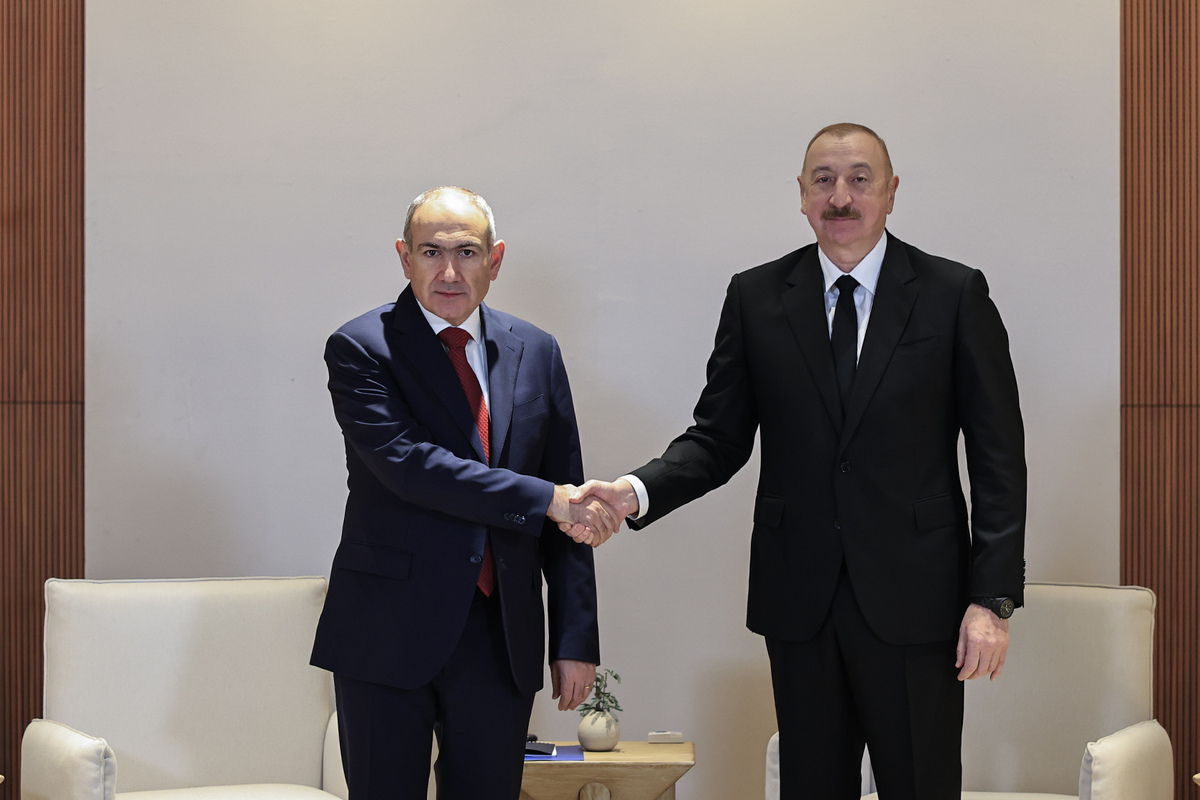
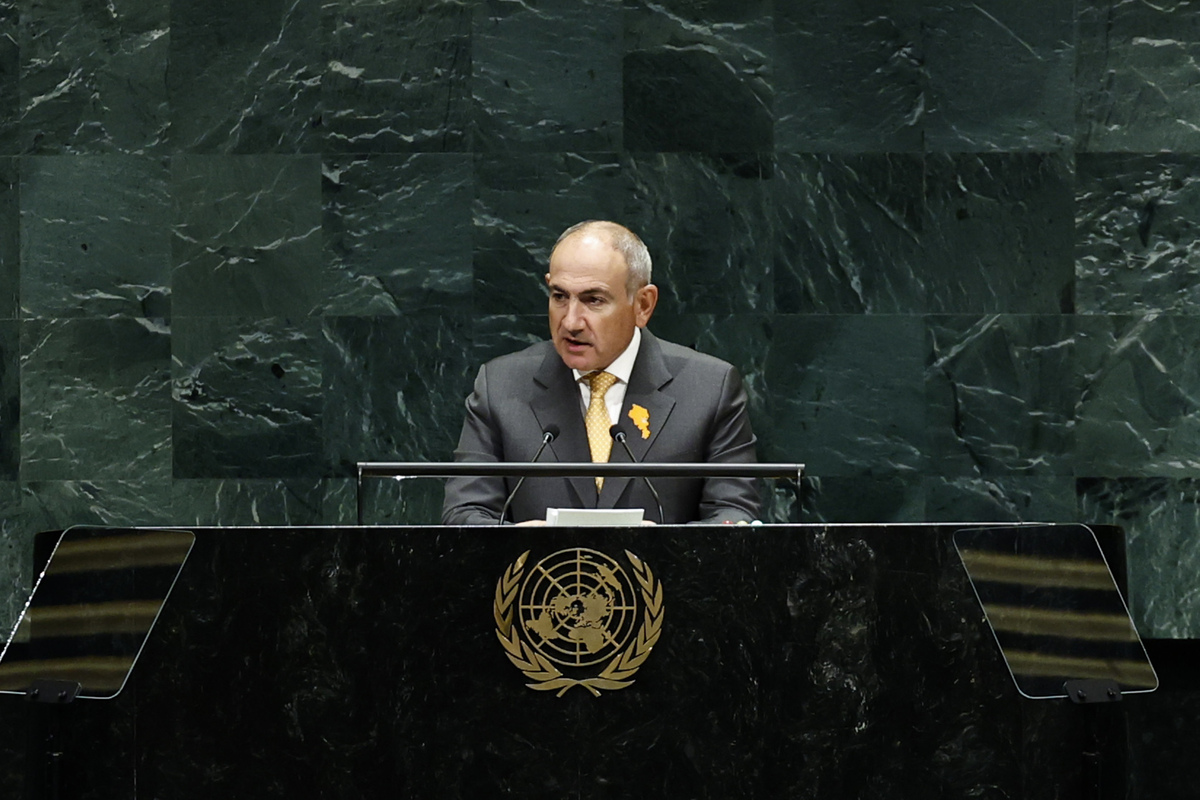
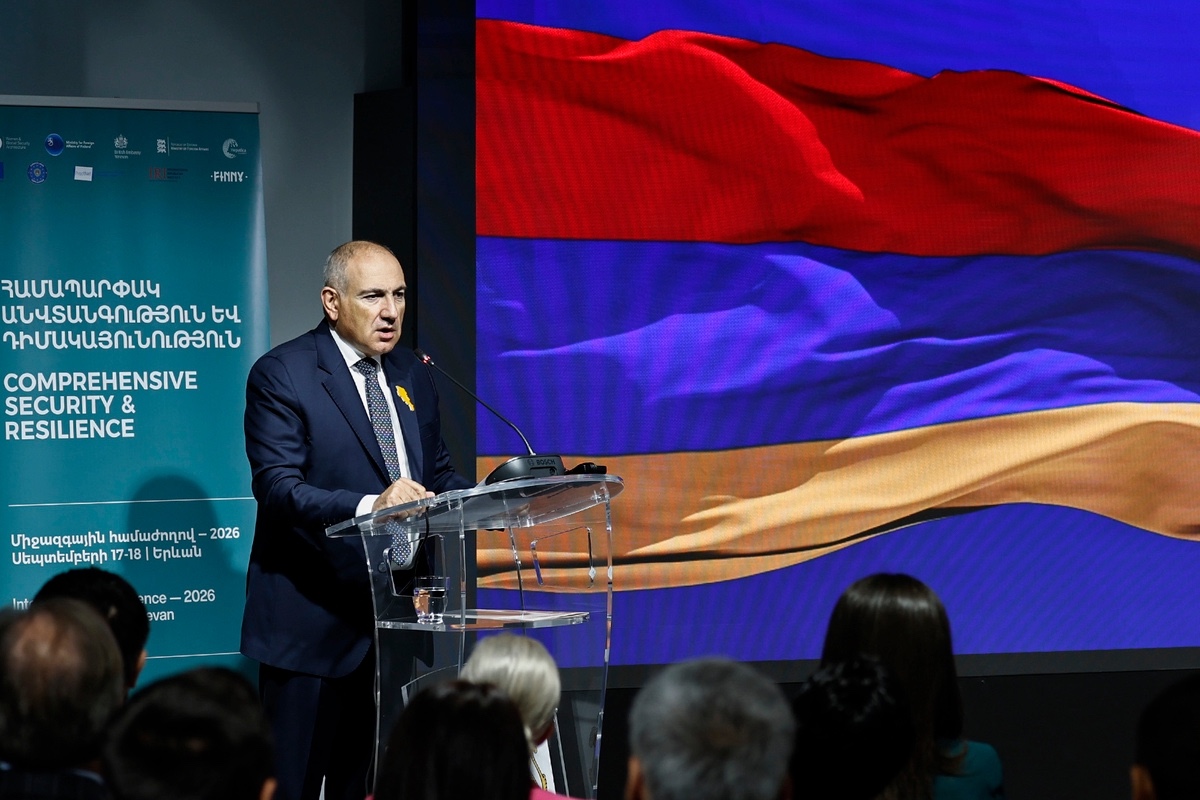
The recent commentary on genocide recognition and Armenia’s leadership is drenched in nostalgia and indignation but offers little in the way of tangible solutions. It repeats old slogans, clings to impossible dreams, and condemns leaders who dare to ask the difficult questions. At its core lies the dangerous delusion of a “return of Western Armenia,” a fantasy that, while emotionally powerful, has no basis in today’s geopolitical reality. To continue promoting such illusions does not honor the Armenian people—it betrays them.
The central charge against Armenia’s prime minister is that he has questioned the value of genocide recognition, asking what Armenians have actually gained from the decades-long campaign for symbolic acknowledgment by foreign governments. For this, he is accused of being “unpatriotic,” of undermining the struggle for justice, even of betraying the memory of the dead. But this line of attack misses the point entirely.
Recognition matters—it gives moral validation, educates the world about historical truth, and reminds Turkey that its past crimes will not be forgotten. But recognition, on its own, does not alter the security environment Armenia inhabits. It does not deter Azerbaijan’s drones, it does not defend Syunik, and it does not create jobs for young Armenians choosing whether to stay or emigrate. To confuse recognition with strategy is to confuse symbolism with survival. That distinction is not unpatriotic; it is essential.
The most corrosive element of the commentary is the repeated call for “justice” through restitution and the “return of the occupied territories of Western Armenia.” This rhetoric is emotionally powerful, particularly for diasporans raised on the collective memory of loss. But it is profoundly irresponsible to present it as a viable political objective. The Ottoman Empire no longer exists. Modern Turkey is a consolidated nation-state, a NATO member, and a regional power. Armenia, by contrast, is struggling to secure even its current internationally recognized borders after devastating conflict. To speak of reclaiming Western Armenia is not to chart a path forward—it is to indulge in a fantasy that can never be realized.
What makes this fantasy so damaging is not only its impossibility, but the way it distorts Armenia’s priorities. Every minute spent debating the “return” of lands long lost is a minute not spent addressing the country’s very real, present-day crises: security, economic development, depopulation, and political reform. Armenia cannot afford this distraction. The survival of the Armenian state depends on pragmatic, realistic strategies, not on the endless recycling of historical grievances that, however justified, cannot be resolved through slogans.
Equally troubling is the contempt shown for those who dare to question whether recognition alone yields practical benefits. This contempt silences debate and treats honest inquiry as treachery. Yet questioning is not betrayal—it is the beginning of wisdom. Symbolism has its place, but symbolism cannot substitute for defense policy, diplomacy, or economic reform. Armenia must be able to hold two truths at once: that the genocide is an undeniable historical fact that demands remembrance and recognition, and that remembrance alone will not secure the nation’s future.
There is also an uncomfortable dynamic at play: much of the maximalist rhetoric comes from the diaspora, far removed from the daily struggles inside Armenia. From the safety of Los Angeles, Paris, or Moscow, it is easy to demand the “return of Western Armenia” and condemn leaders in Yerevan for “capitulating.” But for Armenians living in Armenia, the stakes are different. They are the ones facing hostile neighbors, poverty, and displacement. They are the ones who will pay the price for reckless policies based on illusion rather than reality. Diaspora voices matter, but they must carry the humility of distance, not the arrogance of easy demands.
The truth is that Armenia needs a new political vocabulary—one that does not abandon history, but that refuses to be imprisoned by it. The genocide must be remembered, taught, and recognized. But remembrance should not be confused with remaining in the past. Armenia must seek security through diplomacy, alliances, and internal reform, not through impossible dreams of lost lands. True patriotism is not shouting the loudest about past glories or grievances; it is doing the hard, often thankless work of ensuring that the state and people of Armenia survive in the here and now.
The Armenian people deserve honesty. They deserve leaders who will tell them the truth about what is possible and what is not. They deserve partners in the diaspora who will support their survival, not chain them to illusions that can only lead to further disappointment and division. Above all, they deserve a future not defined solely by mourning the past, but by building a resilient, dignified, and secure present.
Armenia cannot afford to be consumed by fantasies of Western Armenia’s return. That path leads only to paralysis and despair. What it needs is pragmatism, courage, and vision rooted in today’s reality. The real betrayal is not asking whether genocide recognition delivers tangible results. The real betrayal is continuing to sell impossible dreams to a nation fighting for its very survival.
Spoken like a true turk Hagop. Genocide recognition and reparations are extremely important. As the acknowledgment and reparations will prevent genocide from happening again. Alas, the failure to internationally recognize the Armenian genocide has led to the jewish holocaust and the present genocide in Gaza. We in the Armenian diaspora and Armenians in Armenia have a responsibility to fight for Recognition and just reparations. It requires a competent Armenian government to build a nation and at the same time to fight for recognition and reparations. Unfortunately the present pashinyan government sacrifices Armenian lives and interests to placate its turkish and american sponsors while also enriching itself with billions of dollars.
Actually, it is your irresponsible and unpatriotic statements that dishonor and betray the Armenian people. It is quite clear that you don’t understand the premeditated Turkish scheme behind the Armenian Genocide. The Turkish seizure of the Armenian homeland, occupied Western Armenia, and the Armenian Genocide are forever tied together. You can’t talk about one without talking about the other. In other words, to put an end to the Armenian demands and their aspirations to live free of centuries-old Turkish occupation, required the removal of the Armenians from their ancestral homeland and demanded the complete and permanent seizure of their territories. If there were no Armenians left on Armenian territories, there would no longer be any Armenian demands. By explaining away Armenian legitimate demands to their seized homeland as a result of the genocide as delusional, dreams and fantasies you are, perhaps unwittingly, legitimizing the genocidal actions of the Turks. Geopolitics should have no bearing on what is legitimately yours. The liberation of Artsakh three decades ago, in the eyes of many I’m sure, was also a delusion and a fantasy but it did happen.
FYI – After losing centuries-old occupied territories, voluntarily entering into WW1 in 1914 on the side of their German mobilizers and Austro-Hungarian alliance collectively known as the Central Powers in hopes of recapturing lost territories and ending up losing the war at the end, the Turks had already begun the homogenization of what was left of their empire or what we know as Turkey today. Homogenization of territories meant the Turkification and the Islamization of these territories. Armenians were neither Turkish nor Islamic and their prime target.
What makes the dream impossible is people like you who have given up on the dream. Nothing is impossible. It is a matter of time and being prepared when the right time comes to act. However, when the right circumstance comes and people like you have long forgotten the dream, then you make it impossible. The enemy can take our land, but cannot wipeout our memory and our dream. Only we can kill our dream by forgetting our rightful demands. In terms of geopolitical realities of today, I am not stupid, I know those realities better than you, because my expertise is international relations. I am not talking about tomorrow morning nor next decade. You have no idea about the geopolitical circumstances in 50 or 100 or 500 years from now. If you do, you are a prophet. When the right time comes in the distant future and you have already forgotten your demands and have given up, that’s when nothing will happen. By giving up, you are completing what our enemies started. You should never say never. Never means nothing will happen from now till eternity. You have no idea what will happen 500 or 1,000 years from now. You cannot predict the future. No one can.
Let me give you a real example. When Israelis lost their homeland 2,000 years ago, if they thought like you, there would be no Israel today. They did the opposite of what you are suggesting. They did not forget their demands and did not give up. For 2,000 years. Each generation told the next generation, “next year in Jerusalem,” They kept the dream alive for 2,000 years. And you are ready to give up in 5 years in the case of Artsakh and 100 years in the case of Western Armenia. They kept the dream alive, until the right time came and they acted on it. This is no fantasy. It’s the reality, more real than Pashinyan’s fake real Armenia. You are talking about Turkey being a powerful country, a NATO member, etc. You are right, but that is now and for the foreseeable future. Are you sure there will be a NATO or even Turkey 500 years from now? I seriously doubt it.
Recognition has nothing to do with security, economy or emigration. Those are the things that should be managed, if we had a competent Prime Minister. He is the last person qualified to lead a country with so many critical problems. He cannot even be in charge of a doghouse. Since he is so incompetent, he should just shut up. The more he opens his mouth, the more he exposes his ignorance and incompetence. Let me explain something to you. I live in the Diaspora. I have no position in Armenia’s leadership. Whatever I say or write has no consequences on the security of Armenia. I am not asking that Pashinyan say the things I am saying. All I am asking him is to remain quiet. He should neither demand Western Armenia nor say that we have no demands. Why give up now something that may not come to happen hundreds of years from now. He should just shut up. He has no right to say that there is no such thing as Western Armenia or Artsakh. He is not in charge of either region.
Regarding his childish questions intended to undermine the recognition of the Armenian Genocide, he is doing the same thing denialists Turks do. Turks not always outright deny the Genocide. They raise questions, just like Pashinyan, to raise doubt in the minds of others. You seem to be OK with Pashinyan’s shameful talk about the commemoration of the genocide being prompted by the Soviet Union. This guy needs to have his head examined. Forget about being unpatriotic. He is plainly mentally unstable.
I don’t know who you are, since you do not disclose your last name, but what you wrote is a carbon copy of what Pashinyan says.
You think I am in favor of endangering Armenia’s security. Far from it. There is one man sitting in Yerevan who has already totally compromised Armenia’s security, possibly beyond repair. And you are encouraging him to do more damage.
In terms of your lecture about the Diaspora should support Armenia’s survival, you probably don’t know that my charity, Armenia Artsakh Fund, has delivered over one billion dollars worth of medicines to the people of Armenia in the last 36 years, helping save thousands of Armenians. When you do one percent of what I have done for Armenia, you can then dare to lecture me about helping Armenia.
No one really knows the future. There’s also the issue of past now no longer living memory. Even for Israel and Jewish people the holocaust legacy no longer rallies around as before. In Europe increasingly overrun with Africans and Asians who can’t be guilt tripped by Israel over it and the historical population who has heard of it for about 6 million times and hence fed up with hearing it yet again. There’s the sense that Turkey got away with it which will rankle.
International protocols about boundaries are very rigid and it would take a collapse of the United Nations for that to occur in which case there would be no protocol to protect Armenia from irredentism from Turkey and Azerbaijan either.. As for Israel and ancient Judea old raptures never recaptured . Or
No one really knows the future. There’s also the issue of past now no longer living memory. Even for Israel and Jewish people the holocaust legacy no longer rallies around as before. In Europe increasingly overrun with Africans and Asians who can’t be guilt tripped by Israel over it and the historical population who has heard of it for about 6 million times and hence fed up with hearing it yet again. There’s the sense that Turkey got away with it which will rankle.
International protocols about boundaries are very rigid and it would take a collapse of the United Nations for that to occur in which case there would be no protocol to protect Armenia from irredentism from Turkey and Azerbaijan either.. As for Israel and ancient Judea old raptures never recaptured . Indeed the idea that they should have it all to themselves weakens sympathy and seen as chauvinistic. Or for Ireland demographic changes had rendered independence from Britain moot and ironic and put a twist on the northern Ireland issue. Dreams of Arktash and Kars will never die but best to focus on the present reality , Germany not accepting it’s losses in WW1 would go on to lose more and worse in 1945 and seems at official level to enjoy it’s demographic changes thus an utter catastrophe for itself.
We went from Soghomon Tehlerian to; Don’t make the Turks mad, or they won’t like us anymore. We went from General Antony Ozanian to Secretary Antony Blinkin in one generation. Armenia First CIA Nation. We used to be Christians.