


Uncaging the lion: Tigran Tovmasian’s story of masculinity and vulnerability
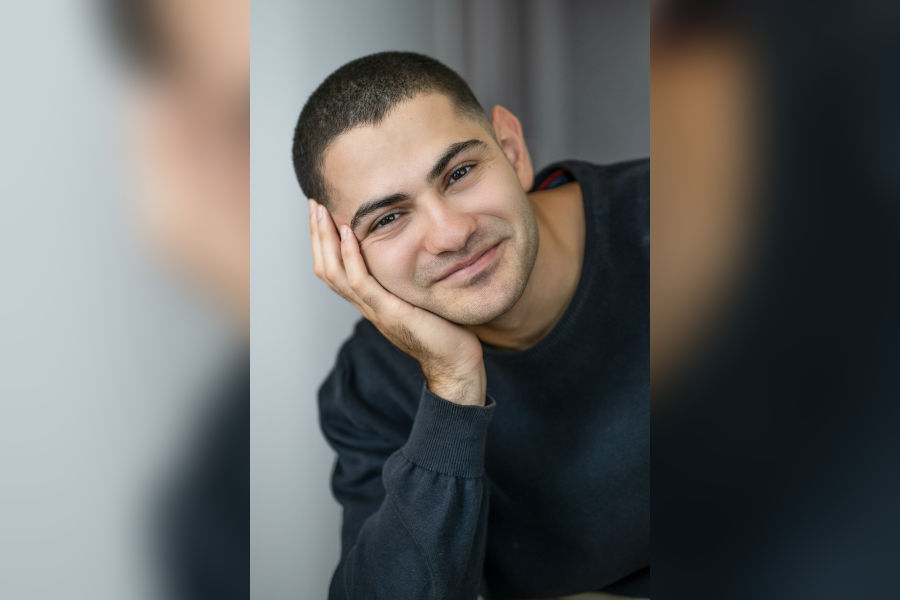
Every so often, you encounter a story that feels less like fiction and more like a confession—a piece of a soul given form on screen. Such is the case with Tigran Tovmasian’s debut, “The Circus Lion.” A 20-minute black-and-white drama, the film is a personal story from an Armenian-Australian filmmaker grounded in his community in Western Sydney.
Independently funded and created with a diverse local cast and crew, it is a story with local roots and global ambitions, already submitted to major festivals like Sundance and in consideration for Australia’s AACTA Awards. Our conversation with Tigran—the film’s writer, director and actor—explored what it means to find strength in vulnerability and to create a love letter to a place you once longed to escape from. This is the story behind the story.
This interview has been edited for length and clarity.
Milena Baghdasaryan (M.B.): Tigran, you’ve mentioned never having received a formal education in filmmaking. What made you decide to step behind the camera? Did you ever feel the need for formal training during the process?
Tigran Tovmasian (T.T.): No formal education, but I have spent the last 10 years studying storytelling from the inside out—as an actor. And as an acting teacher, I have developed the ability to communicate with actors and get the results I want. Life has been my film school. Watching great films has been my film school. Talking with and getting advice from local filmmakers has been my film school. Books have been my film school.
Over time, I realized that some stories were burning inside me and I needed to deliver them to the world. Every film, every set, every mistake became my classroom. There were moments I felt out of my depth, but I never felt I needed a degree—just courage, faith and relentless effort—not being afraid to ask for help when you need it.
M.B.: “The Circus Lion” is described as a very personal film, echoing your own journey growing up in Western Sydney. How did your personal experiences with hardship and trauma directly influence the narrative and themes?
T.T.: Growing up in Western Sydney, I always felt caught between two worlds: my Armenian roots and Australian culture, between love for where I am from and the desperation to escape it.
Going through certain family and personal traumas made me feel isolated and alone—even when constantly surrounded by people, which was the core of Samvel. The grief of losing my wrestling coach, John Withers, was a pivotal wound that shaped the narrative. Samvel’s story became my way of wrestling with my own identity, trauma and the ghosts of my past.
M.B.: You took on multiple roles—writer, director, producer and actor—for “The Circus Lion.” What was the most challenging aspect of wearing so many hats, and conversely, what was the most rewarding?
T.T.: There was never a moment to fully rest or retreat. Overwhelmed feels like an understatement when talking about my time in pre-production. While filming, I struggled to delegate responsibilities and switch roles at times, because it was my first time. I was not sleeping much, and on top of that, I am a perfectionist, which did not help. But I learned to slow down and trust my instincts and my team. The reward was seeing something that lived in my bones finally exist in the world, unchanged, undiluted. It was mine, and I knew I gave it everything.
M.B.: The film is intentionally shot in black and white to visually represent the “dark, gritty and colorless reality” of the town. How did this creative choice impact the storytelling and the emotional tone of the film?
T.T.: The absence of color amplified the weight of Samvel’s world. It stripped away distraction, leaving only what mattered: the emotion, the silence, the conflict. It created a raw and timeless aesthetic that matched the psychological space of the character—gritty, cold but honest.
M.B.: The original score incorporates Armenian instruments like the duduk and dhol to ground the film in cultural authenticity and emotional depth. What was the process of working with Arman Aloyan on the score, and how do these traditional instruments enhance the film’s narrative?
T.T.: Working with Arman was a blessing. We spoke a lot about the emotional spine of the story, and how sound could carry what words could not. The score was one of the most important aspects of this film for me. When shooting, there were so many scenes where I had an idea of a score in my mind, and Arman and I went back and forth to create something we were both proud of. Arman’s talent is unmatched. The duduk gave breath to Samvel’s grief—it is a haunting, ancient voice. The dhol brought heartbeat and urgency, grounding the story in something tribal and ancestral. Together, these instruments reminded us—and the audience—where this character truly comes from.
M.B.: Masculinity and vulnerability, trauma, emotional repression and cultural identity are listed as key themes. How do they intertwine within Samvel’s journey and what message do you hope to convey about them?
T.T.: His journey is about learning that strength is not just toughness—it is vulnerability, it is truth, it is the courage to redefine what manhood means for himself. He is constantly running from the trauma in his life, isolating himself and not letting anyone get too close, trying to cope by training harder and harder. But when he finally faces that pain and allows himself to acknowledge how much the people in his life mean to him—and actually lets them in—his life begins to take a better direction.
M.B.: The trapped circus lion is a powerful symbolic motif, mirroring Samvel’s fear of being caged by his environment and unfulfilled potential. How did you develop this central metaphor and what does it ultimately reveal about Samvel’s inner struggle and potential for strength?
T.T.: The idea came from feeling caged—by circumstance, by culture, by grief. Samvel is the lion: powerful, gifted but boxed in. Lions are not meant to be tamed. The metaphor reveals his inner battle to reclaim his wildness, his truth. In the beginning, we wanted to work with a real lion, but naturally, that was not really possible with our resources, so we had to figure out a creative alternative.
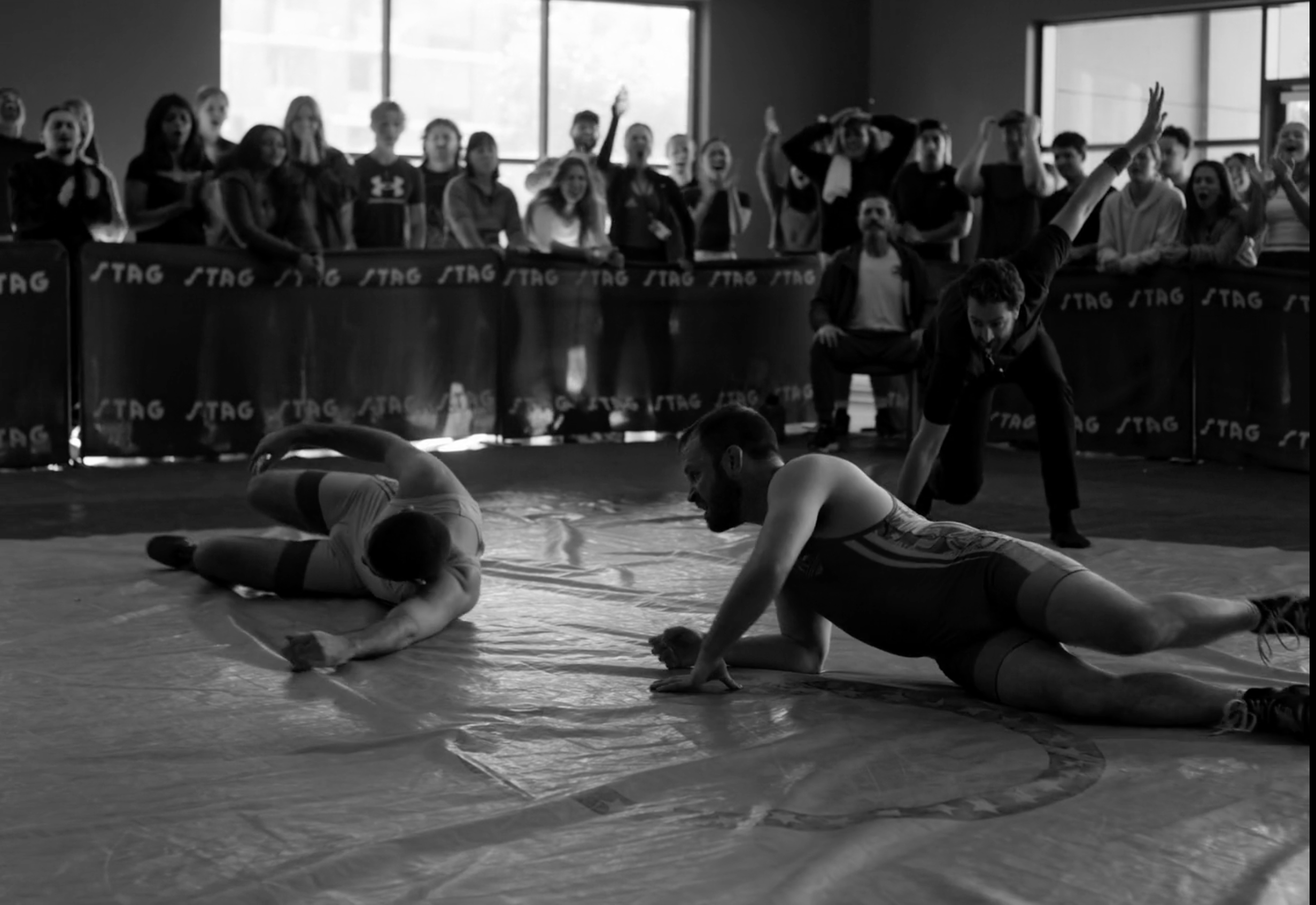
M.B.: The character of John, Samvel’s wrestling coach, honors your real-life coach, John Withers, who played a pivotal role in shaping your values. Since the film is a tribute to him after his passing, what do you hope audiences take away from John’s character?
T.T.: John Withers changed my life. He taught me how to fight with honor, how to carry myself, how to be strong. I hope audiences see in him the quiet heroes who exist in all of our lives—the mentors, the teachers, the father figures who guide us—sometimes without even realizing the impact they have made. This film is a thank you to him. And I hope that John would be proud of everything I am doing now.
M.B.: You describe “The Circus Lion” as a “love letter” to Blacktown, a place you once hated but now love, acknowledging its struggles but also its humility and resilience. How did creating this film change your perception of your hometown?
T.T.: It forced me to look again. To see past the negatives and focus on what was real—the resilience, the diversity, the soul of the place. In telling Samvel’s story, I began to heal my own. I do not run from Blacktown anymore. I carry it with pride. It is not perfect but it made me who I am.
M.B.: The film was entirely self-funded. What challenges did this present and what motivated you to take on the financial burden yourself?
T.T.: The financial strain was real—every dollar mattered. But I knew waiting for permission would kill the urgency. I needed to tell this story now, not later. I worked many jobs—anything I could take on—all day, every single day, for months. I was surrounded by friends and collaborators who believed in the vision and we made it happen with whatever we had. The risk was personal but the reward was communal.
M.B.: You trained the actors playing wrestlers for six months and they have continued with the sport. What was it like seeing your passion ignite in them and how did their real-life training contribute to the film’s authenticity?
T.T.: Beyond the film, it created a real sense of brotherhood. Wrestling gave the cast purpose and discipline. I deeply believe in the sport—its intensity has the power to shape you into a better person. Nothing humbles you more than being slammed onto a mat; it forces you to let go of what you think you know and start learning from scratch.
M.B.: Beyond “The Circus Lion,” you have two upcoming feature films, “Papik” and “The Mountain Men.” Tell us about these projects and how they connect to the themes explored in your debut film.
T.T.: “Papik” is inspired by my journey across Armenia during the Artsakh war, exploring themes of national identity and shedding light on what is happening in our motherland with its constant conflicts with Azerbaijan—and beyond that, making the world more aware of the ethnic cleansing of Armenians and Christians in the region.
“The Mountain Men” is a psychological thriller about a toxic masculinity retreat in the wilderness—how men are shaped, broken and rebuilt. Both films expand on what “The Circus Lion” began: personal stories with universal stakes.
“The Circus Lion” was supposed to be a one-off; I was just looking for something that would boost my acting career but it became so much more than that. It made me fall in love with the art of cinema, which has made me want to continue to create films.

M.B.: Your aim is for a 2025 world premiere at a major international festival, followed by a premiere in Sydney and a screening in Armenia. What is the strategic importance of each of these premieres and screenings? Specifically, how do you envision the film’s reception in Armenia contributing to its overall impact?
T.T.: Premiering at a major international festival helps the film reach a global audience—it legitimizes the work and opens doors for future opportunities. Screenings on home soil are crucial for building momentum and securing funding for “The Mountain Men,” while U.S. and Armenian festivals are key to attracting support for “Papik,” which is rooted in Armenian identity.
We will be using these festivals not only to share the film but also to network and build lasting creative partnerships. I truly believe that if the right people see the film and understand our vision, they will want to collaborate on powerful stories.
The Armenian community has shown incredible support throughout this journey. I believe in our collective strength to push each other forward—a victory for one of us is a victory for all of us. And above all, when you make something deeply personal, you hope to find the right home for it—an audience that connects with it as intimately as you do.
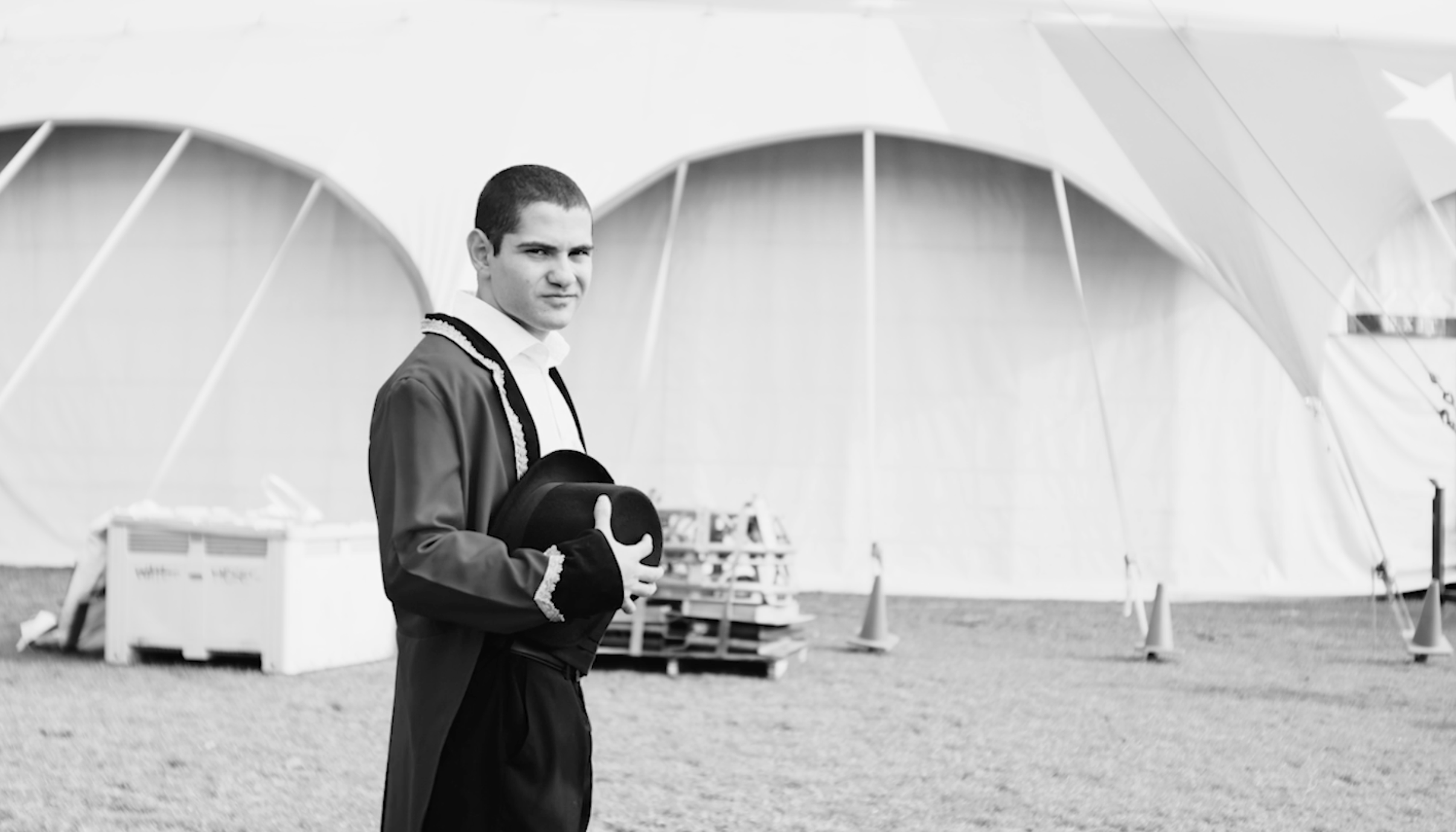
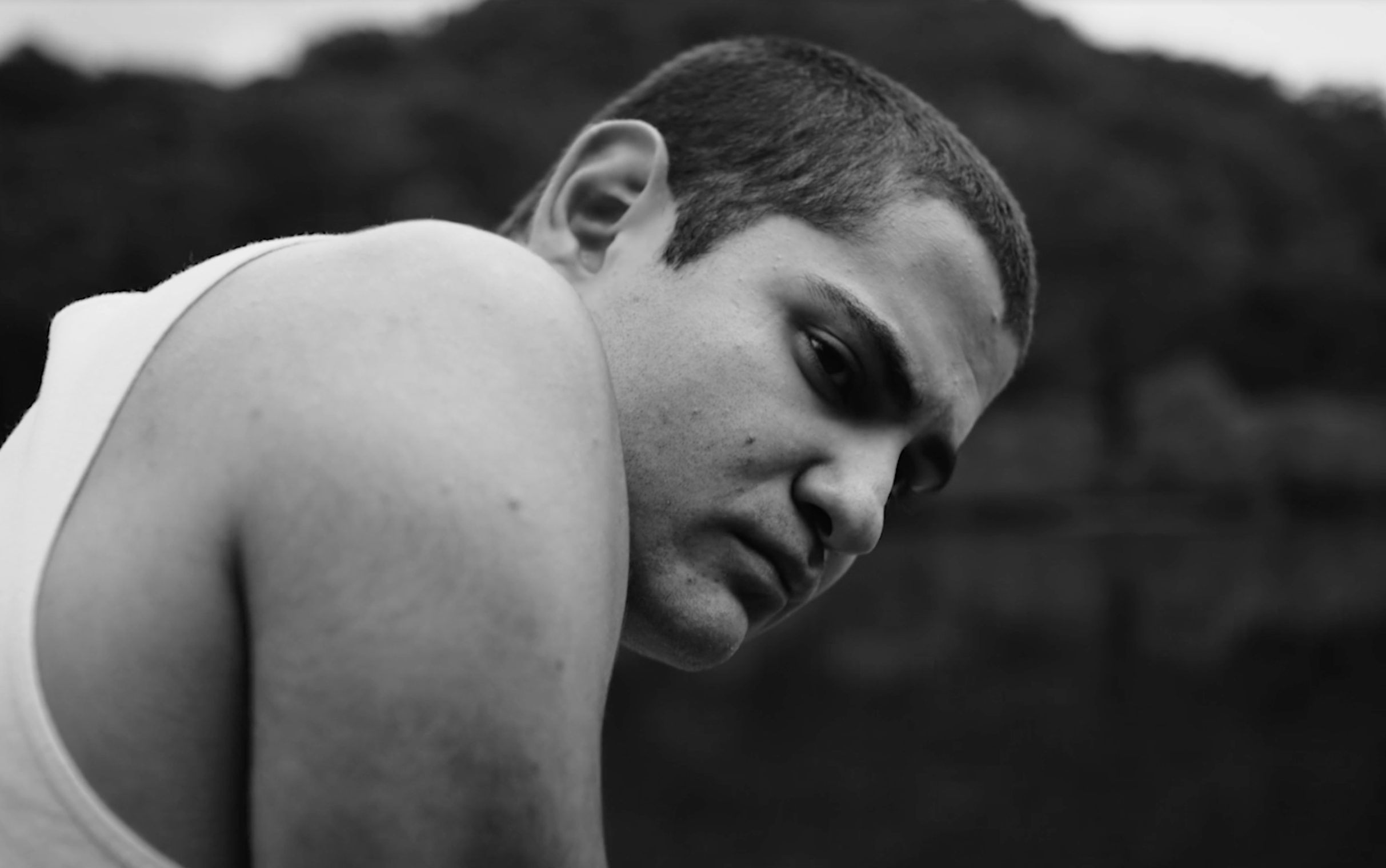
All images are stills from “The Circus Lion,” courtesy of Tigran Tovmasian, unless otherwise noted.