



A special anniversary reminding us of our humble beginnings
Our communities will never be accused of homogeneous thinking—that would be boring. We prefer arguments and seemingly endless debates. There is one domain, however, in which a majority seems to agree: we love our anniversaries.
It does not seem to matter whether it is the 25th of this or the 50th of that—energy levels rise with attendees aplenty. These commemorations serve multiple needs that I am certain sociologists have studied: they afford us an opportunity to remember while living in the present and jumpstarting a new future. They also are an opportunity to raise much-needed funds or simply reunite people whose lives were impacted by the institution or individuals being recognized. Of course, it also satisfies our almost insatiable appetite for socializing—we should be thankful for such a cultural norm.
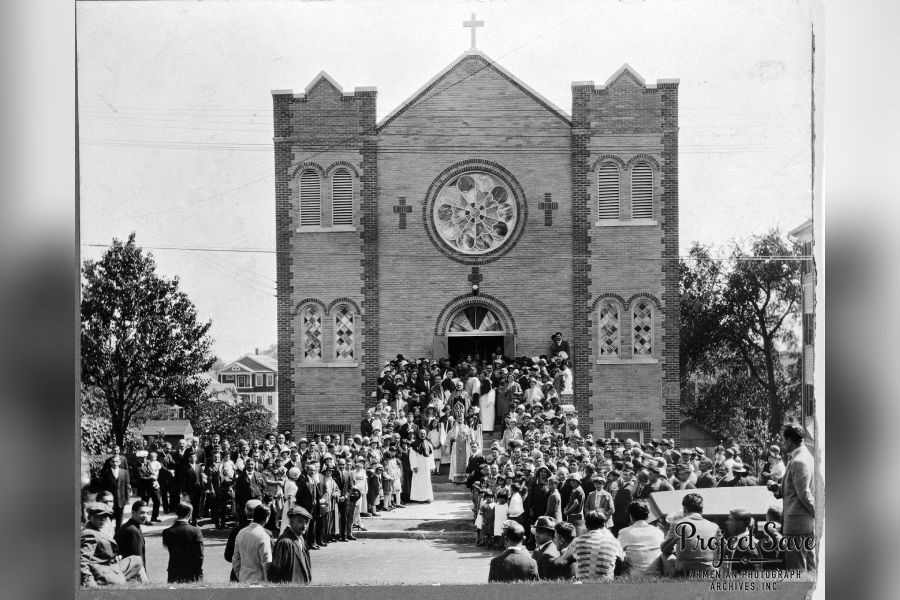
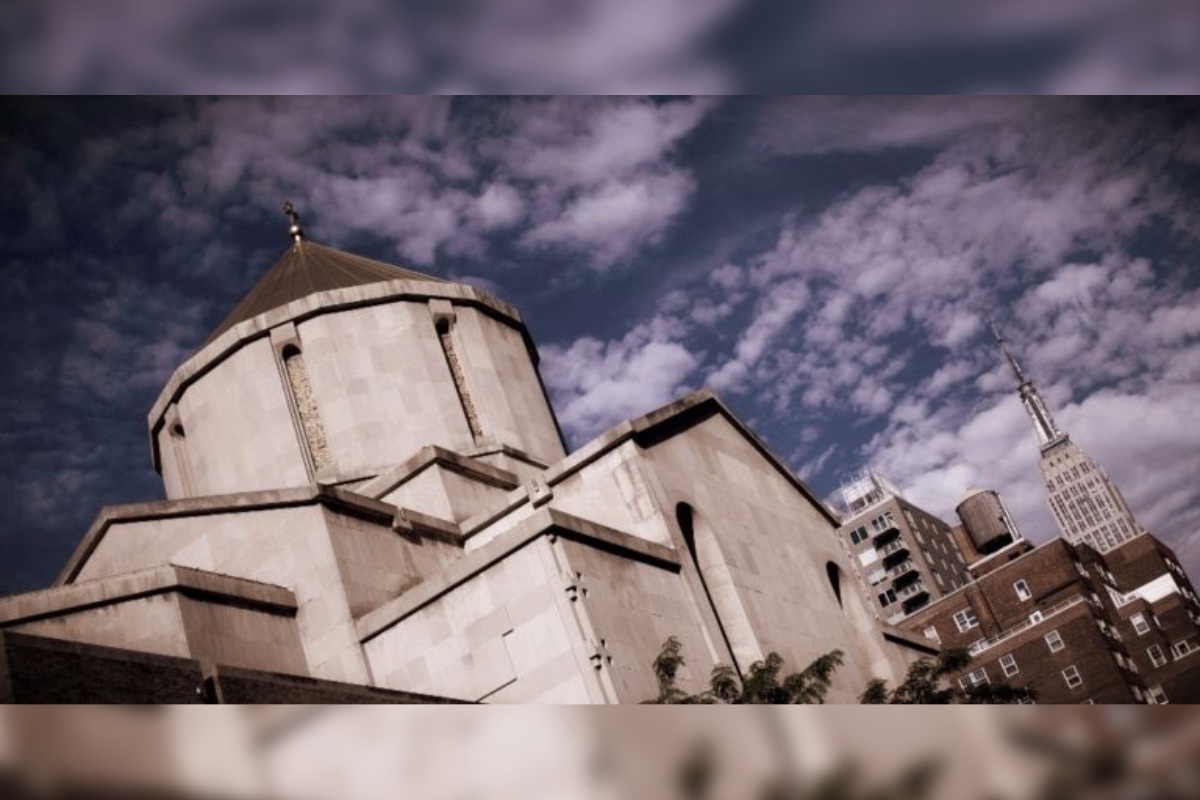
Nearly all of our community infrastructure celebrates important anniversary milestones, but our churches seem to be the most experienced—often attracting the most diverse audiences. Recently, the St. Illuminator’s Cathedral of New York City celebrated the 110th anniversary of its consecration. Known in our communities as the “Mayr Yegeghetzi” (Mother Church), it has had a remarkable history of service and resilience.
Its consecration on the Lower East Side of Manhattan in 1915 took place during the genocide and pre-dates the division in our church. For decades, it was the first and only cathedral of the Apostolic Church in the U.S. For multiple generations, it has operated as a bastion of benevolence for countless waves of immigrants arriving in New York—from Western Armenia, Baku, Iran and the Middle East. For many, the “27th Street” church was their first meal on these shores and their first connection to fellow Armenians.
St. Illuminator’s has been a spiritual center and sanctuary for those yearning to chart a new path in this country. That mission continues today, as new immigrants and longtime parishioners alike find common purpose and connection through its Armenian Christian mission. What a joyful occasion: to gather to recall and reinvigorate such a loving purpose.
This parish has seen it all—from a bustling immigrant neighborhood to the challenges of gentrification. The Prelacy and the parishioners of St. Illuminator’s should be commended for their devotion and endurance. It is no wonder so many Armenians speak of this church with such emotional attachment. To make a substantial difference in the lives of thousands of vulnerable brethren across generations and geographies is such a blessing.
This fall, another iconic pillar of the early Armenian diaspora in America will celebrate a milestone of its own. St. Stephen’s Armenian Church in New Britain, Connecticut, will mark its 100th anniversary with a special celebration in October. Reaching a century of existence is no small feat, given the pressures of economics and assimilation on some of our communities. It is an accomplishment most worthy of recognition.
St. Stephen’s is not only one of the oldest Armenian churches in the country—it is the oldest in Connecticut, where Armenians have lived for over a century. This parish also predates the church division of 1933. Its affiliation was later settled in court, causing unfortunate tension in the community for decades. Other parishes were established later in Bridgeport (Trumbull), another in New Britain and in Hartford.
Many years have passed, and thankfully, the wounds of division have healed. Today, the regional parishes enjoy healthy Christian Armenian relations, as the walls of separation have been removed. Like many communities, we have come to realize that our adversary is not another church but the ravages of indifference and ambivalence.
St. Stephen’s in New Britain has always held a quiet, special place in my heart.
My mother was born and raised in the Armenian community there. She met my dad at an AYF Olympics before he served in World War II, and they married after his return. Through my high school years, we would visit my grandparents in New Britain.
When the church was built in 1925 (and consecrated in 1926), the land it stood on was donated by Karekin “Harry” Kevorkian, who lived across Tremont Street with his family. Harry was successful in real estate and served as the deacon of the new parish. My grandmother Nevart’s mother, Takouhi, was Harry’s sister. Harry and his wife Mari’s children were close cousins of my mom. Shirley was the church organist for well over 50 years. Her brother Steve was the de facto caretaker, always keeping a watchful eye on the church grounds. Their brother Arthur was active from a young age, and their sister Susan—a vibrant 104 years of age—remains a local, dedicated parishioner. My grandfather, Takvor, was a charter trustee of the church. Deeply religious individuals, they all were wholly committed to the Apostolic church.
During our youth, we often stayed at my grandparents’ house. Grandpa Takvor had a shoe repair business in New Britain, and we would arrive there on Saturday afternoons. My parents would let me stay with him in his shop while he fixed some chicken noodle soup for me. It was always a joy (and a bit scary) to drive home with grandpa while he smoked his cigar and drove his three-speed standard transmission sedan.
When we stayed over, my parents would attend an AYF dance or a cultural event in the community. My sisters and I loved that time as it became our chance to have our dear grandparents all to ourselves. Grandpa usually went to bed early, and I still recall seeing a silhouette of him praying in bed. His deep faith has left a deep impression on me to this day.
On Sunday morning, we always attended Badarak at St. Stephen’s. It was a treat to ride with Grandpa and Grandma the few miles to Tremont Street. The church does not have a dedicated parking lot. Grandpa would drop off Grandma and my sisters at the entrance, while we continued down Tremont Street to look for a parking spot. Grandpa was a master of parallel parking and could navigate almost any opening. Walking down the sidewalk with this wonderful man were special moments in my youth. He was a humble and dedicated servant of the church. When he would introduce me as his “tornig,” I would respond with a mixture of shyness and pride.
We always sat on the fourth or fifth pew on the left side, facing the altar. That habit has followed me ever since—I still sit on the left side facing the front in every church I attend. We truly are creatures of habit. After services, we would see friends from the parish at the fellowship. The church grounds were fairly limited with a small but functional backyard in this urban residential neighborhood. The church picnics were held at a rented facility in wooded areas with a dance pavilion. Through my grandparents and parents, St. Stephen’s became a second parish for our family during those very important development years.
Our visits to St. Stephen’s were not complete without a visit to the Kevorkian family home across the street. The patriarch, Harry, had passed away when I was a baby, but we were fortunate to know his wife, Mari, and her adult children. We were instructed by our parents early on to address her as “Mari Hars”—a sign of respect for the bride of Harry.
Their home was a treasure for our young eyes, with its exquisite exterior stonework and detailed stained glass windows. Shirley and Steve, who lived there, were always warm and engaging to young people. They would serve us mezze in addition to the church fellowship refreshments. We loved our time at the Kevorkian home, which felt like visiting humble royalty. By mid-afternoon, we would return to our grandparents’ home for Sunday dinner.
Aside from seeing our beloved grandparents, what made our visits to New Britain special was that the church was the center of our time together. At the dinner table, I would listen to my parents and grandparents talk about community matters as if we were home in Indian Orchard. This church community was at the core of my grandparents’ lives. We adored them—and so, we embraced their church as part of our story. Love makes logic simple.
My grandfather was also a great storyteller. Those Sunday afternoons in New Britain were great entertainment. He always wore a white shirt and tie on Sundays. By late afternoon, the sleeves were rolled up, the tie loosened, and he was settled into his favorite chair to recount another tale. These moments—and our experiences at St. Stephen’s—are embedded in my soul.
Like many of our oldest parishes, St. Stephen’s has faced challenging times in recent years. Demographic shifts and economic pressures have taken their toll. Yet, the parish continues, guided by a core of incredibly dedicated parishioners. This is a moment to remember how churches like St. Stephen’s have impacted your lives. It is time to come forward and give back to our communities in their time of need.
The weekend of October 4, 2025, is an opportunity to re-engage, reconnect and, as Catholicos Aram I stated, revitalize.


Stepan Pidgian well said. Since moving to New England late 2018 – Massachusetts – I made a point of being at a local church and I have been at few of them. Each New England Armenian church is a living history of sorts. Of course, I am not implying they are not in other parts of the country.. Naturally I know too that for all those who work for a living, I no longer do, it is a challenge. But such visitations are educational. Reading the names carved on plaques, bricks, seeing pictures and monuments is an uplifting experience.
Stepan, I apologize for the inadvertent typographical error of my spelling your family name. Sincerely Vahe