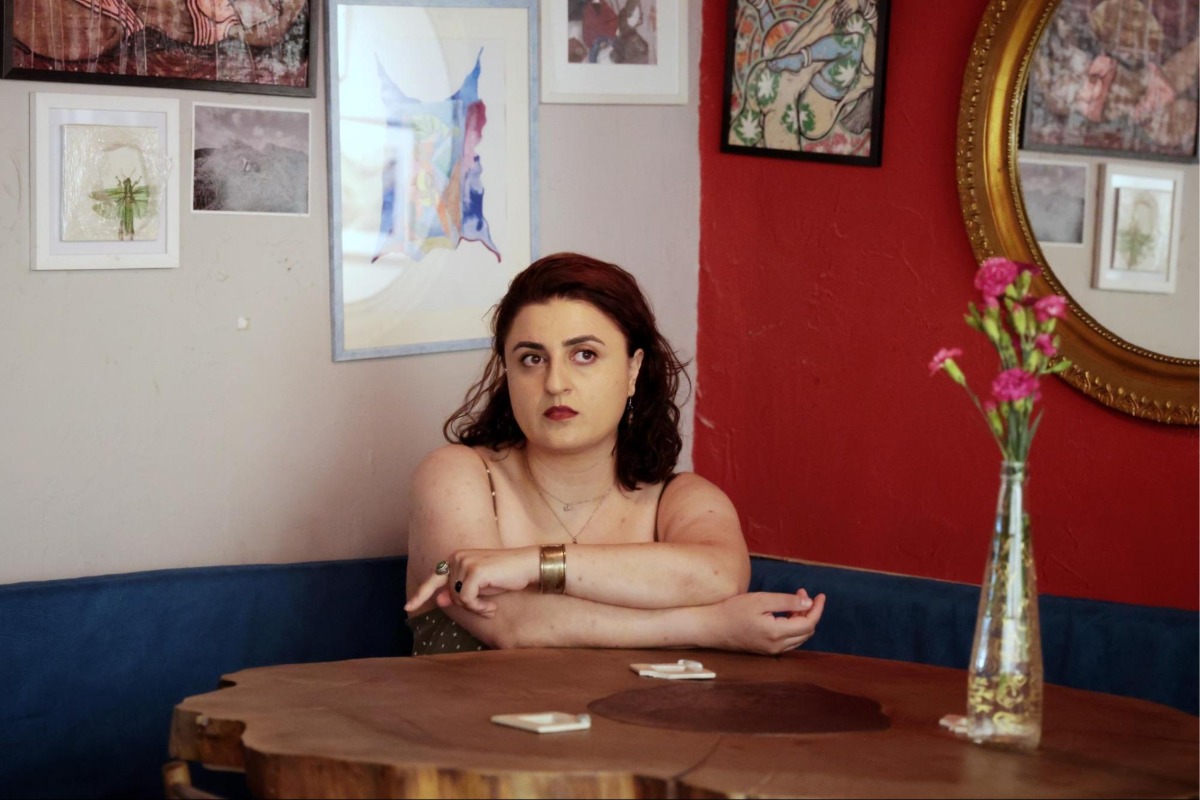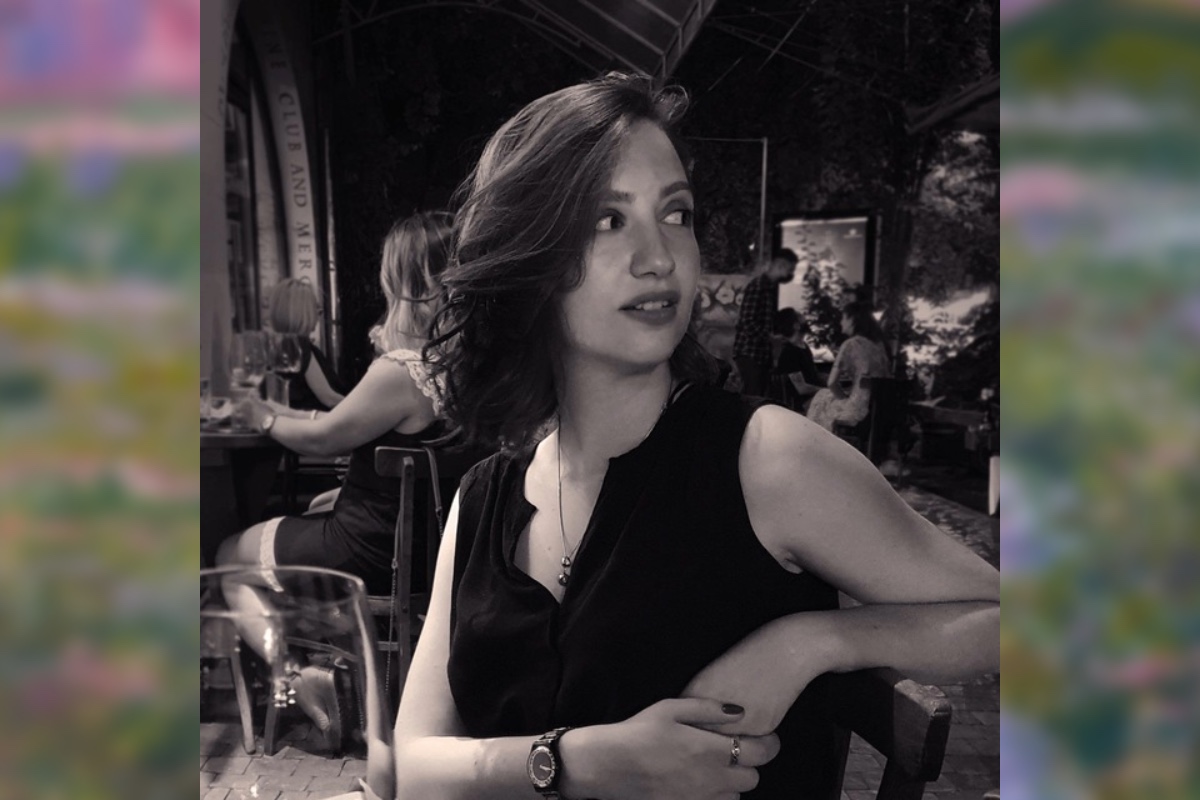
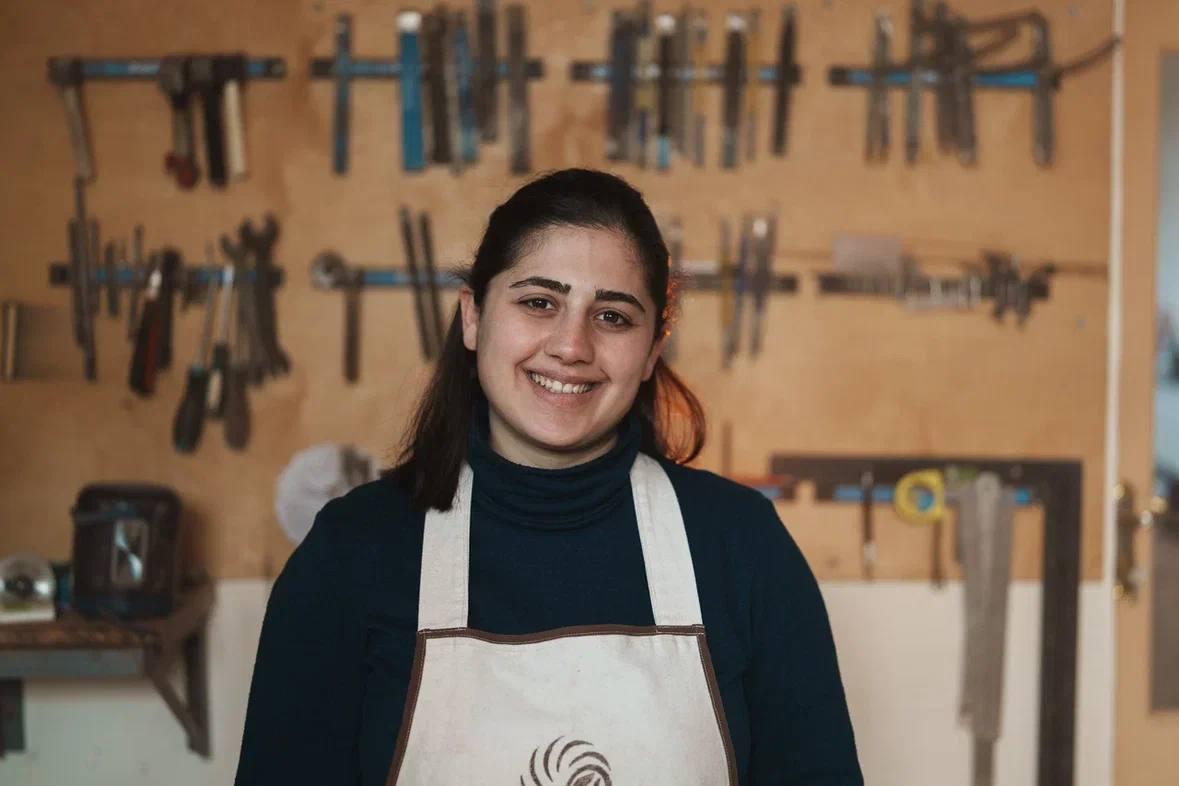
In 2018, when 23-year-old Narine Poladian boarded a flight from Beirut to Yerevan, her suitcase held an interior architecture degree, and her mind was set on a few months of volunteering through Birthright Armenia. She had no plans to radically alter the course of her life. “Leaving your family and moving wasn’t something customary for us. But I wanted to change my life and bring something new into it,” she said.
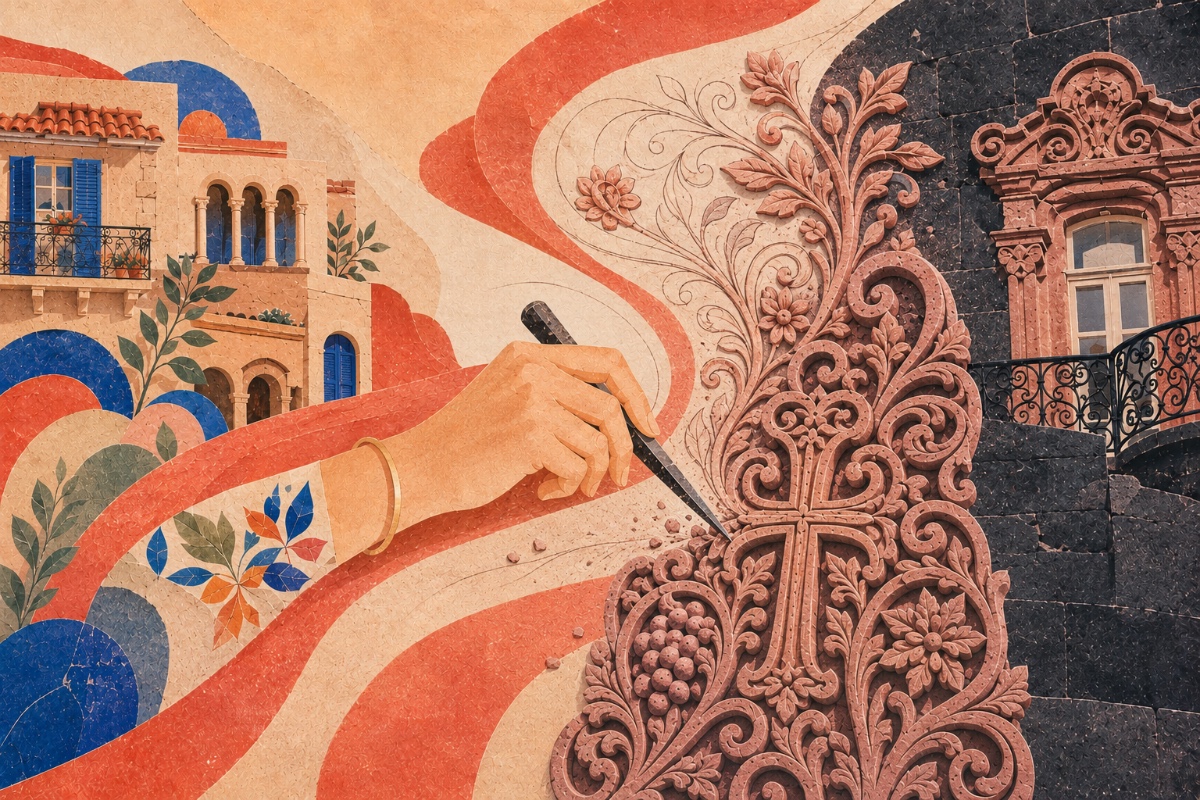
What began as a volunteer experience became a journey of self-discovery and repatriation. It led Poladian from the vibrant streets of Beirut to the workshops of Gyumri, making her one of the few women carving khachkars (cross-stones) in Armenia.
From Beirut to Gyumri, and a chance encounter on Aram Street
Back in Beirut, Poladian was shy; she had to make independent decisions for the first time in Armenia. “The volunteer period helped me find myself. The shy Narine from before 2018 is gone. Now I’m confident, persistent in my decisions, and have clear plans,” she said.
After her first three months volunteering in Gyumri, Poladian moved to Yerevan, but her heart remained in the Shirak region. The noise and bustle of Yerevan did not appeal to her; Gyumri had won her over with its simplicity, calm and human warmth. “It’s true that the people of Gyumri have lived through the earthquake and hardship, but there is no malice in them,” she said.
Later, after meeting her partner, who was also from Gyumri, she made the city her home.
The turning point in Poladian’s life arrived on Aram Street in Yerevan. While taking a walk, she stumbled upon artisans working on stone. For someone with a background in architecture, it wasn’t just a craft. “I was captivated by how ordinary stone became history, culture and spiritual value in their hands. That scene changed the direction of my life,” she said.
When she decided to pick up the hammer and chisel, her initial reaction was a mix of fear and calm. “I was afraid because stone does not forgive mistakes. But after the first few strokes, that fear turned into an inner calm. I felt I had found my true element,” she said.
Breaking into a male-dominated craft
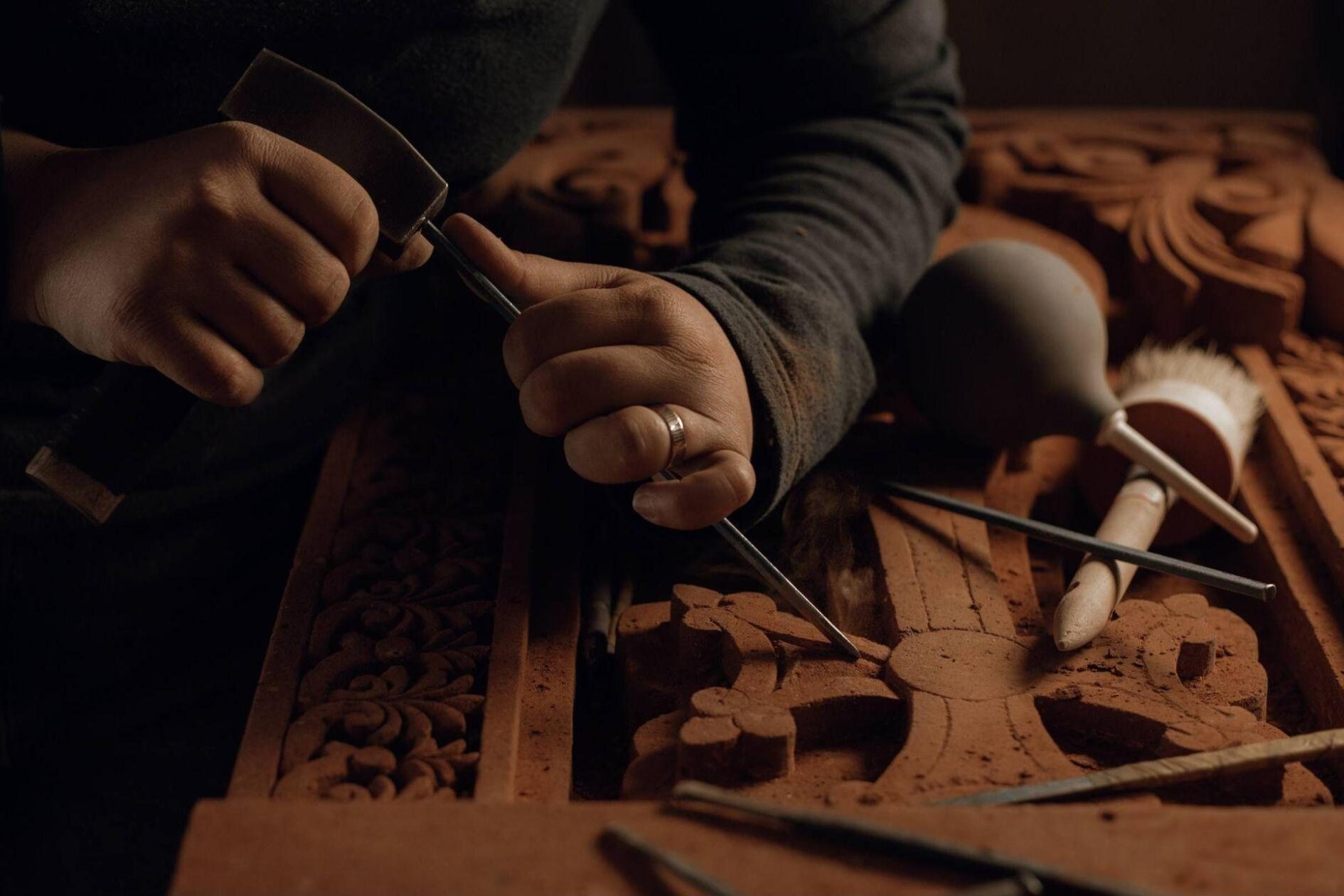
For centuries, khachkar carving has been considered a male domain. For a woman, stone dust, heavy lifting and calloused hands often conflict with societal notions of “femininity.”
“I have never seen a contradiction between delicate craftsmanship and strength. The designer conceptualizes, while the artisan brings it to life. Working with stone hasn’t stripped me of my femininity; on the contrary, it has helped me better understand my strengths,” she said.
At first, her family, especially her mother, worried about her health and unusual path. Society sometimes responded with surprise or skepticism, asking, “Did you make this?” or “A woman can’t do this kind of work.”
“In the beginning, such reactions surprised me, but then I realized that the best response isn’t words—it’s the work itself. When people see the finished khachkar, their doubts disappear,” she said.
Despite stereotypes, Gyumri’s traditional community of artisans welcomed her with open arms. Local sculptors and khachkar carvers supported her, helping with heavy tools and technical challenges. “They always help me and encourage me to do better,” she said.
“I was afraid because stone does not forgive mistakes. But after the first few strokes, that fear turned into an inner calm. I felt I had found my true element,”
The “personality” of stone: Tuff as a conversational partner
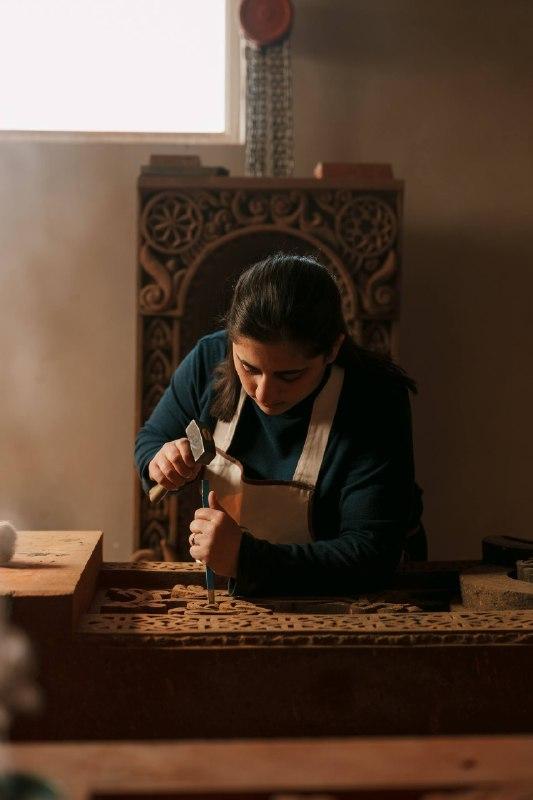
Compared to the hard, unyielding stones of Lebanon, Armenian tuff is a “warm and vocal” material for Poladian. For her, khachkar carving is not just physical labor; it is therapy, prayer and an inner dialogue.
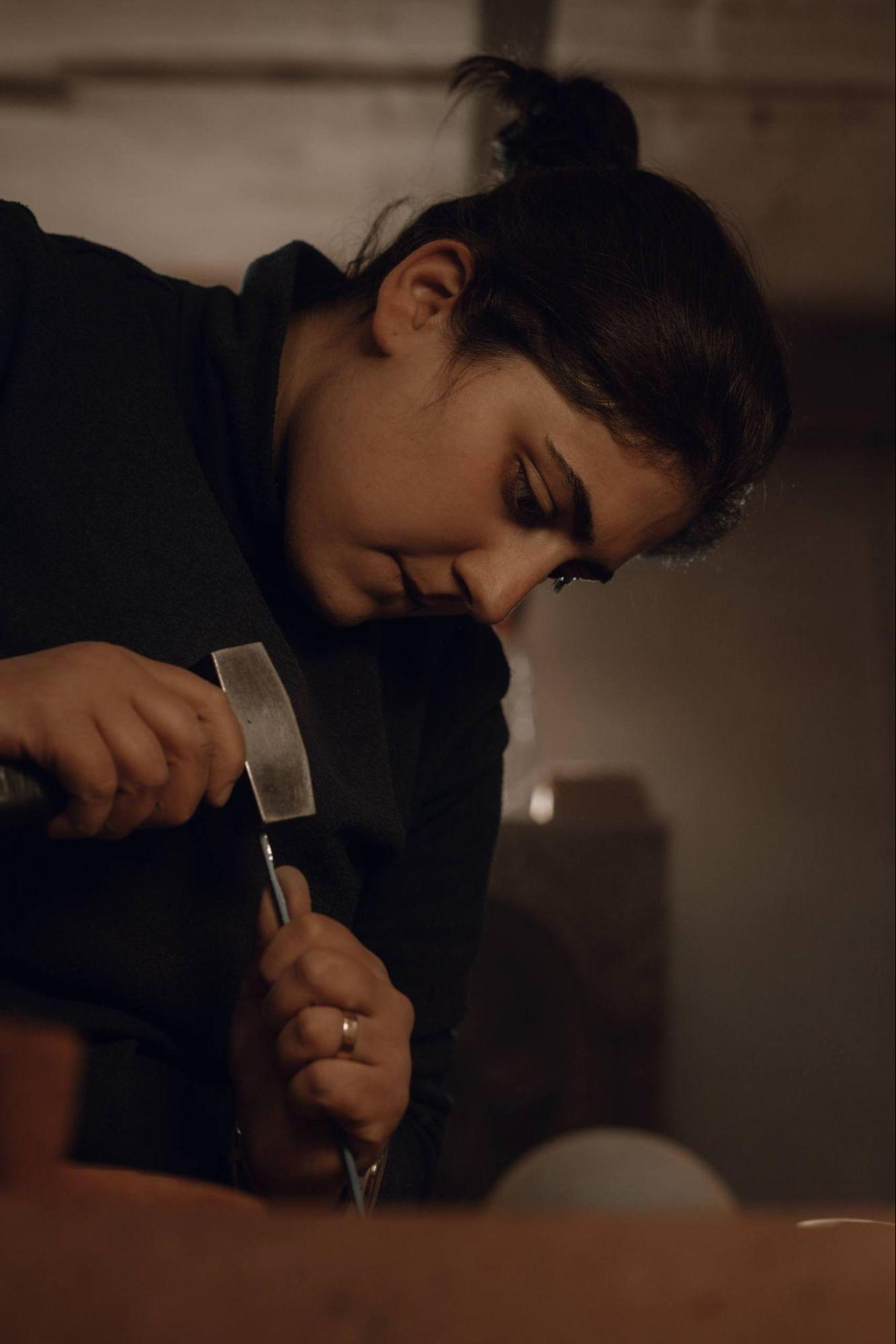
“There are moments when the whole world goes quiet, and it’s just me and the stone,” she said. “Often, the stone itself suggests what to do. You might have a plan, but the texture and color of the stone force you to adjust your details. It feels as though the stone is also participating in the creative process.”
For Poladian, patience is the most important quality in stone carving. She believes that a woman’s attention to detail helps extract emotions from the stone that might go unnoticed by a man.
“There are moments when the whole world goes quiet, and it’s just me and the stone,”
Khachkars in the modern world
In contemporary perception, khachkars are often associated with loss or grief. Poladian’s goal, however, is to convey their original essence: life, faith and resurrection.
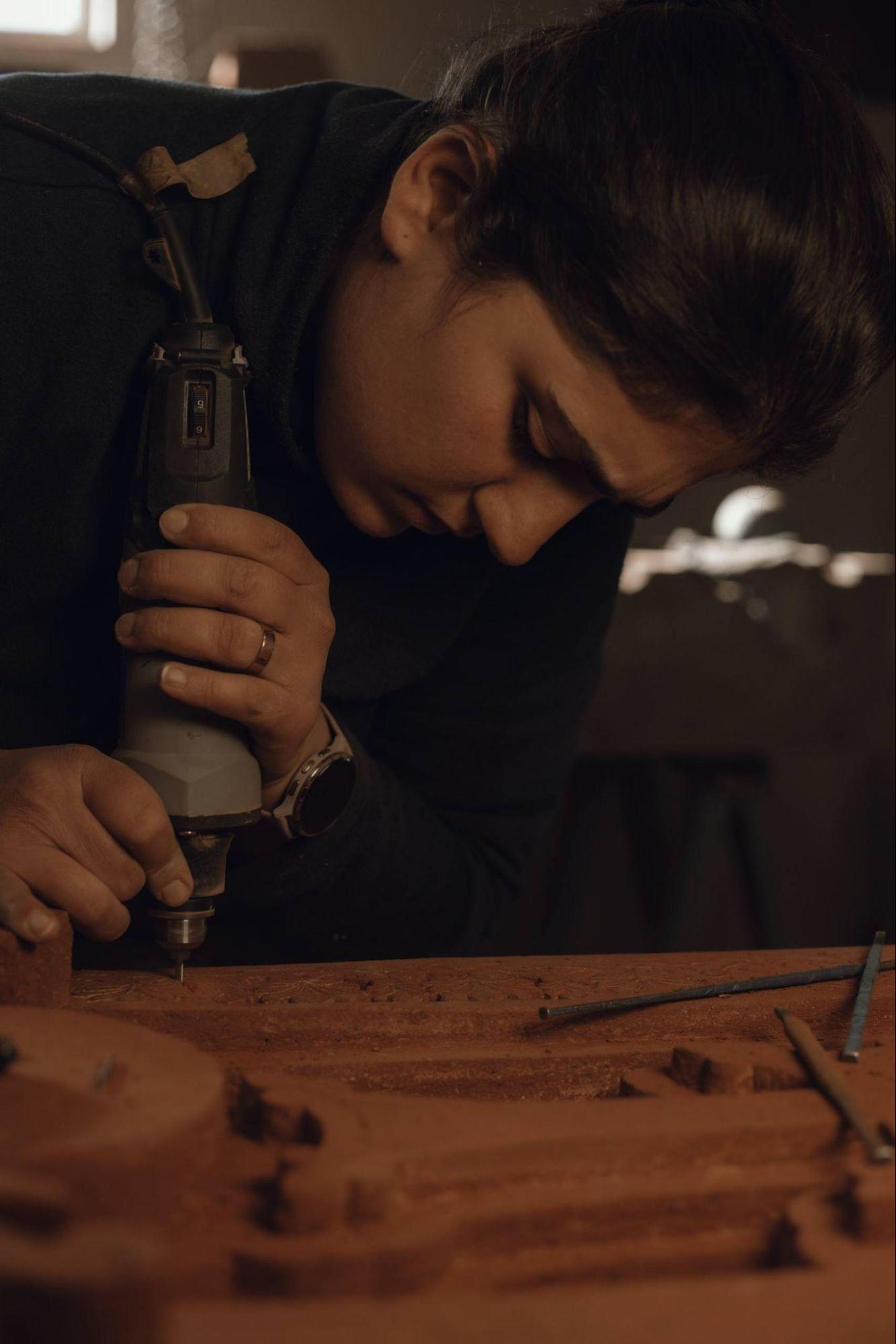
As an architect, she keeps the centuries-old symbolism and rules of the khachkar intact while applying a modern compositional approach. “Tradition should not be copied; it should be continued by creating new works that speak to the person of today,” she said.
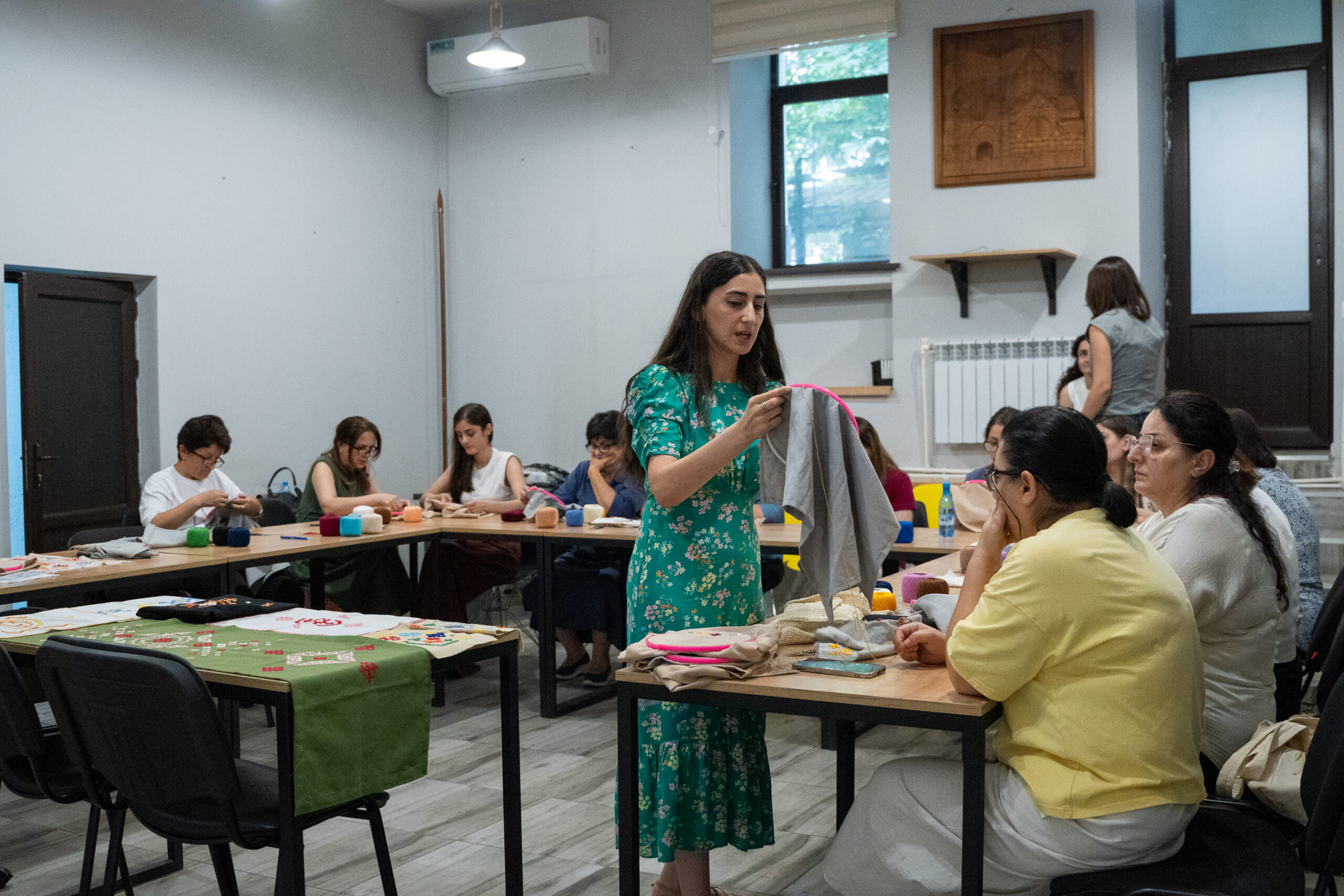
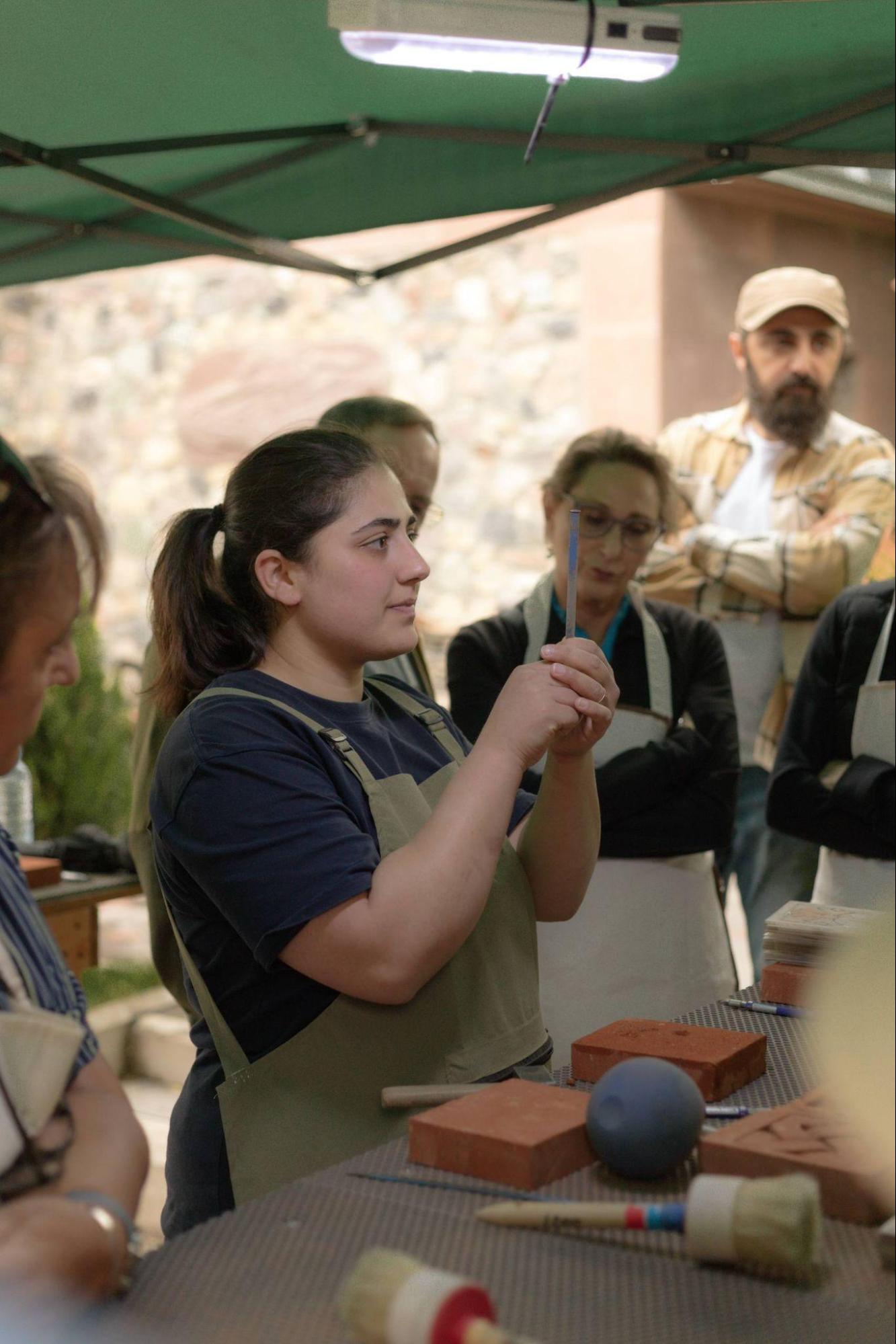
To “translate” tradition for the younger generation, Poladian creates cultural games for children and teaches sculpture to teenagers. She notices how working with stone transforms her students’ temperament: impatient children become focused and calm. “Stone forces you to slow down, listen and respect the process. It educates not only the hands but also the character,” she said.
An unfinished sculpture
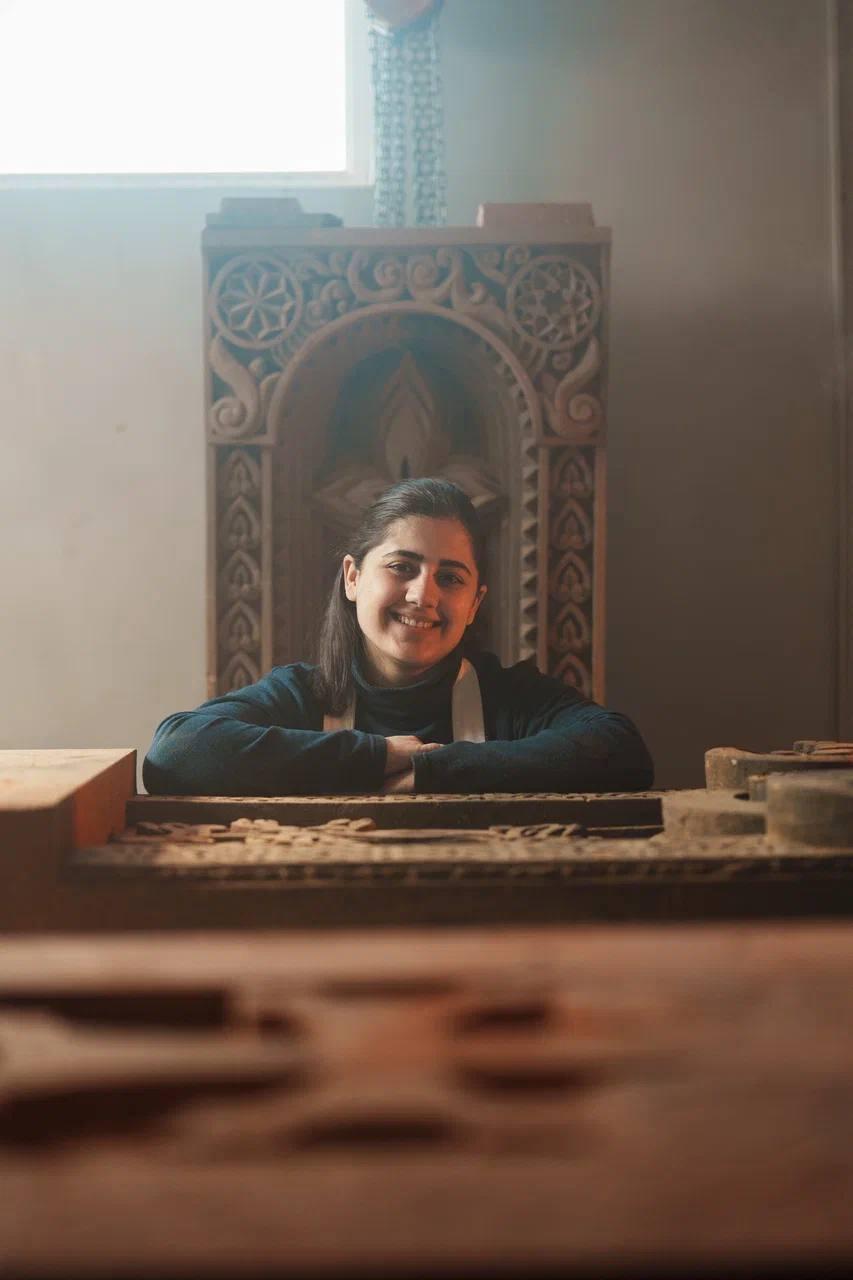
If this chapter of Poladian’s life—the move from Beirut, Gyumri and the stone—were a single sculpture, she would name it “Continuity” and leave it unfinished.
“Not because something didn’t work out, but because a creative person never reaches a final destination. Every new work, every new student, every new country is a continuation of that sculpture,” she said. “The most beautiful works of my life are still ahead.”
“Stone forces you to slow down, listen and respect the process. It educates not only the hands but also the character,”
To young women who possess talent but hesitate to enter fields considered “non-feminine,” Poladian offered a word of advice: “Talent knows no gender. If your heart pulls you toward a field, do not limit yourself to society’s stereotypes. The most important thing is to believe in your own strength and not be afraid to stand out.”