



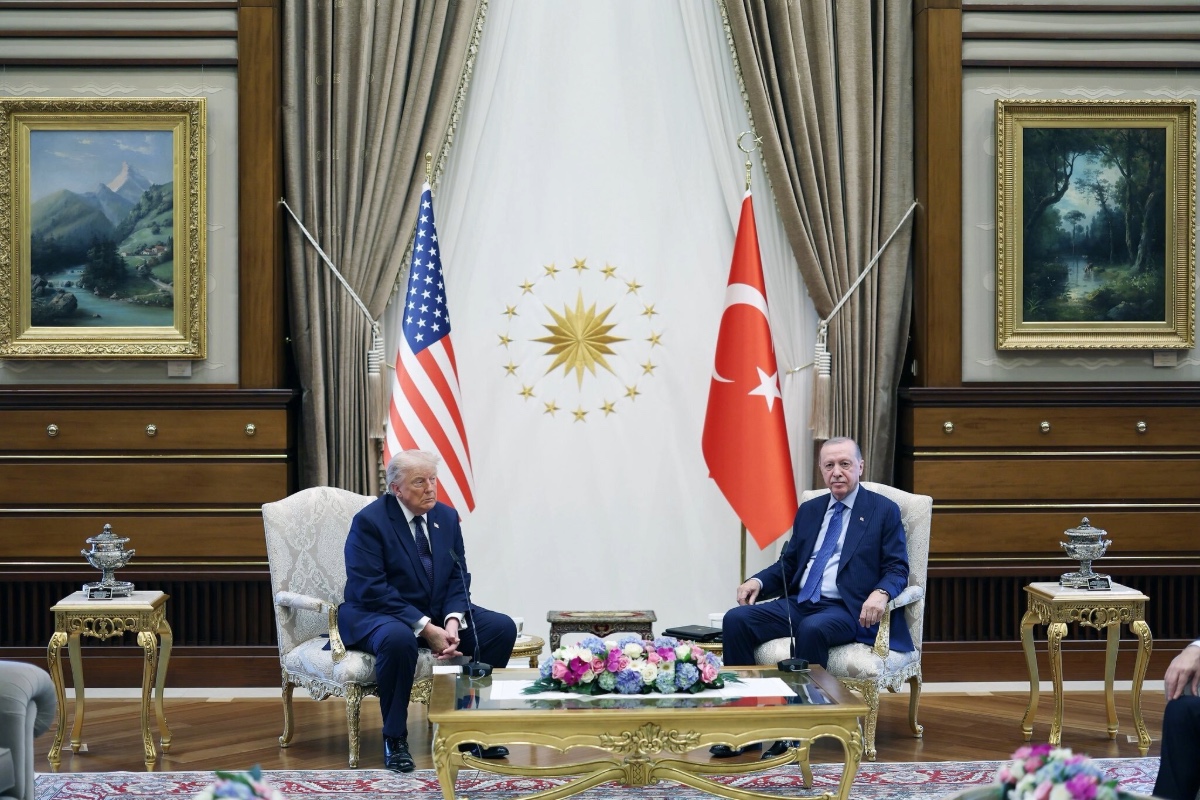
WASHINGTON, D.C. – During the NATO summit this week in Ankara, President Donald Trump announced that his administration will lift sanctions on Turkey and consider readmitting Ankara into the F-35 fighter jet program, defying bipartisan opposition reflected in two congressional hearings, a Joint Resolution of Disapproval and two letters signed by dozens of U.S. Representatives.
“We’re going to be taking the sanctions off, OK?” Trump said at a press conference alongside Erdogan. Asked whether Turkey would receive F-35s, Trump called it “certainly something we will consider.”
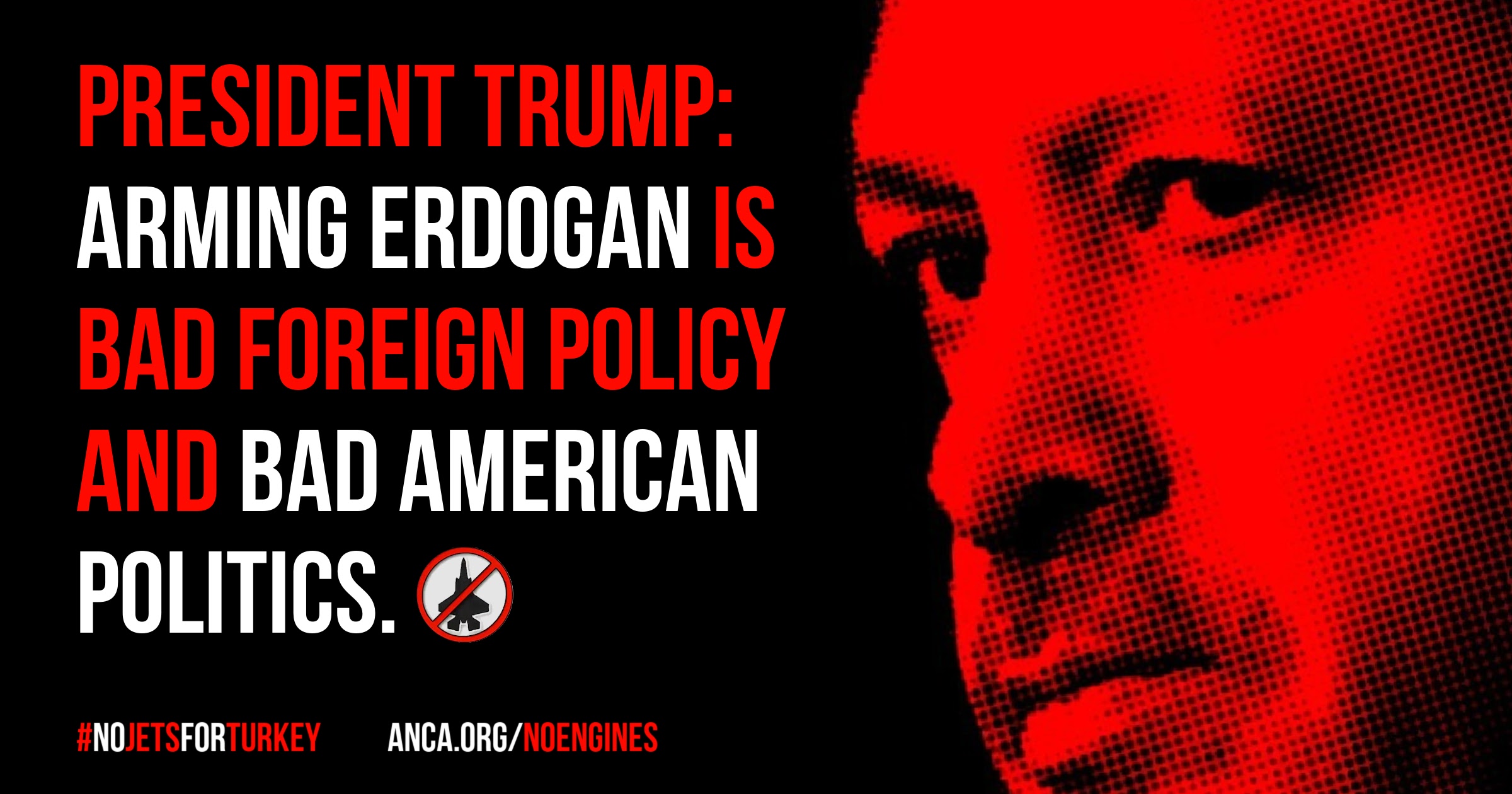
“Members of Congress from across the aisle are sounding the alarm — through two hearings, a Joint Resolution of Disapproval and U.S. House letters to House leadership — and yet President Trump went to Ankara and crossed every congressional red-line,” said ANCA Executive Director Aram Hamparian. “Arming Ankara may score the President a few points with Erdogan, but at the cost of angering Congress and alienating voters heading into the midterms and the 2028 presidential election.”
Members of Congress warned against this
Since Trump’s June 24 announcement of the proposed $700 million jet engine sale to Turkey and his administration’s review of Turkey’s reintegration into the F-35 program, members of Congress have moved on multiple fronts to block it.
Rep. Dina Titus (D-NV) introduced H.J.Res.200, a Joint Resolution of Disapproval to block the proposed sale of General Electric F110-GE-129E/F engines for Turkey’s KAAN fighter aircraft program. Titus told POLITICO’s National Security Daily that Erdogan’s government “has made repeated threats of military action against NATO allies and other partner nations,” and that selling the engines would “embolden it to pursue those threats.”
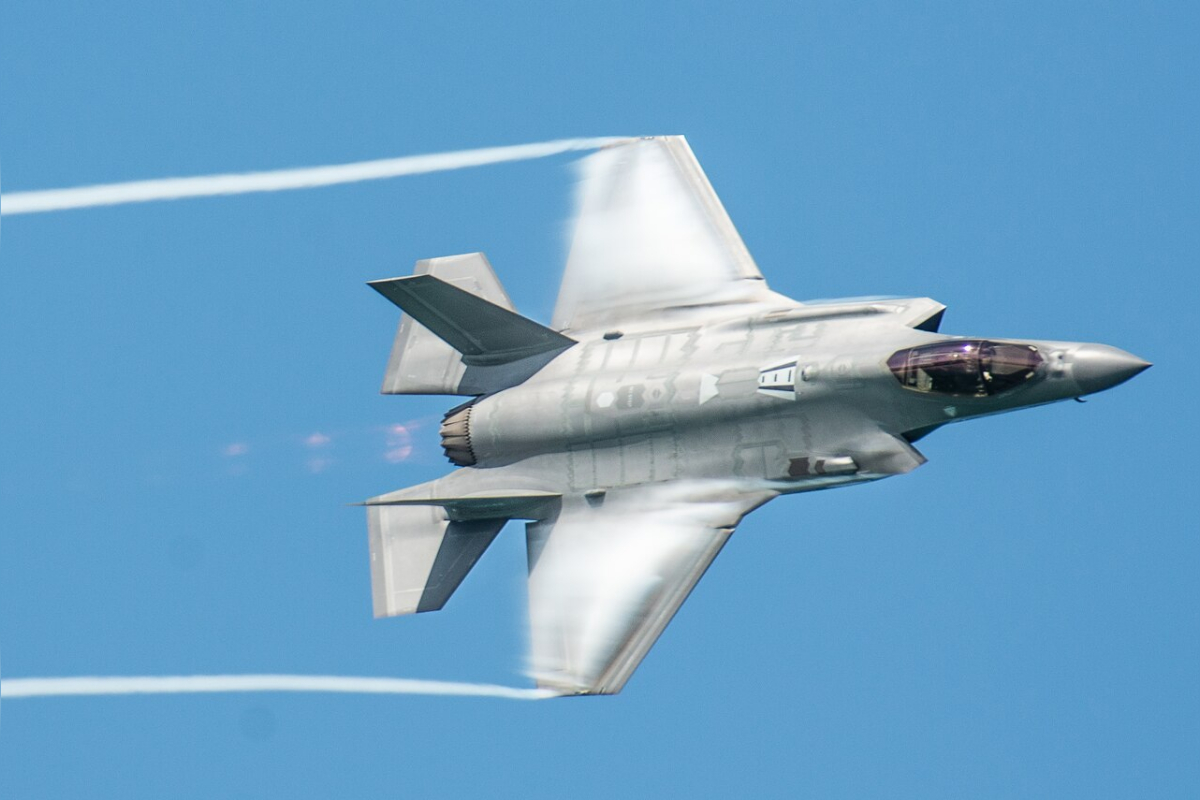

Titus also led a letter to House Majority Leader Steve Scalise and Minority Leader Hakeem Jeffries urging leadership to be prepared to introduce a Joint Resolution of Disapproval under CAATSA Section 216(c)(3) — the same sanctions authority Trump said today he intends to lift — should the administration attempt to readmit Turkey to the F-35 program without a credible legal basis. The letter cited Turkey’s “aggressive posture toward Greece and Cyprus” and its “material support to Azerbaijan in its military campaigns against Armenia” as evidence Ankara has not behaved as a good-faith NATO partner.
On a separate, bipartisan track, Reps. Mike Lawler (R-NY) and Brad Sherman (D-CA) led a letter to President Trump opposing Turkey’s F-35 reintegration. The letter states that Turkey “has hardly been a reliable partner in the present day,” pointing to its military presence in occupied northern Cyprus and its aggressive posture toward Greece, and urges the administration to “maintain this prohibition today,” warning that reversing the F-35 ban “would send the wrong message to President Erdogan and to our allies and partners both in Europe and the Middle East.”
ANCA is working alongside Hellenic American organizations, including the International Coordinating Committee — Justice for Cyprus (PSEKA), the Hellenic American Leadership Council (HALC), the American Hellenic Institute (AHI) and the American Hellenic Educational Progressive Association (AHEPA), to oppose both the engine sale and Turkey’s F-35 reintegration.
Congressional hearings documented the case for accountability
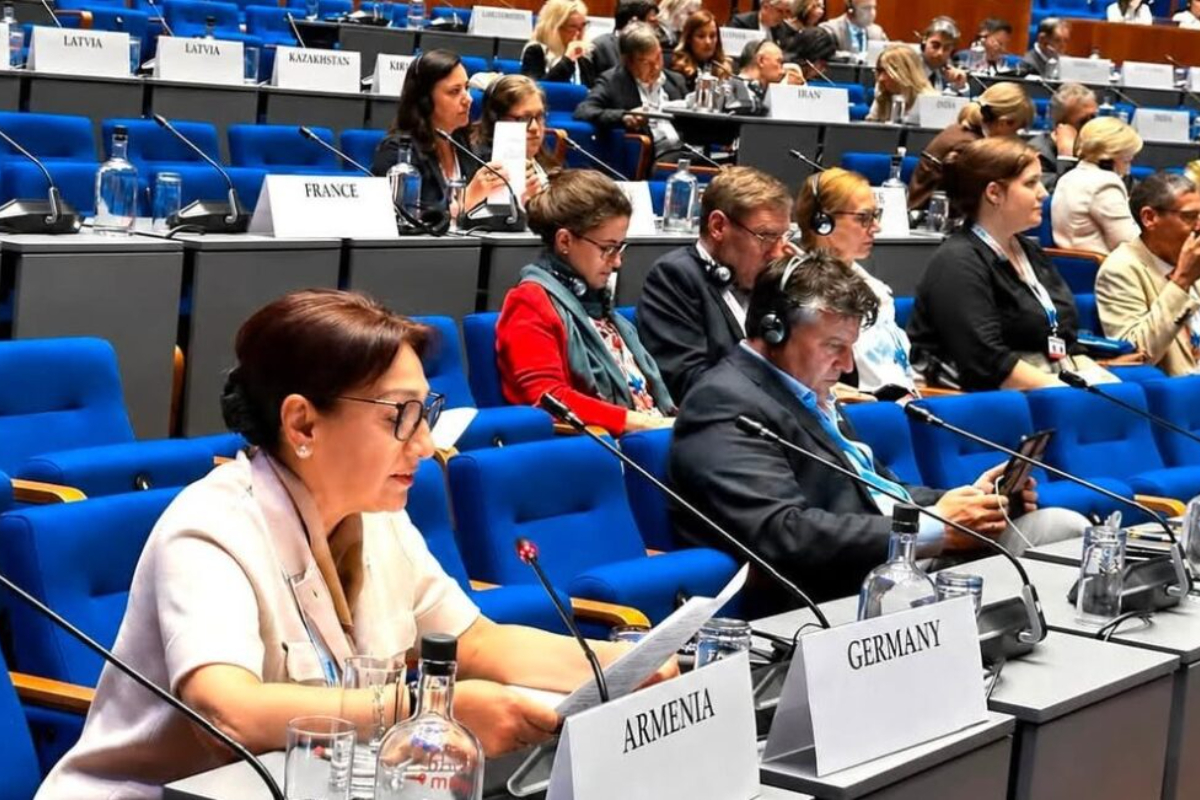
Two Tom Lantos Human Rights Commission hearings, held June 3 and June 30, documented Erdogan’s political repression at home, Turkey’s denial of the Armenian Genocide and its occupation of Cyprus ahead of the summit.
At the June 3 hearing, “Can Turkey Find Its Way Back to Freedom?” Tom Lantos Human Rights Commission Co-Chair Rep. Chris Smith (R-NJ) said Turkey holds more than 10,000 political prisoners, including journalists, lawyers, elected officials and civil society leaders. Michael Rubin of the Middle East Forum testified that Erdogan’s genocide denial and persecution of religious minorities, including Armenians and Greeks, follow the same pattern of impunity. “We saw this with both the Biden administration’s recognition of the Armenian Genocide and that of all 50 states and the District of Columbia,” Rubin testified. “Those recognitions happened and Turkey didn’t do a damn thing.”
At the June 30 hearing, “Human Rights in Occupied Cyprus,” Republic of Cyprus Ambassador Evangelos Savva testified that Turkey continues to block access to mass graves from the 1974 invasion, including the remains of at least five American citizens. Savas Tsivicos of the International Coordinating Committee — Justice for Cyprus (PSEKA) testified that Turkish colonization of the occupied north has reduced Turkish Cypriots to a minority in their own community and stripped basic rights from Armenians, Maronites and Latins alike. Tsivicos also warned that any F-35s or engines sold to Turkey “are not going to go against Russia” but would instead be used “against the three strategic allies of the United States: Israel, Greece and Cyprus.” Rep. Titus told the commission directly that arming Erdogan would mean “perpetuating the horrific policies of a government that has flouted international law with respect to Cyprus.”
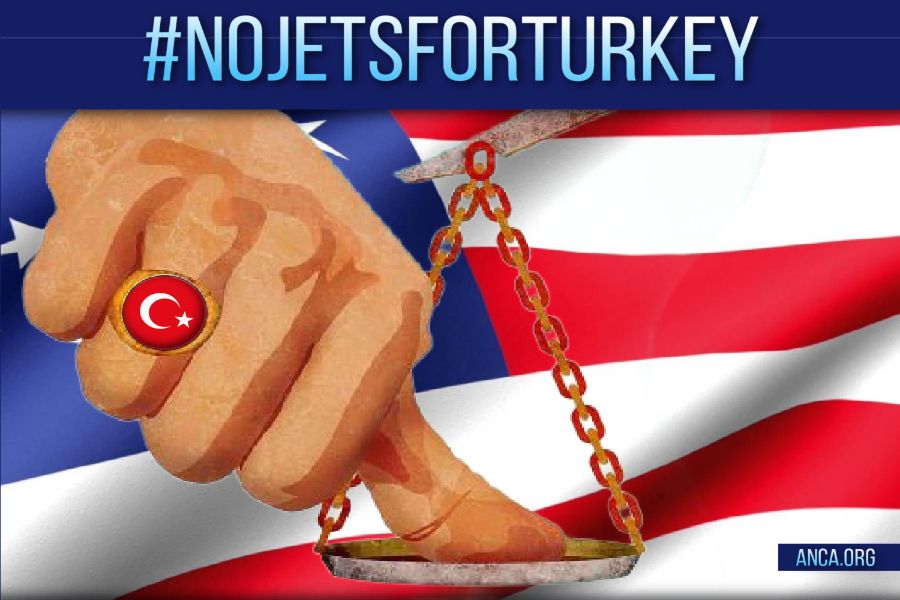
Armenian Americans can visit anca.org/noengines to urge their representatives to support H.J.Res.200 and to oppose any move to lift CAATSA sanctions or reintegrate Turkey into the F-35 program.
Take action at anca.org/noengines.



With Republicans controlling more than half of both Houses of the US Congress, and Republican members beholden to and afraid of Trump, how can there be any effective bipartisan opposition about Turkey (especially when Trump appeases its Islamist dictator Erdogan) or about any other issue? Prior to Trump, no US President in American history exerted such an extensive control over the US Congress and over other US insitutions. This is the price of diluting the separation of powers and tolerating it.