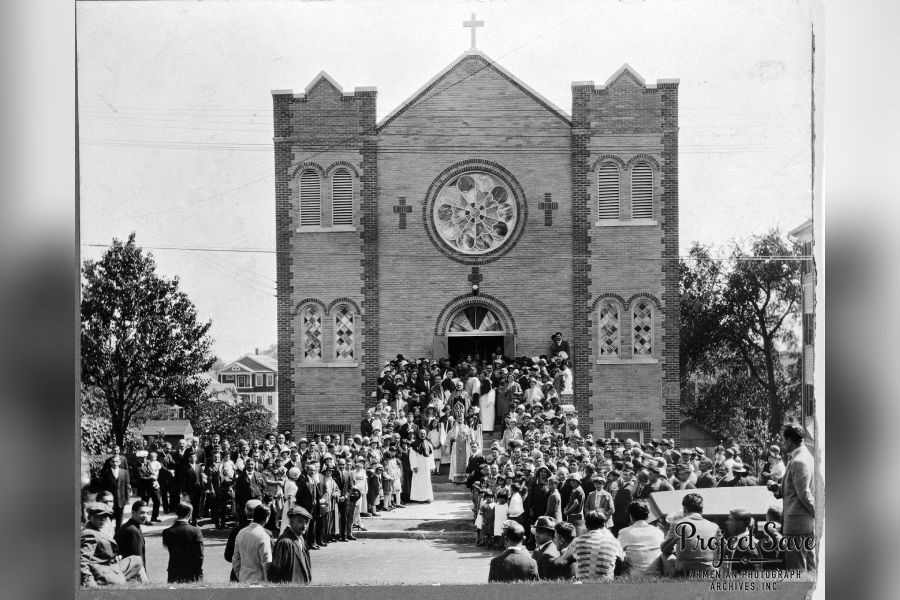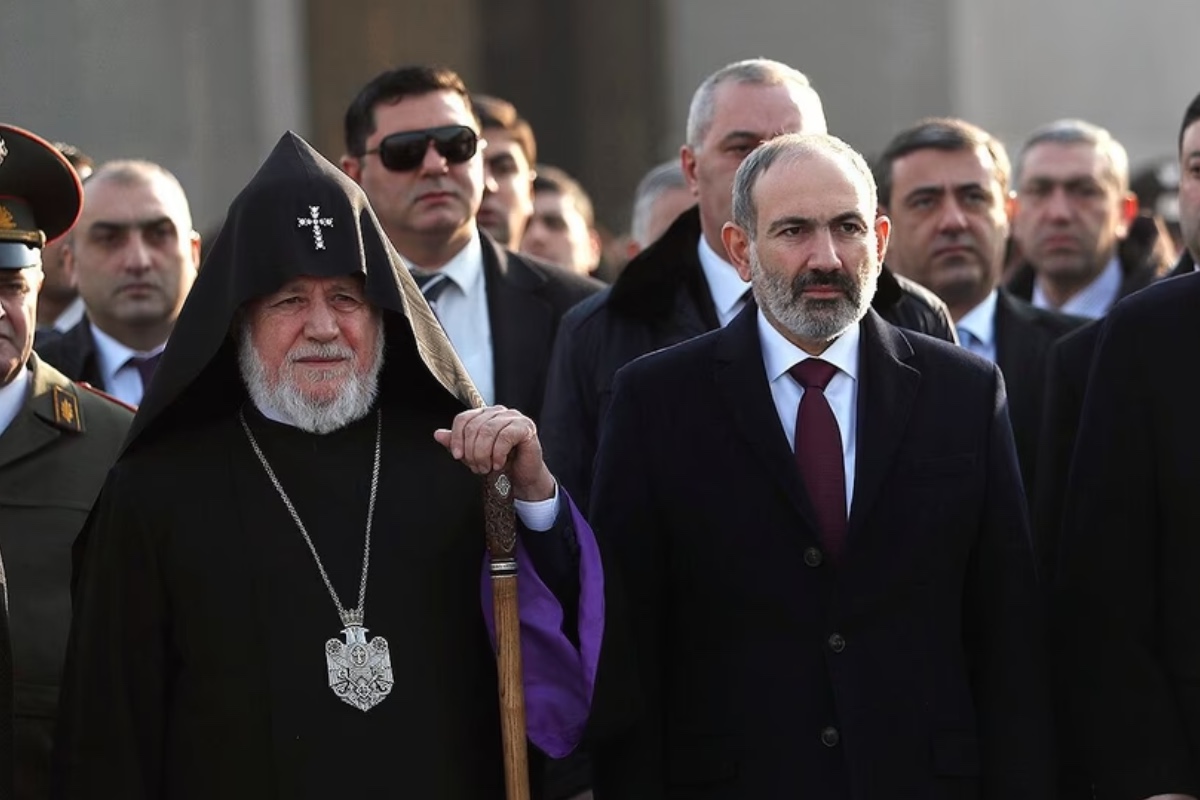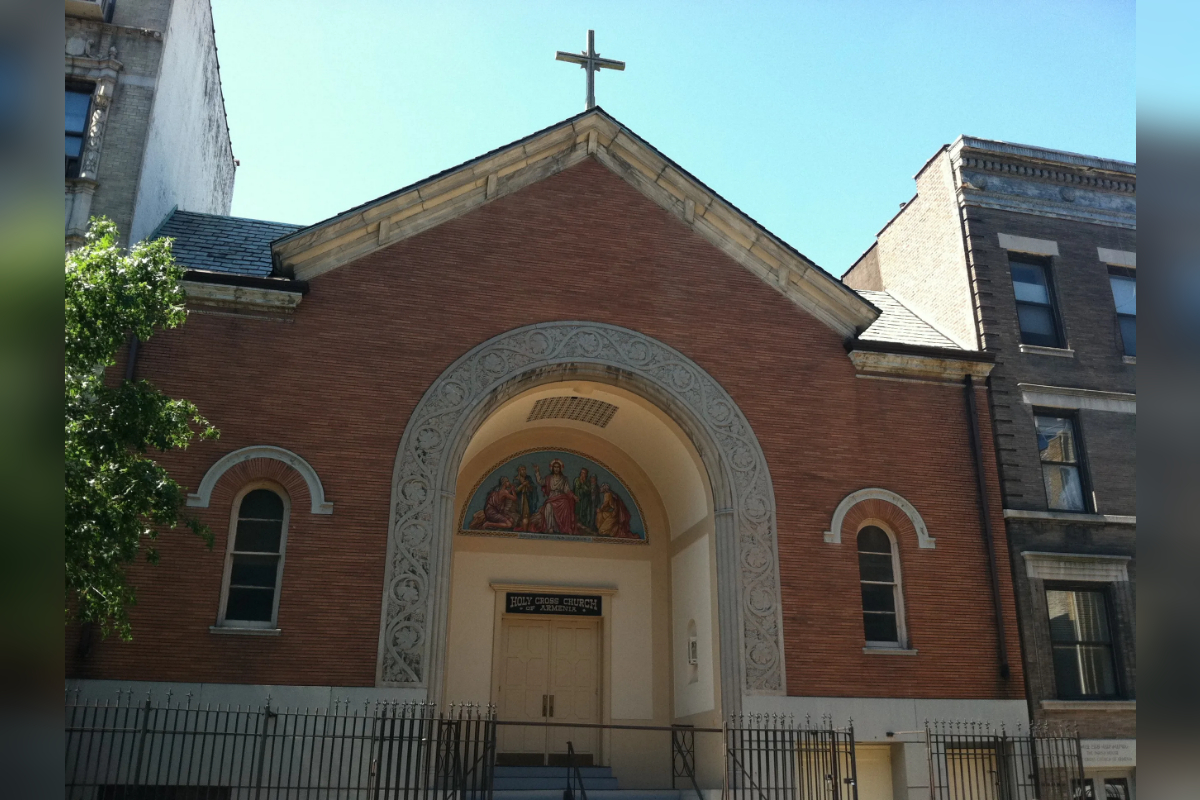



It has often been said that the people are the church. This is true. Without the faithful, the church would have no purpose. Our Lord commanded his disciples to go into the world to spread the Good News of the Resurrection. It was our good fortune that two of those disciples traveled to the land of Armenia.
The Holy Church of Armenia was named “Apostolic” after the original preaching of the apostles Thaddeus and Bartholomew. What follows is what we refer to as the history of our Holy Apostolic Church, filled with sacrifice, commitment and hope. The Armenian Church was built on values that reflect the important role of the faithful. Primates, prelates and the catholicoi are elected through a process that requires a majority of lay delegates. Our parish, diocesan and national assemblies are filled with laypeople. The Armenian Church truly reflects that the people are the church.
In addition to the vital role of the faithful, the Armenian Church has always had a special relationship with its clergy. Our history is filled with uplifting references to members of the clergy who have provided intellectual, compassionate and inspiring leadership at critical junctures in our long history. Our clergy have always provided the spiritual foundation that is essential to our faith, but they have also helped define the long-established blending of our faith and heritage. What would Vartanantz be without the sacrifice of Ghevont and the spiritual preparation of the military?
We remember the three battles of 1918 with the field commitment of then-Bishop Karekin Hovsepian. Our lives have been blessed by the pan-Armenian themes of the brilliant oratory and writings of Catholicos Karekin Sarkissian. In all of our diaspora communities, we have been affected by local clergy who work tirelessly to support the faithful and carry the torch of our identity forward. The canons of our church grant special responsibilities to our clergy. It is for that reason that the local priest plays a critical role in the prosperity of the community. How many times have we said that the priest is the role model who mirrors the community’s direction? It is an important role in the diaspora that has become the successor to the village priests in pre-genocide Western Armenia. Our communities are increasingly diverse, which heightens the need for well-trained priests and sustainable support from the laity.
Despite the visionary and heroic efforts of multiple generations of church leaders, the Armenian Church in America is experiencing a shortage of priests to serve the faithful. The supply-and-demand equation contains both challenging and encouraging news. On the demand side, the church in America continues to grow as a result of demographic changes and migration. The number of parishes in heavily populated California has doubled in the last 50 years, with significant expansion in Arizona, Nevada and other locations with mission parishes.


There are several church communities in Florida, from the greater Miami region to Orlando, Tampa and Jacksonville. With general population shifts in America to warmer regions, the Armenian Americans are no exception. This growth has extended beyond “snowbird” parishes into year-round communities in Florida and a substantial presence in Texas, Louisiana and North Carolina. The same blessing has occurred in the Midwest in nontraditional locations such as Kansas City and Minneapolis. Armenians tend to look for one another when they establish residence in new locations.
Once a critical mass is established, the sponsorship of cultural and religious gatherings becomes a reality. In almost all cases, holding church services is at the core of the new communities, coupled with cultural gatherings and fellowship. Interestingly, while the church has expanded into new regions in the last 50 years, the traditional locations have been maintained. Despite some population decline in legacy communities, most, if not all of the parishes remain the foundation of the community.
Armenians tend to look for one another when they establish residence in new locations.
From a demand perspective, this has placed a significant challenge on the broader church. Each of these communities, whether full-time parishes or mission parishes with aspirations to evolve into full-time status, want to host Soorp Badarak as the core of its communal offerings. Without priests, there cannot be Badarak. The demand is a positive reflection of expansion, but it requires more priests.
On the supply side, we have only a few seminaries to recruit and train new priests. Armenia has two seminaries that have done a superb job of satisfying increases in global supply. While the need was growing in the American diaspora, Armenia’s needs were expanding in the post-Soviet revitalization of the church. It is impressive that Armenia has supplied the rebirth of the church in the homeland and many priests to the American dioceses.
Another major source of priests is the renowned seminary in Bikfaya, Lebanon, of the Great House of Cilicia. Since 1930, this institution has produced married priests and celebrated clergy to the global jurisdiction of the Holy See. In fact, many of the older generation of diocesan priests here in America received their education at the seminary of Holy Cilicia. The seminary in Jerusalem has produced many priests to the diaspora, but the supply to America has slowed in the last few decades. The newest of the seminaries was established with great vision and sacrifice more than 60 years ago here in the Eastern Diocese. Originally located in the Midwest, it was moved to the New York area and recently opened a new campus complete with classrooms, a library, a chapel and residences for seminarians and guest clergy. St. Nersess Seminary is a source of pride, having produced many American-born priests who have served many dioceses.
The biggest challenge for the American seminary is optimizing the student population. Generally, the student population is between eight and twelve seminarians at various points of matriculation. After completion of their education, which includes a Master of Divinity degree, and a variety of postgraduate service and internship programs, seminarians become well-prepared candidates for the priesthood. Despite these incredible efforts, a significant shortage remains. There are seven to eight communities in the Eastern Diocese waiting for a priest and a few in the Prelacy. Retirement from parish life can increase the demand, while many retired priests quietly travel across the country to serve the faithful in mission parishes and others missing a full-time priest. A priest never truly retires.
The absence of a priest in a community can be devastating. Our community life centers on the church, and our church is led by its priest. The absence of a priest creates a void that is difficult to fill with laity. The church offers a deacon’s service when a priest is not available, either with a local deacon or a visiting individual. In some cases, there is a “deacon in charge” with responsibilities to serve a community.
I grew up in a community that didn’t have a full-time priest until I was in high school. The community had never experienced a full-time priest and therefore made it work part-time. I have also lived in parishes where a full-time priest was the norm and then a void occurred through a transfer or retirement. This is a very different challenge, as the community was built around a priestly presence. The spiritual leader of the flock sets the tone for the community. Our communities are more than a Sunday worship service.
This brings us to the challenge of how to overcome the shortage. Reducing the demand is not a viable option, since it would require the closure of churches. The most practical option for consolidation would be to reduce redundancy resulting from the administrative division in America. We are many years from that discussion. The pain of the shortage is currently viewed as a supply problem. Assuming that we follow that path, Holy Etchmiadzin has supplied many priests to the American dioceses in the last 25 years. This process has limitations based on supply in Armenia and the ability of seminarians to successfully adapt to Armenian American culture.
Antelias has been a primary source for the American prelacies, providing high-quality clergy. But again, demand has exceeded supply, and cultural assimilation is always a challenge.
The vision of the St. Nersess Seminary producing clergymen born in the diaspora is a great vision that has produced results. The challenge continues to be recruiting enough candidates to meet the demand of the American dioceses and relieve some of the pressure on Armenia. We should also note that several seminarians at St. Nersess have been from the Western Diocese and logically return to serve their host diocese. The answer lies in attracting more seminarians for the Prelacy and Diocese to optimize the capacity of our seminaries and close the gap with domestic candidates. What can each of us do to assist in this challenge?
The recruiting of candidates is a unique process, since it is the result of a “calling” from the Lord to serve the church. That calling can occur before entering the seminary or during the education process. What we should internalize is that each of us can have an impact on this possibility. Our church has recognized the need for development as a functional requirement and as a means of motivation.
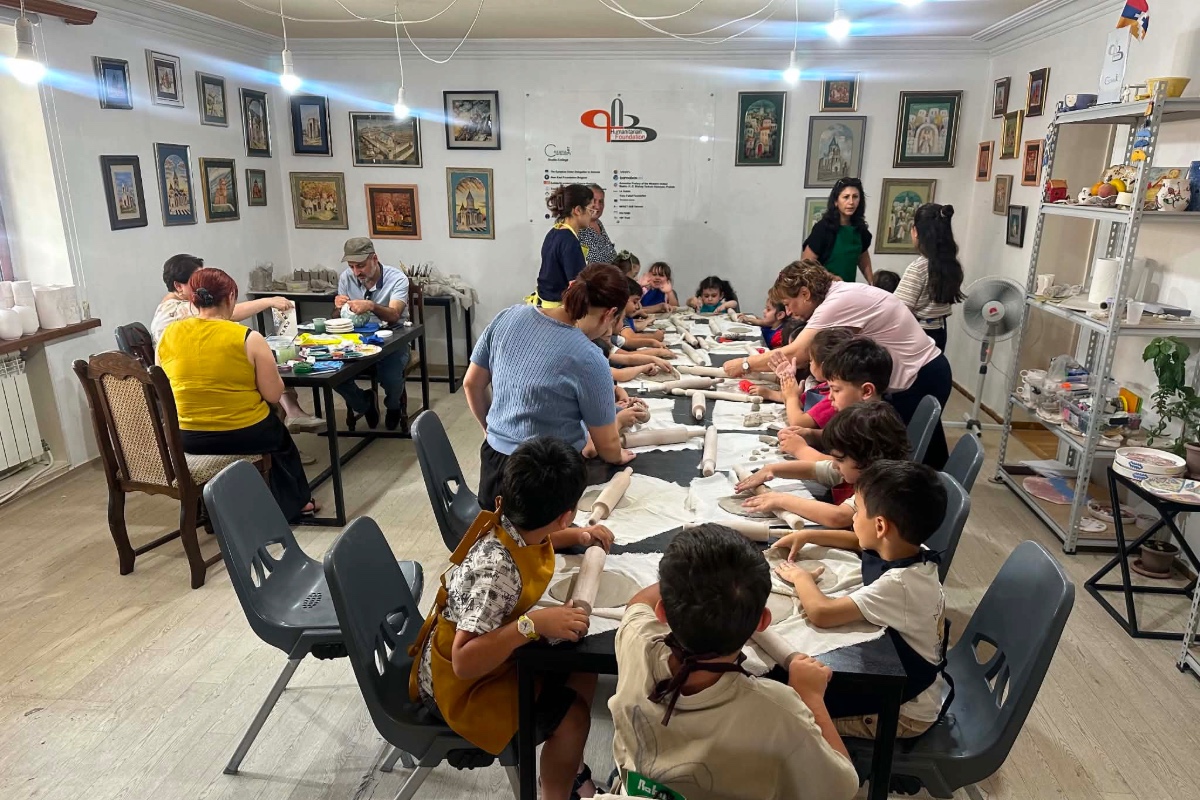
The advancement of the St. Nersess Summer Studies Program and the St. Gregory of Datev Institute are shining examples of where our youth can explore their faith and, in some cases, answer the call. This process must start when our children are young and begin service to the church. It is incredibly important that we take the time to recognize the contributions of candle holders, censer bearers and kshots servers, along with subdeacons and deacons. This is the pool that generally produces seminarians. Compassionate mentoring and other forms of support can have a significant impact on a developing mind. Each of us remembers those individuals that inspired us to serve.
What we should internalize is that each of us can have an impact on this possibility.
We have many young men who make incredible contributions to their parishes, serving weekly and arriving early for morning service. If one of these children were our own, how would we respond? Do we encourage our children to serve the Lord as the most honorable vocation, or do we tell them that volunteering is good but that they should pick a more “professional” career. Does the desire for a more materially fulfilling job outweigh helping others to find salvation?
Another aspect we can all affect is the perception of how we treat priests. In my view, when priests are publicly respected and loved by their parishioners, it has a more positive impact on the youth serving the parish. Obviously, that works both ways, as priests should be mentors. We cannot have wanton public criticism and discord while expecting our youth to respect and love the vocation.
With a focused effort by each of us, we will see improved results in candidates. Providing the development tools is a major piece of the foundation. The behavioral aspects of each parish toward the church, the clergy and one another will complete the task. Each of us wants the church to succeed in this endeavor. Recognizing that we all have a role to play would be a breakthrough.