


The Region in Brief
Artsakh
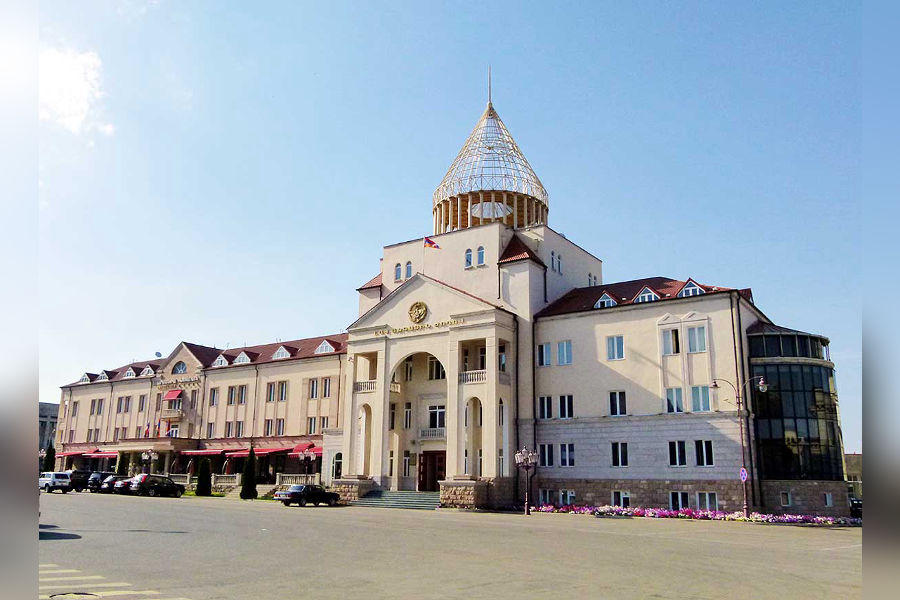
On the sixth anniversary of the Sept. 27, 2020, war, acting Artsakh National Assembly Speaker Gagik Baghunts issued a statement framing the conflict as the starting point of a broader process that ultimately led to the displacement of the region’s Armenian population.
Baghunts argued that the lack of accountability after the 2020 war contributed to the subsequent blockade, renewed military action and the eventual forced displacement of Artsakh Armenians. He also accused Azerbaijan of continuing to erase Armenian cultural and historical heritage in the region.
The statement identified three priorities for the displaced Artsakh Armenian leadership and community: protection of Armenian cultural heritage, the release of Armenians held in Azerbaijani prisons and clarification of the fate of missing persons. Baghunts said the Artsakh Armenian population had not relinquished its collective rights and maintained that a durable peace could not rest on legitimizing the results of force.
He further reiterated the position that any long-term settlement should include restoration of the community’s fundamental rights and the possibility of a “dignified, safe and collective return” to Artsakh under international guarantees.
Separately, a working meeting took place in Yerevan between Artsakh National Assembly deputies and representatives of the ARF Armenian National Committee’s Central Council, offices and committees. The Artsakh state minister and human rights defender also participated. Discussions focused on coordinating international advocacy around the Artsakh issue and preserving the role of the displaced Artsakh institutions.

Participants identified four principal areas for continued advocacy: securing international support for the collective right of return under credible guarantees; pressing for the release of Armenian detainees and prisoners held in Azerbaijan; protecting Armenian cultural and historical heritage in Artsakh; and expanding social, educational and material assistance for displaced Artsakh Armenians.
ARF representatives said the Artsakh issue would remain a long-term priority and stressed the importance of preserving Artsakh’s political and state structures in exile.
Armenia
The sixth anniversary of the start of the 44-day war in 2020 on Sept. 27 drew criticism over the Armenian government’s limited public commemoration of the date. Prime Minister Nikol Pashinyan and other senior government figures were not publicly reported to have visited the Yerablur Military Pantheon, where many of the Armenian servicemen killed in the war are buried, and no major commemorative statement from the country’s senior leadership was issued that day.
Armenia’s Public Television broadcast a recorded entertainment concert by popular singer Tata Simonyan on the evening of the anniversary.
Following widespread criticism, the state-funded broadcaster acknowledged that airing the concert on Sept. 27 had been a “mistake,” accepted responsibility and apologized, saying internal procedures would be reviewed to prevent a recurrence. Simonyan separately said the broadcast had taken place without consulting him and described the decision to air his concert that day as unjustifiable.
ARF Armenia Supreme Body member and former lawmaker Garnik Danielyan called the Public Television broadcast “simply sacrilege,” contrasting it with scenes at Yerablur, where families were mourning those killed in the fighting.
Danielyan also criticized the government’s broader posture toward the anniversary, saying there had been “no worthy commemoration of the war and the heroism of our boys” from government representatives. He argued that an apology from Public Television was insufficient and called for those responsible for the programming decision to face professional consequences. “This is the Armenia Nikol Pashinyan has dreamed of,” said Danielyan.
While senior government officials were largely absent from the public commemorations, opposition politicians, representatives of the former Artsakh authorities, veterans’ groups, relatives of the fallen and members of the public visited Yerablur and participated in memorial events.
Russia
Prime Minister Nikol Pashinyan said Armenia-Russia relations are undergoing an inevitable “transformation” and “will not be the same as before,” linking the change to the altered regional environment following the Armenia-Azerbaijan peace process. He has argued that ties with Moscow were historically shaped by the conflict with Azerbaijan and should now be reconsidered on the basis of friendship and mutual respect.
On Sept. 30, Russian Foreign Ministry spokesperson Maria Zakharova said Russia needed to understand what Pashinyan meant by saying relations would no longer be the same, adding pointedly that perhaps he meant they would become “better.”
The disagreement extends beyond rhetoric. During Pashinyan’s Sept. 1 meeting with President Vladimir Putin in Bishkek, the two leaders openly differed over Armenia’s European trajectory. Putin warned that Armenia’s movement toward EU membership raises fundamental questions about its continued participation in the Russia-led Eurasian Economic Union, arguing that simultaneous integration into the two systems would be incompatible. Pashinyan, while insisting that Armenia values its ties with Russia, said Yerevan wants alternatives and that its diversification policy is not directed against Moscow.
Pashinyan has since said the two governments are effectively conducting an “inventory” of bilateral relations — examining areas such as security, energy, railways, trade and other institutional ties to determine where their positions still coincide and where they increasingly diverge.
Reports that both governments are considering replacing their ambassadors have added to perceptions of strain. Armenian media reported that Yerevan is considering replacing Ambassador Gurgen Arsenyan in Moscow and that Russia may also replace Ambassador Sergei Kopyrkin in Yerevan, although neither change has been formally announced.
Georgia
Georgian authorities have identified the suspect detained over the Sept. 21 vandalism of a bust of former Azerbaijani President Heydar Aliyev in Tbilisi as an Armenian citizen. The incident occurred in Heydar Aliyev Park in the capital’s Abanotubani district. According to the suspect’s public defender, the man is in his 40s, had no close ties to Georgia, entered the country as a tourist and is currently exercising his right to remain silent.
Georgia’s Interior Ministry said a foreign citizen had been arrested in connection with the damage and that the investigation is proceeding under Article 187(1) of the Criminal Code, covering the damage or destruction of another person’s property resulting in significant loss. A court has ordered the suspect into pretrial detention, with a preliminary hearing scheduled for Nov. 12.
The Armenian Embassy in Georgia said it is following developments and is informed about the proceedings involving the detained Armenian national.
Turkey
Turkey and Azerbaijan are preparing to deepen defense-industrial cooperation through a package of agreements expected to exceed $500 million. Speaking to TRT Haber on the sidelines of the ADEX 2026 defense exhibition in Baku, Turkish Defense Industry Agency President Haluk Görgün said the planned deals will cover military platforms, sensor systems, radars, production facilities and broader capability-development programs.
Görgün said the agreements remain at a preliminary stage, with further details to be announced after upcoming meetings and signing ceremonies. He also outlined an expanding Turkish industrial footprint in Azerbaijan: MKE is establishing an ammunition production facility, while ASFAT is developing modernization facilities. Baykar, Roketsan and ASELSAN are also investing in the country, and Görgün said another major investment would be announced following the expected contract signings.
According to Görgün, the objective is to build domestic production capacity that could eventually support military exports. Turkey and Azerbaijan also intend to jointly develop next-generation defense products and technologies for their own needs and for demand from other “friendly and allied countries.”
A separate framework agreement is also expected to institutionalize cooperation in defense-related education, technology and workforce development.
Iran
President Masoud Pezeshkian said the United States and Israel had concluded that they could not force Iran into submission through military action. Speaking to mayors of major cities and provincial capitals, he emphasized national cohesion and broader public participation in governance, warning that exclusionary decision-making could weaken the country internally.
At the same time, Iran’s parliament is considering legislation that would withdraw the country from the Nuclear Non-Proliferation Treaty (NPT). First Deputy Speaker Ali Nikzad said the draft is under review, including an assessment of its international consequences, and could be presented to parliament under an expedited procedure.
The nuclear debate is unfolding alongside a renewed diplomatic effort to end the wider conflict. Iran confirmed on Sept. 30 that Foreign Minister Abbas Araghchi had received a formal U.S. response through Qatari mediators to Tehran’s latest proposal and had presented it to Pezeshkian. Iran’s plan envisages a seven-day confidence-building process, including steps toward reopening the Strait of Hormuz and restoring maritime traffic, while seeking U.S. movement on sanctions. Officials briefed on the negotiations said the principal disagreement currently concerns the sequencing of measures rather than the overall components of the proposal.
Parliament Speaker Mohammad Bagher Ghalibaf warned that Iran could broaden its response if it remains unable to export oil.