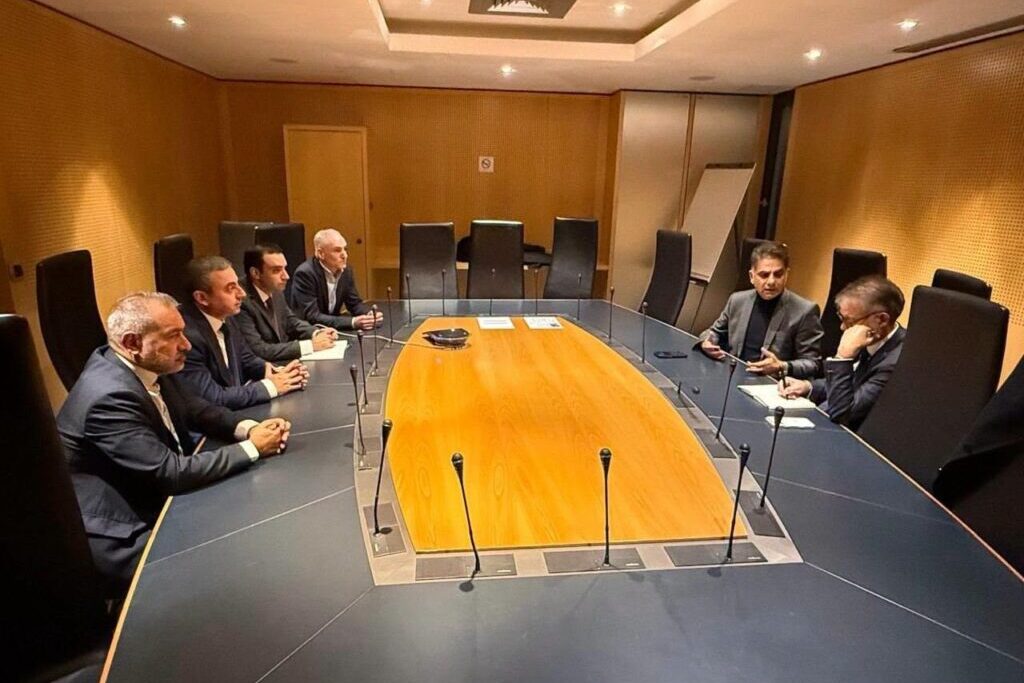



YEREVAN — Armenia’s National Assembly Foreign Relations Committee advanced the framework agreement on the Trump Route for International Peace and Prosperity (TRIPP) on Wednesday, Oct. 21.
The agreement received four votes in favor and one against. It will now move to the full National Assembly, where lawmakers are expected to consider ratification during parliamentary sessions beginning Oct. 27.
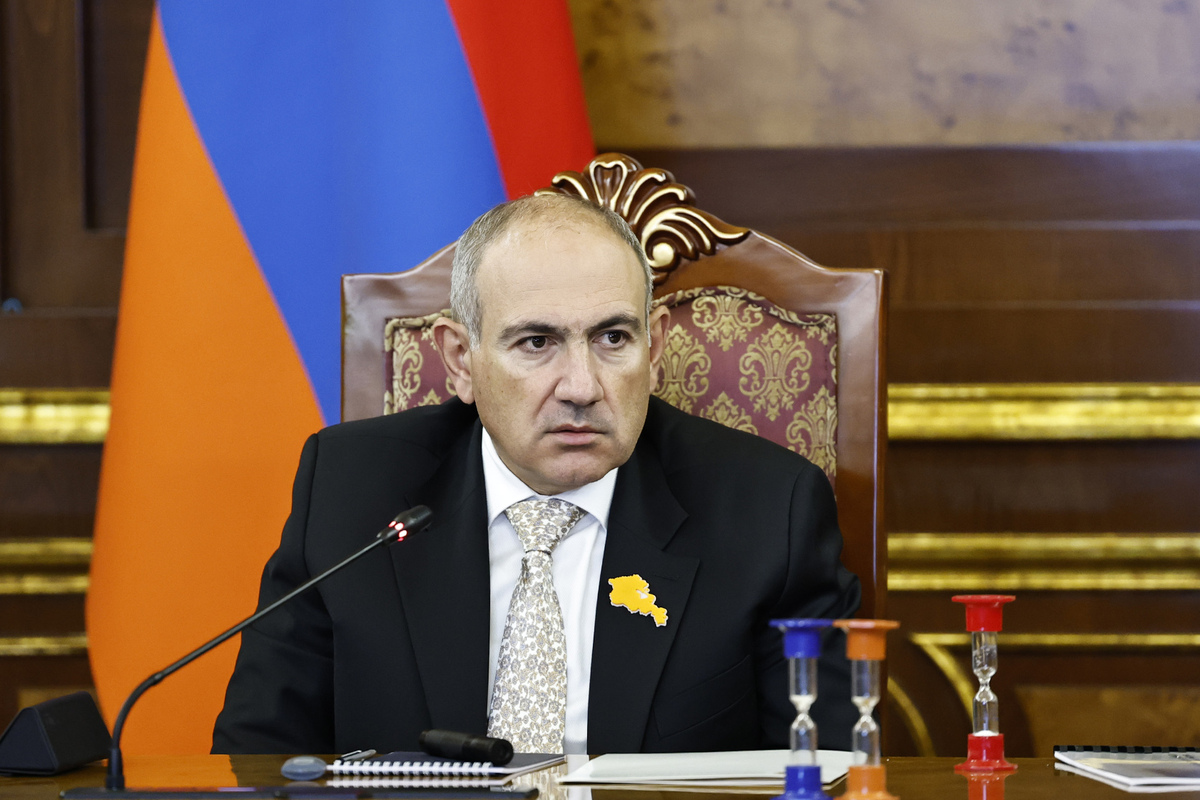
The Pashinyan administration has presented TRIPP as a historic achievement, emphasizing its potential to strengthen regional connectivity, expand economic opportunities and consolidate peace. Mirzoyan described the initiative as an unprecedented development in Armenian-U.S. economic cooperation, arguing that new transport links would serve Armenia’s interests while contributing to regional stability.
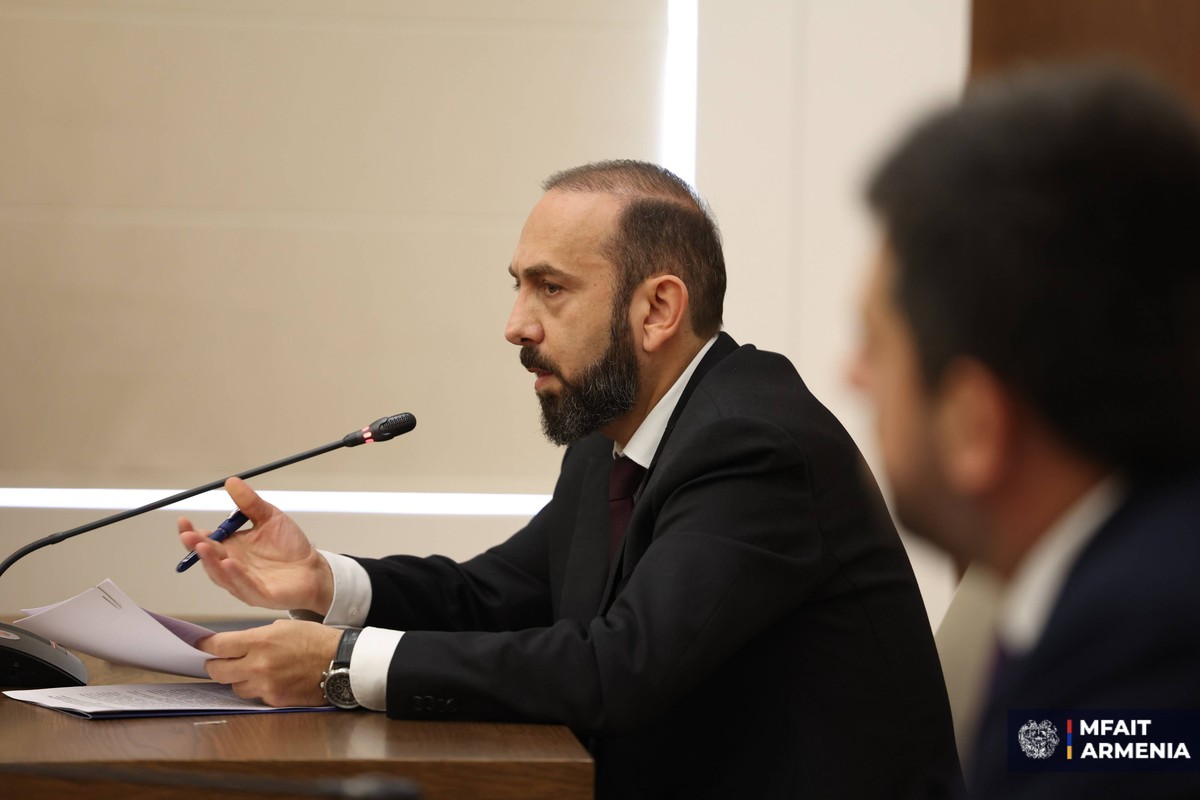
The committee’s decision followed a contentious discussion with Foreign Minister Ararat Mirzoyan, during which government assurances about sovereignty, security and economic benefits came under renewed scrutiny. The debate underscored the divide between Prime Minister Nikol Pashinyan’s administration, which presents TRIPP as a cornerstone of regional peace and economic development, and opposition lawmakers concerned about the practical consequences of granting a foreign-controlled company extensive operational rights over strategically important infrastructure.
Under the proposed arrangement, a U.S. entity would initially control 74% of the joint development company, compared with Armenia’s 26%, for a 49-year period. If the arrangement is subsequently extended, Armenia’s share would increase to 49%, still leaving the U.S. side with a narrow majority. Mirzoyan maintained that Armenia would retain sovereignty over its territory, as well as responsibility for border security, customs and law enforcement.

The distinction between formal sovereignty and effective operational control remains central to the controversy.
ARF Armenia Supreme Body member and opposition lawmaker Kristine Vardanyan questioned the geographic scope of TRIPP, asking whether it would be limited to the approximately 42-kilometer section through Syunik or whether it could also encompass infrastructure elsewhere in Armenia, including the route through Yeraskh. If other routes were included, she asked whether they would operate under the same regulatory arrangements.
She also sought clarification about the project’s physical dimensions and whether trains would be permitted to stop along the Syunik section. “How wide is TRIPP, and what specific territory are we talking about?” Vardanyan asked.
Mirzoyan replied that he could not provide a single width, arguing that the project was not necessarily one continuous strip of infrastructure. A gas pipeline, for instance, could pass through the Ghazakh-Ijevan route, while the railway would run through Meghri. He rejected suggestions that the agreement established a special regime and confirmed that trains would be able to make stops.
The distinction between formal sovereignty and effective operational control remains central to the controversy.
His explanation established that the initiative could involve different types of infrastructure across separate locations. It also highlighted the importance of defining the project’s precise territorial boundaries and the rights associated with its future operation.
ARF Bureau member and chair of the Armenian National Assembly Committee on Human Rights and Public Affairs Lilit Galstyan pursued a related issue, questioning whether the government’s optimistic economic assessments were supported by detailed calculations. “Do we have calculations of what economic benefits transit will bring to Armenia? Do such calculations exist or not?” she asked.
The question challenged a central element of the government’s presentation: that regional transit would translate into tangible improvements in the lives of Armenian citizens. New infrastructure may create economic opportunities, but the scale of those benefits depends on factors including transit volumes, operating arrangements, investment costs and the revenue ultimately retained by Armenia.
Galstyan also addressed repeated assurances that Armenian sovereignty would remain fully protected. She argued that references to sovereignty in the agreement were not, on their own, evidence of how those protections would function in practice.
Drawing attention to the recurring expression “TRIPP construction area,” she asked what territory the designation would cover and how much sovereign Armenian land would fall within it.
ARF member and secretary of the opposition Armenia Alliance Artur Khachatryan challenged the government’s characterization of TRIPP from another direction, arguing that an initiative involving an interstate strategic agreement, Constitutional Court review and parliamentary ratification could not reasonably be discussed as though it were simply an ordinary infrastructure project. “If this was a public-private partnership, why did it not go through the procedures for a public-private partnership?” he asked.
Khachatryan argued that conventional infrastructure development would ordinarily involve competitive procurement and an assessment of potential contractors. The international legal structure adopted for TRIPP, he suggested, demonstrated that the agreement carried geopolitical implications extending well beyond railway construction or commercial investment.
His most consequential exchange with Mirzoyan, however, concerned reciprocity. Khachatryan asked whether Armenia possessed an equivalent binding document guaranteeing its own transport connectivity through Azerbaijani-controlled territory, particularly a route connecting Meghri with Armenia’s Ararat region through Nakhichevan. “Is there a document that would be as binding for Azerbaijan as TRIPP is for Armenia?” he asked, describing the potential imbalance as one between a binding agreement and a promise.
Mirzoyan responded that TRIPP represented an opportunity for Armenia to overcome decades of regional isolation and that its benefits should not be understood as unilateral concessions.
He argued that the railway network would naturally serve Armenian transport needs as well, questioning whether it was realistic to imagine trains using the route for Azerbaijan while Armenia was unable to establish a corresponding connection through Yeraskh.
Khachatryan nevertheless returned to the central issue: “Is there a written agreement or not?”
If this was a public-private partnership, why did it not go through the procedures for a public-private partnership?
The exchange ended without Mirzoyan identifying a specific equivalent binding document in the publicly reported discussion.
These questions come as the Pashinyan administration continues to promote TRIPP as a major diplomatic achievement. Yet the hearing also revealed how much of the project’s practical implementation remains dependent on subsequent agreements, operational arrangements and decisions yet to be finalized. The minister himself acknowledged that lengthy procedures were among his principal concerns.
That uncertainty matters because the project is being advanced as an economic opportunity and an integral component of Armenia’s broader peace agenda with Azerbaijan.
The discussion became particularly relevant against the backdrop of another reported border-crossing incident involving an Azerbaijani citizen that emerged publicly the same day.
According to Armenian media reports, an Azerbaijani shepherd entered Armenian territory near the border village of Chinari in Tavush province and was subsequently detained. Azerbaijani outlet Oxu.az identified the man as a resident of occupied Agna who had reportedly been grazing livestock near the border.
The outlet claimed that the man had consumed alcohol before crossing into Armenia and had previously received treatment for mental health problems. Those details remain attributed to Azerbaijani media rather than independently verified medical or investigative findings.
More consequential than the reported circumstances of the crossing, however, was the apparent absence of timely official communication from Armenian authorities.
The shepherd had entered Armenian territory approximately three days before the incident became public on Oct. 21. He was being held by military police in Berd. Despite this, Armenian authorities had issued no public announcement about the incident. When journalists sought clarification, the National Security Service neither confirmed nor denied the reports, instead directing media outlets to submit written inquiries.
The episode is particularly troubling in light of the earlier border incursion involving Azerbaijani serviceman Nasimi Musayev. On Oct. 1, Musayev was detained in Shaki, Syunik province, after entering an Armenian home and shooting and wounding a local woman.
Ani Avetisyan, the woman shot and seriously wounded by the Azerbaijani serviceman in Shaki, is facing further medical complications and is expected to undergo another surgery by the end of this week or early next week.
She previously underwent surgery to remove shattered bone fragments from her leg, which has reportedly shortened by several centimeters, and doctors are still fighting to save the limb. The incident has also left her two children deeply traumatized. Temporarily relocated to Masis, they reportedly refuse to return to Shaki or even hear the names Shaki and Sisian, associating both places with the attack.
The shepherd’s reported crossing therefore represents a second publicly reported case within the same month, renewing questions about border monitoring, the timeliness of official disclosures and the information made available to residents of vulnerable border communities.
During Wednesday’s committee hearing, Mirzoyan sought to play down the security implications of the shepherd’s reported crossing. He argued that individuals could become lost and cross borders even in peaceful circumstances and that such incidents should not automatically be portrayed as threats to national security. Mirzoyan’s remarks did not address the more pressing question of why Armenian citizens were once again left uninformed about an unauthorized border crossing, despite authorities reportedly having known about the incident for several days.
The contrast between the government’s assurances of stability and continuing concerns over accountability is equally visible in Armenia’s domestic political developments.
On Wednesday morning, just four days before local government elections scheduled for Sunday, Oct. 25, Armenian law enforcement arrested Arsen Gevorgyan, the opposition Strong Armenia alliance’s candidate in Stepanavan, along with 13 other individuals. Authorities also conducted searches at locations associated with the party and its supporters.
Armenia’s Anti-Corruption Committee alleged that Gevorgyan and his associates had participated in a vote-buying scheme involving dozens of voters and had planned additional payments. The opposition rejected the allegations, describing the arrests as a politically motivated attempt to weaken its campaign immediately before voters head to the polls. No court finding of guilt has been established.
These developments followed separate reports from Stepanavan residents who alleged that they had lost their jobs because of their political support for Strong Armenia. Pashinyan publicly called for allegations of electoral pressure to be reported and said he had instructed the relevant authorities to investigate.
Regardless of the eventual outcome of the criminal investigation, removing a leading opposition candidate from the campaign through arrest days before an election creates a significant test for electoral fairness. Authorities must demonstrate that criminal procedures are being applied impartially and are not being used to alter the political contest before voters can make their choice.
Taken together, Wednesday’s developments highlight a growing tension at the center of Armenia’s political direction. The Pashinyan government is advancing far-reaching agreements in the name of peace and prosperity, yet questions about their practical safeguards remain contested in parliament. Authorities continue to speak confidently about improved security relations with Azerbaijan, even as journalists uncover border incidents that have not been promptly communicated to the public. And as the government emphasizes its democratic credentials, opposition figures face arrests at a particularly sensitive point in a local election campaign.
The contrast between the government’s assurances of stability and continuing concerns over accountability is equally visible in Armenia’s domestic political developments.
For a government that has made peace and democracy central to its agenda, the growing distance between official assurances and the realities confronting its citizens remains a question that cannot be settled through rhetoric alone.