



Sherman, McClintock to mark 1,000 days of Armenian hostages’ detention
Reps. Sherman, McClintock, Chu, Friedman; ANCA Executive Director Aram Hamparian to speak as House Foreign Affairs Committee prepares to vote on Sherman-Mast Amendment
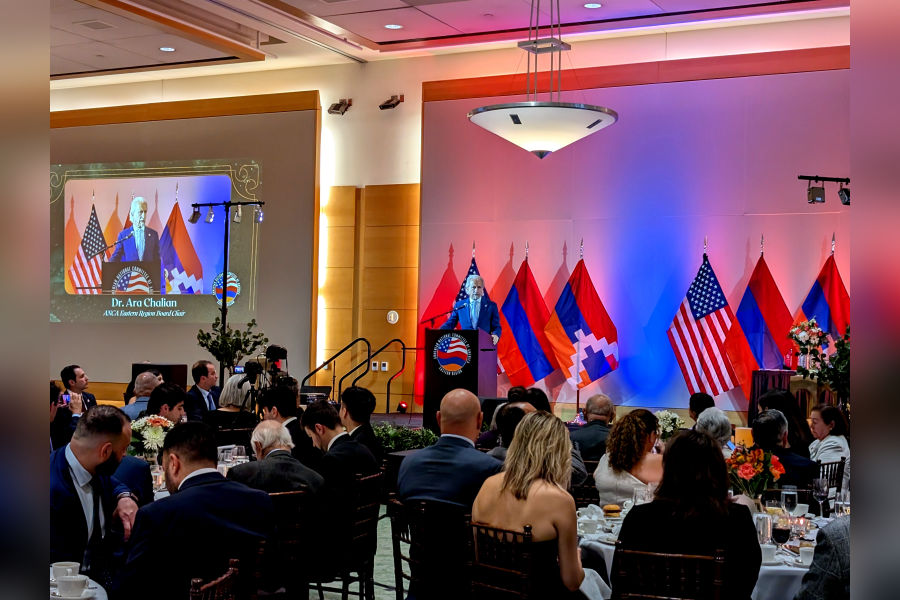
WASHINGTON, D.C. – Congressional Armenian Caucus Vice Chair Brad Sherman (D-CA) and Reps. Tom McClintock (R-CA), Judy Chu (D-CA) and Laura Friedman (D-CA) will hold a bipartisan Capitol Hill press conference Tuesday marking the 1,000th day of Azerbaijani detention of Artsakh (Nagorno-Karabakh) leaders, Armenian prisoners of war and civilian hostages. ANCA Executive Director Aram Hamparian will speak on behalf of the Armenian National Committee of America.
The press conference comes as the House Foreign Affairs Committee prepares to hold a recorded roll call vote this week on the Sherman Amendment to the House Foreign Service Act (H.R. 9086), which calls on Azerbaijan to immediately and unconditionally release all Armenian prisoners of war and political prisoners. It also follows the introduction of seven pro-Armenian amendments to the FY2027 National Defense Authorization Act (H.R. 8800) and the National Security and Foreign Operations Appropriations Act (H.R. 8595) — advanced by Congressional Armenian Caucus Co-Chairs Frank Pallone (D-NJ) and Gus Bilirakis (R-FL), Caucus Vice Chair Sherman, and Reps. Gabe Amo (D-RI) and Jim Costa (D-CA) — now under House Rules Committee review.
WHAT: Bipartisan Press Conference — 1,000 Days: Release Armenian Hostages Now
WHEN: Tuesday, June 23, 2026
TIME: 5-5:45 p.m. ET
WHERE: House Press Triangle, U.S. Capitol East Front
(West side of the House office buildings, in the grassy triangle on the House side of the Capitol)
SPEAKERS:
- Rep. Brad Sherman (D-CA)
- Rep. Tom McClintock (R-CA)
- Rep. Judy Chu (D-CA)
- Rep. Laura Friedman (D-CA)
- Aram Hamparian, executive director, Armenian National Committee of America
Additional members of Congress are expected to attend.
In person / live webcast online: The ANCA will be webcasting the press conference live on its social media channels: X (https://x.com/anca_dc) | Facebook: (https://Facebook.com/ancagrassroots) | YouTube: (https://www.youtube.com/@ANCAgrassroots/streams)

Background: 1,000 Days: Armenian hostages in Azerbaijani captivity
June 23 marks 1,000 days since Azerbaijan began its unlawful detention of Armenian prisoners of war and civilian hostages following the genocidal ethnic cleansing of Nagorno-Karabakh’s entire Armenian population in September 2023. At least 19 Armenian prisoners of war and civilian hostages remain in Azerbaijani custody — among them eight Artsakh (Nagorno-Karabakh) leaders: Ruben Vardanyan, state minister (2022–2023); Arayik Harutyunyan, president (2020–2023); Bako Sahakyan, president (2007–2020); Arkadi Ghukasyan, President (1997–2007); Davit Ishkhanyan, speaker of the National Assembly; David Babayan, adviser to the president and former foreign minister; Levon Mnatsakanyan, commander, Artsakh Defense Army; and Davit Manukyan, first deputy commander of the Artsakh Defense Army.
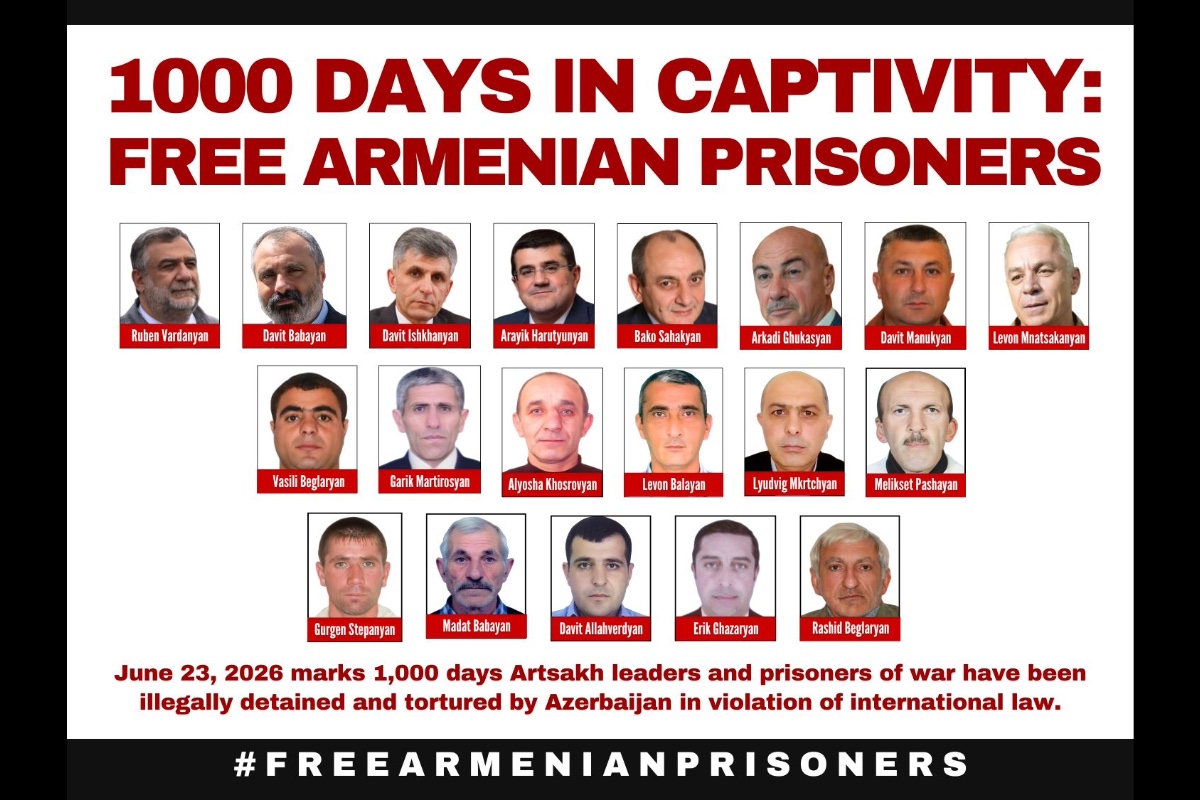
Armenian detainees have suffered torture and abuse in Azerbaijani custody and denied their fundamental legal rights throughout their detention. In February 2026, following sham trials widely condemned by human rights organizations and legal experts, Azerbaijan sentenced Armenian hostages to prison terms ranging from 15 years to life on politically motivated charges. Azerbaijani President Ilham Aliyev flatly refused clemency despite repeated calls from international legal institutions, human rights organizations and U.S. officials for their immediate and unconditional release. The current peace framework contains no provision requiring the hostages’ release. Since September 2025, Azerbaijan has expelled the International Committee of the Red Cross — the only organization authorized to visit Armenian detainees — cutting off international monitoring of their treatment and well-being.
Congress has a critical role to play. The release of Armenian hostages would represent a meaningful confidence-building measure toward a just, dignified and durable peace in the region. The following ANCA-backed measures send a clear signal that Azerbaijan’s ongoing crimes against Armenians will not go unanswered.
The Sherman-Mast Amendment to H.R. 9086
The Sherman Amendment to the House Foreign Service Act cleared a House Foreign Affairs Committee markup with the support of Committee Chairman Brian Mast (R-FL), declaring it the sense of Congress that Azerbaijan should immediately and unconditionally release all Armenian prisoners of war and political prisoners. Rep. Sherman cited documented abuses in Azerbaijani captivity and verified battlefield executions of Armenian POWs confirmed by Human Rights Watch. The measure heads to a full House Foreign Affairs Committee roll call vote this week.
Seven Amendments to FY2027 National Security Legislation (H.R.8800 & H.R.8595)
Six pro-Armenian amendments to the FY2027 National Defense Authorization Act (H.R. 8800) and the National Security and Foreign Operations Appropriations Act (H.R. 8595) — introduced by Congressional Armenian Caucus Co-Chairs Frank Pallone (D-NJ) and Gus Bilirakis (R-FL), Caucus Vice-Chair Brad Sherman (D-CA), and Reps. Gabe Amo (D-RI) and Jim Costa (D-CA) — are advancing through the House Rules Committee process. The measures call for the release of Armenian hostages and prisoners of war illegally held by Azerbaijan, the withdrawal of Azerbaijani forces from sovereign Armenian territory, the protection of Artsakh’s cultural and religious heritage, and the safe return of forcibly displaced Armenian refugees to their Artsakh homes. The ANCA is urging members of Congress to cosponsor all six amendments by visiting anca.org/ndaa2027 ahead of Rules Committee consideration.


Yes, the Turks will be shaking in their boots.
You know, I know, we all know that the Turks only understand raw, naked power.
Still, chasing pieces of paper helps fill up Anca’s time, I suppose.
I commend the relentless efforts of ANCA to keep the plight of the Armenian hostages held by Azerbaijan in the spotlight, along with other crucial Armenian issues.
Unfortunately, it is almost certain that the amendment will be rejected and tossed out – like so many other rejected proposed amendments about Armenia/Armenians.
ANCA’s efforts are almost always failing and hitting a brick wall. As if they are talking to the wind. It obviously needs to change its strategies to become effective and get results. How this can be achieved, I have no idea, but a change is necessary.
We are pursuing a Request for Clarification of the Current Legal Status of President Woodrow Wilson’s Arbitral Award(WWAA) of November 22, 1920. There are more than 86,000 cosigners of the petition.
Dear Legal Adviser,(of the President of the US and the Secretary of State).
We respectfully request clarification regarding the current legal status of WWAA.
The Award was issued pursuant to Article 89 of the Treaty of Sèvres and accepted by the Principal Allied and Associated Powers as a binding arbitral determination concerning the boundary between Armenia and Turkey. The instrument bears the Great Seal of the United States and was executed by President Woodrow Wilson, acting in his internationally recognized arbitral capacity.
As a matter of law, arbitral awards are generally considered final and binding unless lawfully modified, superseded, annulled, or otherwise terminated by a competent legal authority. To date, we have been unable to identify any formal act of the United States Government that expressly revoked, annulled, repudiated, superseded, or declared legally void President Wilson’s Award.
Accordingly, we respectfully request answers to the following questions:
1. Does the United States Government currently recognize the Request for Clarification of the Current Legal Status of President Woodrow Wilson’s Arbitral Award of November 22, 1920
Dear Legal Adviser,
On behalf of the Initiative Group for the Implementation of Woodrow Wilson’s Arbitral Award and tens of thousands of petition signatories, I respectfully request clarification regarding the current legal status under United States law of President Woodrow Wilson’s Arbitral Award of November 22, 1920.
The Award was issued pursuant to Article 89 of the Treaty of Sèvres and accepted by the Principal Allied and Associated Powers as a binding arbitral determination concerning the boundary between Armenia and Turkey. The instrument bears the Great Seal of the United States and was executed by President Woodrow Wilson, acting in his internationally recognized arbitral capacity.
As a matter of law, arbitral awards are generally considered final and binding unless lawfully modified, superseded, annulled, or otherwise terminated by a competent legal authority. To date, we have been unable to identify any formal act of the United States Government that expressly revoked, annulled, repudiated, superseded, or declared legally void President Wilson’s Award.
Accordingly, we respectfully request answers to the following questions:
1. Does the United States Government currently recognize the Request for Clarification of the Current Legal Status of President Woodrow Wilson’s Arbitral Award of November 22, 1920
Dear Legal Adviser,
On behalf of the Initiative Group for the Implementation of Woodrow Wilson’s Arbitral Award and tens of thousands of petition signatories, I respectfully request clarification regarding the current legal status under United States law of President Woodrow Wilson’s Arbitral Award of November 22, 1920.
The Award was issued pursuant to Article 89 of the Treaty of Sèvres and accepted by the Principal Allied and Associated Powers as a binding arbitral determination concerning the boundary between Armenia and Turkey. The instrument bears the Great Seal of the United States and was executed by President Woodrow Wilson acting in his internationally recognized arbitral capacity.
As a matter of law, arbitral awards are generally considered final and binding unless lawfully modified, superseded, annulled, or otherwise terminated by a competent legal authority. To date, we have been unable to identify any formal act of the United States Government that expressly revoked, annulled, repudiated, superseded, or declared legally void President Wilson’s Award.
Accordingly, we respectfully request answers from the legal advisers of the President of the US and the Legal Adviser of the US Secretary of State to the following questions:
1. Does the United States Government currently recognize the WWAA as a legally valid arbitral instrument?
2. Has any branch of the United States Government ever formally declared the Award revoked, terminated, superseded, annulled, or without legal effect?
3. If such action exists, please identify the authority, date, and legal basis for that determination.
4. Does the Department of State possess any legal memorandum, opinion, analysis, or policy determination addressing the present legal status of the Award?
5. Has the Department of State ever issued guidance concerning the relationship between the Award and subsequent treaties, including the Moscow Treaty of 1921 and the Treaty of Kars of 1921?
6. Does the Department maintain any official position regarding whether the Award remains legally dormant, legally operative, or legally extinguished?
This inquiry is made solely for the purpose of understanding the legal position of the United States regarding an official presidential act issued under international authority and bearing the Great Seal of the US.
of November 22, 1920, as a legally valid arbitral instrument?
2. Has any branch of the United States Government ever formally declared the Award revoked, terminated, superseded, annulled, or without legal effect?
3. If such action exists, please identify the authority, date, and legal basis for that determination.
4. Does the Department of State possess any legal memorandum, opinion, analysis, or policy determination addressing the present legal status of the Award?
5. Has the Department of State ever issued guidance concerning the relationship between the Award and subsequent treaties, including the Moscow Treaty of 1921 and the Treaty of Kars of 1921?
6. Does the Department maintain any official position regarding whether the Award remains legally dormant, legally operative, or legally extinguished?
This inquiry is made solely for the purpose of understanding the legal position of the United States regarding an official presidential act issued under international authority and bearing the Great Seal of the US.
of November 22, 1920, as a legally valid arbitral instrument?
2. Has any branch of the United States Government ever formally declared the Award revoked, terminated, superseded, annulled, or without legal effect?
3. If such action exists, please identify the authority, date, and legal basis for that determination.
4. Does the Department of State possess any legal memorandum, opinion, analysis, or policy determination addressing the present legal status of the Award?
5. Has the Department of State ever issued guidance concerning the relationship between the Award and subsequent treaties, including the Moscow Treaty of 1921 and the Treaty of Kars of 1921?
6. Does the Department maintain any official position regarding whether the Award remains legally dormant, legally operative, or legally extinguished?
This inquiry is made solely for the purpose of understanding the legal position of the United States regarding an official presidential act issued under international authority and bearing the Great Seal of the US.
Honorable readers, this was the copy of our 126th letter. We got 8 responses from the White House with the ex- and current presidents’ signatures. There is no word in the WH responses that is close to these questions.
Fear of answering the simple question is a sign of America abandoning its founding fathers’ principles and attempting to cover up existing law with silence. In the Armenian Question, US policy is based on a policy of silence.ANCA, the Armenian Assembly, and other organizations are doing a great job. Unfortunately, they are shy to talk about the law in the country that declared ” the law above power” politics.