



“And Then?”: Narine Karapetyan on war, memory and life after Artsakh
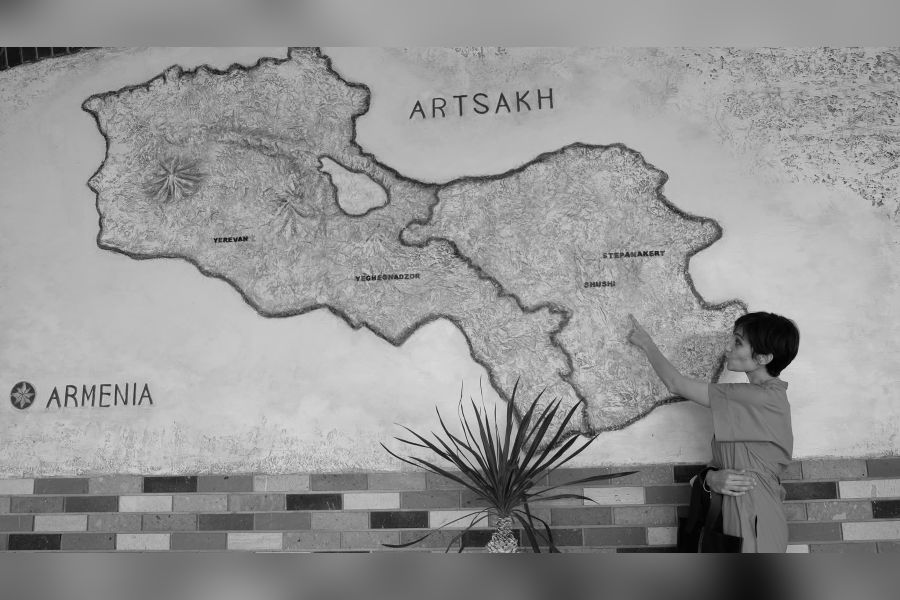
Narine Karapetyan is one of the Armenians forcibly displaced from Artsakh. An Iranologist, photographer and mother of two children, she now lives in Armenia, where she works at Photo Atelier Marashlyan. There, Armenians from around the world come to be photographed in the traditional clothing of their ancestors. These garments offer a tangible connection to histories interrupted by war and genocide.
Since her displacement, Narine has been grappling with questions of identity, belonging and return — questions she is exploring in her first documentary film project, And Then? The draft film examines what it means to be a refugee in one’s own homeland, drawing on Narine’s lived experience of war across generations. She witnessed the First Artsakh War as a child and lived through the Second Artsakh War as a mother, navigating fear and survival while caring for her children.
By placing these two periods in dialogue, And Then? traces recurring patterns of violence and memory, asking what remains when war reshapes not only geography, but identity itself.
War. Memory 1: Winter 1992
Inside a helicopter, long wooden benches ran along the sides. Children sat close together, bundled in warm clothes. An open coffin lay at their feet. The soldier inside had his head wrapped in bandages. His mother knelt over him, mourning, but the helicopter’s roar drowned out her cries.
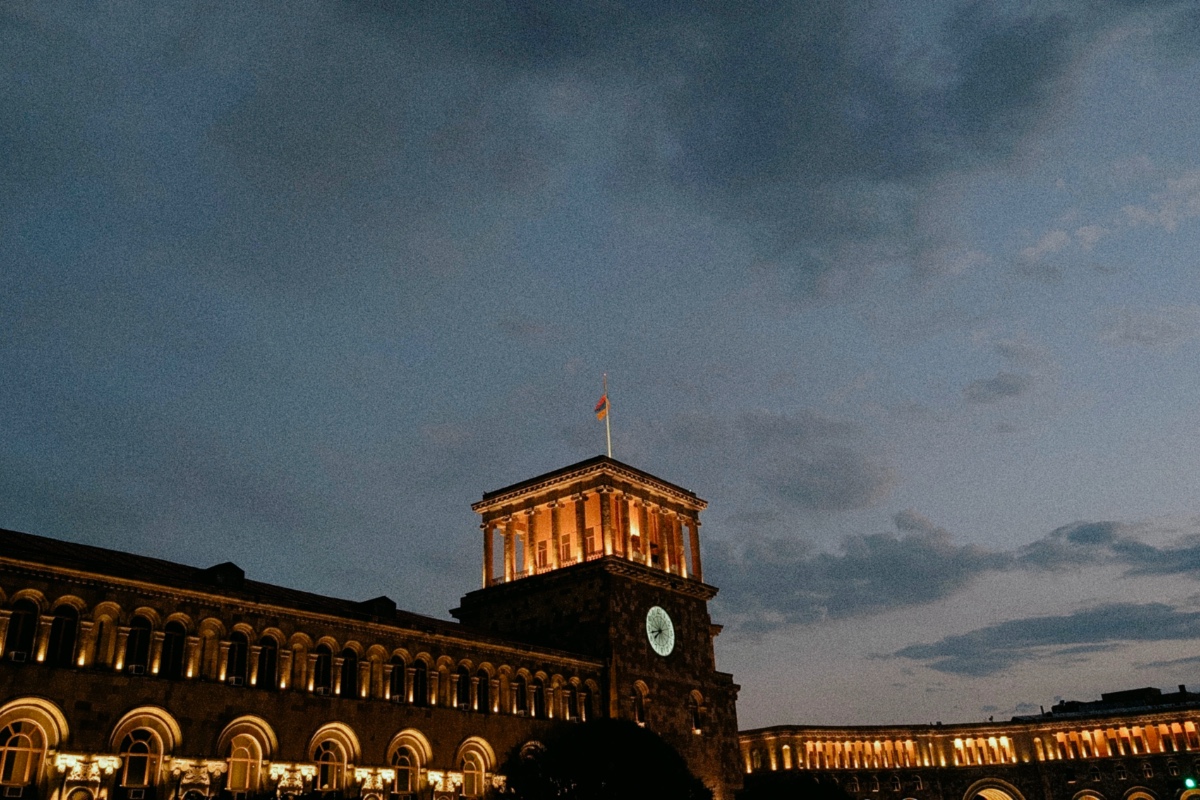

6-year-old Narine imagined the unseen conversation between mother and son. At first, she scolded the soldier silently: Why had he died while his mother was crying? Then, her gaze shifted to the window. Geese she had seen before boarding the helicopter had shrunk to tiny dots. But she knew the truth — they were still geese. She smiled.
How strange it was to look at the world from above. Death lay beneath her feet, yet the world stretched endlessly before her.
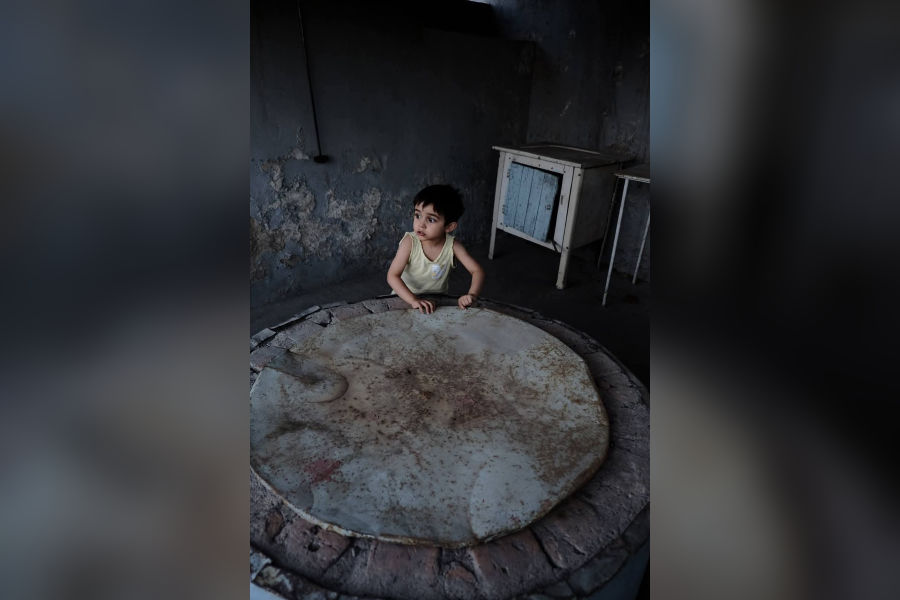
War. Memory 2: Sept. 27, 2020
Sept. 26. It was Stepanakert’s day. Narine wore her favorite English black-and-white checkered trousers and a white silk shirt. They returned home late, and she decided to sleep in the living room. Exhausted, she fell asleep quickly.
In the morning, she realized the war had begun: smoke filled the air, and drones were falling. She ran to wake her children. “The war has started,” she told them.
“When the explosions start, the world around you seems to change; panic comes instantly. You have to recognize it, calm yourself and act. If panic takes over, you can do nothing and the children will suffer. Your heart beats fast, but you can’t cry or show weakness. You must stay strong — you are a mother and you have to take the children to safety.”
She led the children to the basement and told them that she would be back soon. She returned upstairs to gather supplies: a chair, a cup, confirming each item aloud as she carried it down. “I was telling the children, ‘See, I returned; I wasn’t lying to you. Wait a little longer; I’ll be back soon.’ And I asked myself: Will I really come back?” she recalled.
To make a bed for the children, they lowered tables from the multi-story building’s elevator. When a child complained that the neighbor’s place was better, Narine ignored it — they had to make their own space. She spread yoga mats and blankets on the floor, lying down with a friend. Despite the pandemic, they wore masks and kept their distance. Exhausted, they laughed at their own discipline amid the chaos.
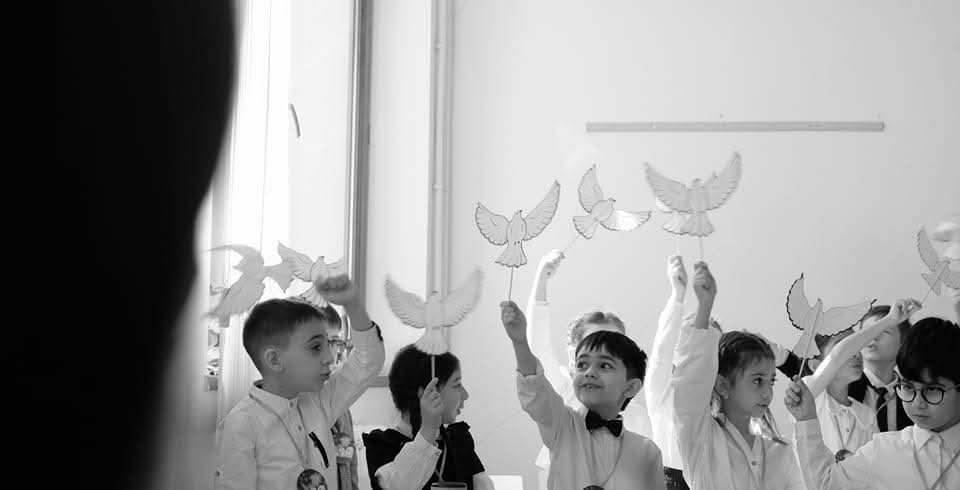
“I looked around and realized we were like the people in the basement during the war in 1992. The war had the same face. In a minute, you become a person living in war, a person who no longer recognizes time,” she told the Weekly.
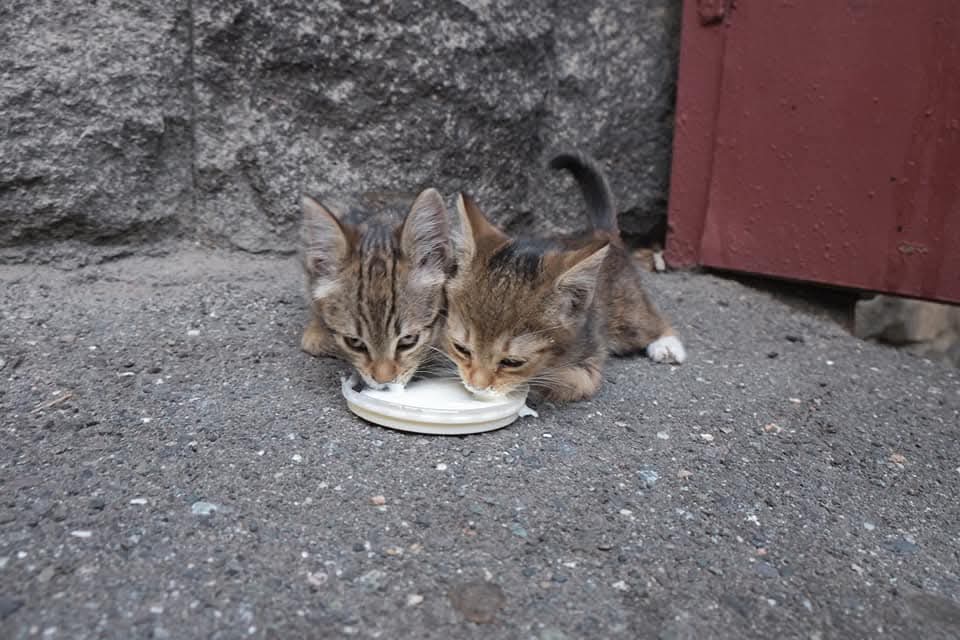
Almost all the women in the basement were in bathrobes. She was the only one in “festive” clothes. In the morning, she opened her eyes and saw the building’s three cats standing above her. She called, “Murka, Murka.” She thought that if the cats could talk, they would ask, “What are you doing in our territory?” That day, she did not feed them like she usually did.
Return 1. Post-war 1.
When Narine returned to Stepanakert, she asked friends what they had seen and how they had lived during the war. As they began to tell their stories, she first felt ashamed, then pity and finally envy.
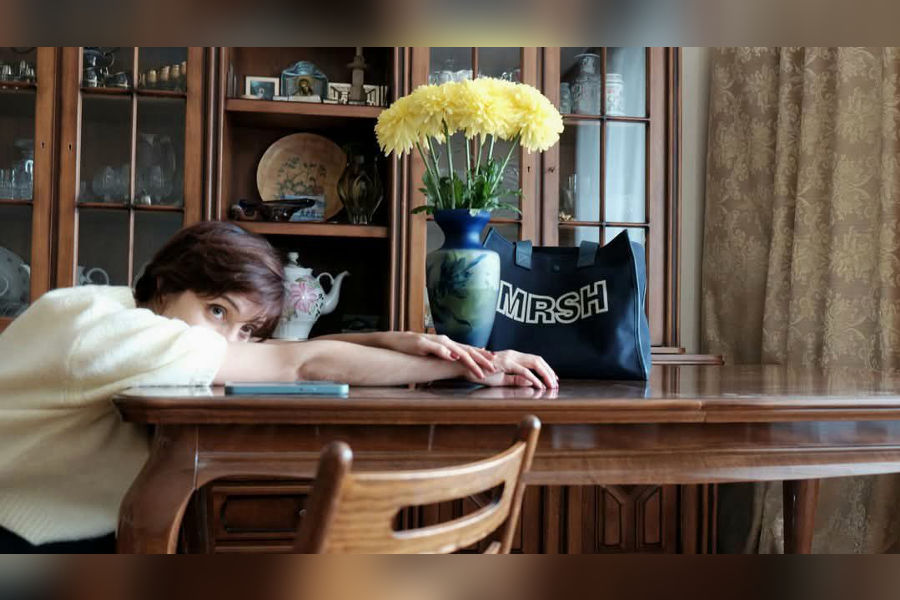
Memory 1
Her class went hiking outside the city. In an open field stood an airplane that had been hit during the war. The children climbed onto it. Looking down, they saw wild roses growing inside the plane. They quickly went down and began picking bouquets.
One girl felt embarrassed when she realized she was holding most of the flowers. She put them in her backpack. Excited, she rushed home, eager to show her grandmother how much the other kids loved her. But the bag was already open — at some point, the other girls had taken most of the bouquets. Only two small bunches remained as “evidence.”
Memory 2
In 1993, while returning home from school, she saw a crowd gathered in a circle and moved closer. A cow stood in the center. People held bowls, waiting for their share. They tied the cow’s legs and laid it on the ground.
She kept looking into its eyes, and the cow looked back at her. It was white. They cut its throat. Its white coat turned red, but its eyes stayed open — frozen, staring at her. She turned and walked home.

Memory 3
Black ribbons stretched across the city, bearing men’s names, surnames and ages. Schoolchildren ran from street to street, stopping at each ribbon, trying to remember the numbers. They searched for the youngest and the oldest, the smallest and the largest.
When they reached a ribbon, everyone fell silent. No one had told them not to laugh — the ribbons themselves felt serious. The youngest was 17; the oldest was 50.

Slowly, the ribbons began to disappear. The city wanted to return to normal. When the neighbor’s boy was killed, a black ribbon appeared on their street. That ribbon felt the closest, because she personally knew the person who had become a number, a letter and a black ribbon.
Return 2. Post-war 2.
In May 2021, they returned to Artsakh. It was spring, but people were searching for their sons, not violets.
One summer day, an explosion rang out. She rushed her children toward the basement. The boy could not find his slipper, and the girl stood waiting. A split-second decision had to be made: if both children stayed in the same place, both could die. They had to be separated.

She shouted, “Mari, Mari, run, run; we will come.”
Time stretched and slowed. The girl ran down the long corridor, looking at her feet and thinking: Is this the last time? When the girl disappeared from sight, she began to cry. In her mind, she was already saying goodbye — imagining that either she and her son would die, or her daughter would.
She pulled herself together. They found the boy’s slipper and went down to the basement, where all the children were crying. She left the boy there and went back to look for the girl.
Fortunately, the worst did not happen. On Aug. 20, 2021, an unexploded piece of ammunition detonated in the city — ordnance that had been collected to be neutralized.
Blockade
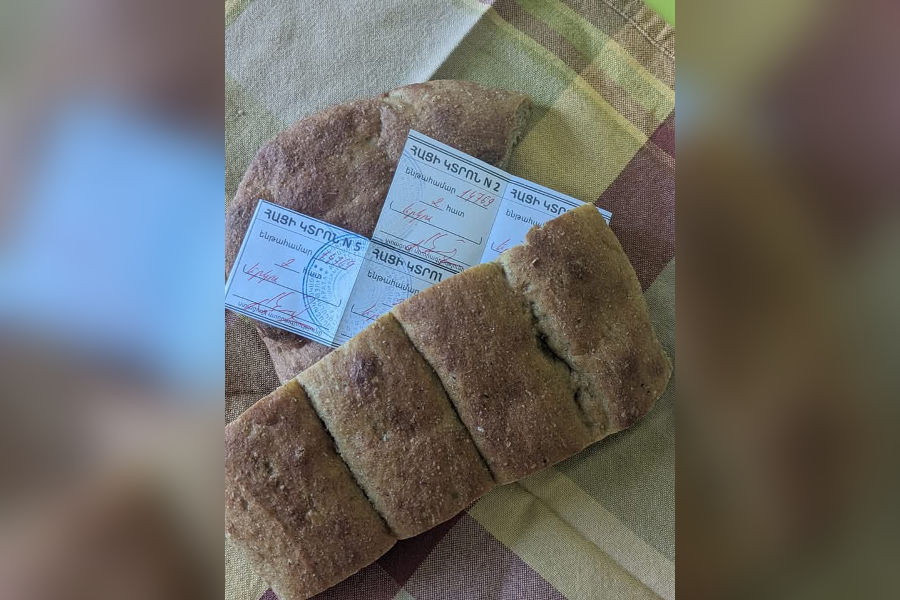
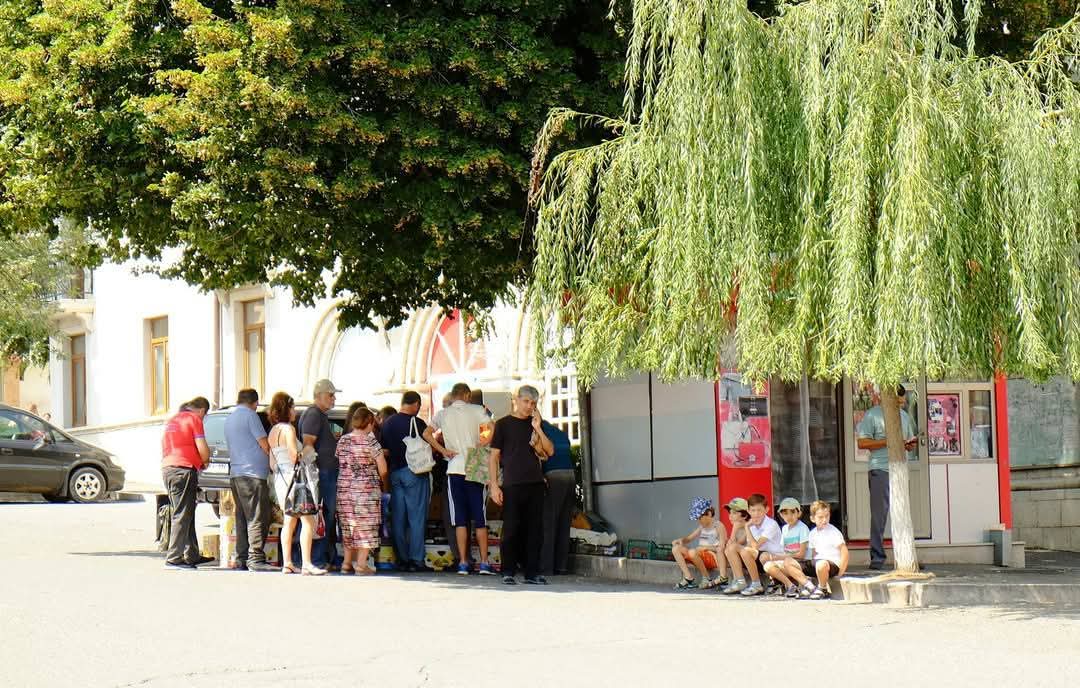
At first, “blockade” was just a word in the press. Slowly, it became reality. Cafes and shops emptied. Even without warnings, people asked shopkeepers whether they could take a certain amount. Per-person quotas kept shrinking.
People often faced the hardships with humor. On the Facebook page “I need this thing,” Artsakh residents exchanged goods and food. One post read: “I want to exchange my eating children for non-eating children.” Narine said with a smile that she was lucky — her children were non-eaters.
“The lack of food is depressing, not because you cannot buy what you want, but because hunger is used as a weapon — to weaken you, to dehumanize you,” she explained. “You feel ashamed for humanity: how can one human treat another this way? But following the events in Gaza, we saw it can be even worse. You can go for food and be killed by gunfire. I was naive.”
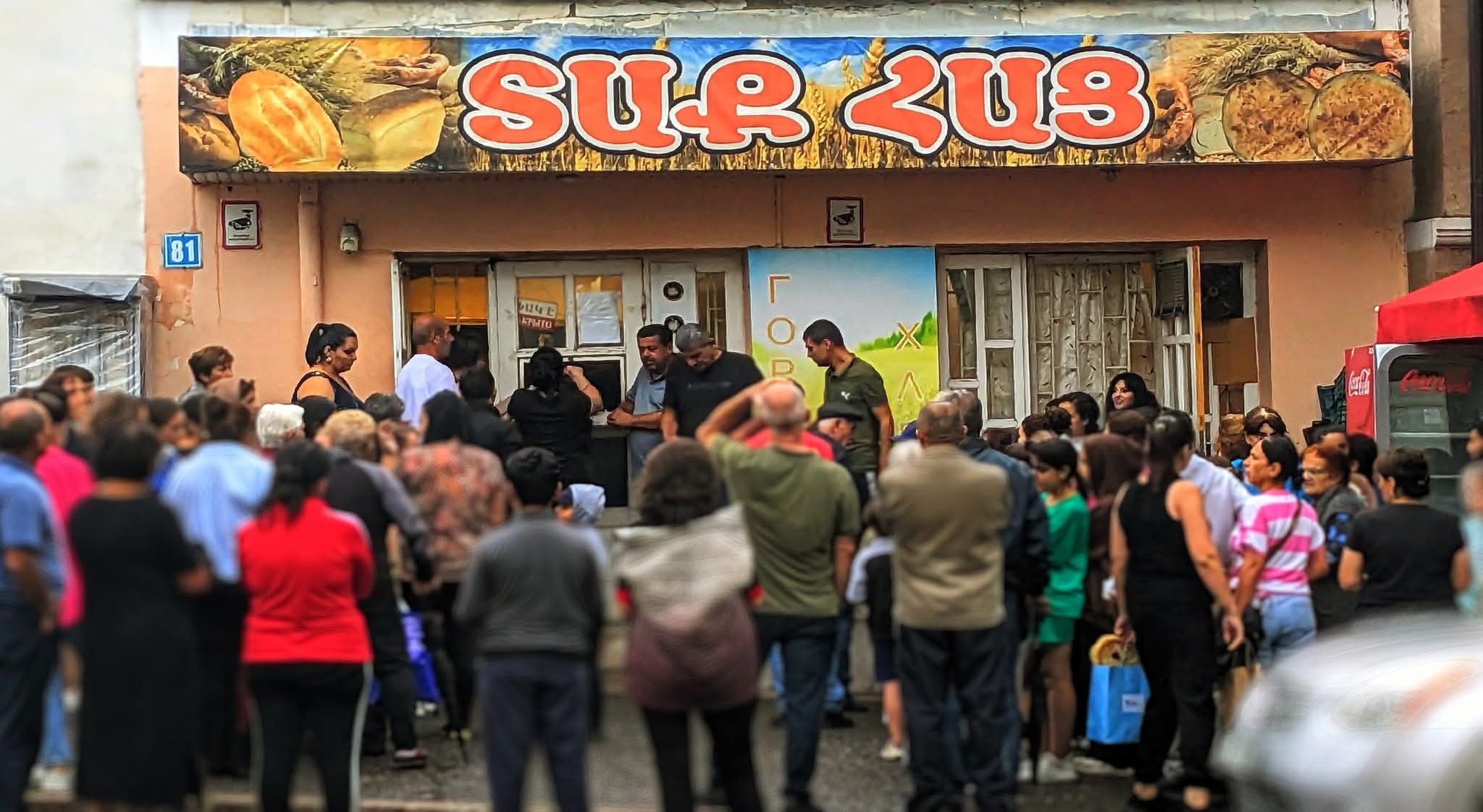
At that time, Narine was a chief specialist in the Department of Humanitarian and Development Programs at the Office of the State Minister of Artsakh. On Aug. 31, she took leave to take her children to school. The head of the department asked for her key, saying he had lost his.
“I said, laughing: ‘You want to fire me, right?’ I remember handing over the key and thinking: You will not give this key back to me. I don’t know why I thought that. On Sept. 20, I came to the office — the door was open, not with my key. I never saw that key again.”
During the blockade, people tried to maintain a sense of normalcy — not just for themselves, but for those around them, so no one would lose hope. “When you’re happy, you don’t care much about how you look,” she said.
In 2023, during the bombing, her friend called to check on her. “I said, ‘Let me put on some eyeliner and go out, Emma. If I put on eyeliner, it means I still have hope to live; if I don’t, then you need to worry about me.’ Emma laughed. I said, ‘You don’t understand — putting on eyeliner is very important; it is the horizon of your life.’ Then, I joked: ‘If I die, the BBC will film me and say, Poor thing, she wasn’t even pretty’ — maybe it’s for the best.”

One pre-holiday worry was explaining why Santa Claus would not come on New Year’s. Narine reassured the children that their letters had reached him. Santa had prepared the presents, she said, but even he was not allowed to cross the Lachin corridor to reach Stepanakert.
Around that time, the phrase “You are like a New Year mandarin” became popular in Artsakh. Narine smiled, noting that the younger generation was only beginning to understand its meaning. The children summed it up simply: “Our first New Year without mandarins.”

The road of exodus: Sept. 2023
On Sept. 26, they spotted a parrot on the gray asphalt. Narine thought it was her son’s friend’s parrot, Kesha. They decided to catch it, take it with them and surprise the owner.
The hunt began. With a light blanket in her hand, Narine approached the bird. Each time she threw the blanket, the parrot managed to fly off at the last moment, landing farther away. This happened several times; she didn’t even notice she had crossed the sidewalk. Frustrated, she watched as “Kesha” finally settled in a tree.
“It sat on a branch that I couldn’t reach. I said, ‘Idiot, I want to take you to Deni. You’ll stay here, freeze and die — silly exotic bird, come down now!’ I talked to it, but eventually, I couldn’t catch Kesha. The parrot decided to stay.”
Her son Levon was upset, but it turned out the bird wasn’t Kesha. The real Kesha had already been taken to Armenia, and — Narine added with a smile, had behaved very badly on the way.
She left the city on Sept. 27, still hoping that something might change and that they wouldn’t have to leave. In the morning, her husband confirmed their departure. Narine was sweeping the floor slowly when he suddenly took the broom from her and said they were leaving.
“I didn’t understand what leaving forever meant,” she recalled. “It felt like leaving the house and going to Armenia for a while. I couldn’t imagine — or even think about — never coming back.”

Her son had a collection of dinosaurs. Narine told him he could take one, but he refused, saying it would remind him of the others.
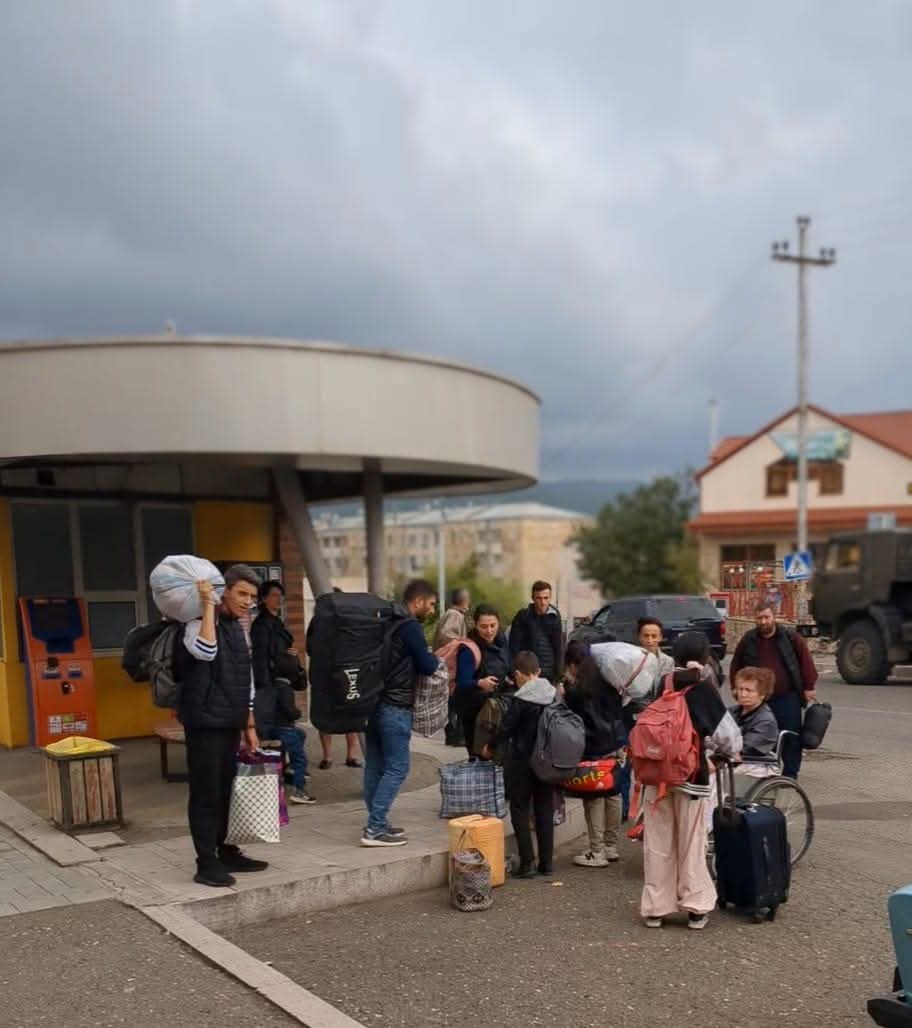
The convoy moved slowly; the entire city was leaving. When they paused to rest their numb legs, she noticed the sun rising behind the mountains. How could such calm be ruined by war? she thought. Then it struck her: This is the last time the sun will rise for you behind these mountains.
Nearby, a family stood with the mountains behind them. The men stood still while a woman photographed three generations together. It felt like a miracle, she thought, when she learned the family had suffered no casualties.
“My heart was full. I asked if I could photograph them, and I did — right there, with that wonderful view,” she recalled. “At that moment, I realized that Artsakh wouldn’t end there. It would live on inside those people.”
While waiting, they entered Commander Ashot Bekor’s garden, a figure from Narine’s childhood. She was born into the family of the first commander of the Artsakh self-defense forces. When the convoy began moving again, she and the children ran through the city, laughing.
“That was my way of showing love to the city,” she explained. “I’m glad I didn’t hold my feelings back. I said, ‘Here is your laughter, Stepanakert. You will change soon, but let my laughter stay with you. After all this, you deserve laughter, not tears of goodbye.’”

The next stop was the Brothers’ Cemetery. A woman with two children ran toward the grave of the family’s father. Narine saw people hurrying to catch their cars and the Artsakh and Armenia flags waving in the wind.
She did not take out her camera, feeling she had no right to photograph people in their grief.
“There is a famous photo of a refugee woman with her two children,” Narine said. “Years later, she said she hated it because it made the world see her only as a refugee, even though that is not who she is. What right did I have to photograph a woman and her family like that?”

While waiting, she noticed a boy of about 9 holding grapes. His running added motion to the stillness of the convoy. She followed him with her camera. Where is he taking them? she wondered. The boy reached the platform of a truck, stood on tiptoe and lifted the grapes up. A dried hand reached out, took them and disappeared. She pressed the shutter.
Later, she understood that people inside the truck were hungry and had sent the child to bring food. Normally, the elder feeds the younger, but now, the roles were reversed.

As they began moving again, she wanted to look back through the rear window, but the car was packed with belongings up to the ceiling. She felt trapped, frustrated that she couldn’t take one last look.
Post-war: Yerevan
She dipped her hands into the Badara River, pressing her fingers into the soil and pulling out shards of mirror and glass of different sizes. She was cleaning the river, and the river was cleaning her. Later, when the river was far away and out of reach, she returned, in her mind, to that moment. She imagined her hands in the soil, and it calmed her. Now, the winds of events had carried her away from her land.
She was in first grade, and literary Armenian felt foreign to her. She was shy about speaking and remembers that the other children did not accept her. Sometimes, they shouted after her: “Refugee.” One teacher even mocked people from Artsakh. With her own children today, it is different. No one treats them that way, though sometimes, they say they miss the Artsakh dialect, which they no longer speak during school breaks.

In the past, Narine traveled to Yerevan often while studying at Yerevan State University. Now, she says, it looks like the same Yerevan — the same streets — but everything else is different. She is no longer the young student she once was; she arrived with a new story and found herself in a completely different situation, against her will. She is now a refugee in her own homeland.
“At that time, I was a student, but I had a home I could always return to. Living in Armenia, I knew the familiar road would take me back,” she reflected. “Now, I can’t do that. I simply can’t go to the home I long for more with each passing year. Can you imagine? Just before falling asleep, I sometimes close my eyes and find myself in my house in Stepanakert. I start opening shelves, taking things out, arranging them. It’s madness. Not being able to go home makes you feel vulnerable and incomplete. It’s like sitting at a train station, always waiting, hoping the train will come and take you there.”
On Sept. 19, her son, Levon, was confused about going to school. It was the day they lost their home, but for others, it felt like any other day. When they watched the news about Gaza, he said he envied the people there: “They are already used to living in a war zone, but at least they stay in their homes.”
One day, Levon saw a dinosaur in a toy store and told his mother, “How silly I was. I should have taken my dinosaurs,” blaming himself. Narine replied, “I told you, Levon. Back then, you didn’t understand what it meant to leave and never return. Now, you do.”

AGBU organized a training program for journalists and photographers in Goris. Narine hadn’t paid much attention to the program details, but the word Goris alone was enough to motivate her to apply. She wanted to travel the road to Artsakh again — alone, without anyone else.
A year after leaving Artsakh, she wanted to understand what she felt on that road. But her emotions remained restrained; she was afraid that if she expressed them, others might look at her pain with disdain. She could not bear any more pain.
“I just looked and thought, ‘You are beautiful, Armenia.’ It’s a pity your Artsakh isn’t here — just this much: you are beautiful,” she said.
“One of the organizers came over and introduced himself. I was the only person in the group who had lived through the blockade and the exodus. He was French-Armenian.
I don’t remember exactly what he asked, but I told him about one event, and I saw tears running down his face. I felt bad for burdening him with my story. I really didn’t want to.”
Later, she decided to apply to the EurasiaDoc documentary film workshop. She told a woman named Mari that she wanted to make a film about Artsakh, to try to understand what had happened to them.
“So, you’re going to focus on the losses of Artsakh and on pain again?” Mari asked. “They don’t like it when you talk about Artsakh only in terms of loss, because for them, it has always been a place of rich, vibrant life,” Narine remembered.
Despite this, the documentary is in progress. Its working title is “And then?”
And then?
After the depopulation of Artsakh, 120,000 Armenians were forcibly displaced. One of them is Narine Karapetyan. She feels like a refugee in her own country — in part because the Republic of Armenia has formally given her that status. When blue passports were replaced, displaced Artsakh Armenians received documents identifying them as refugees in Armenia.
“The refugee document irritates me — I don’t understand how or why,” she stated. “When we first entered Armenia, it was devastating for me to see refugee tents set up in Kornidzor. For the first time in my united homeland, I crossed a border and arrived in Armenia as a refugee.
She does not rush to accept Armenian citizenship, despite social pressure. Without the new passport, for example, it is not possible to buy a home. For Narine, accepting citizenship feels like relinquishing hope of returning to Artsakh. She also disagrees with the current authorities’ policy, which denies the right of return to one’s homeland.

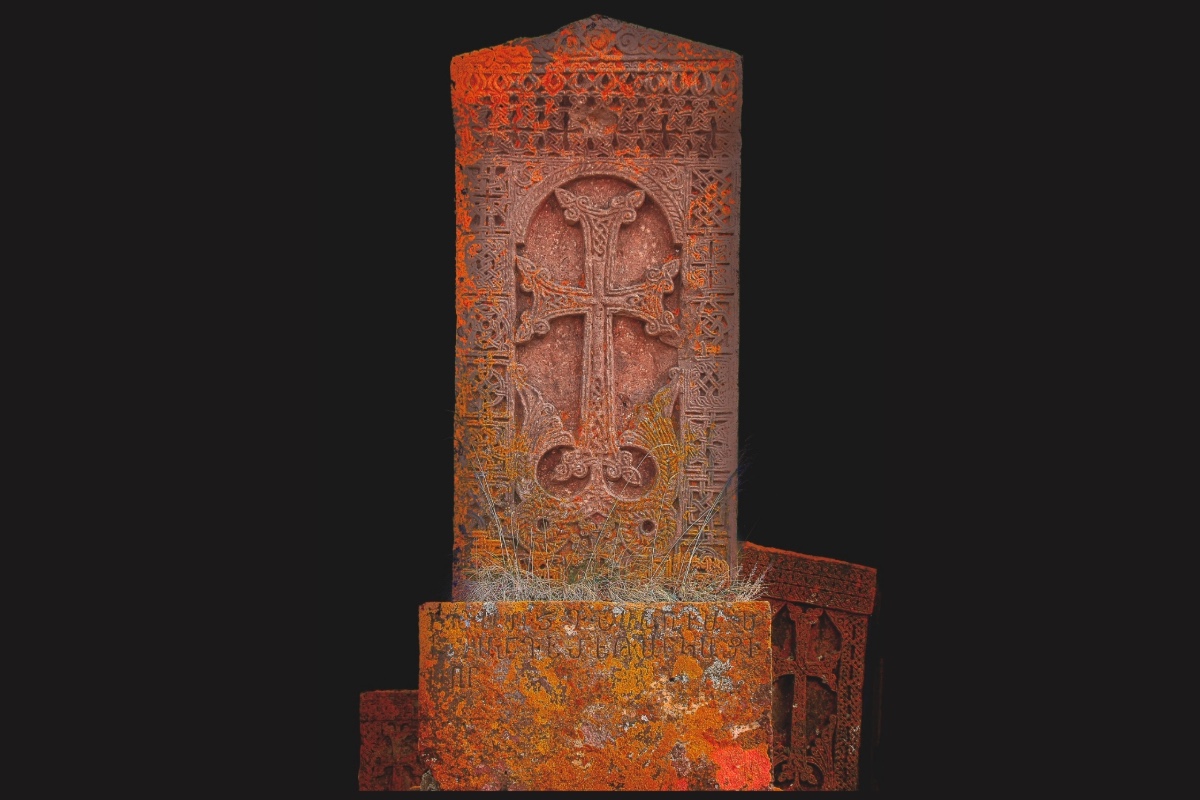
“You worry about being deceived, that they might take away your right to return entirely,” she remarked. “On my grandmother’s tombstone, there is a small photograph of my grandfather, noting that he rests in the Stepanakert cemetery. It shows that there are Armenian graves in Stepanakert and, because of these events, a husband and wife could not even be buried next to each other.”

Narine explained that being from Artsakh has become a label in Armenia — a stereotype that has persisted since the 1990s. Regardless of the circumstances, refugees are often treated as second-class citizens.
The film project focuses on her story. She wants to show that she is a young woman who was forcibly displaced and now faces numerous challenges. She works at Photo Atelier Marashlyan, where Armenians from around the world come for photo sessions wearing the traditional clothing of their ancestors. As she photographs them, she talks with them about identity, hoping to find answers to her own questions.
“I am the first generation of the forcibly displaced,” Narine stated. “I have two children growing up, and I want to understand what will happen to us in the future. If I go abroad, will they grow up the same way? Do I want that, knowing they carry generational trauma? I live with this trauma now, and my children will likely face it, too.”
She added that it is important to observe how modern families change when they wear traditional clothing. Entire families come together, appearing unified and in harmony.

“Once, a woman chose an Artsakh costume,” Narine recalled. “She said that although she grew up in Los Angeles, her roots were in Shushi. She began to cry as I asked her questions. She told me, ‘I didn’t understand what homeland meant until I went to Artsakh. In the past, when people asked if I was Armenian, I felt ashamed to say I was. But after going to Artsakh, I understood what it means to be Armenian.’ For me, that was the best answer. It showed how important Artsakh was for Armenians living far away. It proved that our struggle was not in vain.”
Narine has presented her film project to different audiences. She noted the enthusiastic response from international jury members reaffirmed the importance of addressing this topic. Still, even in its early stages, the film has faced obstacles. The Leipzig Film Festival awarded her accreditation as a prize, but without funding from Armenia, the project could not make it to the festival.
“Georgia and Iran were also competing for accreditation, and if they had received it, they would have presented their films,” she said. “Documentary cinema is taken more seriously there. That’s why their films succeed, while we’re still left asking whether it’s worth participating.

In the film, Narine plans to reconnect with the family she photographed on the road during the exodus. She will also draw from her photo archive to depict life in Artsakh, between peace and war. Though the film tells her personal story, she says that it ultimately reflects the story of us all.
All photos are courtesy of Narine Karapetyan unless otherwise noted. For updates on her work, you may follow her on Facebook.

This is so heartbreaking. As if the trauma of losing their homeland, their homes, their family members and their friends wasn’t enough, on top of that, they are stigmatized and are pressured to “shut up” about Artsakh and about their ordeals by Pashinyan and by an equally unpatriotic, insensitive and callous lot in Armenia. When refugees from Artsakh are treated as second-class citizens and are made feel unwelcome, with this apathy, indifference, lack of empathy and solidarity, Armenia cannot come together. Sowing the seeds of division in Armenian society, is what its external and internal enemies have always employed, in order to keep the Armenian nation divided and weak, and which they also used to defeat Armenia in wars by pitting Armenians against each other.
To me they are the true Armenians in that region. They have been totally betrayed by Armenia’s current ‘regime’.