



New two-volume history chronicles Armenian Church under Soviet rule

LONDON—The Gomidas Institute has announced the publication of Catholicos and Commissar: The Armenian Church Under the Soviet Regime, a landmark two-volume history by British historian Felix Corley. Spanning nearly 1,600 pages, the study is the most comprehensive account to date of how the Armenian Apostolic Church endured, adapted and ultimately re-emerged as a pillar of Armenian national identity during the Soviet era.
Drawing on rare archival documents, memoirs and interviews, Corley charts the tumultuous relationship between the Soviet state and one of the world’s oldest Christian traditions. The work captures both the ruthless strategies of repression employed by the Kremlin and the subtle tactics of resilience deployed by church leaders to keep faith alive across seven decades of dictatorship.
Volume I: From Revolution to Purge
The first volume traces the story from the upheavals of 1917 through the devastation of Stalin’s Great Terror. After the Bolshevik Revolution, church lands were seized, schools shuttered and clergy persecuted. By 1938, Catholicos Khoren had been murdered and almost every parish across Soviet Armenia was closed. Yet, after World War II, Stalin permitted the election of a new Catholicos, Gevorg VI, whose carefully managed cooperation with the regime allowed the church to regain limited visibility.

Volume II: Vazgen I and the Road to Independence
The second volume follows the extraordinary tenure of Vazgen I, who led the Armenian Church from 1955 to 1994. Appointed under KGB oversight, Vazgen outwardly endorsed Soviet policies while quietly expanding the Church’s reach at home and abroad. Seminaries were revived, ties to diaspora parishes cautiously restored and the Church became a symbol of unity during the crises of the late 1980s—from the Karabakh conflict to the 1988 earthquake. By the time of Armenia’s independence in 1991, Vazgen had positioned the Church as a central force in national life.


A story of survival and identity
Corley’s twin volumes reveal the delicate balance of complicity and resistance that defined the Armenian Church’s Soviet experience. They show how an institution that was nearly annihilated in the 1930s re-emerged decades later as a spiritual and cultural bedrock of the Armenian nation. With meticulous use of official Soviet archives, once-restricted church records and personal testimonies, the books combine solid academic rigor with narrative clarity, making them an essential contribution to both religious and Soviet history.
“This is not simply a history of persecution,” wrote the Gomidas Institute in its release, “but of endurance, revival and the power of communal faith to shape identity under the harshest of regimes.”
Publication details
Felix Corley, Catholicos and Commissar: The Armenian Church Under the Soviet Regime (Volume 1), London: Gomidas Institute, 2025, pp. i-xlii +1-698 pp., chronology, maps, ISBN 978-1-909382-84-8, pb., UK£60.00 /US$80.00
Felix Corley, Catholicos and Commissar: The Armenian Church Under the Soviet Regime (Volume 2), London : Gomidas Institute, 2025, pp. 699-1492, biblio., index., ISBN 978-1-909382-85-5, pb., UK£60.00 /US$80.00
For more information, please contact info@gomidas.org
This article was written by Nora Vosbigian


Never would I have thought that the Armenian Apostolic Church would be persecuted again, this time in an independent Armenia, by Pashinyan. I thought that the centuries long persecution of the Armenian Apostolic Church by the Bolsheviks, Muslim Turks, Arabs, and Zoroastrian and Muslim Persians, was firmly and irreversibly in the past. What the Church, its Catholicos and its clergy are going through under the treacherous Pashinyan, is persecution, full stop.
Armenia was Zoroastrian before it became Christian.
There was never any Zoroastrian persecution of Christianity.
There was, however, a very strong rivalry between the two faiths in Armenia before Christianity emerged triumphant.
However, Armenians were intermittently persecuted by Sassanid Persia along with the Syriacs, after both people largely converted to Christianity in the 4th century AD, because they were wrongly regarded as “fifth columns” of the Roman Empire, after it adopted Christianity, and which was the enemy of Persia. However, Armenian and Syriac Christians, were also persecuted by the Roman Empire, because they broke away in the 5th century from the official Chalcedonian Christianity practiced by the Roman state. Depending on the individual Sassanid emperor, the Christian subjects of Persia experienced both toleration and persecution.
You don’t know the meaning of persecution if you think the Armenian Church is currently being persecuted in Armenia. Successive post-Soviet leaders in Armenia have considered it and courted it (and pandered to it agendas) as an essential ally. Pashinyan’s current tantrum against parts of it has not changed the fact that active support from the Church is still seen as a requirement for maintaining and legitimising power in Armenia.
@Steven Sim
Pashinyan is of course persecuting the Armenian Apostolic Church. He no longer needs, seeks and relies on the support of the Church. Especially so, after he gained control of the legislature, planted his supporters in the bureaucracy, in all Armenian state institutions, including the Presidency and especially in the judiciary, which he uses as a weapon against his opponents, including against the clergy who oppose his misrule and his neverending appeasement of Azerbaijan. No Armenian leader in an independent Armenia has attacked, questioned and hounded the Armenian Apostolic Church, until Pashinyan came to power. He showed his true face, after he gained control of all the levers of power and was challenged for his misdeeds. Pashinyan has not only surpassed his predecessors in authoritarianism, he has crossed all lines. He doesn’t want any challenge and any opponents to himself. And this means neutralizing any opponents and institutions, including the Armenian Apostolic Church. Simple as that.
Is it as “simple as that?” I think you forgot to add another entity on the list of Church persecutors. Though not murderous like the Bolsheviks, Turks, or Arabs, our new persecutors use the church as a political tool in the same way as the Tsar did through Polozhenie and as the Ottomans did through the National Constitution.
Post-Soviet Russia has used its own church, the Georgian church, Ukrainian, and Moldovan churches to pursue its political programs in their near-abroad. They have been, and currently are through HH Karekin II, pursuing the same program of soft influence using the Armenian Apostolic Church.
When HH Karekin II and some of the clergy took a blatantly partisan pro-government position during the 2007 elections – that was Russian political influence on the Armenian Church. When HH Karekin II called for the resignation of the PM as if it were a political party, that was the Russian puppeteer breaking through the Church-State boundary. When Bishop Bagrat started his campaign for PM, with HH Karekin II’s blessings (a strange alliance between the two since they were not on good terms previously), the Armenian Church showed that its spiritual mission had been corrupted by Putin’s influence in the same way as Russia’s Patriarch Kirill.
This interpretation that the current Armenian Government is persecuting the Armenian Church runs into another problem: Pashinyan’s own behavior, personally and as PM, quite openly contradicts the program of persecution Messieurs M and Whig believe is being undertaken. He has attended Divine Liturgy rather consistently as PM, which is odd for someone who wants to undermine the Church. He has allied himself with Bishops/Archbishops who state that they want Church reform to remove the authoritarian and uni-polar power structure that Polozhenie has bequeathed to the Armenian Church. Should they be successful in their reform, that would make the Church *more* difficult for Pashinyan to “neutralize” and control.
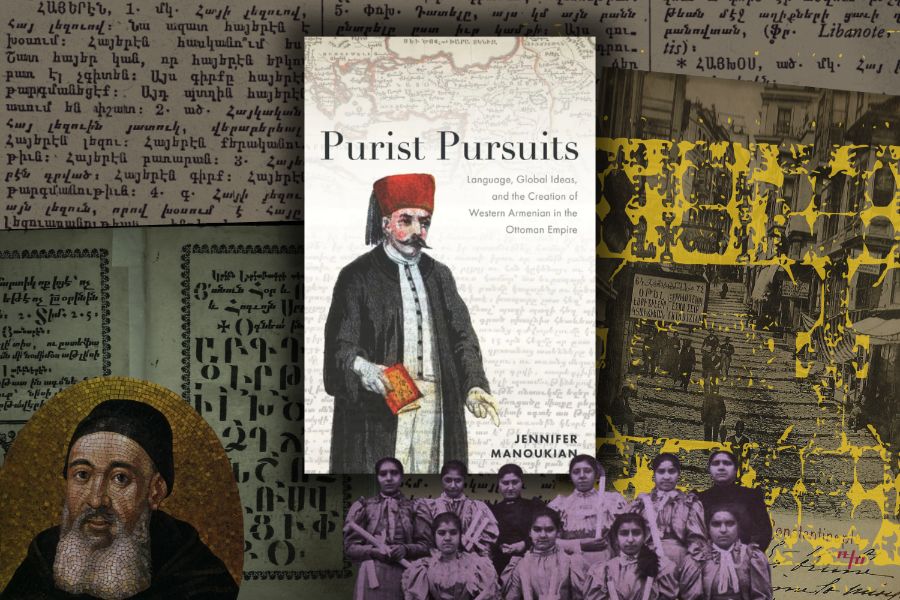
No, the facts don’t stand in support of Steve M or Robert Whig. Rather, their interpretation indicates a type of “Derangement Syndrome” when it comes to Pashinyan: everything he does must be understood to disadvantage, harm, or undermine Armenia. Ironically, it is Russia that has been doing this for two hundred years, as anyone who would read Felix Corley’s work could see. Yet, the M’s and Whig’s of the world turn a blind eye to our “ally’s” blatant exploitation and betrayal of our Nation.