Between mountains and bees, a journey back home
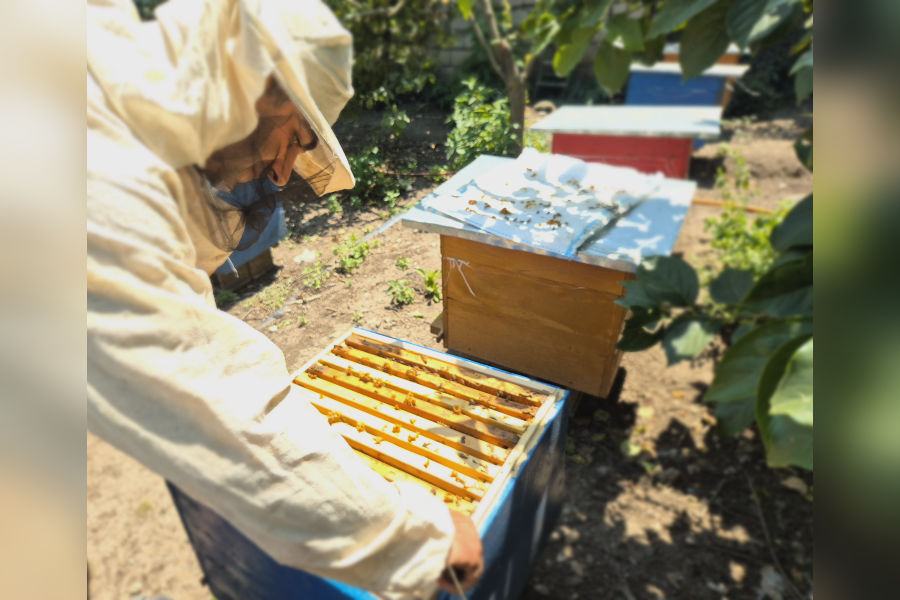
In the village of Getahovit, in Armenia’s Tavush region, up on the hillside (in Armenian Sarn i ver), live Sophia and Mher, who were displaced from Artsakh in 2023.
Mher is Hadrutsi (from the region of Hadrut in Artsakh), while Sophia was born and raised in Ukraine, where she lived for over 10 years. They met in Artsakh, where Sophia was working on a media project and Mher became her guide to assist her work. Sophia and Mher married during the nine-month blockade and in September 2023, along with nearly 120,000 others, were displaced to Armenia and settled in Getahovit, Ijevan.
When asked to describe himself, Mher’s answer was simple: “I am a soldier and a beekeeper.”
Before the 2020 attack on Artsakh, Mher lived in Hadrut and spent much of his time in his grandfather’s village, Toomi. Beekeeping was his hobby, and he loved following his grandfather’s work with the hardworking and beautiful insects.
“The most interesting thing about beekeeping is watching their discipline. Bees are truly amazing; every single bee in the hive has its role and everyone knows what they are responsible for,” Mher said.
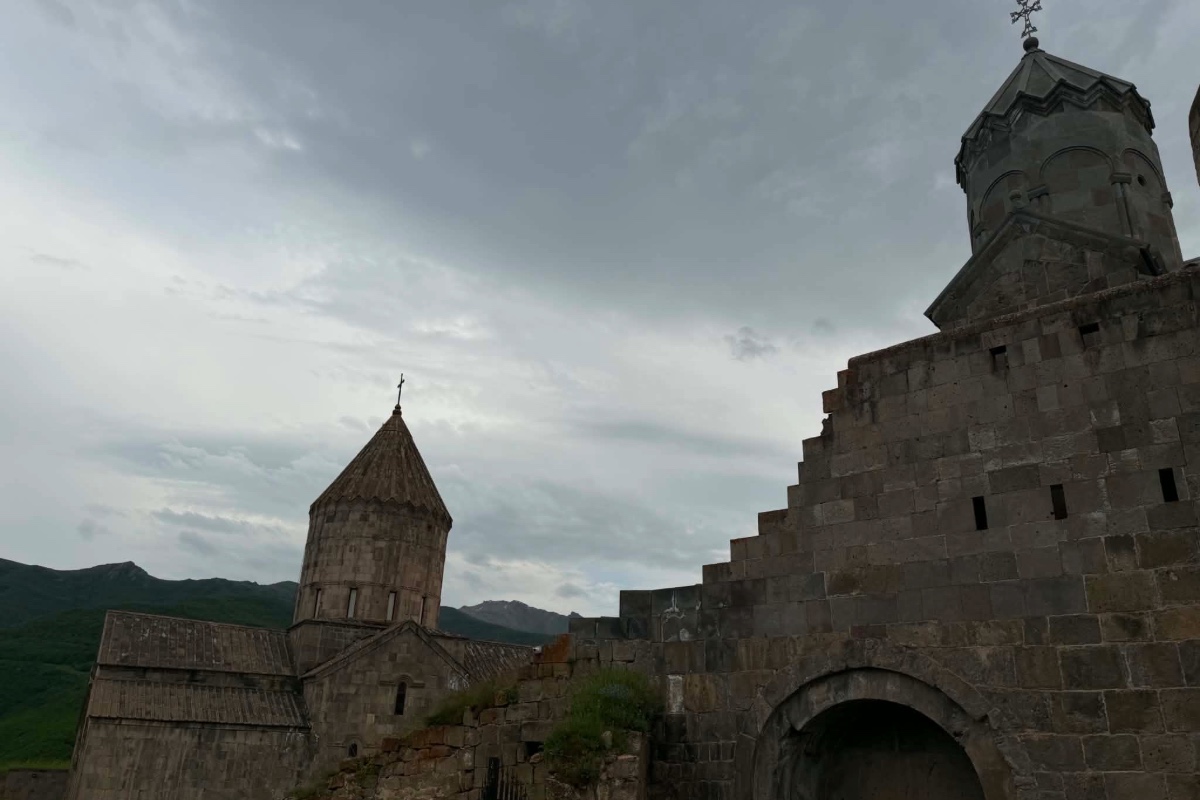

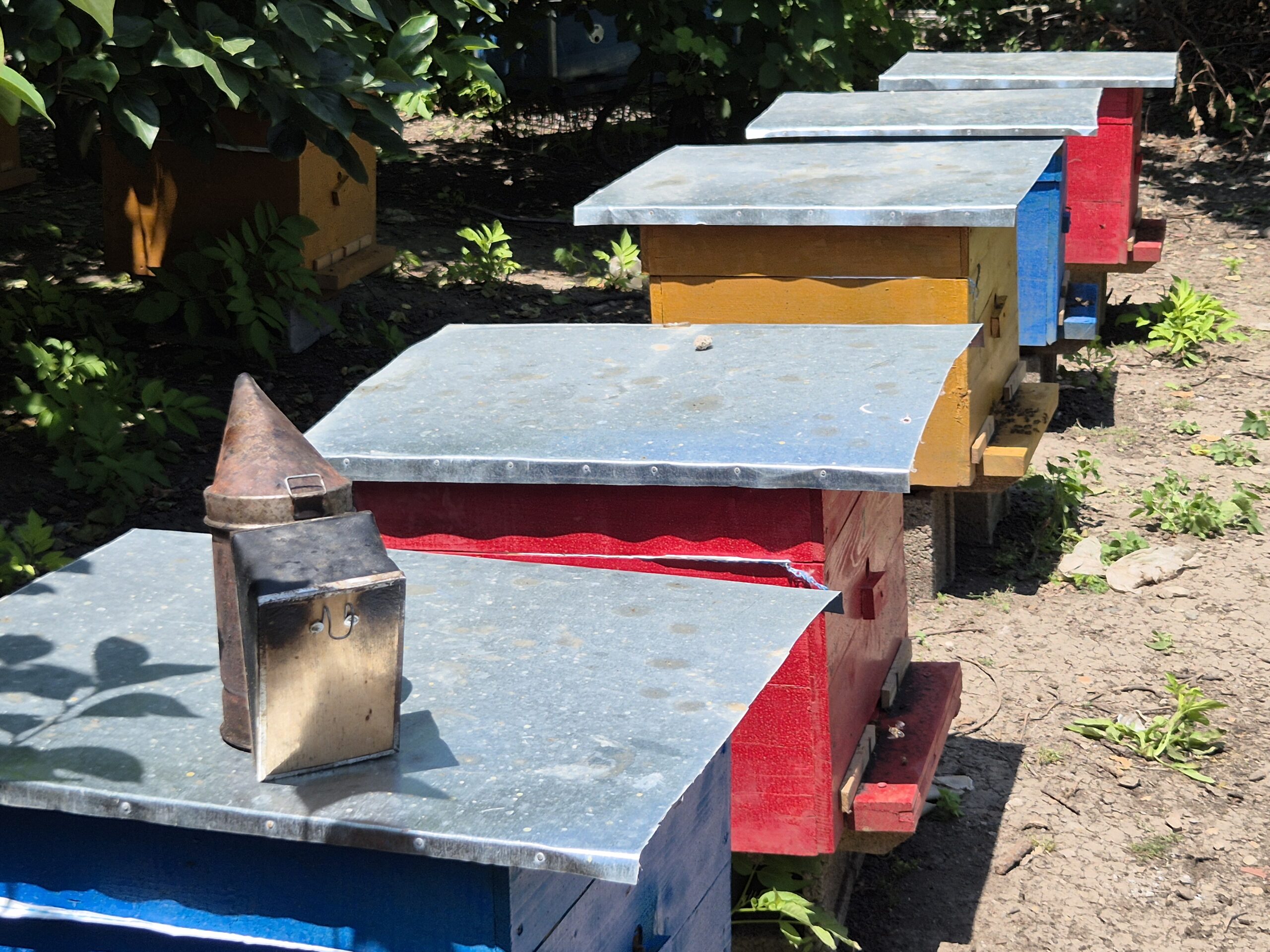
He noticed that the honey in Armenia and Artsakh were pretty much the same, but there, in his homeland, the environment was alpine: far from the city, far from people, hidden deep in the forests. Also, most bees there were local species and queen bees were not imported from outside.
“We did not exactly choose Ijevan,” Mher explained. “It is just very similar to where I come from—the same nature, the same landscape. Sophia promised I would love it here and I trusted her.”
Mher does not like talking much, or maybe it is hard for him to remember everything. Strangely, even his brief answers surprise with their depth and emotion.
“I tried to find familiar faces but could not find any. I kept looking for someone I would know, but I could not. So instead, I got used to imagining that everyone reminded me of someone from my past,” Mher explained.
The beekeeper said that people are very hospitable in Tavush, and although the dialect is different, it still carries the same warmth.
“Well, to put it simply: they are the same crazy mountain people. Same folks, really!” Mher laughed.
Sophia and Mher continue beekeeping and selling honey in Armenia. But recently, Mher discovered a new adventure: hiking. Sophia, who works as a tour guide and often travels to Western Armenia, recalled receiving a call from guests wanting to hike in Ijevan just as she was leaving for a tour. At first, Mher refused to guide them because of his English skills, but Sophia explained that hiking is about navigating, not talking—so he agreed.

“You are a forest man; take them,” Sophia remembered saying. “It turned out very well. People still say they want to go with Mher.”
“In the end, it is our homeland—Armenia is our bigger one,” Mher said. And then, we left him with his bees—the ones he loves spending time with most.
The couple has a busy schedule; during certain parts of the month, neither Sophia nor Mher is home.
“Our ducks wake us up, they do not let us decide when to get up. The ducks and the roosters have already decided for us, and with their noise, it is impossible to sleep in, even if we are very tired,” Sophia relayed.
The day starts with feeding the animals and making breakfast. Sophia enjoys mornings when they are both at home and can have breakfast together, enjoying the beautiful Ijevan view. Depending on the season, Mher goes immediately to his beekeeping work and waters the greenhouse in the evenings. Sophia works online, and they often appreciate being close to hiking trails.
“We like to stroll around town, too, and host guests, picking fruit and so on,” Sophia said.
When asked who buys their honey, Sophia said their customers are quite diverse, but mostly people who, like them, seek a story inside the honey—not just good honey. She was initially worried because they had limited means to advertise or market to large audiences. One friend told her, “Be patient—the people who are like you will find your honey.” And that’s exactly what happened.
Their customers appreciate the high quality, and Sophia proudly said that once someone buys their honey, they always come back for more.
The daily business struggles of displaced people are not the same as what locals face. There are no special tax breaks or advantages. Some government programs exist, but even those usually require co-investment from the business. Sometimes private NGOs help.
“Honestly, without support, a displaced person cannot manage alone.
These challenges sometimes lead displaced people to settle in Yerevan, but not Sophia and Mher, who felt they did not have anything to give Yerevan and moved to Ijevan for their health, mental well-being—among other reasons. This was clearly the right choice for them.
“We have never once regretted it, even knowing it is not easy to live here. Many people wrongly assume displaced people live here for free—we hear such silly myths all the time. But I assure you, buying a house in Ijevan costs the same as a one or two-room apartment in Yerevan. So. living here is its own challenge,” Sophia said.
She noted technical obstacles, such as obtaining sales permits. All their old registrations from Artsakh were canceled; they had to open new ones in Armenia. Depending on scale, people work differently, but overall, Armenia’s tax policy is tough—not exactly friendly for new businesses.
The fairs during their first year were helpful, Sophia noted. Displaced people were not charged for stalls and so on. Those fairs really helped people sell what they made. But in other cases, selling at fairs or markets can be expensive, tax rules are complex and supermarket registrations are exhausting—so for small producers, it is sometimes pointless.
For a woman raised in Kyiv and then Yerevan, who traveled a lot, village life can be challenging. Sophia remembers asking Mher funny questions about village life, like “How many eggs does one chicken lay per day?”
“When we moved, Mher said, ‘Let’s agree: the yard is mine, the inside of the house is yours.’ So, the animals, the bees, the greenhouse—all that was his. Until recently, I barely got involved. But then, he returned to service, so I had to take responsibility—like, for the chicks that hatched this spring,” Sophia said, her eyes shining.

In the village, it is clear that nothing comes easy and every living thing needs care—whether it is an animal you plan to eat or simply love. Sophia recalled how exhausted she was, caring for the chicks. At that time, she was expecting a baby, so it took a lot of energy to wake up every morning, give them water, arrange their food and so on. But she did it because, like her grandmother used to say, “It is a creature—it is innocent.” Even when it rained heavily in the spring, she dragged herself out there because she could not let them die. That experience changed her attitude toward life.
In 2023, when Artsakh was under blockade, the couple—happy and hopeful—was looking to buy champagne. Later, they finally found some at the shop of Emma Tatik. A few days later, the shop closed forever. If it closed in Stepanakert, it meant everything was over. But Sophia is strong and accepted her life as it was.
“I went to Artsakh alone and we came back home together.”
All photos courtesy of the author