Armenian Cultural Foundation celebrates the legacy of Alan Hovhaness
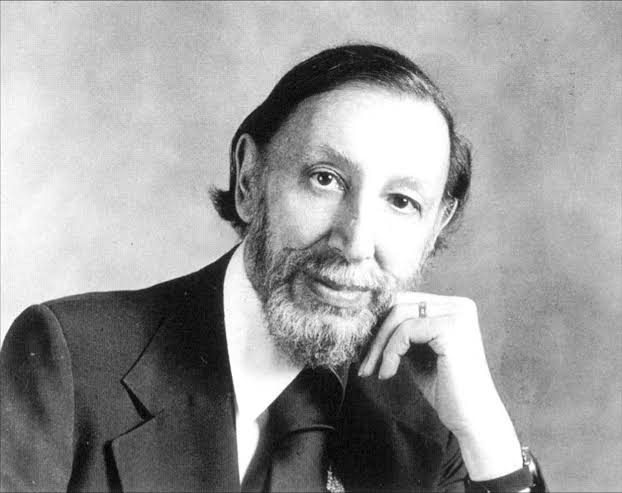

ARLINGTON, Mass.—Arguably, no American composer has enjoyed high praise, been lauded by musical luminaries or hailed as the “Prince of Music” quite like Alan Hovhaness. On Sunday, June 9 at 3 p.m., the Armenian Cultural Foundation (ACF), as part of its annual Mirak Chamber Music Series, will present a concert in tribute to Hovhaness (1911-2000) at the Robbins Memorial Town Hall in Arlington, Massachusetts.
Born Alan Vaness Chakmakjian on March 8, 1911, to Harutiun Hovaness Chakmakjian, an Armenian chemistry professor at Tufts College, and Madeleine Scott of Scottish ancestry, he changed his surname to Hovhaness in honor of his grandfather. He grew up in Arlington (5 Blossom Street), and it was within the nurturing environment of Arlington Public Schools that Hovhaness discovered his musical talent and composed his first opera. His journey from a local student to a globally recognized composer is a testament to Arlington’s role in fostering artistic growth.
Upon graduation from Arlington High School in 1929, he studied under Leo Rich at Tufts and later under Frederick Converse at the New England Conservatory of Music. There, in 1932, he won the Conservatory’s Samuel Endicott prize for Composition with his Sunset Symphony (also known as Sunset Saga). In the early 1940s, he served as the organist at St. James Armenian Church in Watertown. In 1942, he won a scholarship at Tanglewood to study under Czech composer Bohuslav Martini. Hovhaness joined the faculty of the Boston Conservatory in 1948, where he taught until 1951. He received Guggenheim Fellowships in 1953 and 1954 for composition. He went on to write the score for the Broadway play The Flowering Peach by Clifford Odets in 1954. He also created a ballet for Martha Graham (Ardent Song) and two scores for NBC documentaries on India and Southeast Asia (1955, 1957).
From the early 1960s, Hovhaness’s music increasingly incorporated influences from other cultures. His travels and research trips to India, Hawaii, Japan and South Korea took place between 1959 and 1963. As a Fulbright fellow in India, Hovhaness collected over 300 ragas, learned to play the veena and even composed a work for a Carnatic orchestra titled Nagooran. This piece was performed and broadcast by the South Indian Orchestra of All India Radio Madras on February 3, 1960. He was given the title “Prince of Music” by Indian music critics.
In Japan (1962-1963), under a Rockefeller Foundation grant, he studied Japanese gagaku as well as nagauta (kabuki) shamisen and joruri (bunraku) shamisen. These experiences led to his composition of Fantasy on Japanese Woodprints Op. 211 (1965), a concerto for xylophone and orchestra.

In 1963, he set up a record label, Poseidon Society, which released around 15 discs over the next decade. Two years later, in 1965, he traveled to the Soviet Union, including Georgia and Armenia, as part of a U.S. government-sponsored delegation.
Hovhaness was inducted into the National Institute of Arts and Letters (1951). He has received a number of honorary degrees from various universities and institutes worldwide. He moved to Seattle in the early 1970s, where he lived for the rest of his life with his wife, Hinako Fujihara (1932-2022).
Hovhaness died on June 21, 2000. A prolific American composer of Armenian descent, he carved a unique path in the world of classical music. His vast body of work, including over 68 symphonies and over 500 surviving works of diverse genres, reflects a deep exploration of Armenian, American and Asian musical traditions. He left a great legacy unmatched in the history of 20th century classical music.
Throughout his career, Hovhaness garnered praise from renowned figures across the music world. Music critics Rudolph Elie, Joel Schwartz, Virgil Thomson, Hubert Roussel, Robert Sherman, John Cage, Lou Harrison and Harold C. Schonberg, world renowned orchestra conductors Leopold Stokowski, Andre Kostelanetz and Dominick Argento, performer Keith Jarrett, novelist and playwright William Saroyan and Carl Sagan all spoke highly of Hovhaness for his genius, unique style and philosophy.
The Archives of Hovhaness, comprising scores, photographs, sound recordings, correspondence and video recordings, are located in several academic centers, including the Armenian Cultural Foundation in Arlington.
In 2009, the town of Arlington honored Hovhaness by dedicating a monument to him, which was followed by a concert at the Robbins Memorial Town Hall. The monument is located on the grounds of Whittemore Park next to the Cyrus Dallin Art Museum.
The concert, “A Tribute to Alan Hovhaness,” organized under the auspices of the
ACF, Mirak Chamber Music Series, will be in honor of the great son of Arlington and Arlington High School alumnus. Under the musical directorship of Dr. Pasquale Tassone, the program will include the following works: Eight Pieces for Solo Flute (1927) by Paul Hindemith; Mystic Flute (1937), Prayer of St. Gregory (1946), Macedonian Mountain Dance (1960) and How Lovely Are Thy Dwellings for guitar and chorus Op. 433 (1995) by Hovhaness; Toccata (1932) by Aram Khachaturian; Komitas Portrait based on the songs of Komitas vardapet (celibate priest) and dances by Vagharshak Srvandztian (2021) by Pasquale Tassone; and Trumpet Concerto in D Major, TWV 51:D7 (1710-1720) by Georg Philipp Telemann.
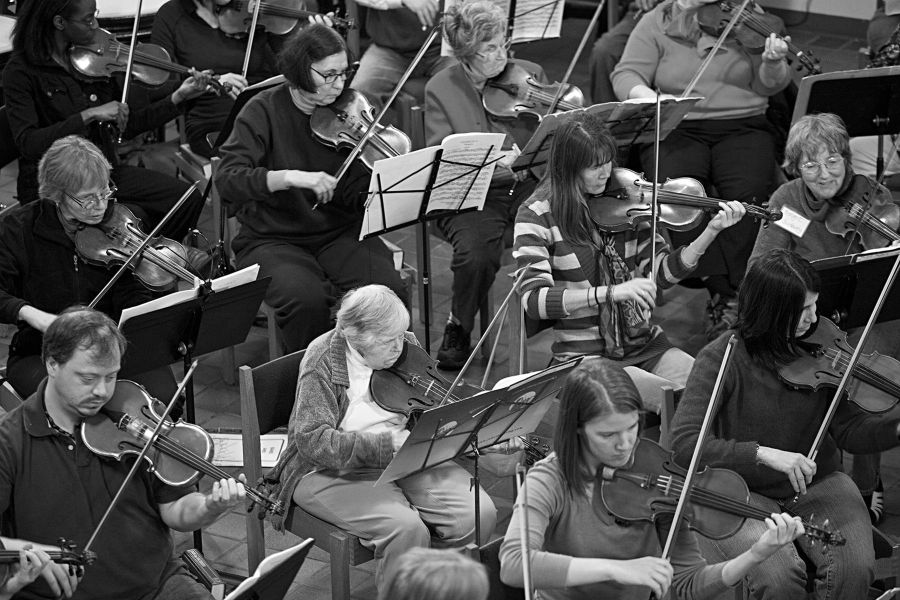
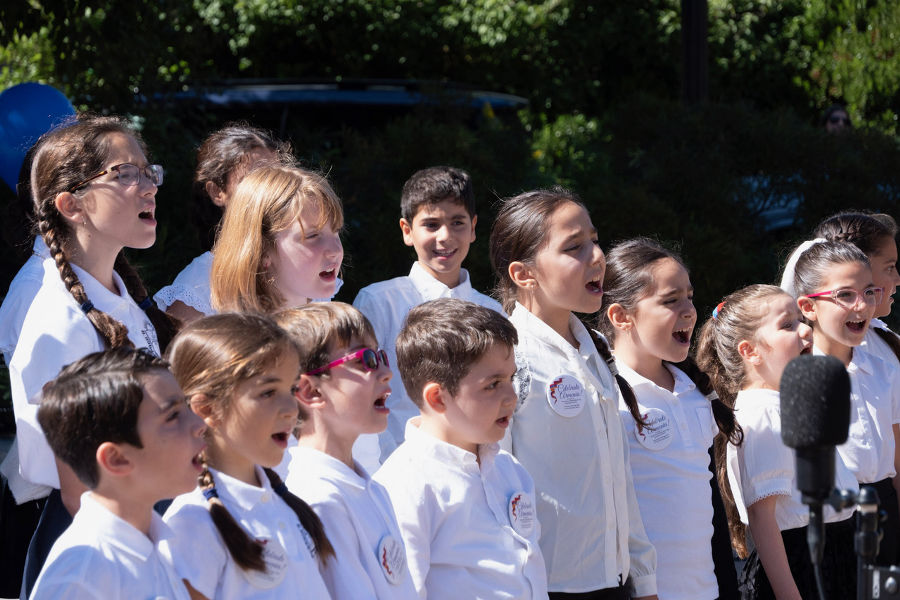
Performers will include an impressive roster of professional musicians and current residents: Wei Zhao, flute; Yelena Beriyeva, piano; Knarik Nerkararyan, soprano; Jing-Huey Wei, viola; Sylvie Zakarian, marimba; Michael Peipman, trumpet; Aaron Larget-Caplan, guitar; the Arlington-Belmont Chamber Chorus conducted by Barry Singer; and The Menotomy Chamber Orchestra, conducted by Jing-Huey Wei.
The concert, which is free and open to the public, will be held on Sunday, June 9, at 3:00 p.m. at the Robbins Memorial Town Hall (730 Mass. Avenue), Arlington. For questions and other details, you may contact the ACF during office hours at (781) 646-3090.