




YEREVAN — A planned meeting between Armenian and Azerbaijani experts in Yerevan was postponed at Azerbaijan’s request on Sept. 23. The meeting was to take place under the “Peace Bridge” initiative, a civil society format that has already brought Armenian and Azerbaijani representatives together in both countries. Azerbaijan’s APA news agency confirmed that the Azerbaijani side requested the postponement, saying it did not consider holding the meeting appropriate “at the current stage.” Boris Navasardyan, honorary chairman of the Yerevan Press Club and one of the Armenian participants, said the Armenian side had taken the opposite position. According to Navasardyan, the tense atmosphere made dialogue more necessary, not less.
The postponement followed an escalating dispute over the presentation of Armenian Christian monuments in Nagorno-Karabakh, including Gandzasar and Dadivank. It also came during a week in which Azerbaijani institutions expanded activities connected with the concept of “Western Azerbaijan,” President Ilham Aliyev continued using the term “Zangezur Corridor,” new questions emerged about Azerbaijani military positions near Armenia’s Aygebar village, and Armenians marked three years since Azerbaijan’s September 2023 offensive and the subsequent mass displacement of the Armenian population of Artsakh.
More than a year after Armenia and Azerbaijan initialed a peace agreement in Washington, the document remains unsigned and unratified. Diplomatic relations have still not been established. Meanwhile, disputes concerning territory, borders, cultural heritage, historical narratives and competing concepts of return remain active.
“Western Azerbaijan” expands from rhetoric into organized research
One day before the planned Yerevan meeting was postponed, Azerbaijan’s state news agency AZERTAC, reported that the Western Azerbaijan Community had established a working group to study what it calls the “Albanian Christian heritage” located across the territory of the Republic of Armenia. The Sept. 22 announcement identified areas described as “historical Zangezur” (Armenia’s Syunik province), “Daralayaz” (Armenia’s Vayots Dzor province) and the “Goycha Lake basin” (Lake Sevan).
According to the so-called “Western Azerbaijan Community,” the work will document churches, monasteries, chapels, inscriptions and other cultural monuments and will also contribute to establishing the historical and cultural foundations for the “safe and dignified return” of Azerbaijanis “displaced” from Armenia.

The announcement demonstrates how the “Western Azerbaijan” concept is increasingly being developed through institutions, research programs and cultural heritage projects rather than existing solely as political rhetoric. The initiative is particularly notable because Prime Minister Nikol Pashinyan publicly described the “Western Azerbaijan” narrative only days earlier as a serious threat to Armenia’s security and regional stability. Azerbaijan maintains that the campaign concerns the right of Azerbaijanis formerly living in Armenia and their descendants to return and does not constitute a territorial claim.
Aliyev has nevertheless repeatedly framed present-day Armenian territory through Azerbaijani historical terminology. In January 2025, he spoke of about 300,000 people whom he described as “Western Azerbaijanis” returning to present-day Armenia. In May 2025, Aliyev again insisted that the campaign did not represent a territorial claim while declaring that the issue would remain on Azerbaijan’s agenda until the proposed return was achieved. For Armenia, the issue is increasingly difficult to treat as a dispute over terminology alone.
A second Azerbaijani announcement published on Sept. 22 concerned Christian monuments in occupied Artsakh and surrounding territories. A project titled “Historical, archaeological and ethnological research in the Christian religious-administrative centers of Karabakh and Eastern Zangezur” received funding through the Azerbaijan Science Foundation’s 2026 grant program. The project covers Gandzasar, Dadivank, Amaras and other monastery complexes.
According to the Azerbaijani announcement, archaeological work at Dadivank began in August, with further research planned at other sites. The project follows a September visit to Nagorno-Karabakh by about 150 foreign diplomats and representatives of international organizations accredited in Azerbaijan.
During that visit, Azerbaijani presidential adviser Hikmet Hajiyev accompanied diplomats to Gandzasar and Dadivank and presented the monasteries as part of the Christian heritage of Caucasian Albania. Armenian members of the Peace Bridge initiative later warned that the episode had damaged trust and strengthened perceptions that dialogue between the two societies was ineffective.
Dadivank’s principal cathedral contains an Armenian foundation inscription recording its construction in 1214 by Princess Arzu Khatun. The monastery contains extensive Armenian inscriptions, khachkars and other elements of medieval Armenian ecclesiastical culture.
Amaras has similarly occupied an important place in Armenian religious history. Armenian historical tradition associates Mesrop Mashtots, creator of the Armenian alphabet, with establishing one of the earliest schools teaching the newly created Armenian script there in the fifth century.
The issue therefore reaches beyond competing academic interpretations of Caucasian Albania. It concerns how monuments with documented Armenian inscriptions, patrons and ecclesiastical traditions are being reclassified within an Azerbaijani state-supported historical framework after the displacement of the Armenian population that had maintained a direct cultural connection to them.
Dadivank artifacts become part of an Interpol dispute
The dispute over Dadivank intensified further this week. Sabina Hajiyeva, head of Azerbaijan’s State Service for the Protection, Development and Restoration of Cultural Heritage, accused Armenians of removing crosses, bells, frescoes, khachkars and other objects from the monastery before the Kalbajar region passed to Azerbaijani control following the 2020 war. She said information concerning some of the frescoes and khachkars had been entered into Interpol’s Stolen Works of Art database in October 2025 and that Azerbaijan would seek their return if they were located abroad.
The Armenian Church has presented a sharply different account.
The Mother See of Holy Etchmiadzin announced in November 2020 that prominent khachkars from Dadivank had been removed for preservation before the transfer of the surrounding territory to Azerbaijani control.
Interpol states that information in its stolen-art database is provided by national law enforcement authorities and authorized organizations and that responsibility for the submitted information remains with those sources. Interpol does not independently guarantee the validity or accuracy of each claim. The episode has therefore added an international law enforcement dimension to an already politically charged dispute
These developments unfolded during the week Armenians marked the third anniversary of Azerbaijan’s Sept. 19, 2023, military offensive in Nagorno-Karabakh. Gagik Baghunts, acting speaker of the National Assembly of the Republic of Artsakh described the September 2023 offensive as the culmination of a deliberate policy of ethnic cleansing against the Armenian population of Artsakh. Baghunts stressed that three years of displacement had not erased the collective right of Artsakh Armenians to return under credible international security guarantees.
Aliyev continues to invoke the “Zangezur Corridor”
Another unresolved issue concerns the planned transport connection between mainland Azerbaijan and Nakhichevan across Armenia’s Syunik province.
In an official address to security officials from the Organization of Turkic States, Aliyev said Azerbaijan’s victory in the 2020 war had “paved the way” for the realization of the Zangezur Corridor and described it as a historical gateway linking Turkic states economically, logistically and strategically.
The Armenian government has largely chosen a policy of limited public confrontation with Baku. Its officials have repeatedly argued that immediate retaliatory statements may produce domestic political satisfaction while complicating negotiations. That is a strategic choice rather than a neutral position.
During a period in which Yerevan has sought to remove Armenian territorial claims from official doctrine, Azerbaijani officials and institutions have continued promoting the “Western Azerbaijan” concept.
Aliyev continues to use “Zangezur Corridor” despite Armenia’s insistence that all routes inside its territory must remain under Armenian sovereignty and jurisdiction. Questions remain about fortified Azerbaijani positions near Aygebar.
A civil-society dialogue meeting intended to reduce mistrust was postponed by Baku when tensions over precisely these issues intensified. Pashinyan himself now describes the Western Azerbaijan concept as a security threat. If the government recognizes the threat, what concrete diplomatic, legal, informational and security mechanisms are being used to contain it?
From historical revisionism to political strategy
Azerbaijan expert Tatevik Hayrapetyan argues that the latest disputes over Armenian cultural heritage should not be treated primarily as a debate for historians. According to Hayrapetyan, Armenian scholars have been documenting the history of the region’s churches, monasteries, inscriptions and cultural heritage for decades, including during the Soviet period, when Armenian historians publicly challenged Azerbaijani attempts to reinterpret Armenian monuments through a Caucasian Albanian framework.
Hayrapetyan argues that the more important question is why Azerbaijani hostility toward Armenia and Armenians continues after Yerevan recognized Nagorno-Karabakh as part of Azerbaijan, after the displacement of its Armenian population and after the Armenian government moved to politically close the Karabakh issue in the name of peace.
“War is not only physical destruction,” Hayrapetyan said. “It is also a struggle against culture, history and identity.”
She rejects the argument that the Armenia-Azerbaijan conflict was fundamentally limited to Nagorno-Karabakh, contending instead that the broader dispute concerns the Armenian historical presence in the region and that Nagorno-Karabakh represented only one component of that confrontation.
Hayrapetyan also criticizes the Armenian government’s restrained approach toward Azerbaijani narratives, arguing that hostility does not disappear simply because officials choose not to respond to it.
Hayrapetyan closes her argument by invoking Václav Havel’s “The Power of the Powerless,” citing his warning about political systems that become dependent on the narratives they create: “Because the regime is captive to its own lies, it must falsify everything. It falsifies the past. It falsifies the present, and it falsifies the future.”


Is anybody surprised?
The Turks are not to be trusted.
I remain puzzled and perplexed by Hoory Manoyan not reporting on what the Armenian government is standing steadfast all along, but reporting what Ilham Aliyev says. It will be foolish for Ilham Aliyev not to go on playing the same tune over again given the interest it generates in Armenian reporters. Aliyev has the best of the two worlds for any politician. He is placating his domestic constituents and showing them the headlines he gets from gullible Armenian reporters.
Great article.
I have been writing and saying for decades that Armenia has done a very poor job in the last 35 years at advancing its own historical narratives while also delegitimizing Azerbaijan and its phony narratives.
Had Azerbaijan had Armenia’s ancient history it would be shouting it from rooftops.
So why haven’t Armenian governments done that?
This has had a negative effect. For instance, an EU official who took a recent tour of Artsakh was taken in by Azeri lies about the origin of its Armenian churches.
Other examples:
. Azerbaijan was invented only in 1918 and rubber-stamped by Stalin. No nation or country EVER had that name throughout all of history.
. Armenia is truly ancient. Azerbaijan is the opposite.
. Azerbaijan was ethnically and religiously mixed. Its “Azeris” were called Tartars, Turks, or just Muslims. They did not even call themselves Azeri until the 1930s.
. Artsakh is an ancient Armenian territory.
. Nakhichevan is ancient too. Azerbaijan rid it of its Armenians and destroyed its Armenian heritage. Now look at Artsakh. Why was not Nakhichevan used as an example decades ago by Armenian governments?
. Not only is Armenia not “western Azerbaijan” but much of Azerbaijan is Eastern Armenia. Ever seen Armenia hit back with that? Of course not. It doesn’t get any lamer than that.
, Azerbaijan was originally actually a Persian, not Turkic, word.
What a disgrace. Armenian governments should hang their heads in shame.
Two maps showing so-called “Azerbaijan” as part of Armenia:
https://www.google.com/imgres?q=maps%20of%20ancient%20armenia&imgurl=https%3A%2F%2Farmenian-history.com%2Fwp-content%2Fuploads%2F2025%2F08%2Farmenia-map-opt.jpg&imgrefurl=https%3A%2F%2Farmenian-history.com%2Fmaps-collection%2F&docid=Mcxvpkrql9yCXM&tbnid=gQJliWvvC3yFGM&vet=12ahUKEwjXtJig5YeXAxWdKVkFHTsJCjUQnPAOegUImgEQAA..i&w=1536&h=1024&hcb=2&ved=2ahUKEwjXtJig5YeXAxWdKVkFHTsJCjUQnPAOegUImgEQAA
https://www.google.com/imgres?q=old%20maps%20of%20armenia&imgurl=https%3A%2F%2Fpreview.redd.it%2Fmap-of-the-kingdom-of-armenia-in-70-bc-v0-xayxlojf9nuf1.png%3Fwidth%3D640%26crop%3Dsmart%26auto%3Dwebp%26s%3D9e1f6600b7c7e0a252998b78d51ad014dca5b1db&imgrefurl=https%3A%2F%2Fwww.reddit.com%2Fr%2Farmenia%2Fcomments%2F1o4k2ck%2Fmap_of_the_kingdom_of_armenia_in_70_bc%2F&docid=XlVzE97ph5p1NM&tbnid=LpkIXS3KoaWrqM&vet=12ahUKEwixvaqI5oeXAxVqMlkFHfE5N7UQnPAOegUIoAUQAA..i&w=640&h=446&hcb=2&ved=2ahUKEwixvaqI5oeXAxVqMlkFHfE5N7UQnPAOegUIoAUQAA
I agree with you 100%
Great maps!
Dating from the time of Tigranes the Great, the first and only time when Armenia was an actual superpower.
I think the reason why Armenia doesn’t highlight its ancient history is because of the Church’s opposition to anything that would celebrate the time when Armenia was a Zoroastrian country.
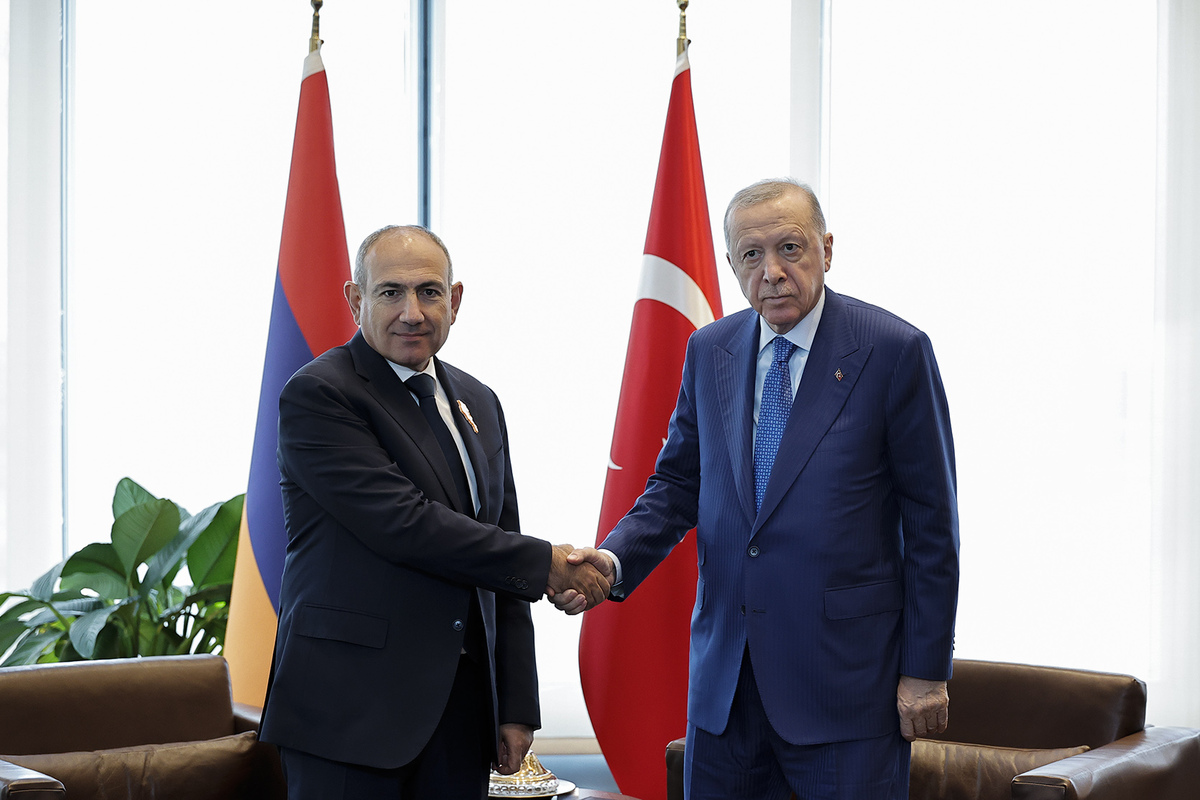
A picture is worth a thousand words as the old saying goes. Looking at the above picture Pashinyan shaking hands with Er-dog-an, I can’t help thinking a delusional Armenian sheep shaking hands with a cunning Turkish wolf in sheep’s clothing. But when one looks at the relationship between the two and actions, or lack thereof depending on one’s point of view, taken by Pashinyan and the response received from the Islamo-fascist Turkish terrorist Er-dog-an you come to the realization that this is not just a thought but a reality that can never lead to anything constructive. It is unnatural for the two to coexist in harmony when one is genetically programmed to devour the other. This relationship will never change until our sheep is kicked aside and replaced with a lion that can display courage and give that cunning wolf a run for his money!.
For a few decades, this despicable enemy with its own admission has been playing games buying time and masquerading as peace seeker in public, because they were not yet ready for war, and secretly in private getting ready and preparing for war. That is indeed the TRUE nature of our enemy and there should never be any doubt in the minds of any Armenian that we are dealing with a bunch of vultures and hyenas in the wild and that is exactly how they must be treated and dealt with. But unfortunately we don’t have the right people in charge of the country to realize this and act accordingly. We are today witnessing a repetition of that very same enemy clandestine and cunning tactics. After having accomplished their initial goals of reoccupying Armenian liberated territories, with direct and indirect help from over half dozen terrorist states, and facilitated by an inexperienced and traitorous regime that has deceived the gullible and politically ignorant Armenian public three times in its election and reelection process but in return it has given them nothing tangible other than three wars that have culminated in massive loss of liberated territories and the ethnic cleaning of their native Armenian populations.
The enemy has not changed and it is the same racist enemy it was yesterday and a century ago. After merely a century of existence on other people’s lands, they are still in the process of forging a false identity for themselves at the expense of ours and by destroying and erasing ours. Not knowing who they really are, because their existence is based on falsehood, when it suits them they portray themselves as descendants of the former Christian Caucasian Albanians to expropriate our religious and cultural heritage, because that is what you do after their occupation to legitimize their destruction or misappropriation, but then when it suits them in terrorizing our populations with their terrorist Turkish criminal collaborators they declare solidarity with their Turkish step-cousins-in-crime and become members of the Oghuz Turkish tribe with their joint fabricated slogans. The last time I checked, the Caucasian Albanians converted to Islam in the 8th century so why would 8th century converts to Islam continue building Christian Churches centuries after their conversion when Gandzasar (Treasure Mountain) and Dadivank were built instead of building Islamic mosques? Their entire existence on our lands is based on total falsehood and it is unfortunately being legitimized by an incompetent and traitorous Armenian regime that should never have been allowed to take power and run a country let alone one in a state of war for the last three decades. What is really interesting is the fact that even Pashinyan regime itself is all of a sudden acting surprised by enemy postponement of their upcoming meeting when they pushed back a little on enemy rhetoric. But I’m sure they knew this day will come sooner or later and the enemy would once again reveal its TRUE nature and that they had to drag their “era of peace” nonsense with an illusion of peace but in reality without any peace and as long as they could. This regime’s idea of peace, according to them, is that there are no clashes and shootings at the border anymore. Why would the enemy engage in such acts if it gets what it wants from our loser and capitulator without firing a shot!
Azeri claims about Caucasian Albania are desperate attempts to present themselves as the descendants of an ancient indigenous nation and hence to legitimize the ownership of Karabakh with all its cultural and historical heritage. In their eyes it’s a convenient doctrine because the Caucasian Albanians no longer exist so there is nobody to claim the land, the monuments and everything else but their legitimate successors, the Azeris. This is no more than a shameful buffoonery recognized by the whole world. Still, they keep promoting the fake doctrine, and sadly some buy it like the “diplomats” accompanying Hadjiev at Gandzasar.
The territory where the Republic of Azerbaijan was formed in 1918 has been multinational and very multiethnic for millennia. In terms of statehood, it was part of the Armenian Kingdom up to the 4th century, then part of the Persian empire, the Turko-Mongol Timurid Empire, and after the Russo-Persian wars of the 19th century, the Russian Empire.
Following the invasion of the nomad Turkic tribes Qara Qoyunlu, Aq Qoyunlu, Karapapakhs, Seljuks, and Ottomans (10-14th centuries), the territory became mostly Turkic/Muslim populated. European sources (e.g. Marco Polo) called them Tartars (or Tatars) as opposed to the Armenians who lived in South Caucasus and Eastern Anatolia (the Armenian Highland) since ancient times. The current population of Azerbaijan is multinational as well (around 90% Azeris + Lezgins, Talysh, Russians …). Soon after the formation of the Azerbaijani Soviet Socialist Republic in 1936, the Azeris embarked on building a national identity, which has led to contradictory and rather bizarre situations. One dominant idea was to represent the Azeri people as the descendants of a nation that not only lived on that territory for a long time (indigenous people) but also had statehood right there where they live now, which led to the Caucasian-Albanian theory: the state-sponsored attempts of Azerbaijan to present themselves as the descendants and the successors of the Caucasian Albanians (Aghvans, in Armenian sources), who, by the way, had nothing to do with any Turkic entities. These efforts are politically motivated and aim at gaining historical legitimacy as an ancient nation who owns the territory of their progenitors and also intend to provide justification for claiming all Armenian churches, khachkars and all the ancient heritage of the Armenian provinces of Artsakh and Utik as belonging to the Caucasian Albanians, and hence to their successors. i.e. the Azeris. A major proponent of this pseudo-scientific theory was Ziya Musa-oglu Bunyatov, the once-vice president of Az. Academy of Sciences, who grew into high ranks in the country’s government as acknowledgment for his services to the motherland. It is interesting to note that the Caucasian Albanians had their language (with many dialects) and their alphabet of 52 letters, created by the Armenian priest Mesrop Mashtots in the beginning of 5th century in the Amaras Monastery. Their capital was Vartashen, meaning (in Armenian) City of Roses. They were Christian and conducted religious services in Armenian as part of the Armenian Apostolic Church and had Armenian surnames ending with ‘yan’. So, if we accept for a moment the Caucasian-Albanian theory, it will appear that the Azeris are kind of the descendants of Armenians. This dilemma is very well acknowledged in Azerbaijan, and every measure is being taken to erase the facts of Armenian presence and influence in the region. For example, in 1991, during the Karabakh conflict, Vartashen was renamed to Oğuz, the name of a prominent Turkic tribe, and all Udis (the only surviving Caucasian Albanian people) and Armenians were expelled to Armenia, Georgia, and Russia. Armenian churches in the modern-day Azerbaijani territory are being claimed as Albanian (Dadivank, Gandzasar, Tsitsernavank, for example) and the Armenian inscriptions are being erased. Hundreds of khachkars in the Armenian cemetery of Julfa have been shredded into pieces and thrown into the Arax river. To UNESCO’s inquiries they responded that the khachkars were Albanian, not Armenian. Question: why would the Azeris destroy the valuable cultural heritage of their ancestors? More questions: Why would they expel their ancestors from their native land? Why are they not using their ancient alphabets, like the Georgians or the Armenians, instead of switching from Perso-Arabic script to Cyrillic to Latin?”
The pitiful and certainly deceptive Caucasian Albania doctrine of Azerbaijan is being scrutinized by historians resulting in research papers and doctoral dissertations. I had the pleasure to read on of those titled “Ziia Bunyatov and the invention of an Azerbaijani past,” written by Sara Crombach at the University of Amsterdam and successfully defended on October 18, 2019. Crombach examines how Bunyatov and subsequent state historiography framed modern Azerbaijanis not as later Turkic arrivals but as the primary, indigenous descendants of the ancient, Christian kingdom of Caucasian Albania. The research reviews how medieval Christian monuments and literary figures in the region were systematically reclassified in Azerbaijani academia as “Caucasian Albanian” rather than Armenian, establishing what critics in Western academia characterize as an ethno-territorial historical revisionism.
The other prominent branch of Azeri national identity is the well-known “One nation – two states” doctrine that was put forward in recent decades, again for pure political reasons to align with Turkey, a most influential and militarily mighty state in the region, to effectively counter the independence movement of Karabakh and the sponsoring state: Armenia. So, how can the Azeris be Caucasian Albanians and Oğuz Turks at the same time? These are indeed very interesting issues and are being studied by researchers. When it goes beyond the academic research and into the political arena, it may become dangerous, produce nationalism, prejudice, tendency to supremacy, and war, which will only kill thousands of innocent young people. Hopefully the animosity between nations will end one day!
I agree with David. IMHO, Armenia was defeated on several fronts. Firstly, at the very local level, secondly at the regional level, thirdly with regard to relations with Russia, and fourthly with regard to caviar diplomacy with UNESCO and other agencies. On top of that that Azerbaijan employed new military technology and strategies against outdated inferior technology and outdated on the ground strategies. I can hardly blame Pashinyan for all of that.
Today’s circumstances and conditions are not those of the Ottoman era.