


Mouradian discusses heritage, under-resourced languages and AI at Haigazian
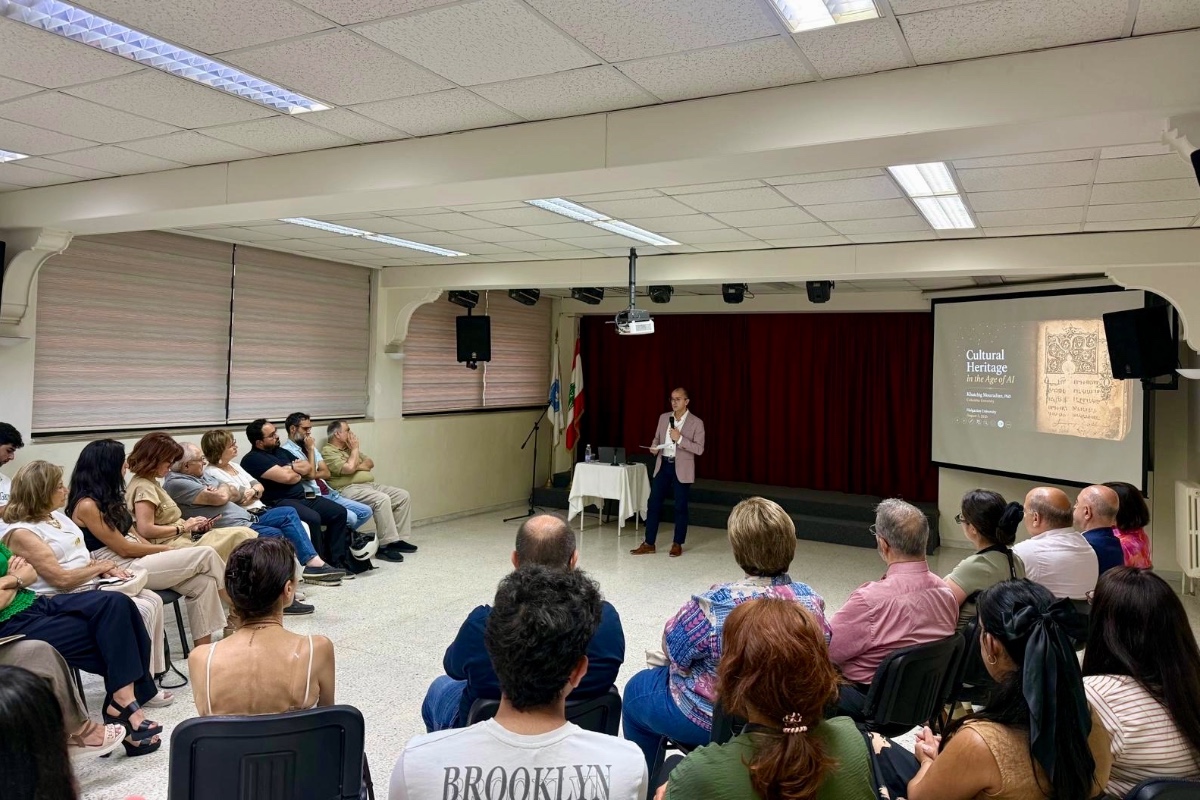
BEIRUT — Haigazian University hosted a public lecture by Dr. Khatchig Mouradian on Wednesday, Aug. 5, 2026, titled “Cultural Heritage and Under-Resourced Languages in the Age of AI.” Dr. Antranig Dakessian offered opening remarks, and Haigazian University President Rev. Dr. Paul Haidostian delivered concluding reflections.
Mouradian, a lecturer at Columbia University and Johns Hopkins University, as well as the Armenian and Georgian Specialist at the Library of Congress, explored how artificial intelligence and other emerging technologies are transforming the ways cultural heritage is preserved, recovered, experienced, and created.
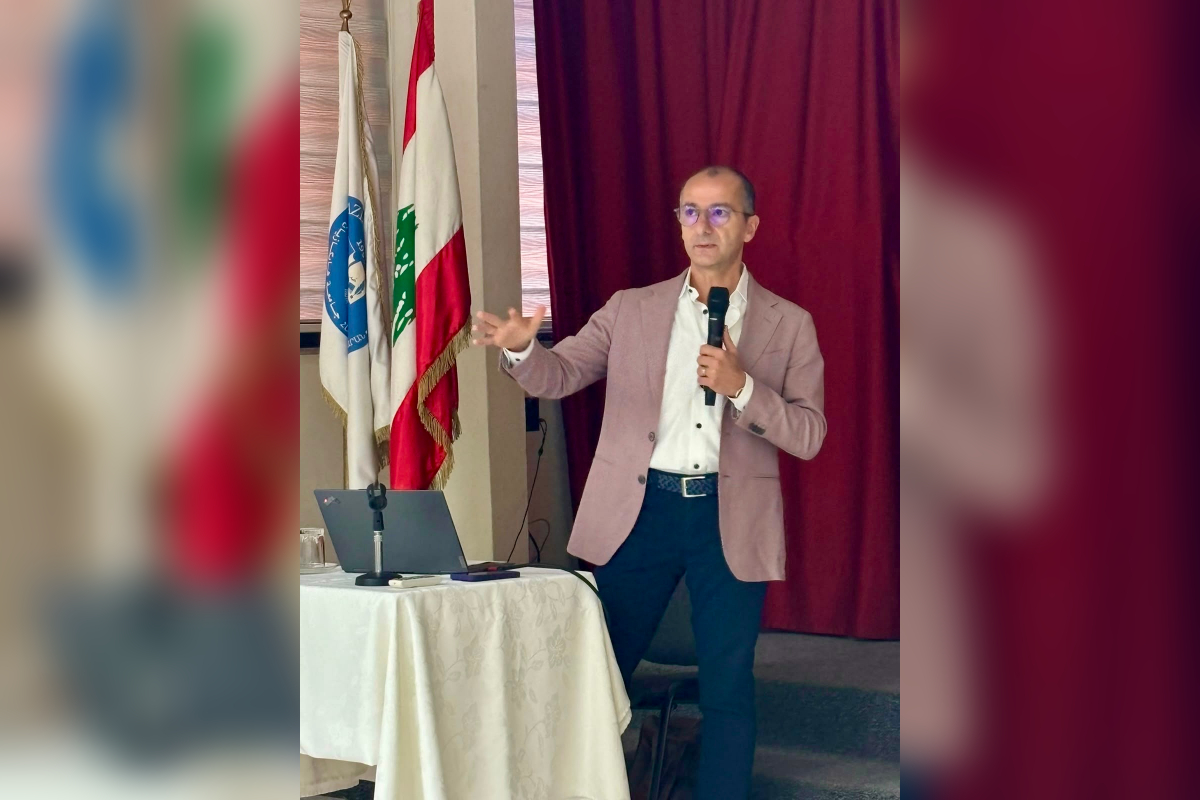
Drawing on a dozen case studies from around the world, Mouradian organized the discussion around four central operations: preserving what survives, recovering what has become inaccessible, enabling new uses of existing cultural materials, and generating cultural expressions that did not previously exist. The projects examined ranged from efforts to decipher carbonized Herculaneum scrolls and digitize endangered languages to the use of satellite imagery to document threatened Armenian cultural heritage in the South Caucasus.
The lecture also highlighted the particular opportunities AI offers under-resourced languages and dispersed archives. Mouradian discussed tools that can recognize Armenian and other poorly supported scripts, connect multilingual collections, and trace the movement of ideas across linguistic and geographic boundaries. At the same time, he cautioned that AI systems can reproduce gaps and biases in the historical record, flatten differences among communities, and present generated material with misleading authority.
Using Krikor Zohrab’s short story “Love Beyond the Grave,” written more than a century ago, as a central thread connecting the lecture’s various themes, Mouradian examined the increasingly blurred boundary between preserving people, objects, and experiences from the past and using AI to create new, responsive versions of them.
Mouradian concluded by emphasizing that decisions about provenance, meaning, cultural authority, consent, and responsibility must remain fundamentally human. As heritage becomes machine-readable, he argued, the conditions governing its access and use must become machine-readable as well.