


The Region in Brief
Armenia
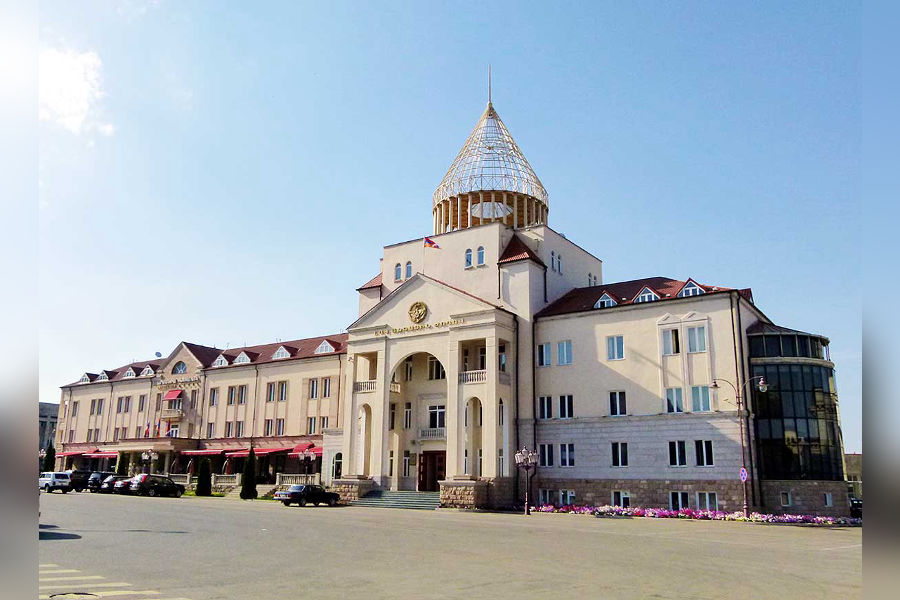
Armenia’s Constitutional Court ruled Sept. 16 that the country’s obligations under the Armenia-U.S. TRIPP framework comply with the Constitution. The agreement will now proceed to the National Assembly for ratification.
Under the Armenia-U.S. framework, the TRIPP Development Company is envisioned with a 74% U.S. controlling stake and a 26% Armenian stake for an initial 49-year period. If the arrangement is extended for another 50 years by mutual consent, Armenia’s stake would increase to 49%. The Armenian government maintains that all TRIPP infrastructure inside Armenia will remain under Armenian sovereignty and jurisdiction.
Disagreement with Baku over terminology nevertheless continues. Azerbaijani Foreign Minister Jeyhun Bayramov again referred to the route as the “Zangezur Corridor.” Bayramov said physical construction of the Armenian section is expected to begin in early 2027.
Azerbaijan
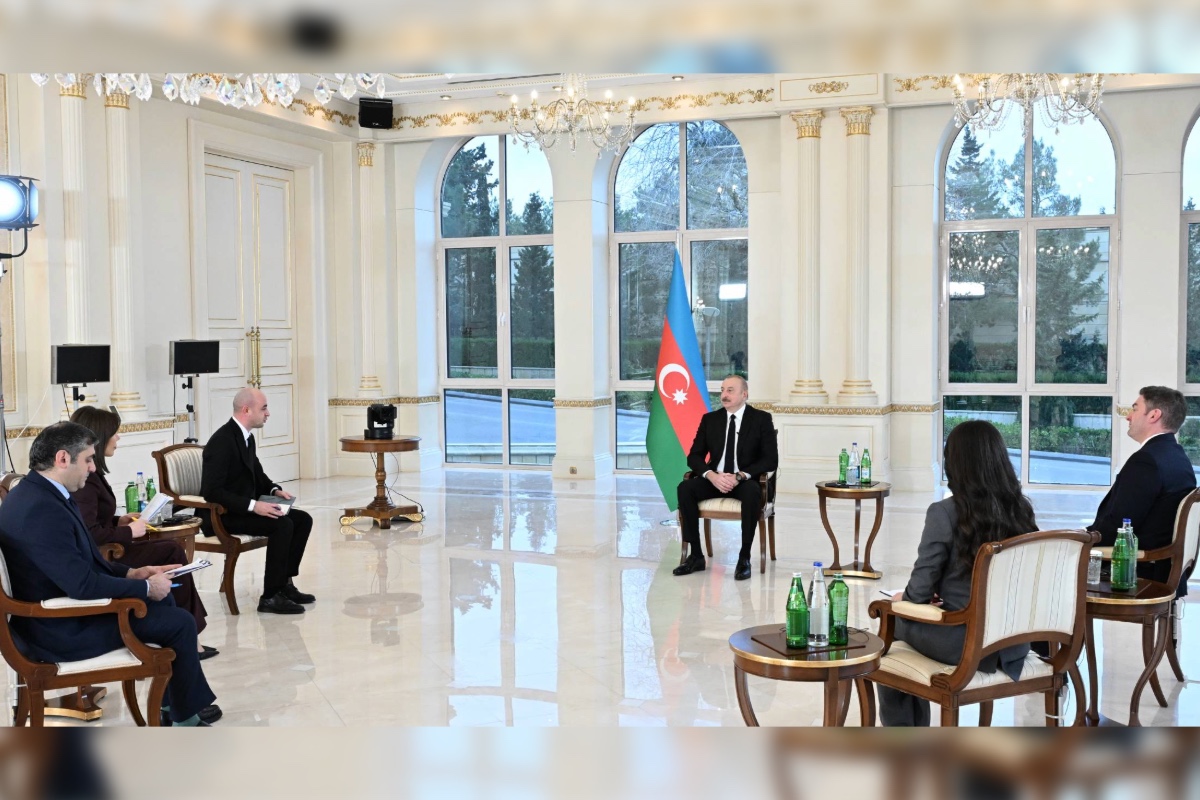
Azerbaijani Foreign Minister Jeyhun Bayramov described relations between Azerbaijan and Turkey as having reached a level with “no equivalent in the world,” highlighting the shared political vision of Presidents Ilham Aliyev and Recep Tayyip Erdoğan and the frequency of their high-level contacts. Speaking alongside Turkish Foreign Minister Hakan Fidan in Baku, Bayramov said the two leaders had visited each other’s countries eight times during 2025-26.
The statement reinforces the continuing consolidation of the Azerbaijani-Turkish strategic partnership at a time when the two governments are coordinating closely on regional transport, energy and connectivity projects. Bayramov continued to refer to the Armenia-based portion of the TRIPP project as part of the so-called “Zangezur Corridor,” saying the approximately 42-kilometer section lies on Armenian territory, with its entry and exit points on the Azerbaijani border. Baku says its road and railway infrastructure toward Armenia is advancing rapidly, with the highway around 95% complete and the railway approximately 75% complete.

Georgia
Georgian Prime Minister Irakli Kobakhidze called for what he described as “Russophobia” to be stopped “at its root,” arguing that anti-Russian xenophobia is foreign to Georgian society and is being artificially encouraged by outside political forces.
Kobakhidze distinguished opposition to Russian government policies from hostility toward Russian people, pointing to the 2008 war and Russia’s continuing occupation of Georgian territory while arguing that even those events did not produce widespread hostility toward individual Russians. He alleged that foreign-backed forces are now attempting to manufacture anti-Russian sentiment to generate political escalation and economic instability.
The Georgian government, he said, intends to maintain what it calls a “pragmatic yet principled” policy toward Moscow.
Iran
Iran has rejected Washington’s latest public overture for negotiations, with Supreme National Security Council Secretary Mohsen Rezaei saying Tehran will not enter talks until its conditions are met.
The diplomatic deadlock comes as the U.S.–Iran war approaches seven months. On Sept. 15, the U.S. House of Representatives voted 220-204 for a war powers resolution seeking to terminate unauthorized U.S. military operations against Iran. All House Democrats and seven Republicans supported the measure.
Diplomatic activity is nevertheless continuing outside the direct U.S.-Iran channel. Chinese Foreign Minister Wang Yi met Iranian Foreign Minister Abbas Araqchi in Beijing on Sept. 16 and urged both Tehran and Washington to exercise restraint, revive the interim peace framework reached in June and resume substantive negotiations.
The maritime dimension remains one of the war’s most serious regional consequences. Traffic through the Strait of Hormuz has fallen sharply, while attacks and disruptions across Gulf and Red Sea routes have contributed to major increases in oil and refined-fuel prices. Brent crude has recently approached $110 per barrel, intensifying inflationary pressure internationally.
The conflict is also increasingly spilling into neighboring theaters. Saudi Arabia and Iran-aligned Houthi forces in Yemen exchanged attacks this week, while U.S. officials reportedly met Houthi representatives in Oman in an effort to preserve arrangements protecting American shipping and prevent further expansion of the war.
For Armenia, instability involving Iran remains particularly consequential. Iran is currently supplying additional gas volumes while Russian deliveries are temporarily suspended.
Russia
Russian Foreign Minister Sergey Lavrov said Moscow does not intend to prevent Armenia from choosing its partners or development path but made clear that Russia does not intend to subsidize Armenia’s preparations for possible EU membership through the economic benefits Yerevan receives as a member of the Eurasian Economic Union.
Lavrov recalled that President Vladimir Putin and Prime Minister Nikol Pashinyan agreed during their meeting in Bishkek to hold a separate bilateral discussion concerning Armenia’s EAEU membership and European integration.
The political tension coincides with renewed attention to Armenia’s energy dependence. Russia temporarily suspended natural gas deliveries through the North Caucasus-Transcaucasia pipeline from Sept. 15 to 25 for planned maintenance. Gazprom Armenia said consumers would not face restrictions because domestic reserves and increased supplies from Iran would compensate for the interruption. Armenia imported approximately 82% of its gas from Russia last year, underscoring the continuing scale of that dependence.
Central Bank Governor Martin Galstyan separately warned that a possible increase in the price of Russian gas could simultaneously raise inflation and depress economic activity. He described such a development as an extreme “X-type” scenario requiring a “strong and unconventional” monetary policy response.
Turkey
President Recep Tayyip Erdoğan used an AK Party meeting in his home province of Rize to frame the government’s next stage around the “Century of Türkiye” agenda.
Erdoğan said that after 25 years of political struggle, Turkey had established strong foundations across the economy, defense industry, technology, health care, agriculture and tourism.
“The construction of the Century of Türkiye has begun,” Erdoğan said, adding that Turkey was moving closer each day to its ambition of becoming a “world giant.”
The remarks complement Ankara’s increasingly assertive regional posture and come as Turkey deepens strategic coordination with Azerbaijan, expands its role in regional transport projects and seeks greater influence over the South Caucasus, Central Asia and Europe.