



Strength of spirit: Empowering the neurodivergent community through UFit
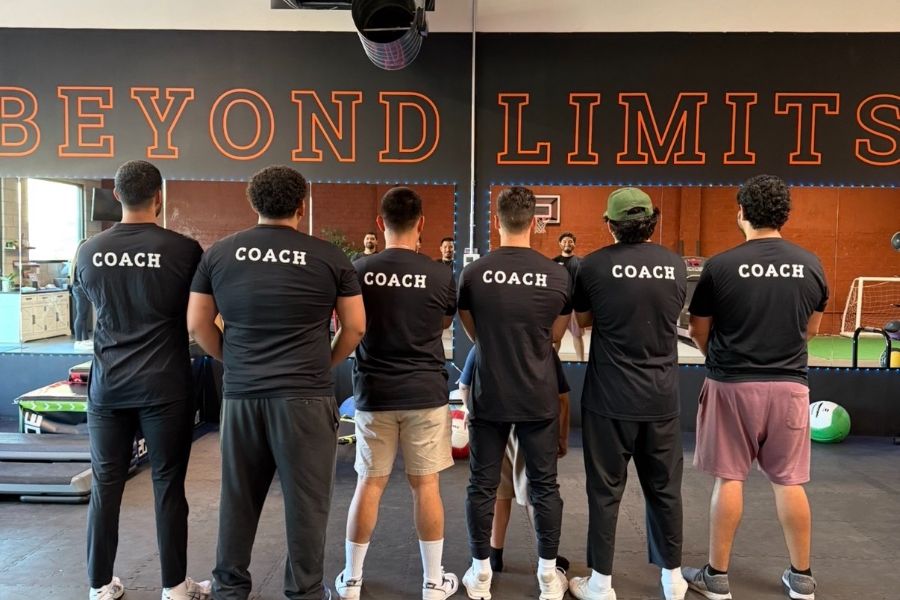
In the world of neurodivergent therapy, progress is often measured by what happens at a desk — by the words spoken or the tasks completed. But there is a deeper, more visceral connection between the body and the mind that often goes ignored. It is a gap that Dveen Agazaryan, founder of UFit, has made his personal mission to close.
I first sat down with Dveen to understand how a second-degree black belt in martial arts and a sports coach ended up building a sanctuary for the neurodivergent community. What I found was a story of unexpected purpose. What started as a small project to bolster a college résumé, spurred by a nudge from his mother and a challenge from his sister, has blossomed into a vital lifeline for more than 250 families across Southern California.
Based in California, UFit is more than a gym. It is a space where movement is used as a universal language for healing. For many in the Armenian diaspora, finding culturally attuned support can feel like an uphill battle. Dveen and his team of 20 coaches have stepped into that void, creating an inclusive environment where “athlete-level” exercise is not just for the neurotypical.
Through the discipline of martial arts and the empathy of a mentor, Dveen is proving that when a child learns to regulate their body, they find the confidence to navigate the world. From multiple locations in Los Angeles to his aspirations for a center in Yerevan, Dveen’s vision is a testament to the power of one individual’s drive to give back to their roots. It is not just about the reps or the sets; it’s about the “small wins,” like a child running through a store for the first time, that change a family’s life forever.
This interview has been edited for length and clarity.

Milena Baghdasaryan (M.B.): Most ABA providers focus solely on task-based or play-based therapy. What made you realize that a structured physical fitness program was the missing piece? What inspired this project?
Dveen Agazaryan (D.A.): Honestly, I’ll put it to you straight: We saw that ABA therapy is incredibly valuable — it is a foundation — but we also saw a desperate need for something active. There was a need for a structured form of therapy where individuals engage in movement to help them self-regulate their emotions, build confidence and develop social skills. By creating a space where they receive that structured therapy while moving in a more natural environment, it becomes essential to their progress. It is about combining fitness with sensory awareness and a sense of calm.
My own inspiration came from my background as a second-degree black belt and coaching sports like basketball and soccer. During COVID-19, I needed something for my college résumé. My mom, who has been in this field for 15 years, suggested I do private home visits for exercise. My little sister teased me. She said, “Dveen, you always have business ideas but never follow through.” I told her, “Watch me do it.” It started as a way to get into college, but God had a different plan. It blossomed into this mission and purpose.
M.B.: Is your program mostly focused on Armenians in Los Angeles or do you serve a broader demographic?
D.A.: We have a good mix of cultures. We are all-inclusive. Depending on the location, we see different demographics, but I would say about 85% to 90% of our clients are Armenian. However, we always welcome other cultures as well; inclusivity is very valuable to us.
M.B.: How does exercise help a child regulate emotions or reduce maladaptive behaviors?
D.A.: I truly believe movement is the most powerful regulation tool we have in our arsenal. When kids on the spectrum are dealing with sensory overload or excess energy, they often do not know where to channel it. Exercise gives them a safe, structured outlet to release that pressure.
Think about activities like jumping, pushing, climbing or even deep-pressure massages and stretching. Those are not just gym exercises; they help the body release built-up sensory and proprioceptive “hunger.” Whether it is stress from school, tension at home or the mental drain from other therapies, it is often physically stored.
When we get them moving, it creates what I call a “calm body.” Once the body is calm, the mind follows. They can focus, frustration levels drop and they become more open to learning and interacting with others. It shifts the entire baseline of their day.
M.B.: When a new client joins, what does the assessment look like to ensure both safety and personalization?
D.A.: Our philosophy is to meet every child exactly where they are, at their level and within their comfort zone. I do not leave that to chance. I personally meet every family and athlete one-on-one for a 30-minute consultation across our three locations.
During that time, I observe everything — coordination, balance, body awareness and, most importantly, comfort with movement. For many of these children, “athlete-level” exercise or structured group sports have never been accessible to them. They have often been sidelined.
But I am not just observing the child; I am listening to the family. At the end of the day, a parent is with their child constantly and knows them best. We actively seek parental input to help tailor the program. With about 20 coaches —both Armenian and non-Armenian — we now serve approximately 250 families. That partnership between coach, athlete and parent ensures safety and effectiveness.
M.B.: In fitness, we usually track weights or reps. What are UFit’s key performance indicators, or behavioral metrics?
D.A.: In a typical gym, the focus is physical — and track that as well. We monitor strength, balance, eye contact and flexibility daily. But UFit goes beyond the physical.
The metrics that matter to us include attention span and the ability to follow multi-step instruction. We focus heavily on emotional regulation. Success is when an athlete can pause and express themselves — saying, “Hey coach, I’m feeling sad,” or “I’m angry,” or even just “I’m tired.” That is a huge win.
We also measure willingness to try. Many children arrive closed off due to unfamiliar environments and sensory overload.; Over time, they begin to open up, build friendships and engage in activities like soccer or basketball. These “small wins” may seem minor, but they are foundational to long-term confidence and independence.
M.B.: How does the group setting help with social skills in a way that standard therapy might not?
D.A.: The way I see it, the gym creates a natural opportunity for social learning that cannot be replicated in a quiet room. In a traditional setting, interactions are often “scheduled”; it is a dialogue between a therapist and a child. But at UFit, these children are not just clients; they are peers.
They are engaged together. They learn essential skills: waiting their turn, cheering each other on and working as a team in activities like basketball or soccer. They share equipment and learn how to navigate space together. When someone reaches a goal, we celebrate that success as a group.
We also extend this beyond the gym. We host large-scale events, including Christmas and Halloween parties, and recently organized a car show. These events allow children to bond over shared interests, such as cars or games, in a natural environment.
Because our roots are important to us, we also celebrate Armenian heritage. We are currently hosting an event recognizing both Autism Awareness and Armenian Heritage Month — a full-scale bowling event with music, pizza and all the shenanigans. It is about building a community where they feel a true sense of belonging.
M.B.: How do you build trust with a skeptical or nervous parent?
D.A.: Trust starts with listening. When a parent comes to us, we want them to feel heard. We want them to express all their concerns and know that we understand them. We are not here to deliver a sales pitch; we are here to partner with them.
We walk them through every aspect of our safety procedures and show them how their environment is designed specifically for neurodivergent individuals. We maintain transparency; parents can sit in the waiting area and observe sessions in real time.
Our coaches are also central to building trust. They come from backgrounds in ABA, physical therapy, occupational therapy and special education. They bring patience and energy to every session. Once a parent sees a genuine relationship forming between the coach and their child, trust develops naturally. They see their child being understood for who they are, and that changes everything.
M.B.: Can you discuss the marketing and advertising aspect? Are you reaching these families, or are they finding you?
D.A.: It is a mix of both. We approach marketing through three main channels. First, we focus on community engagement. We attend events and resource fairs to remain visible and involved. We want people to recognize us and feel connected to what we do.
Second, word of mouth plays a major role, especially in our community. Families share experiences and recommendations. When a parent sees their child progressing at UFit, they often share that experience with others. That organic trust is invaluable.
Third, we are active on social media. We run advertisements and post regularly so families can see the environment and energy of the gym. When someone reaches out, we respond quickly and schedule a consultation. We encourage them to visit, see the facility and experience firsthand.
M.B.: Can you share a success story?
D.A.: I often share two examples because they illustrate why we do what we do.
First, we had an older athlete around 10 years old. When he started, he was overweight and uninterested in exercise; he preferred to spend time on his phone. After about five months of consistent work, we saw a major shift. He began greeting every coach by name. His diet improved, he got healthier and he learned to manage his energy in a more constructive way, reducing meltdowns at home. He became more confident and comfortable in his own body.
The second example is particularly meaningful. We worked with a child who walked only on his toes and could not run or jump. His mother was initially skeptical. I told her, “Look, just give us three months. Put your trust in us for ninety days.” Three months later, she called me in tears. She had taken him to Target, and for the first time in his life, he didn’t just walk; he ran straight to the toy section. Seeing a parent cry because their child can finally run… that’s it. That’s the whole reason UFit exists.
M.B.: What factors led to that success?
D.A.: It comes down to three factors: trust, patience and consistency. You have to understand this is not an overnight process. There will be days when progress feels minimal, when energy is low or when building a connection is difficult. That is where patience becomes essential.
It requires repetition and consistent effort to build a relationship with the child. When the athlete trusts the coach and the coach remains consistent, “miracles” start to happen. It is a long-term process, but the wonders it creates for these families make every challenge worthwhile.
M.B.: Where do you see this heading in five years? Are there plans for Armenia?
D.A.: I truly believe we are at a turning point. In the next five years, fitness will become a vital and non-negotiable component of health for the special needs community. Awareness is increasing, acceptance is growing and more families are finally finding the courage to speak up and seek the resources their children need. My goal is for UFit to become a leading organization in this space.
As for Armenia, that is absolutely part of the vision. That is a dream of mine. I love our people, I love our culture and I have this deep-rooted drive to give back to the homeland. I have visited centers such as TMM in Yerevan, which are doing such wonderful and important work. I hope to build on that momentum and expand support for families, whether in Glendale, Yerevan or even across Europe. I am ready to take this mission wherever there is a family that needs us.
M.B.: For a parent who cannot get to a UFit location, what is a tip for home?
D.A.: If I had to recommend one thing, it would be stretching. As children grow, especially if they are not active, muscles can tighten and mobility becomes restricted, sometimes painful.
A simple stretching routine at home can improve blood flow and strengthen the connection between muscles and the brain. It helps individuals feel more “at home” in their own bodies.
But I have to be honest: Movement is only half the battle. Diet also plays a critical role. Physical activity alone is not enough if nutrition is lacking. Fueling the body correctly regulates the brain and develops muscles. Focusing on both movement and diet can significantly improve quality of life.
All photos courtesy of Dveen Agazaryan unless otherwise noted.




What a great idea from an inspiring young man for an often neglected group of the population! Bravo!