



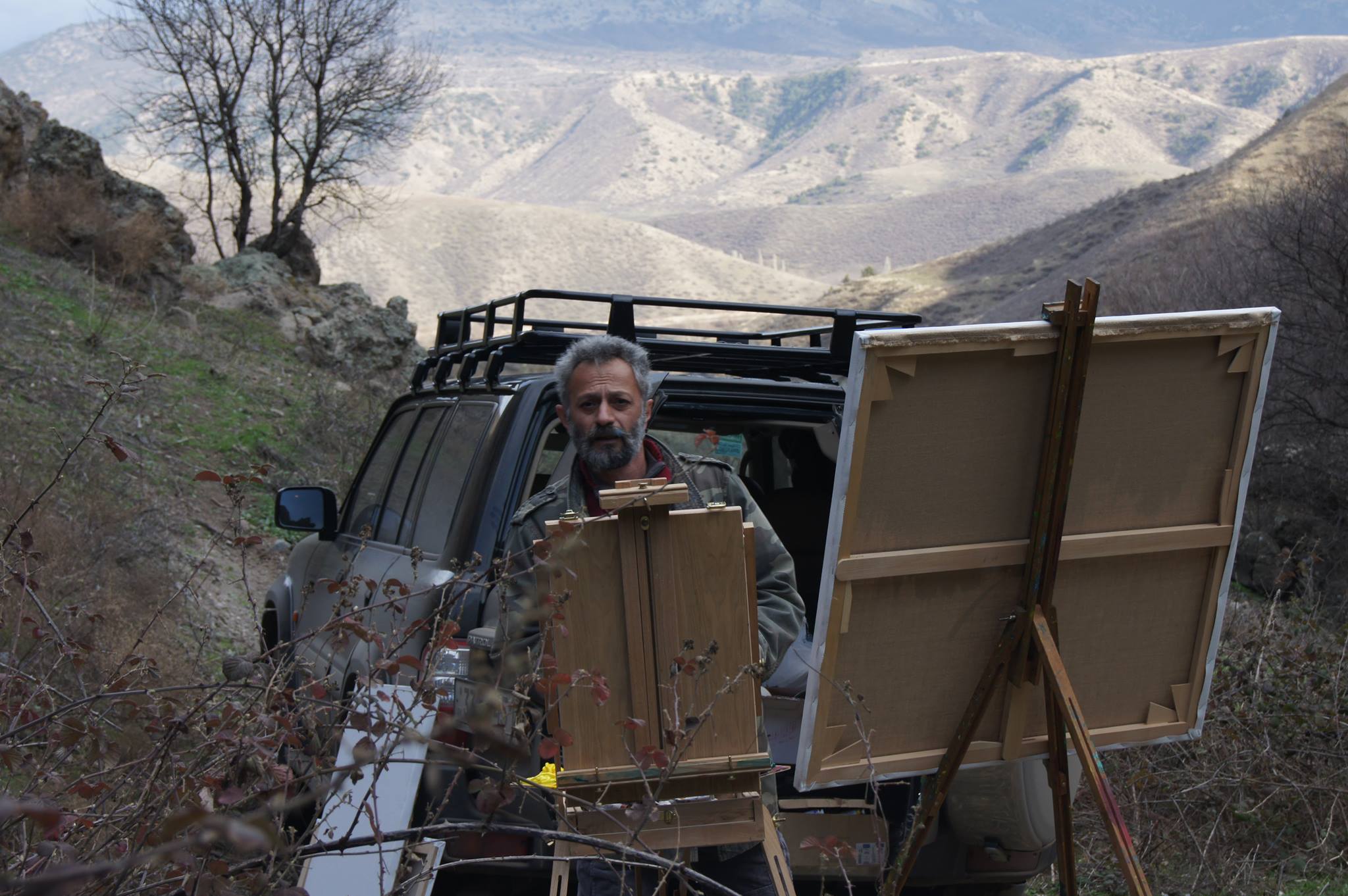
Armenian director Jivan Avetisyan is in post-production on his feature film “Revival,” a co-production between Armenia, Cyprus and Lithuania. Set for release in 2026, the film illuminates the harsh realities of war through the evolving lens of artificial intelligence (AI). It follows the intertwining stories of three characters as they navigate identity, resilience and future possibilities.
The film is written by Narine Voskanyan and Monique Peterson, and directed by Jivan Avetisyan, who is best known for weaving real human stories from Artsakh into powerful cinematic narratives, including “Gate to Heaven,” “The Last Inhabitant” and “Tevanik.”
“Revival” features an accomplished global cast, including Armand Assante (U.S.), Maia Morgenstern (Romania), Heino Ferch (Germany), Robin Hairabian (France), Clémence Baudouin (France), Babken Chobanyan (Armenia) and Narine Petrosyan (Armenia).
Assante leads the cast as Jean Perbost, a professor of AI engineering. He is best known for portraying hard-charging characters, such as John Gotti in “Gotti” and Odysseus in “The Odyssey,” Dominic Cattano in “American Gangster,” and for his turn as a U.S. Marine commander in the award-winning 2007 film “California Dreamin’ (Nesfârșit)” by Romanian director Cristian Namescu.
The Weekly caught up with Assante ahead of the film’s release to discuss the impact of AI, what message he hopes to impart on the audience and the importance of Avetisyan’s work to Armenian filmmaking.
This interview has been edited for length and clarity.
Rosie Nisanyan (R.N.): What inspired you to join “Revival?”
Armand Assante (A.A.): There was a brilliant actor from Germany, Richard Sammel, who had worked previously with Jivan Avetisyan on his Film “Gate to Heaven.” Richard recommended me to him, and I eventually connected with Jivan and his executive producer, Adrineh Mirzayan, via Zoom calls. I purposely drove to Montreal to meet with the co-creator of the film, Viken Attarian, to understand the script’s context and geography, which were still evolving at the time. I met Viken, and it made a profound impression on me about how personal this film was for both of them — that’s what drew me to it.
The script was one of the most cutting-edge stories about AI and its critical role in the world today. Part of the film’s theme is that AI must be infused with a moral compass; it must be imbued with a certain moral consciousness. In my own opinion, it would take AI to die — to experience death — to understand the level of human suffering that this film is really discussing, and that’s impossible. It’s important that whatever we implement in AI be monitored very, very carefully. And as we know, in the field of robotics, AI is very dangerous if it’s not conducted by what’s called “humans in the loop.” In other words, every gesture, every stroke of AI has to be monitored — especially in robotics — by a moral component. If a human component does not monitor it, it could be an absolute disaster.
I’m making a documentary now on war victims of the Vietnam War — soldiers, men who’ve been afflicted with PTSD for over 60 years. My highest hope for the Department of Defense — the Department of War here in the United States — and I know it’s a deep, deep concern of theirs, is that right now in the world, there are no more excuses for soldiers or combatants to be afflicted with losing their legs or their arms or their minds or their eyes. There are no more excuses because AI is deeply embedded in the governance of war. War is conducted by algorithms.
And as Viken reminded me only recently, “Unfortunately, even when war is conducted with AI, while we can minimize combatant casualties, the trauma and death of civilians is deliberately multiplied to cause terror and capitulation — and civilians of the ‘other side’ do not count in war planning.”
R.N.: How did Jivan and Viken impact your decision to join the film?
A.A.: The one fundamental thing that I get from both Jivan Avetisyan and Viken Attarian, the two men who created this film, is that both of them have endured trauma — they don’t show it; they don’t advertise it. Jivan was born in 1981, so he’s 44; he’s a very young man. Already in his lifetime, he has lived through repeated atrocities in Armenia and Artsakh — 1988, 1989, 1990 through 1994, 2016, 2018, 2020 and 2023. In 2023, over 100,000 Armenians were displaced — [they] had to flee Artsakh and the Nagorno-Karabakh region. Jivan is coming from a place of profound trauma, which makes this film very powerful. This film is a map of his heart. This film, in a sense, is a map of the whole history of Armenia.
Armenia was the second truly horrific genocide of the 20th century, which happened in 1915 and was the first fully documented one. And imagine this: since the beginning of the 20th century, there have been probably 33 genocides. It’s a fact. With the Armenian Genocide, almost a million and a half people were expunged. “Genocide” was not even officially recognized until 1948, when the UN held the Convention on the Prevention and Punishment of the Crime of Genocide. Well, if you have the five strongest nuclear powers controlling the veto of the UN, it’s useless, because they’re generating their own geopolitical interests. Genocide is made into a politically negotiable tool, and Jivan has had to live with the intransigence of that his whole life. And Viken’s grandparents were survivors of the Armenian Genocide of 1915.
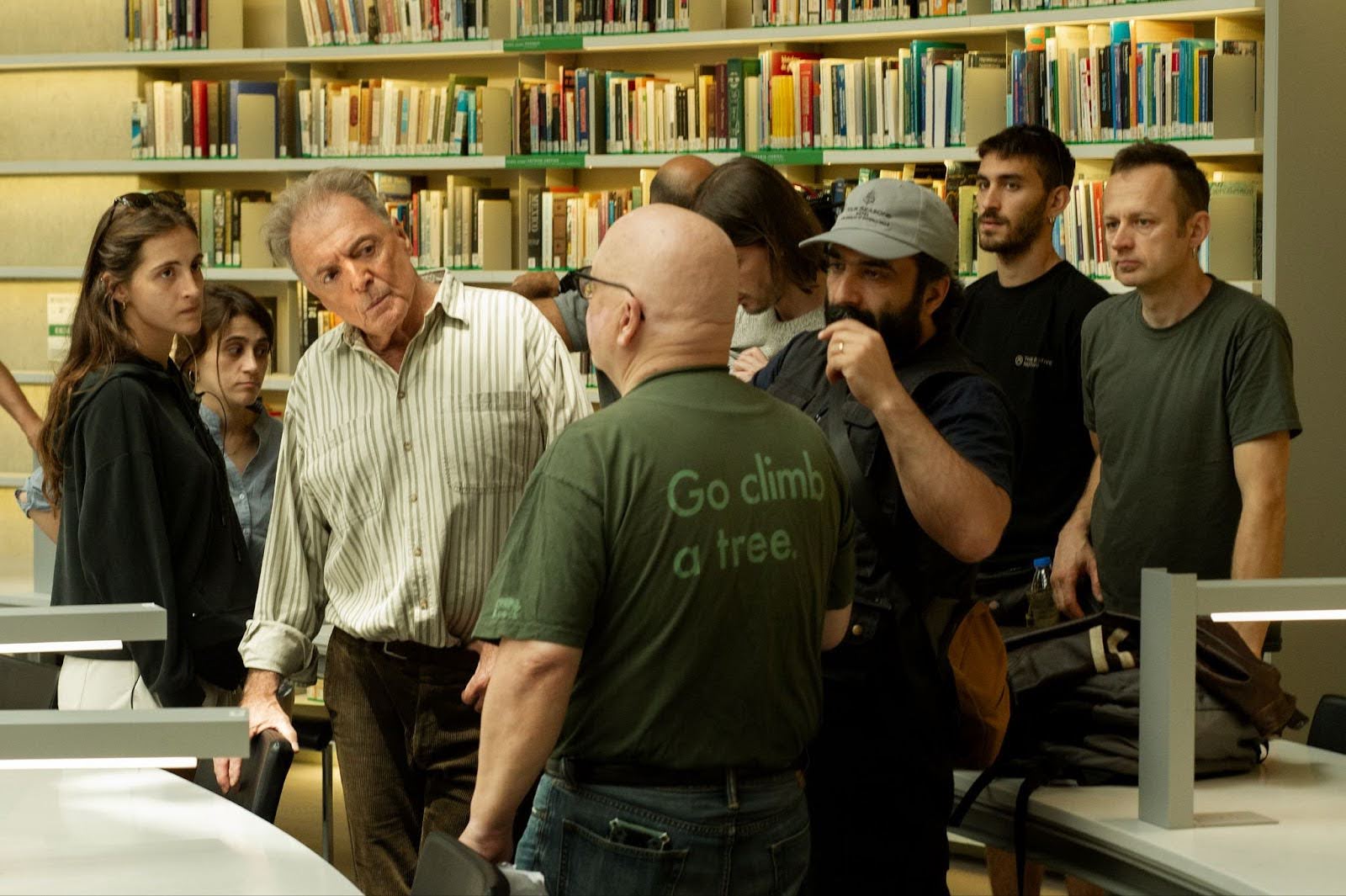
Not to digress from AI, but this film is about mercy. Jean [the character I play] is a professor of AI engineering who co-created an AI component with a team and a student, Murat. The film’s opening is about palliative care: alleviating human suffering. It’s about nurturing the pain of death. Nothing is more merciful on earth than palliative care. Within the first few minutes of the film, Jean is lecturing in defense of his student using AI for palliative care after the experiment goes somewhat awry. And it’s then that Jean suspects that the very man he co-created the project with had already cut a deal with a weapons manufacturer, using it in the field of death and weaponry instead of using it to heal people.
There’s a tremendous moral argument that runs throughout this film. But what drew me is its power, which is found in the heart and soul of Jivan Avetisyan, the filmmaker.
R.N.: After working with Jivan on “Revival,” what do you think makes his voice as a filmmaker unique? How do you see his contribution to world cinema and the way he represents Armenia through his work?
A.A.: He’s the conscience of Armenia, of what that country has been put through. He’s a living conscience of Artsakh and Nagorno-Karabakh. He has been a witness — in his very brief lifetime — to seven generations of his family who have been literally eradicated. In this last conflict, Azerbaijan cordoned off the Lachin corridor and 120,000 Armenians were displaced. There, he alone lost something like 400 years of his familial generational homes. That’s trauma, with a capital T.
What this means is that it’s a deeply personal film. You cannot escape this, what I call “multi-generational sin,” which is a big theme in the film. The mother of Murat is in complete denial about the war in Artsakh in 1994, when she lost her husband. She has lied to her son for his entire life. She carries a multi-generational trauma and is burying her sin of denial. And why I say that is that Jivan has been a witness himself to this multi-generational trauma.
One of the real dangers of what’s happened is that nothing has been done to alleviate genocide. Once you condone genocide in the human consciousness, it becomes a repeat offender. Genocide does not end.
R.N.: In this role, you are interacting with an AI system that develops consciousness. How do you think this film will impact the audience?
A.A.: As I mentioned, AI must be made to understand pain and suffering to truly comprehend empathy. That is the core issue: empathy; that is the value model. But the real danger of AI is not that AI can turn against us — we know for a fact it could destroy us – it’s not that AI could become evil unto itself. The danger is that it could become completely apathetic. Apathy is what’s driven every genocide in the last 125 years — apathy, ethno-nationalism and fascism. But it begins with apathy. If AI is apathetic to our needs and concerns, we’re doomed.
R.N.: How would you describe your character’s emotional or psychological journey in the film?
A.A.: Jean becomes profoundly disillusioned because he’s been betrayed in one of the most moral, ethical moments in his life. His soul is a cry for mercy. He’s been betrayed and profoundly disappointed that his student ran off to resolve the lie that his mother has perpetuated over the last 30 years. It’s the smallest of his experienced betrayals.
The real betrayal is that his co-creator has completely violated everything he believes in. In a sense, his journey is about being dismantled. When he finally returns to Jerusalem, there’s a beautiful line they included — he says, “I’ve lost my way.” That’s his journey. He finally realizes that those around him betrayed him on the things he believed in the most. He literally, psychologically, emotionally and spiritually becomes dismantled.
When I first read “Revival,” I said to both Viken and Jivan, “It’s an incredible story that could be made into a long-form series, because this subject of AI, and the conflict of unresolved atrocities in the world right now, is so present in the global consciousness.” It really deserves a thorough examination. I have a lot of hope for the film; I wouldn’t say it’s a commercial blockbuster-type movie. It’s a serious film that I think will get serious attention. The actors are phenomenal; beautiful actors, all of them. If I have a hope for the film, it’s that it would be recognized for how important these messages are to the global consciousness right now.
R.N.: You’ve portrayed many powerful characters throughout your career, like John Gotti and Odysseus (my favorite). How does your role in “Revival” differ from your previous work?
A.A.: The hardest thing about playing Jean is that it was closest to who I am as a person. All my family were in the military — World War II, Korea and Vietnam — so I say that my life is a miracle unto itself. Just that I’m alive is a miracle. The very theme of this film really rings true because in my lifetime, I’ve been witness to so much human suffering. The night I was born, my mother was paralyzed from the neck down with polio. I grew up in rehabilitation centers, I grew up watching people suffer, so it made a tremendous impact on my childhood.
I had to let go of a previous conception of Jean Perbost. I asked myself, “Well, Armand, what do these issues mean to you personally? How are you affected or afflicted by the very nature of what this film discusses?” I think the hardest acceptance of Jean for me was how much it touched off reservoirs of thought and pain in my own brain about these issues. It’s right in front of you; how do you deny that?
R.N.: Was there a particular scene or moment during filming that stayed with you long after the cameras stopped rolling?
A.A.: My character, Jean Perbost, is a man of action; he’s an alpha male. But there is a moment in the film where Jean is sitting and watching his student, Murat, be annihilated. And he can’t do anything about it — that sense of impotence is something that terrifies me. It’s one of the most horrific images I’ve ever seen on film. I hope it impacts the audience the way that moment impacted me. The global consensus, I suppose, on film is that the audience has seen everything, but that moment had a tremendous impact on me personally.
I would never want to be in a position where I could do nothing to help, save, heal or nurture the people I love — that feeling of being completely intransigent, of being incapable of doing anything. Strangely, it’s a mindset of the world we’re living in right now, because we watch repeated atrocities all over the world on social media. God forbid we should become anesthetized, but we’re well on the way. That’s the most terrifying aspect.
Thank God someone like Jivan did not become anesthetized. He saw through to the heart of the matter that he had to heal this crisis. He comes from an incredibly humanistic sensibility, and that’s the one thing that touched me the most, why I even ventured to get involved in this film. This film was made on a shoestring budget — it is an independent film in the most classic sense: a work of love. It’s a work of: “Hey, we need this, we need this. Can you help? Can you help?” It’s one of those movies.
But the one driving thing that committed me to the film was the humanism of Jivan Avetisyan and Viken Attarian. When I first saw the incredible message of humanity in this film — and I’ve seen a lot of films in my lifetime — I believed the film was worthy of sincere attention.
R.N.: The film is very international — you speak in French, and it was filmed in Armenia, Cyprus and, in November 2025, in Lithuania. What kind of impact has this film had on you?
A.A.: I was involved in the Cyprus part of the film, but that wasn’t new to me. I’ve been blessed all my life because I spent over 20 years in the former Soviet Union, so I’ve worked literally all over this planet. I’ve been to places on earth that most people only dream about going to and I’ve filmed in some of the most remote places on the planet.
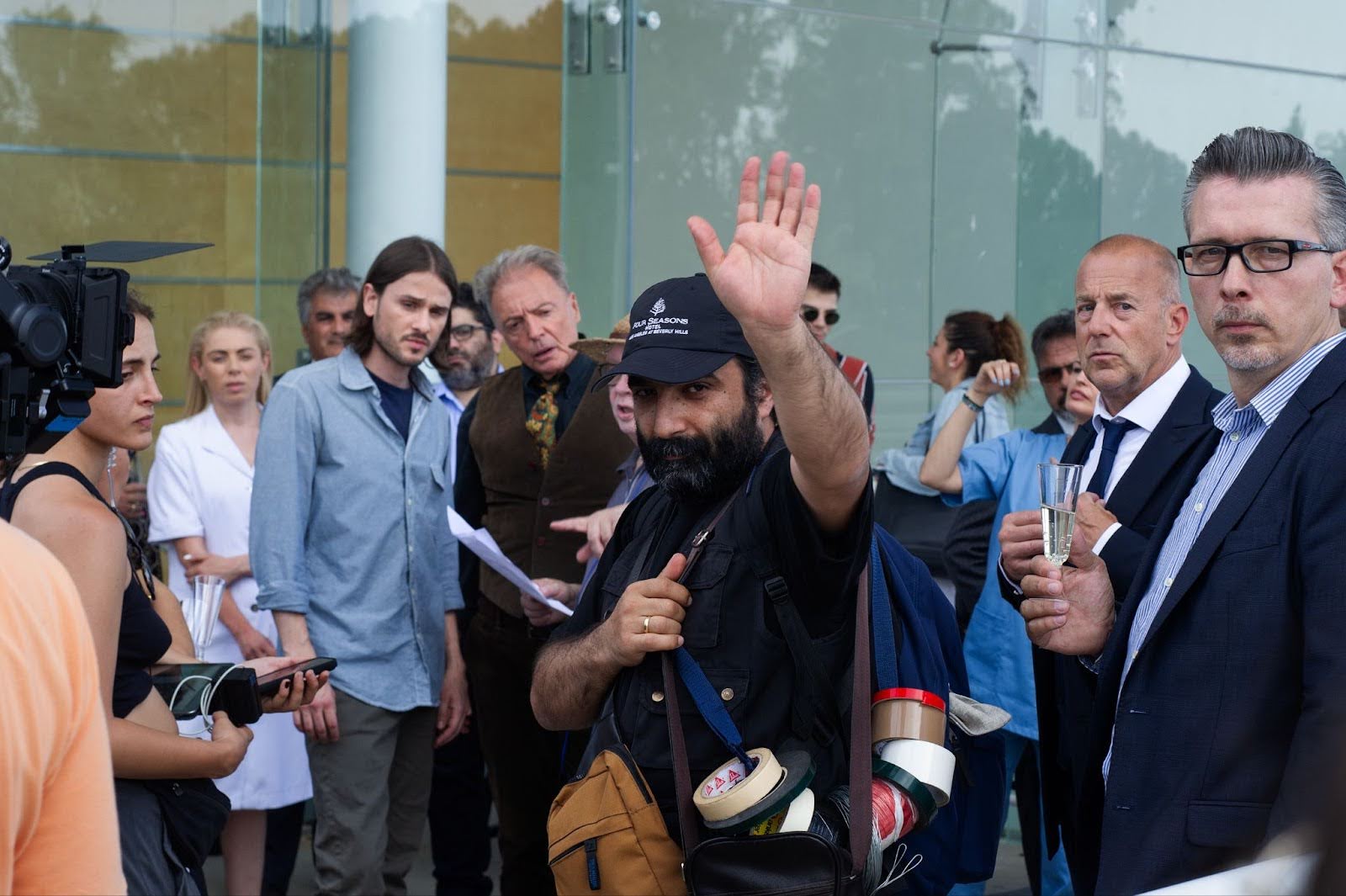
Two things made a profound impression on me. One was Viken Attarian, the co-creator of the film, who is a brilliant man. I was so impressed that he became a hands-on co-producer of the movie.
I was equally impressed that this film was made with goodwill. When you see people committing all their energy to the unification of a single humanistic idea, it renews your faith. Throughout my career, the one thing that consistently renewed my faith in what I do is what I’ve witnessed in people’s capability to come together. If there’s one thing I could look back on my whole life, for all the failures that I’ve known, it is that it brought a lot of people together. And one of the things that was so touching about this film was that it brought a lot of people together — they all recognized the immense humanity of this movie.
R.N.: Do you have any advice for aspiring actors or filmmakers?
A.A.: In 2012, I was invited to Ukraine to be a judge at the Molodist Kyiv International Film Festival. 75% of every film I saw was no more than seven to 15 minutes long and they were all made by very young adults, some even kids. They were some of the most memorable films I’ve ever seen.
So, to young people: if you have an instinct, a feeling, if you want to express something, do it. Don’t wait. Engage in it, believe in it, make it your own. Doing it will teach you what your next moment will be. Many young people are still suffering from their own childhood trauma, which prevents them from moving on. And I say: stop that thinking, get rid of that thinking. Engage in what you’re doing now and do not stop. Do not stop for anyone. This is the most important voice in the back of your head.
We’re all stuck in our heads; this is the problem. I look back on my life and I’m very sorry that I, myself, am guilty of that — I never accepted the position to direct. I would love to direct, but I made the excuse that it’s such a monumental task to have 21 marriages happening at the same time — it’s a lot of people to be faithful to.
Don’t live with regrets. It’s the most important thing for young people to understand: do not live with regrets about things you didn’t do. Do it. The one thing I gave myself as a very young actor — and I failed consistently all through my lifetime — is that I just did it. Doing it taught me who I am today; that’s just from engaging in what’s around me.
“Revival” is a production of Fish eye Art Cultural Foundation and LifeTree Pictures and is expected to be released in 2026. You can learn more about the film on the Fish eye Art Cultural Foundation website or by following Armand Assante (@armandassante.official) and Jivan Avetisyan (@jivan_avetisyan) on Instagram.
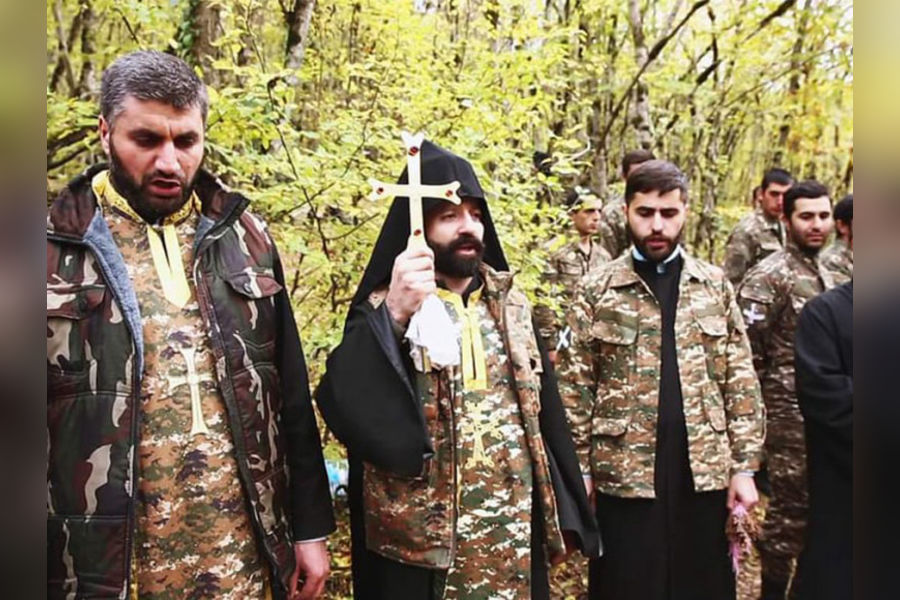
All photos are courtesy of Fish eye Art Cultural Foundation unless otherwise noted.


Excelente entrevista gracias por entrevistar Armand Assante tambien para mí su mejor actuacion es Odiseo