



Funny Armenian girl: The creative evolution of Mary Basmadjian
It was a dark autumn night in Los Angeles — traffic ebbed as pedestrians rushed by, spilling out of restaurants, cafes and trendy streetwear boutiques along Melrose Avenue. Between dark shops stood the Zephyr Theatre, its white facade beckoning.
Fragments of our mother tongue drifted over the din — Armenians had arrived early to enjoy the restaurants and shops that peppered the famous street before attending the one-woman show, “Mom, Are You There?” written and performed by comedian and creative, Mary Basmadjian.
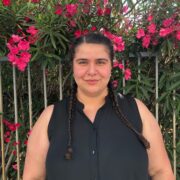
From her early days on Facebook, signing off with the tag “Funny Armenian girl” — which later became the name of her first comedy special released in 2024 — to her 15-year stand-up career performing at comedy clubs across LA County, Basmadjian’s artistry has reached a diverse audience. For over a decade, she has expanded her reach through social media, sharing viral improv-comedy videos, especially the cheeky Vartoush Tota.
“Mom, Are You There?” previously ran at the Hollywood Fringe Festival in June, with three performances that drew packed crowds and high praise from audiences. With requests for an encore, the show returned as an official selection by Soaring Solo Studios’ Star Series on November 2, 2025, at 7 p.m. “The reception has been great. Everyone loves it. So many people come up to me and say, ‘Wow, this is exactly like my story, I have felt this way. I’ve been through this,’” Basmadjian told the Weekly after the Sunday show.


Arriving early, I approached the theater’s entrance, marked by a turquoise canopy and twinkling lights. “Oh, you are here for Mary’s show,” the attendant smiled. “I am working her show — excited for a packed crowd.”
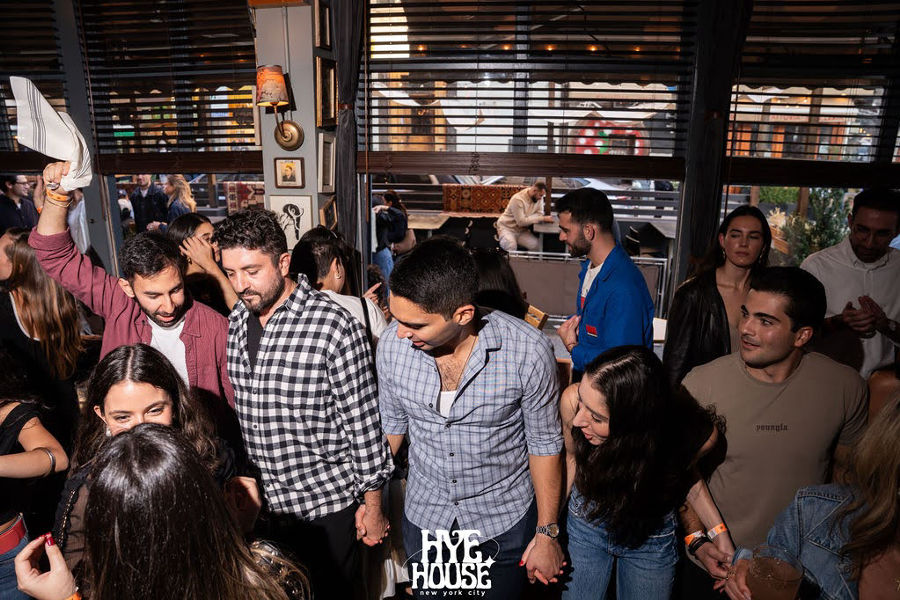
Over the next hour, attendees arrived from all walks of life, chattering outside. Two older morkurner huddled together, switching between Armenian and Russian. An Armenian couple spoke Arabic in soft tones, and an Iranian Armenian mother-daughter pair sat in anticipation. Soon, dozens of people waited outside — singles, couples, mother-daughter pairs, families, groups of friends. As the night wore on, the crowd reflected Basmadjian’s multi-generational, multicultural following.
Soon, her unmistakable voice rose over the chatter, her laugh echoing. The camaraderie and community were apparent, with performers, writers and creatives stopping to mingle and chat. Basmadjian congratulated each performer, making her way through the crowd to greet and thank everyone waiting outside before heading inside to prepare.
While waiting for the doors to open, Nairi Najarian, Basmadjian’s friend of 20 years and marketer, relayed the buzz “Mom, Are You There?” had generated. Just the week before, Basmadjian was on Fox 11 Los Angeles’ Good Day LA, where she spoke with hosts Araksya Karapetyan and Sandra Endo about her career, her special and her one-woman show.
“Mary gives voice to Armenian women, our stories,” Najarian said. “It is just the beginning — Mary’s voice and work are always evolving and there is so much more to come.”

Najarian explained that Basmadjian had performed “Mom, Are You There?” for the first time in late 2024, before its Hollywood Fringe Festival debut earlier this year. “The very first time I did this show, I didn’t even post about it,” Basmadjian revealed. “I wanted to keep it safe. I was too scared to post about it. Now, I’m talking about it out loud and in front of people.”
“The show had been living in my heart and in my mind for 10 years,” she added. “I knew I wanted to tell little Mary’s story for a long time,
Once the doors opened, everyone rushed in. Young or old, Armenian or otar, attendees settled in — all of us here for the same thing.
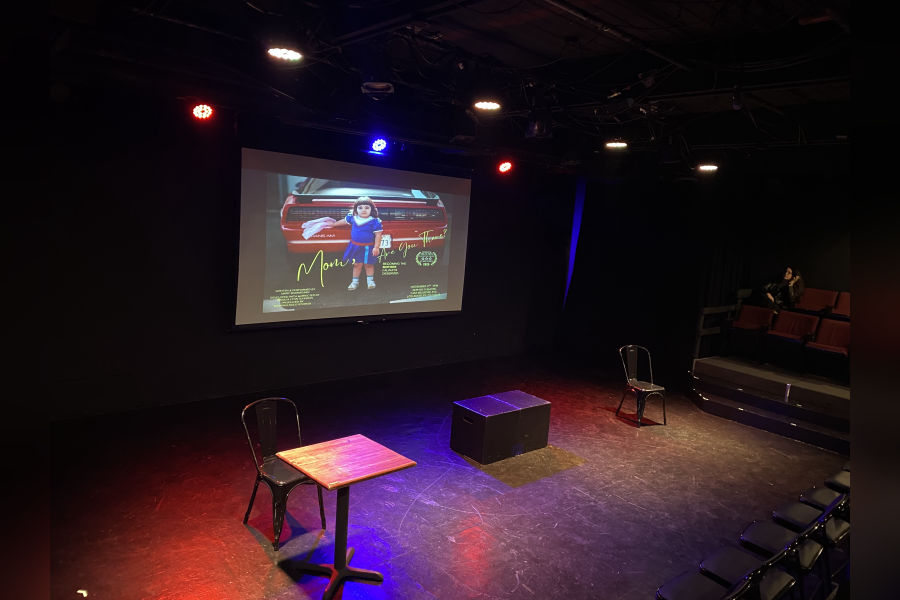
The theater projected the show’s flyer showing Basmadjian, no more than a few years old, in front of a red Trans Am, her expression questioning, “Mom, Are You There?” A tagline read: “becoming the mother I always deserved,” prefacing the subject matter of the show. Soon, every seat was taken.
“Have you been to a show by Mary before?” I asked the woman seated beside me. “No, this is my first one,” she responded. Kristine Jegalian relayed that her friends had attended the show during its run at the Hollywood Fringe Festival and urged her to see it.
“Mary is speaking about important topics that are often hidden in shame. Her work normalizes the fact that our lives as Armenians are not always perfect. We are just like any other people. This show is a big deal. Her voice is so important,” Jegalian commented.
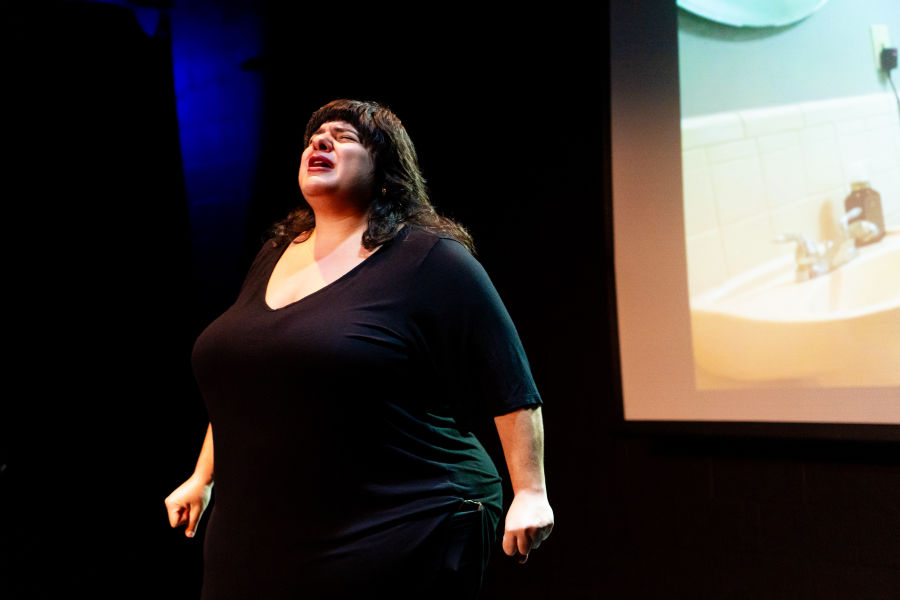
Before she could add more, the lights dimmed and Jessica Lynn Johnson, who helped develop and direct the show, stepped forward for an introduction. Out of the dark emerged Basmadjian — or should I say, Vartoush Tota — with her iconic rimmed glasses and her usual, “Hello everybody, this is Vartoush.”
For the next hour, Basmadjian embodied 25+ characters, inviting the audience to explore her history, balancing levity and pain. “It took me over a year to write and edit the show and create each character,” Basmadjian relayed. “I found voices that matched the character of Shame or Edie, inspired by the people who had a lasting effect on my life.”
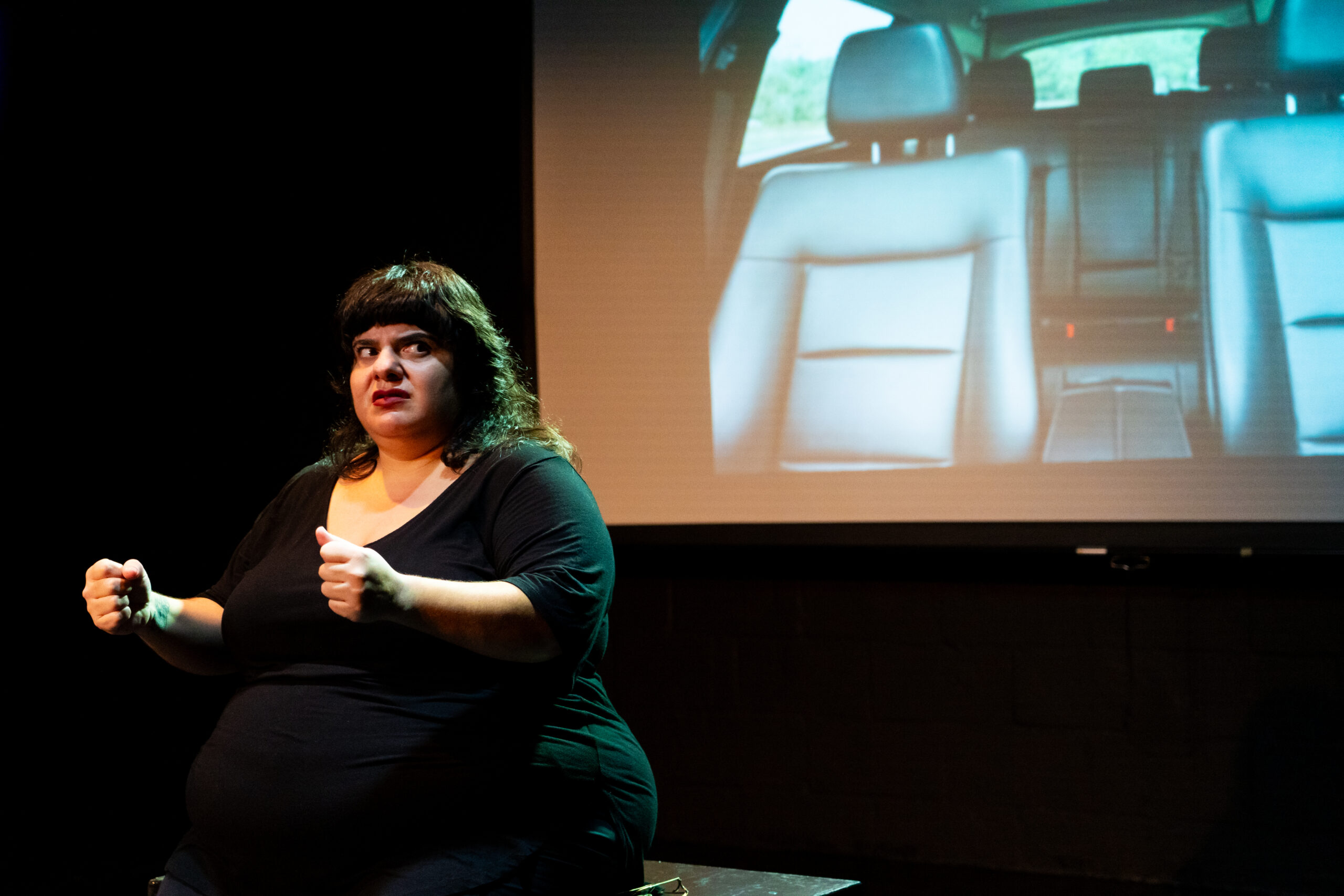

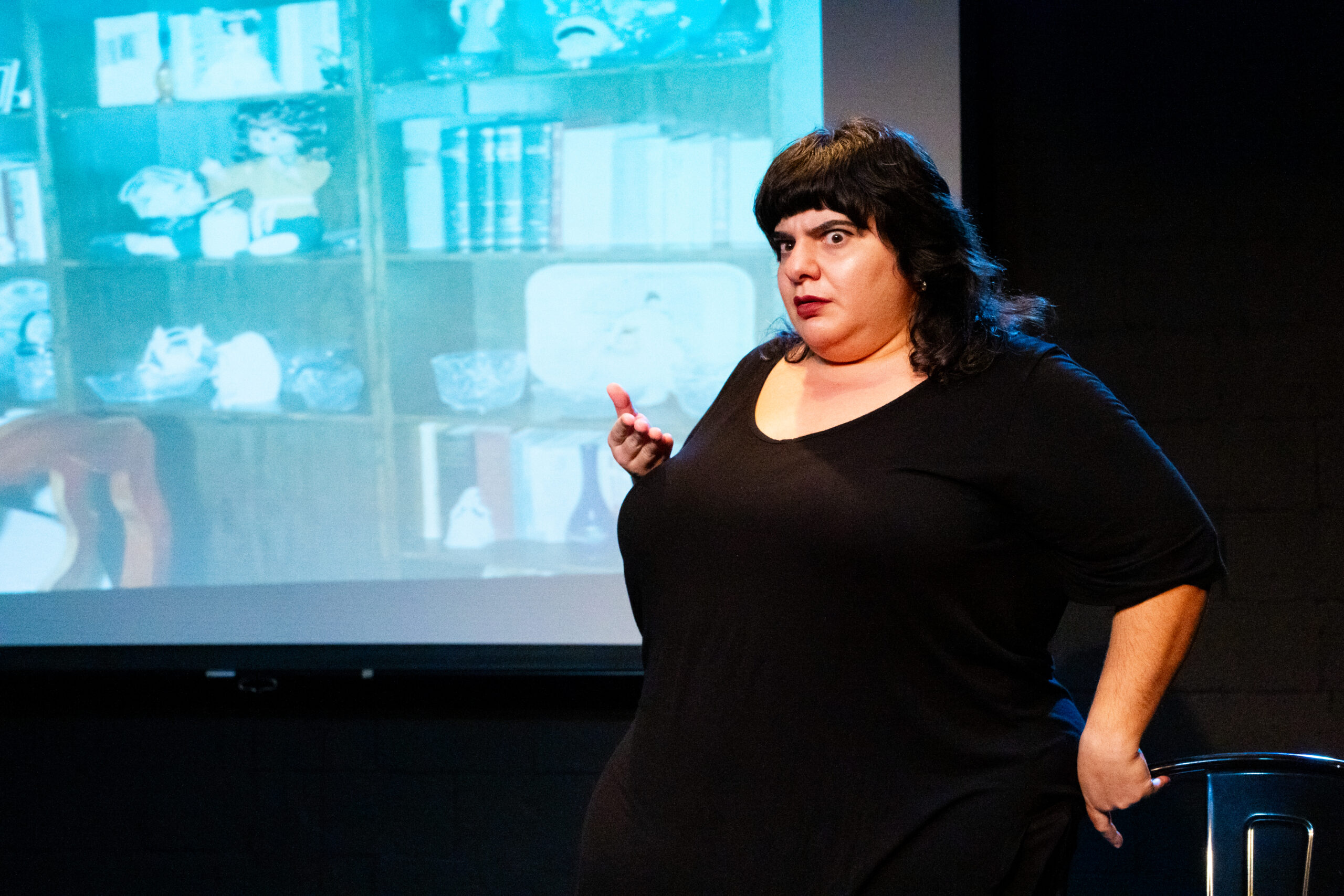

Basmadjian commanded the room — bursts of laughter followed by heavy silences — as she explored emotions, experiences and dynamics that shaped her. Themes of shame, family issues, abuse, mental health, estrangement, purity culture and body image were explored. The crowd reacted to her vulnerable performance, which coaxed both joy and sadness. Basmadjian took a story of isolation, shame and heartbreak, and illustrated her journey toward self-love and compassion.
When asked how she balanced the heavy subject matter while writing and performing, Basmadjian responded: “Honestly, when I was writing this show, weed helped me a lot — I smoked through the writing and rehearsals because it soothed.”
“Connecting with the childhood pictures I used as my background also helped. I looked through everything, and crazy enough, I feel like I got reintroduced to my mom in some weird way,” she continued. “I loved being around people, and not isolating. My friends were there for me — they always heard me when I cried or talked about it.”
“Therapy helped a lot, actually — he is amazing. That’s right, I said he,” she laughed. “Can you believe it? I’m a feminist with a guy therapist.”
As her final words reverberated, the heaviness of the story released. In the final moments of the show, Basmadjian shed her character and spoke to us as herself. “In order to get rid of shame, you have to release it,” she said, her face beaming with gratitude and vulnerability.
The crowd erupted in applause, some visibly emotional. Hoots and hollers filled the air as the audience rose for a standing ovation. A line formed at the front of the stage for those wishing to offer their thanks.
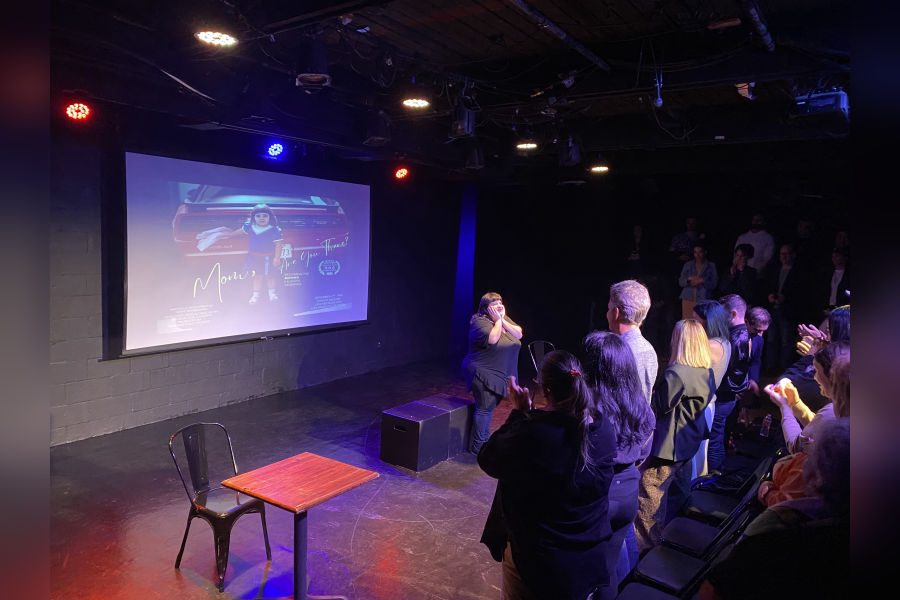
“A lot of people, especially Armenian women, have gone through something similar,” Basmadjian commented.
“In those really rough days, I thought I was the only Armenian going through that s**t — that I was abnormal. But saying this story out loud and finding out that so many people have also been through it has been healing.”
Outside, Basmadjian patiently spoke with everyone, taking photos, accepting bouquets. “I remember you,” she exclaimed as she embraced the Russian Armenian morkurner, their initial icy exterior melting as they gushed over her performance.
Even with the heavy subject matter, people were buzzing with joyful energy. “We wanted to come in the summer,” one fan exclaimed, “but we did not make it.” Person after person thanked her. Mothers clutched Basmadjian, as if to say, I am here for you.
When asked about taking the show to other parts of the country, Basmadjian said, “One of my biggest aims is to do it on the East Coast; it would be amazing. I would love to take it to New York, though I don’t have any connections there. I think they would love this show.”
Requests for continued performance keep growing. Basmadjian shared that she “may do another encore [at the Zephyr Theatre] in late December,” and that she wanted to take it to other theaters, “maybe in Glendale.” She even expressed interest in translating the show into Armenian, “so that people who don’t speak English can see it.” Her ambitions of “taking the show outside of LA” were clear.
Through her artistry and vulnerability, Basmadjian has created a community — a family of multigenerational and multicultural people, Armenian and otar.
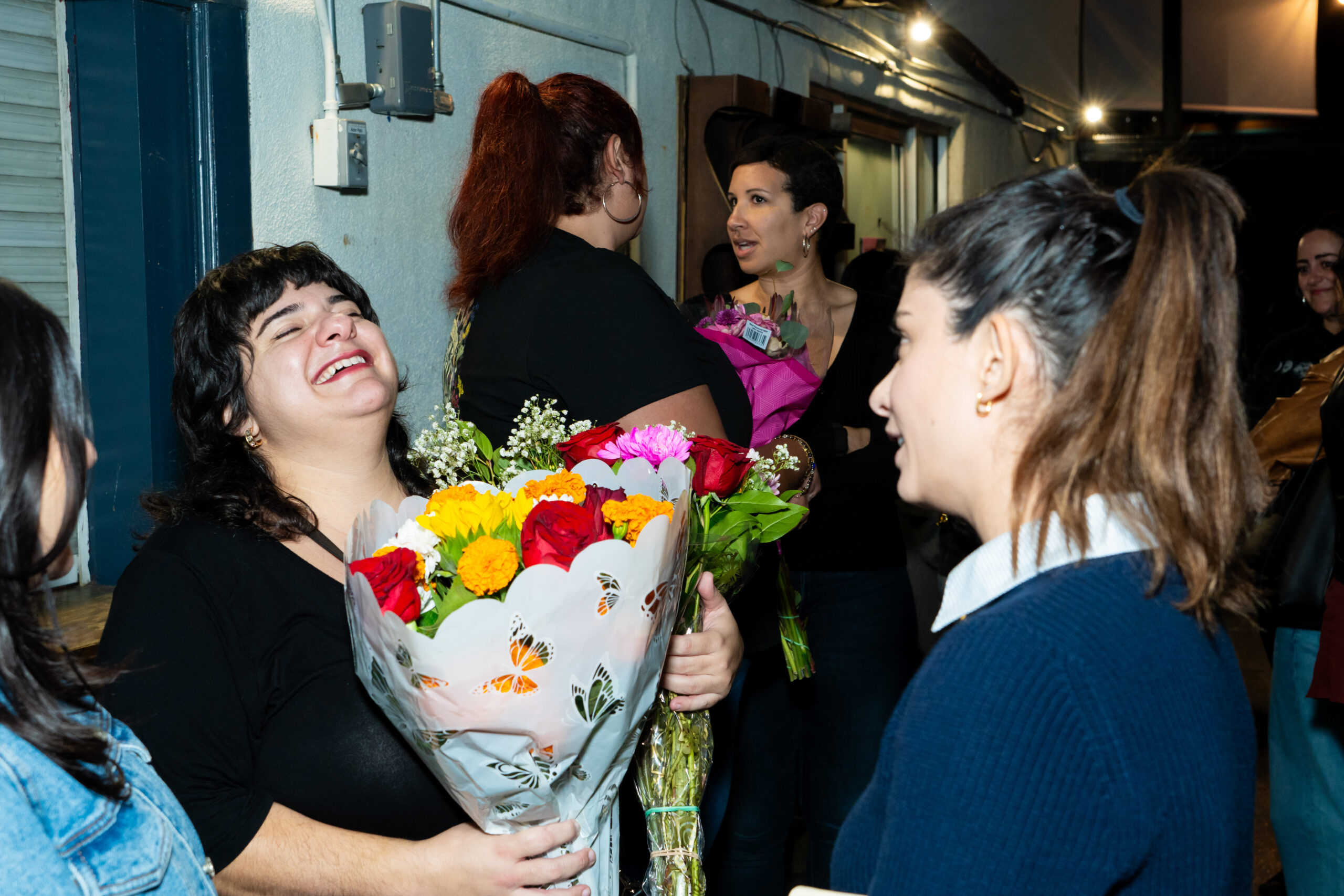

“I found the theme of liberation along the way — in the process of writing and performing,” Basmadjian remarked. “I thought [it] was going to be, ‘Oh, am I good enough?’ But the deeper I went, the more I realized that I’m not the only one with that question. There are so many people out there who relate. I felt more and more liberated after each performance.”
We were the last remaining people, standing in the chilly weather, discussing her show. Even after an emotionally taxing performance and the long stretch of post-show mingling, Basmadjian remained vulnerable and open: “I was so scared my mom would find out,” she shared. “I still haven’t talked to her or seen her in 10 years. I don’t know where she is or what she’s doing, but I’m assuming people told her about it. There are a lot of feelings, a lot of emotions, that come with the job.”
Basmadjian discussed how this experience — the detour from her usual comedy to explore deeper, more complex subjects — had influenced her future work. “This show has made me a little bit braver. I feel more liberated,” she said. “I want to take a bit of a more serious turn.”
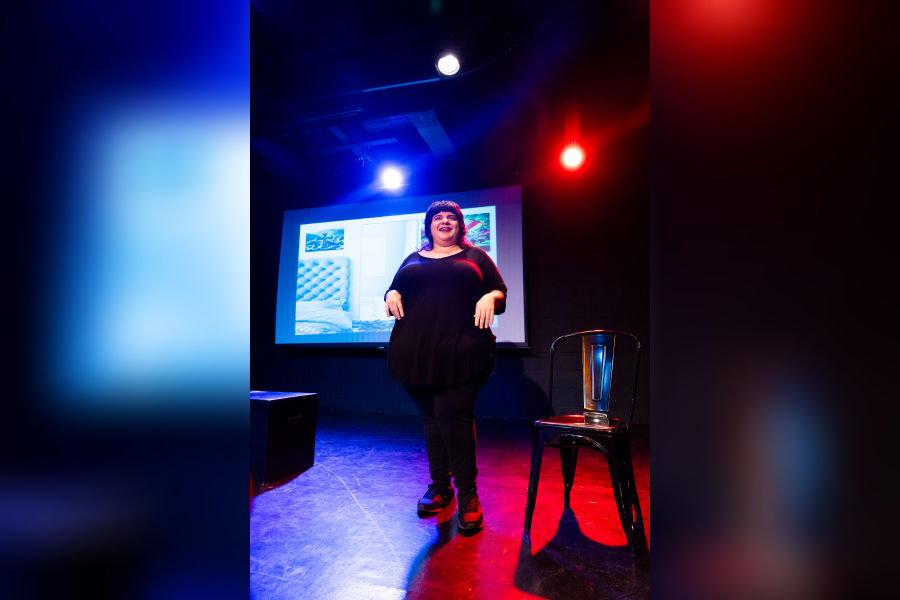
She pointed out the shame that arose from writing and performing. “Doing this show and still being in a bigger body is really hard. But the more I did the show, the more compassionate Cathy showed up, saying, ‘It doesn’t matter what body you’re in. It’s your story and you have to talk about it. Others are feeling this way, too.’”
As we stood outside the closed theater — as often happens in Los Angeles — a man threateningly yelled down the street. “Let’s go,” Najarian ushered us toward their car. “I am parked two streets down,” I said, trying not to cause an inconvenience. “We are not letting you walk alone,” Basmadjian pressed protectively. The interview continued in the car, as Najarian drove.
When asked what advice she had for creatives, especially those in the Armenian community, Basmadjian responded: “Just do it. Write it down. Whatever story you have is important. Once you put it out there, you’ll find others who have gone through it, too. It will make the connection with others even more powerful.”
She explained that sharing her story with other Armenians has led to more connections. “You never know who’s dealing with what — you may free and liberate someone else with your story,” she said as we navigated through the LA traffic. “Be playful. Find that little kid and play as much as you can.”
As we arrived, giddy from the impromptu detour, I asked if she had anything else to add. Basmadjian responded, “Make sure you include that a crazy man chased us.”
You can find Mary Basmadjian on Instagram, TikTok and her website to keep up with future performances. Her comedy special “Funny Armenian Girl” is currently streaming.
Photos courtesy of author unless otherwise noted.



I’m trying to get her out here. I live in nyc