



The real tale of Tumanyan: A town reimagined
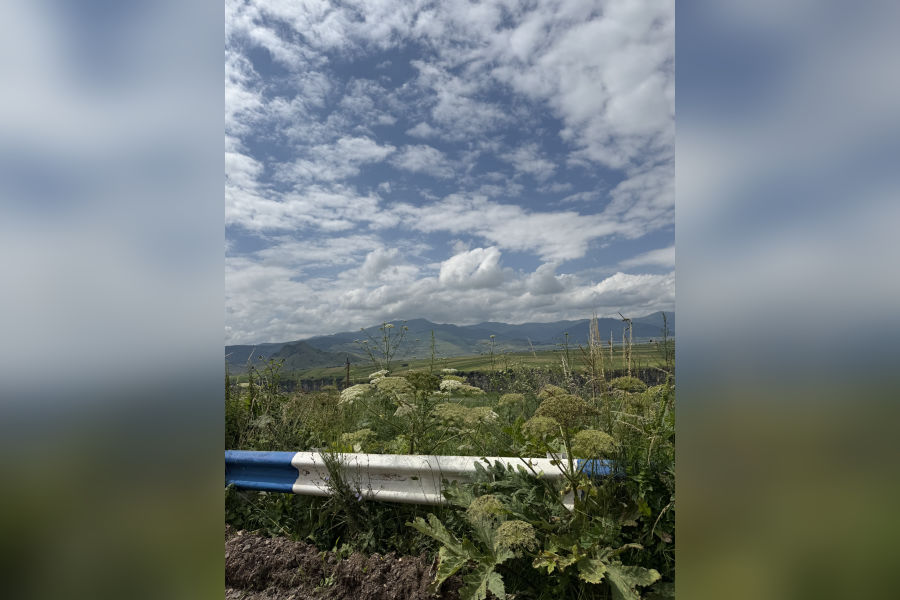
I can’t really say if it was the peaceful sleep, the golden morning sun or simply the pull of adventure, but on the second day of our Lori trip, we knew it was time to head to Tumanyan. Maybe it was the promise of those mesmerizing mountain views I’d heard so much about, or the buzz of new initiatives I’d been following online. Perhaps it was just the charm of a place that still feels like a hidden treasure. Whatever it was, Tumanyan had us captivated long before we arrived.
With stops in Odzun and Kobayr along the way, we were reminded of just how much history these hills have witnessed. Each one of the centuries-old monasteries had its own soul, drawing us in with both its setting and the stories its walls seemed to whisper. Each stop on the road left us with a quiet sense of fulfillment, making the anticipation for Tumanyan grow bigger.
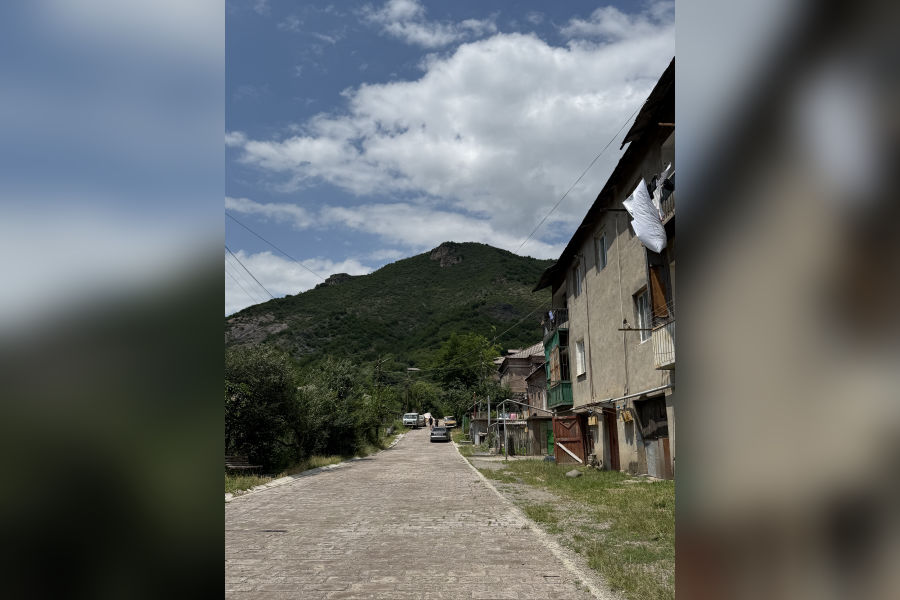
And then, almost without noticing, we found ourselves in Tumanyan. The town welcomed us with its small, charming houses, gardens bursting with flowers and old balconies displaying colorful laundry. Yes, it was almost exactly as I had pictured it: quiet streets with neighbors strolling unhurriedly, children chasing a football across the pavement and old men gathered in yards, shuffling cards beneath the afternoon sun. It was a glimpse of slow living.
Our first stop was the Flying Samovar Café, a place that caught our eye before we even walked through its doors. As you walk inside, you notice how the place has its own quirky charm; a blend of bohemian ease, vintage furniture and nostalgic touches. The walls were covered with retro Armenian posters, with wide windows framing the surrounding mountains. What caught my eye most were the tall shelves, stacked with treasures: rows of Armenian typewriters, vintage clocks and piles of board games. Each corner seemed thoughtfully curated to spark the curiosity of any visitor.
Only one person was working, to our surprise, a foreigner, who took our order for iced coffees and cookies, which were some of the best I’d had in Armenia, that we couldn’t resist from the display.
As charming as the café’s interior was, the weather outside was too good to pass up, so we took our coffees outside. There, another customer was already sitting, chatting easily with the worker inside. We introduced ourselves, and to our surprise, he turned out to be an expat who spends his summers in Tumanyan. Although we were initially surprised that many young people chose this quiet town as home, even part-time, we realized that it made sense as the expat spoke. Remote workers and volunteers had started drifting here, drawn by nature, the slower rhythm of life and the energy of new projects taking root. Whatever the mix of reasons, the truth was clear — Tumanyan had quietly grown into a hidden treasure of Armenia.
The café might have been small, but it carried a lively, welcoming spirit, hosting weekly movie screenings and game nights that fostered a true sense of community. You could tell the whole idea was about bringing people together. So, when the worker explained that it was part of the Tumanyan Development Foundation (TDF), it all made perfect sense.
A relatively new initiative, the TDF has been leading various projects since its founding in 2020, working to turn this small town into a thriving tourism destination. Through a mix of social entrepreneurship projects, TDF has been helping visitors enjoy richer experiences while generating new opportunities for locals. This is being done through guesthouses, guided tours, literary events and more, benefiting both visitors and the community alike.
As we continued to chat with the volunteer, she told us that she was originally from the Netherlands and she had been living in Tumanyan for months, volunteering at the café and contributing to other TDF projects across town. Fortunately, several of the projects she mentioned were already on my list, including the world’s only Matchbox Label Museum, which became our next destination.
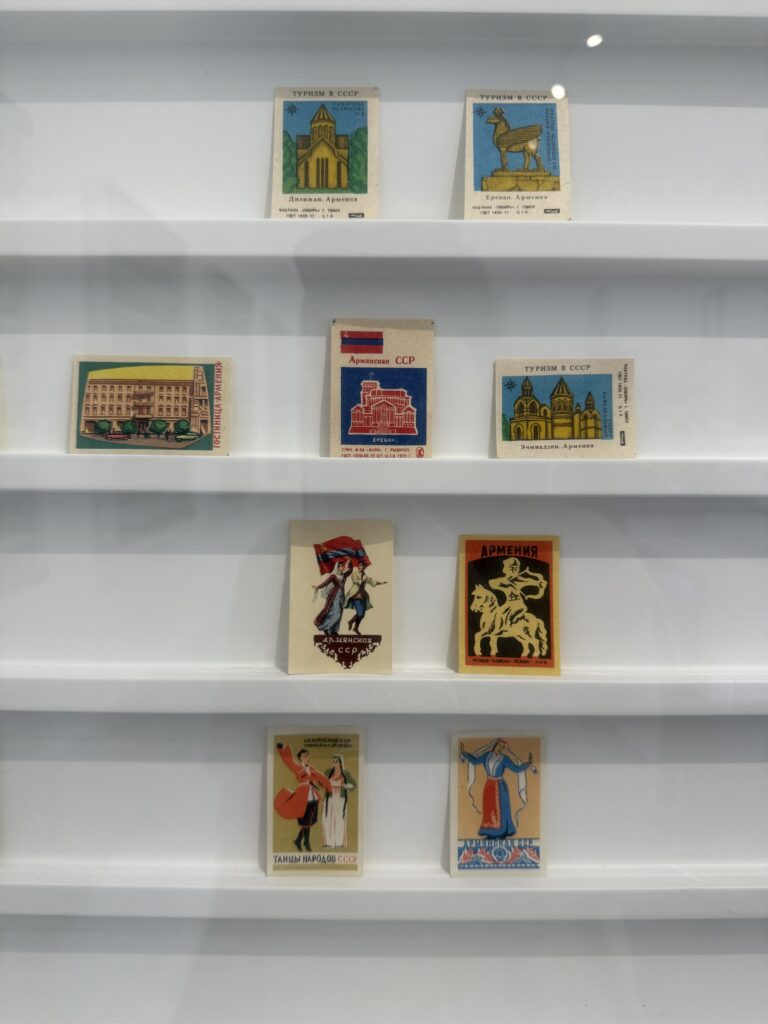
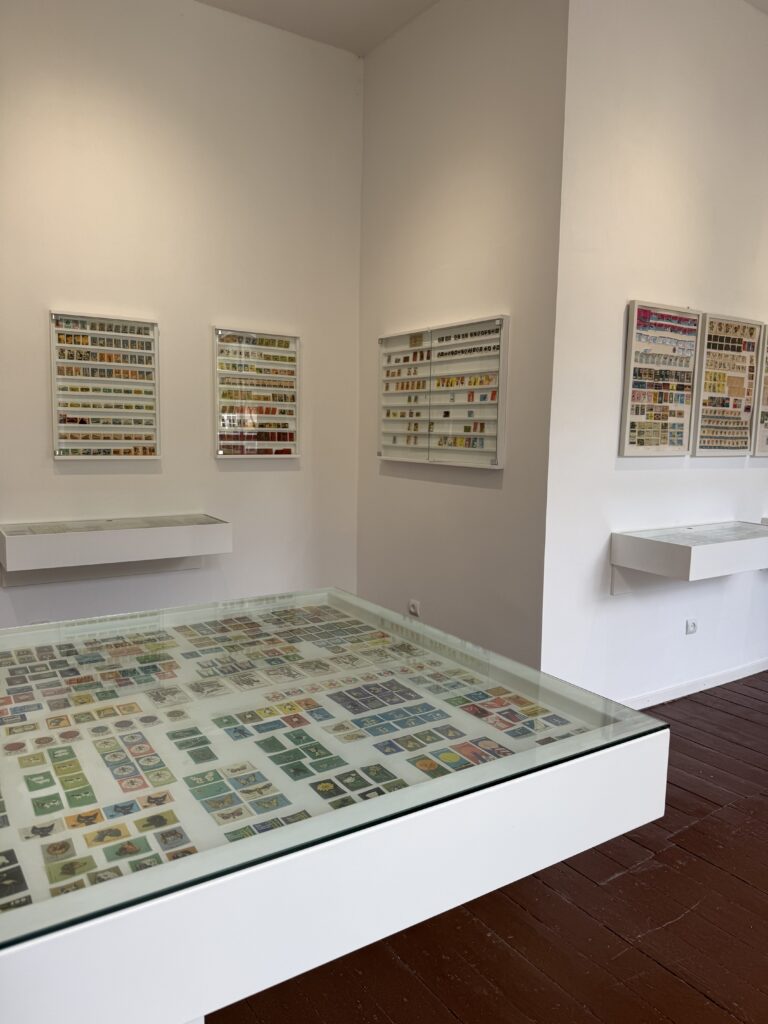
Conveniently located just across the street from the café, we headed to the museum with our unofficial guide. The building appeared modest from the outside, still marked with a Soviet-era banner reading “Tumanyan’s Alaverdi Region Ethnography Museum.” Inside, however, awaited a vibrant world of over 8,000 matchbox labels from the Soviet Union, Europe, Africa, Japan and China. The space itself was not very big; it was a one-floor building with an open space. Yet the collection was so rich and absorbing that it was easy to lose track of time. What made the experience even more surreal was that this was the only museum of its kind in the world, tucked quietly into a small town in Lori, waiting patiently for curious visitors to discover it.
Once everyday objects, even tools for spreading information, these tiny boxes now feel like windows into another era and a nearly forgotten art form. And being housed in a building already dedicated to culture made the museum feel like a continuation of that legacy of preservation.
As we wandered through the exhibit, I was moved by the beauty of the labels and proud to see such a rare concept thriving here in Tumanyan. It felt like proof that Armenia’s art and culture often reveal themselves in the most unexpected corners.
Naturally, we couldn’t end our journey here. Both the café and the museum had revived our spirits and sparked our curiosity, so we set off for the next adventure: an abandoned Soviet-era textile factory, which lay just a car ride away.
The building itself has lived many lives, from schoolhouse to a textile factory; now it has been reborn as Abastan, a coworking and creative space. Carrying traces of its layered past, I sensed how this new concept has added a new energy to the space; one that’s artistic, collaborative and quietly inviting.
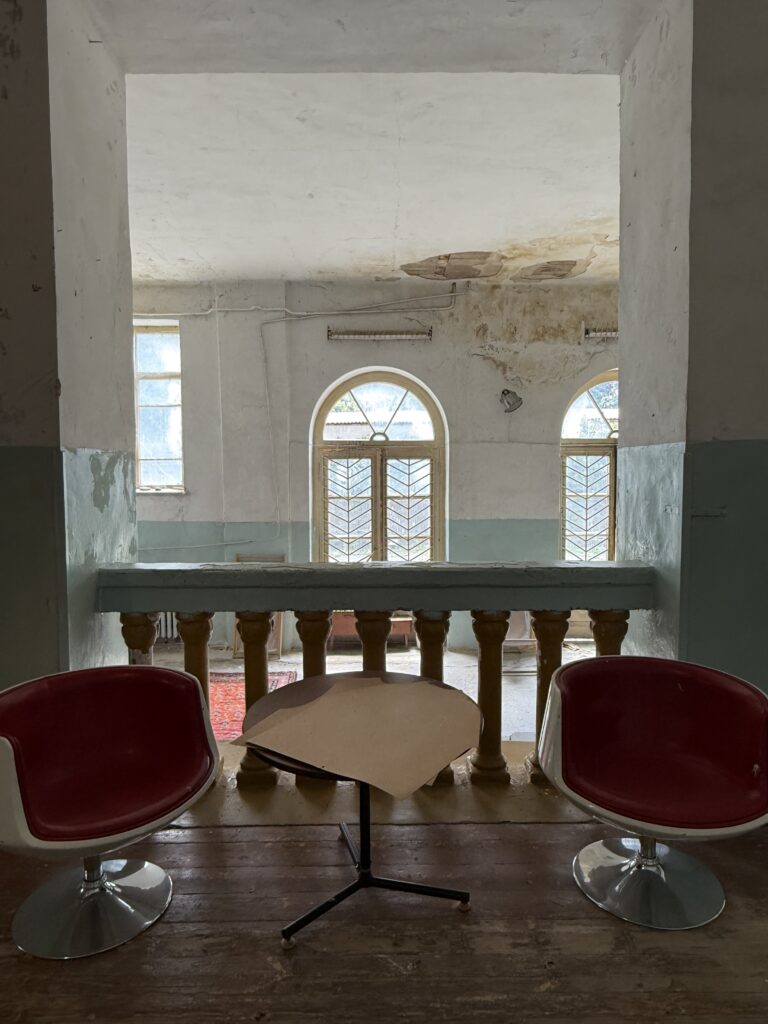
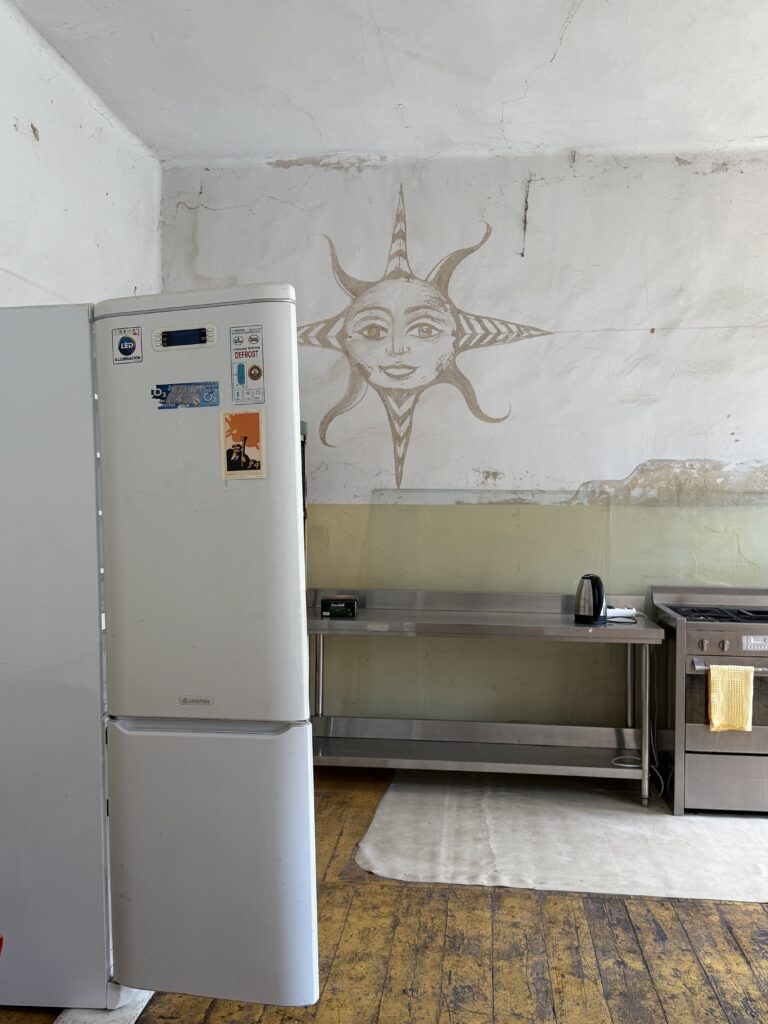
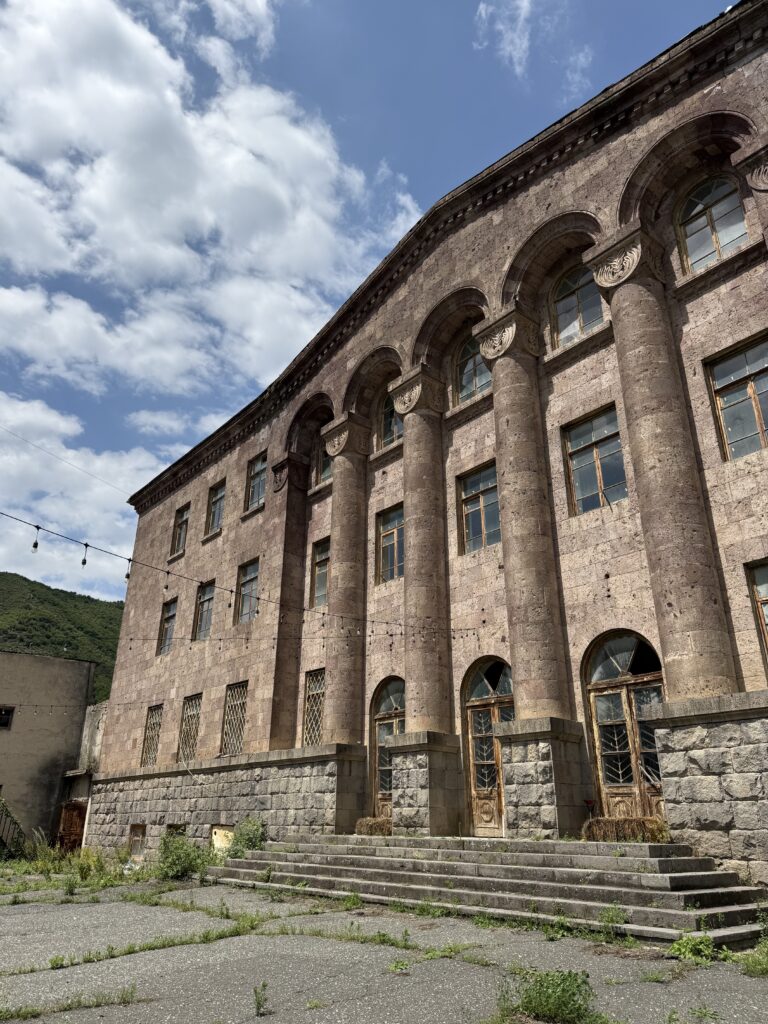
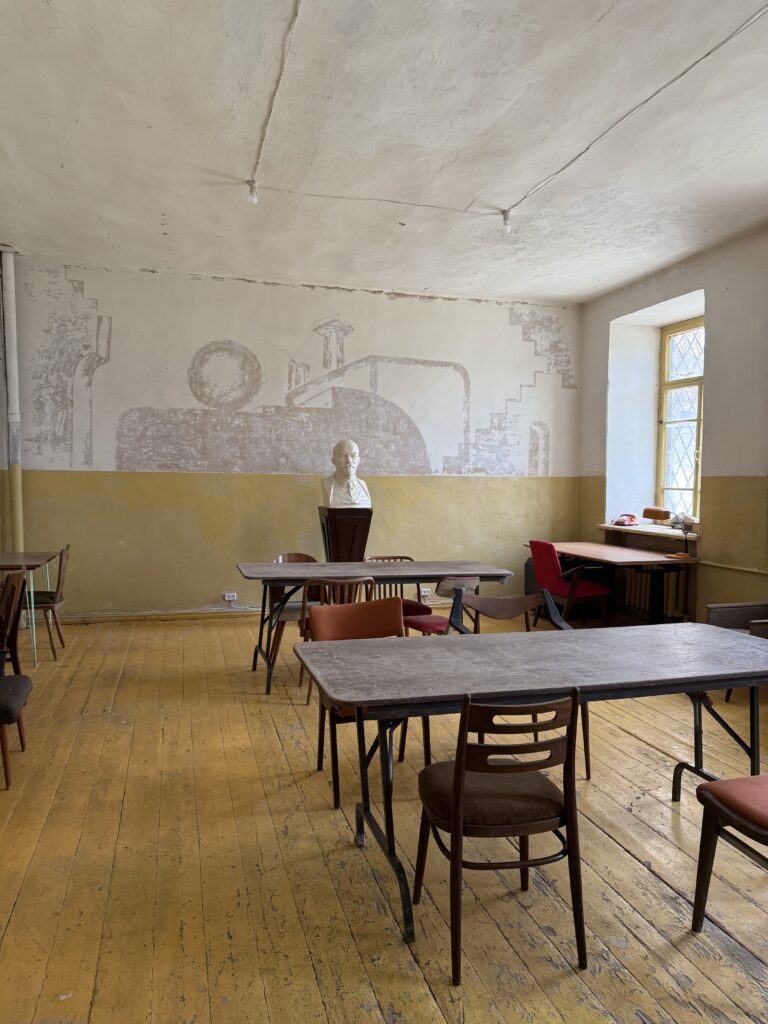
Walking in, I immediately felt that mix of history and renewal. As someone drawn to old spaces, it was a feast for the eyes; the perfect blend of what had been and what was becoming. The building was vast, with long hallways and rooms that still carried traces of their past, while others had been transformed. Long desks and chairs filled one workspace as Lenin’s head stood at the center, as if daring anyone to lose focus.
There was a communal kitchen, a lounge filled with games and walls decorated with old sketches and paintings. And then there was the courtyard, so big and warmly lit by the sun, which seemed to tempt anyone to abandon work altogether.
All the cool interior aside, what I loved most about Abastan was that it wasn’t just another abandoned Soviet building left to decay, like so many others scattered across the region. This one had been noticed, cared for, and reimagined.
Abastan felt like a place equally suited for focused work as for creative gatherings, and perhaps that’s its true magic. Within the walls of an old Soviet factory, something authentic and alive is taking shape. It wasn’t polished or modern, but it didn’t need to be. Its effortlessness was its charm. Still, there was plenty of work ahead to make the space fully accessible. When we visited, it was quiet, no one was around, but the volunteer explained that this was normal. Sometimes the place buzzes with people, and other times it waits in silence, locked up until the next group arrives.
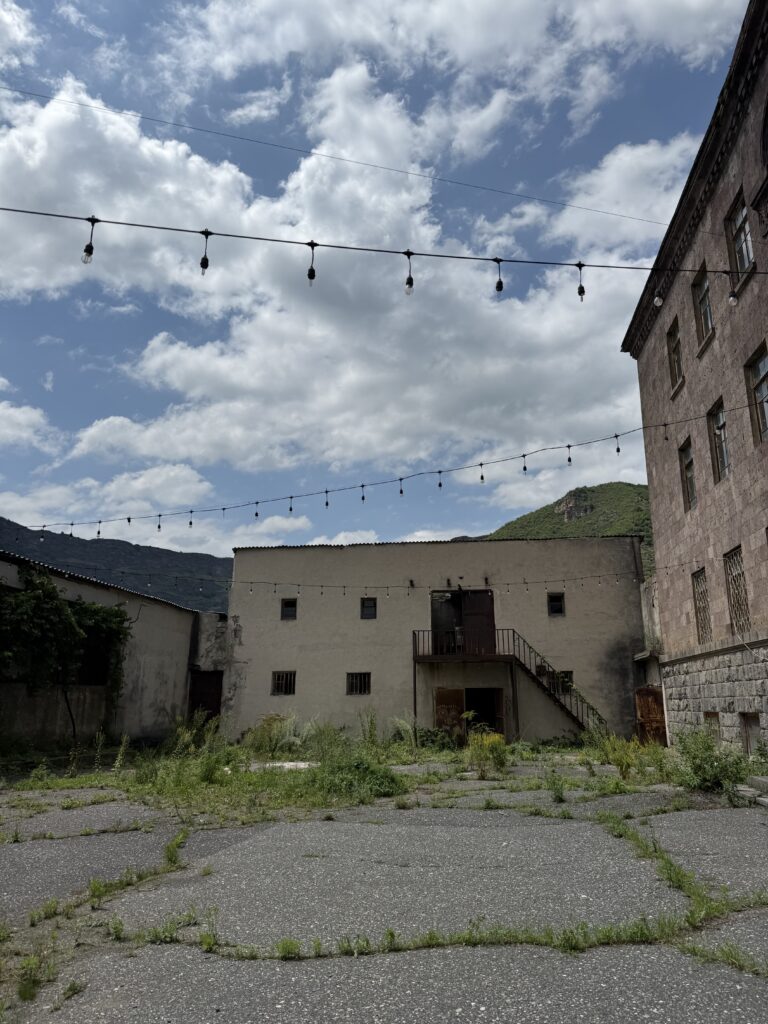
By the time we finished exploring it, most of our time in Tumanyan had already slipped away. And as much as we wanted to see more of the TDF’s projects, like the bathhouse or the library, we decided to save them for another visit.
From this short yet fulfilling visit, I realized how a small town like Tumanyan could feel so essential, both for locals and visitors. It’s a place where nature and city life meet, filled with stories and surprises just waiting to be uncovered. I understood why it has become a magnet for remote workers and young travelers in Armenia. And thanks to initiatives like TDF, the town isn’t standing still; it’s evolving, drawing people in with a shared sense of purpose — to sustain and reimagine the motherland.
Tumanyan felt like proof that change is possible, that we have countless spaces across the country waiting to be noticed, revived and reinvented. It’s on us — together with others who care — to bring them back to life and create places that inspire both locals and visitors.
A cool urban café, a niche little museum, a reimagined Soviet factory, all framed by mountain views so breathtaking they look like still paintings. Tumanyan was beautiful, and every minute we spent there was worth it. Next time, though, I will be sure to stay longer to appreciate the many corners of this beautiful town.

Thank you for this.
Despite my Anglo name, my wife Hilary and I are first cousins, and share a grandmother we never met, but whose maiden name was Clara Melita Holmwood Zohrab. Our ancestor was Zohrab of Manucharian out of Julfa about 1600 to Isfahan, and the family then to Malta, England and New Zealand in 1863.