


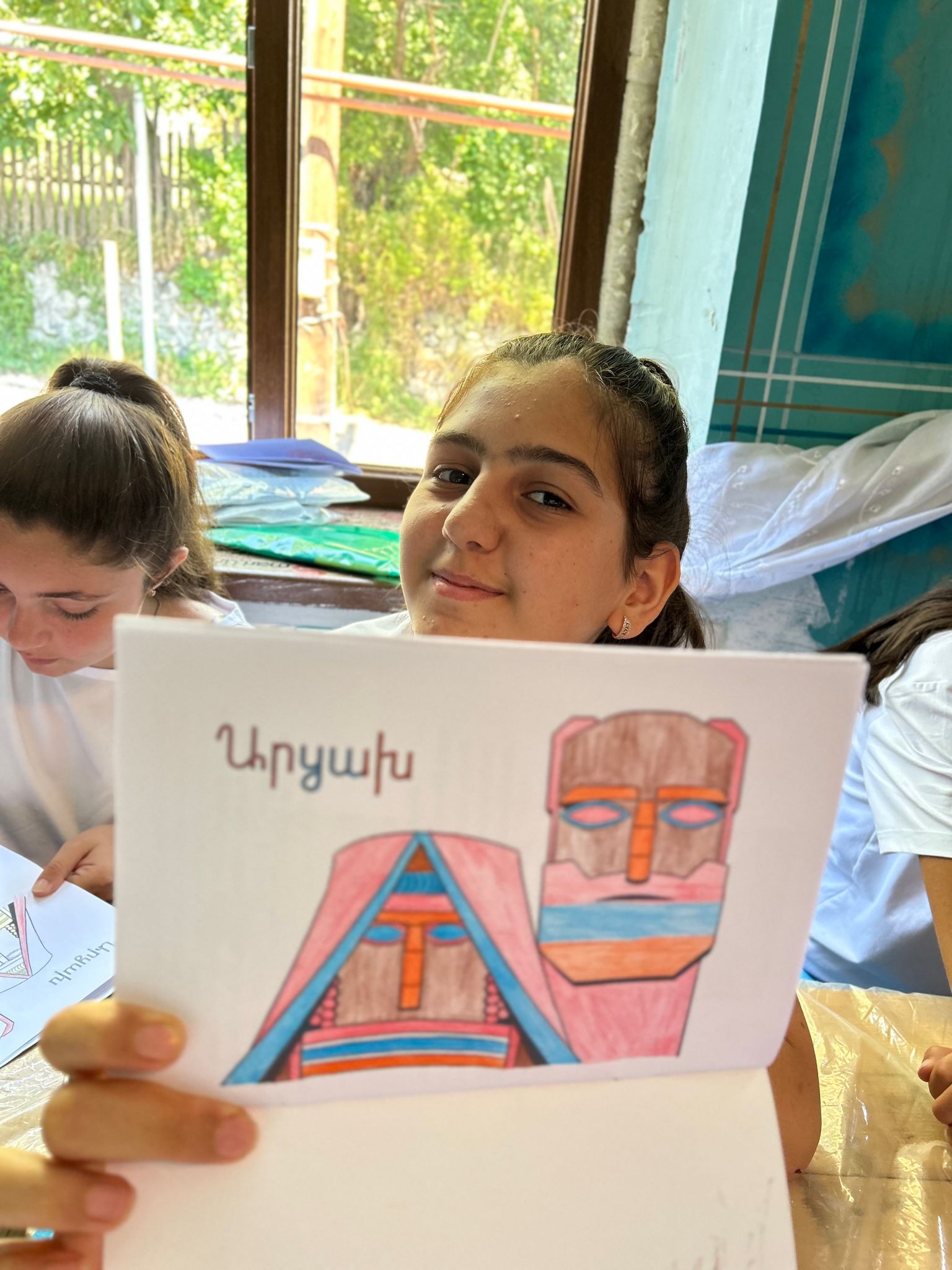
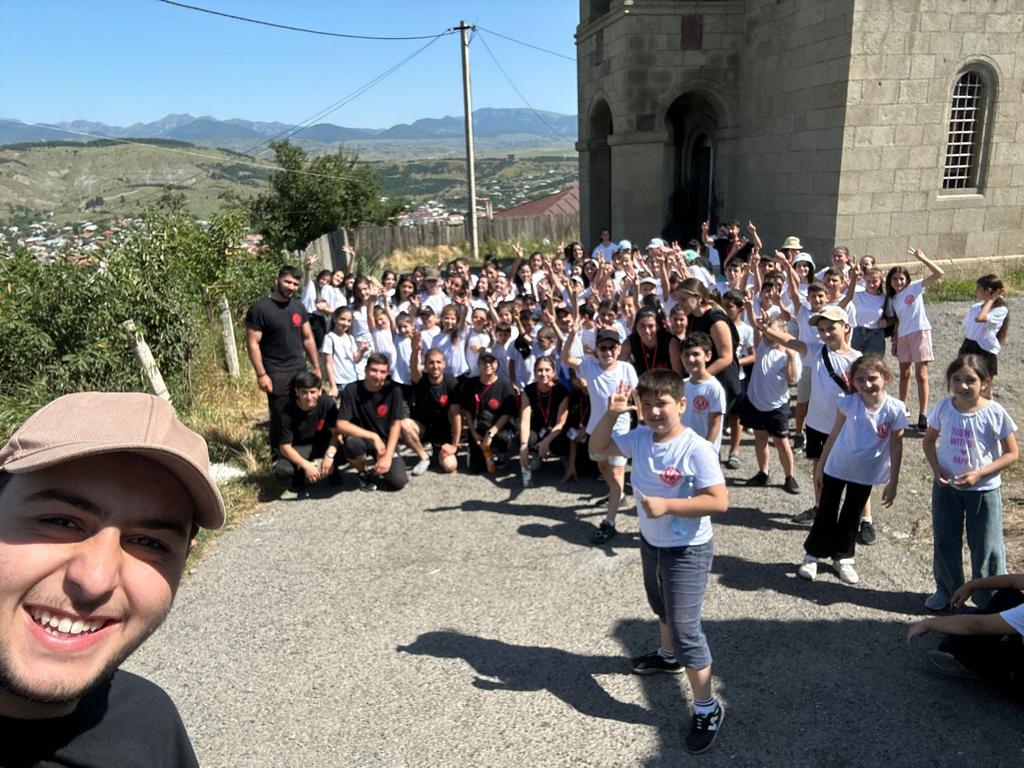
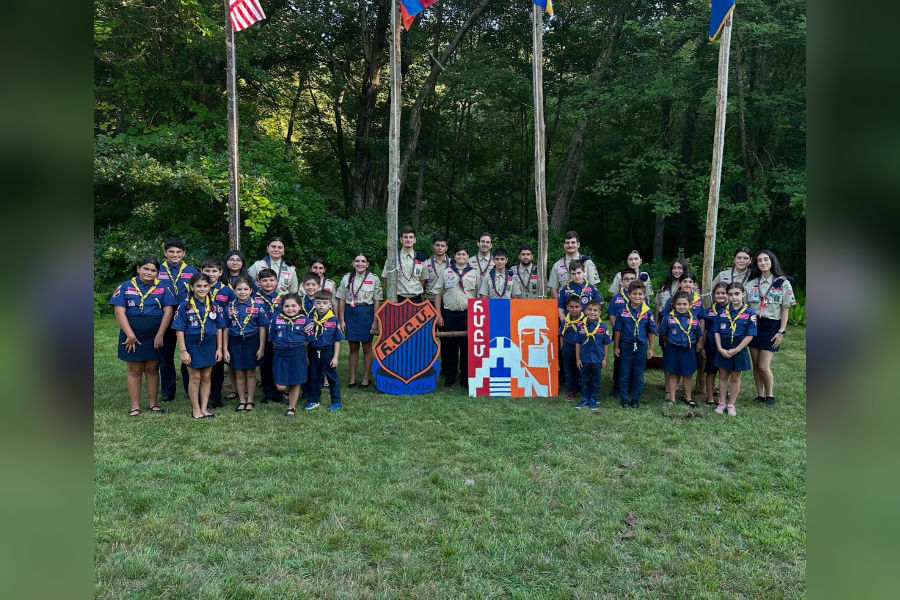
This summer, I had the immense privilege of participating in Camp Javakhk, a two-week program that brings young Armenians to a lesser-known part of the homeland to engage with its youth and teach them about Armenian history and culture. Traveling to Javakhk showed me firsthand what our compatriots face while living in parts of our global nation that are not in Armenian hands. The camp visits Akhaltskha and Akhalkalak in the first week and Ninotsminda and Dzalka in the second week. The Armenian communities of these towns were inspiring, each with their own unique love for the Armenian nation and heritage.
While most of the Armenian population of Javakhk settled in the region right after the Armenian Genocide, its history goes far beyond 1915. Javakhk has formed part of ancient Armenia since at least 428 AD, when it was a part of the Gugark province of the Arsacid Kingdom. The region hosts many Armenian churches and fortresses, some of which the Georgian government claims as its own. Many notable Armenians also come from Javakhk, including Hamo Ohanjian, the third Prime Minister of the Republic of Armenia.
I spent my first week in the city Akhaltskha, whose Armenian population is committed to preserving its identity and culture. Many of the campers were well versed in Armenian history and proudly performed traditional Armenian songs and dance. Although currently living under Georgian rule, the Armenians of Akhaltskha are determined to one day form part of a united Armenia.
My second week in Javakhk was spent in the Dzalka region in a village called Darakyugh. Unlike Akhaltskha, Darakyugh has an entirely Armenian population. Its proud Armenian community feels much more strongly about Javakhk’s connection to Armenia. On our last night walking through the streets of the village, we bumped into a group of locals and began talking. The local men shared that their village church, built in the 19th century, was constructed from stones brought from Karin in Western Armenia. They were proud that the legacy of a church used by their ancestors in Western Armenia before it was destroyed lives on in Javakhk.

It became clear to me, especially after a deep and insightful conversation with the residents of Darakyugh, that the Javakhk Armenian population shares a similar fight with our compatriots in Artsakh. Old and young, all seemed to know about the difficulties facing Artsakh today. Javakhk’s population, especially the residents of Darakyugh, see Javakhk as a part of the Armenian homeland, as they do Artsakh. As the Armenians of Artsakh struggle for their right to self-determination, the population of Javakhk watches in support, knowing that their turn to struggle and fight will come next–all to achieve the dream of a free, independent and united Armenia.


Well done Areg! So proud of our young generation!
Stop bastardizing Georgian names of the cities and regions and claiming it’s an “Armenian homeland”, there are Armenians living in that region solely due to the fact that Georgians welcomed them to their home after atrocities from Armenian genocide left thousands of Armenians seeking refuge around the Russian Empire.
So at least show some gratitude instead of awfully bastardizing names like Akhal-Tsikhe (directly translated from Georgian meaning “New Castle/Fortress”) not Akhaltskha, Akhal-Kalaki (directly translated from Georgian meaning “New City”) not Akhalkalak and Javakheti, not Javakhk.
Due to separatist stunts like these Armenians in Georgia are not looking as trustworthy as other ethnic groups, and you’re not making it any easier for them, if you care of well being of Armenians in here I would stop calling homeland every piece of land that an Armenian has ever stepped on.
Karabagh seems to be not enough for your kind so youre asking for another one by Georgians this time it seems. No rest for Armenian parasitism
Rather astonishing that the armenian diaspora, like the author, harbors more nationalist sentiments of united Armenia at the cost of every neighbor of Armenia rather than Armenians from Armenia. Because the diaspora doesn’t live in Armenia and won’t be hurt by any conflict.
Please stop renaming Georgian regions and claiming it to be “an inseparable part of the Armenian homeland”.
The reason why a lot of Armenians are living in Akhaltsikhe and in Javakheti in general is because we offered Armenians a shelter during the Armenian genocide.
When Turkey was massively killing and massacring Armenians, we – Georgians where the first nation who offered help. Let’s not forget that Armenians settled in Javakheti region from Turkey, so we can conclude that newly settled Armenians are not an ethnic population of Georgian region of Javakheti.
Akhalkalaki (ახალქალაქი) and Akhaltsikhe (ახალციხე) are combinations of two Georgian words. Akhali and kalaki literally translates to “new city”. And Akhaltsikhe translates to “New Castle”.
Stop claiming that everything is Armenian. For example, our national and well known poet – Shota Rustaveli is Georgian, but Armenians claim that he is Armenian. Same with Tamar the great – The first female king in the world.
In 1828-29, after the war between Russia and the Ottoman Empire ended in favor of Russia, the Russian administration began to settle the population on the newly annexed lands. As the main tool for creating a loyal environment, the officials of the empire presented the Christian religion. Georgian Muslims, whom the Russians accused of pro-Turkish orientation, were deported to Turkey, and instead, the territories of Kvemo Kartli and Samtskhe-Javakheti were settled with Christian Armenians from Kars, Ardagan, Bayazeti and Arzrum. From the end of the 19th century to the 20s of the 20th century, waves of migration were caused by the persecution of Armenians by the Ottomans. It is also worth noting that after the Armenian Genocide in 1915, Javakheti became a new home for a part of the displaced population.
And despite all of our help, you guys create seperatist groups against Georgia and you guys steal our culture, traditions, and now claiming that our land is yours? C’mon now.