



The HomelandOpinion
Ambassador warns of Goris-Kapan repeat in Tigranashen, says Baku has no legal claim
Former Armenian Foreign Ministry diplomat speaks with The Armenian Weekly, raises alarms over Tigranashen and Armenia’s foreign policy trajectory.
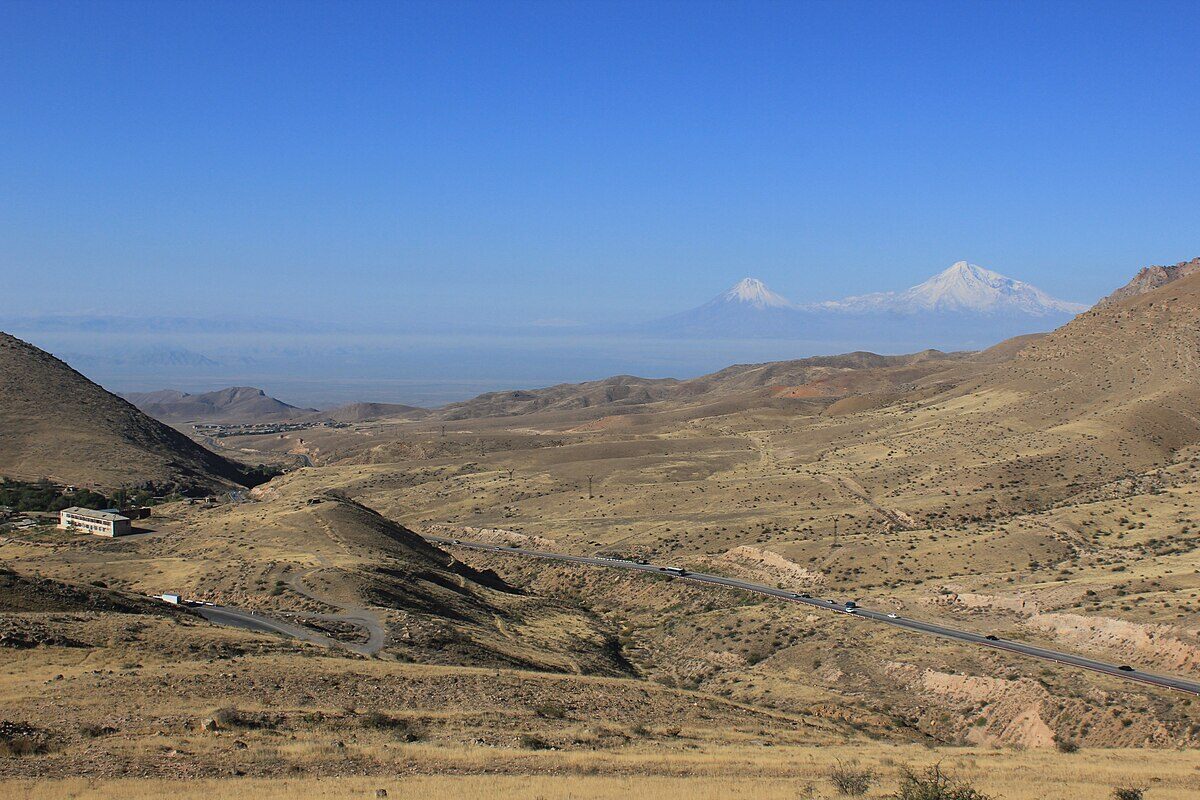
Months ago, Prime Minister Nikol Pashinyan received votes from residents of the Ararat region, including Tigranashen, with the promise of protecting Armenia’s sovereignty and territorial integrity. Today, he is introducing Azerbaijani toponyms into public discourse. Referring to Tigranashen by the Azerbaijani name “Karki” is not an accidental slip but part of a consistent policy aimed at conditioning public consciousness and preparing for another unconstitutional concession.
Public statements made years ago by representatives of the ruling Civil Contract faction stand in sharp contrast with their current actions.





When you prepare an important article such as this. Include maps, quite a few of them, high level to low level. A map is worth a thousand words.
Here is a Google map of the locations in question published by the Armenian Weekly itself: https://armenianweekly.com/2021/05/26/armenian-soldier-killed-by-azerbaijani-forces/map-of-armenian-and-azerbaijani-enclaves-photo-karen-harutyunyan/
Here is a link to a map of Armenia showing the extent of its territories occupied by Azerbaijan: https://euro-sd.com/2023/11/articles/34984/armenia-and-azerbaijan-what-happens-next/
‘karki’ is a fake name. Like ‘kaliningrad’.
True, but the Germans who founded the former Königsberg (today Kaliningrad) in the former East Prussia province of Germany (today Kaliningrad oblast of Russia), are not native to the region either. They, under the Teutonic Knights, conquered and violently colonized the region in the 13th century as a “crusade” against the native Baltic Old Prussians, who were pagan, and who were largely exterminated in a genocide, and the rest gradually assimilated and became extinct in the 18th century. Ironically, the Germans adopted the name “Prussia” for themselves. Armenians’ plight under Turkish conquest was of course similar, except that fortunately Armenians as a people survived eight centuries of Turkish occupation. Had the Turks decided to exterminate the Armenians in the very beginning when they conquered Armenia, Cilicia and the rest of Asia Minor which had Armenian communities, the outcome could have taken a completely different turn – much like what happened to the Old Prussians – or they could have been reduced to a small minority facing the threat of extinction, much like the Assyrians or Yazidis face today.
the Old Prussians certainly did not build cities. It was a backward, illiterate tribe living in some villages. That’s all. Not comparable to Armenians or Germans at any level. Immanuel Kant comes to mind…
Incidentally, Koenigsberg was part of Kingdom of Poland for centuries. It was called Krolewiec, and had a significant Polish-speaking population.. ‘Koenig’ is a translation of Krol
Yes, I am aware of the Polish history in that city and region. What I wanted to convey is that the Germans were also non-native, hostile invaders in that region who colonized and committed genocide against the native Old Prussians (that they were not advanced, literate, or urban, is not the issue), just like the Turks did in Armenia against the native Armenians, or against the native Assyrians in Mesopotamia, etc. Unlike the Turks, at least the Germans and Poles contributed a lot to world civilization.
It’s curious how a people can adopt the name of a locale which often is from a tribal origin, such as English people as British and the Slavs in Macedonia calling themselves Macedonian, thus Prussian became a co-opting by Germanic peoples from the Baltic inhabitants. The Lithuanian kin of the original Prussians were able to better maintain their identity. Interestingly post 1945 the Soviet Union was planning to award nothern East Prussia to Lithuanian SSR who reportedly declined the proposal, so Moscow settled Russians knowing their loyalty would be stronger. Ironically nowadays the population is more appreciative of the German past and consider themselves as more European and cultured than those in the heartland of Russia.
Whilst the relationship was often fraught and one way the fact that Turkish tribes didn’t exterminate Armenians when they arrived and why after about 800 years did the relationship violently breakdown into extermination and deportation and some forced acculturation, is perhaps something that should be observed.