


The Region in Brief
Armenia
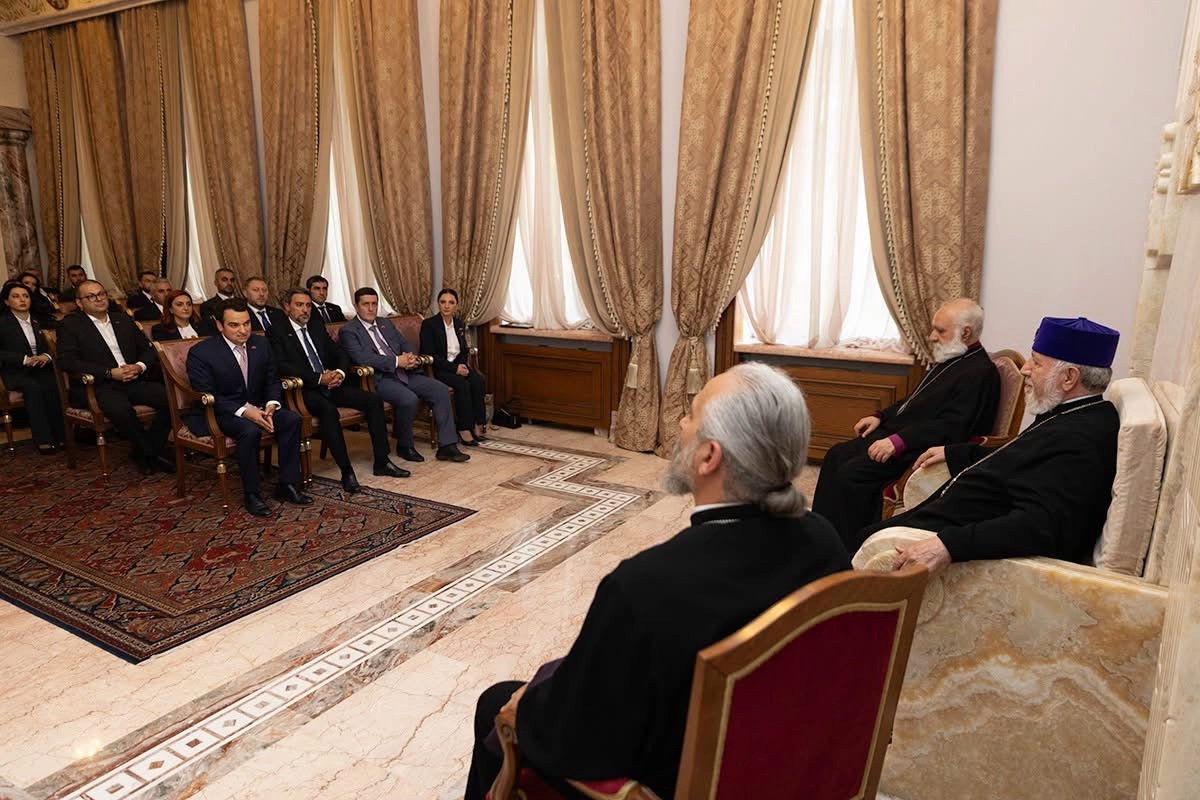
The criminal case against Catholicos of All Armenians Karekin II and six senior bishops returned to the Armavir Regional Court this week, adding another procedural turn to proceedings that have yet to advance to a substantive trial.
On Sept. 7, Armenia’s Court of Cassation resolved the jurisdictional dispute by sending the case back to Armavir and reassigning it to Judge Serzh Rushanyan, the same judge who had previously concluded that the case should instead be heard in Yerevan. The ruling effectively reverses Rushanyan’s Aug. 28 transfer and requires the proceedings to continue under his consideration.
The decision followed another unusual development on Sept. 5, when prosecutor Khachatur Galstyan, who had overseen the prosecution and sent the indictment to court, resigned from the Prosecutor General’s Office. The office confirmed that Galstyan left at his own request but explicitly denied that his departure was connected to the case.
The case has already followed an unusually circuitous path through Armenia’s courts. Judge Hakob Manukyan, initially assigned to hear it, recused himself on Aug. 7 because of a previous professional connection with defense attorney Ara Zohrabyan. Rushanyan subsequently transferred the proceedings from Armavir to Yerevan after concluding that prosecutors had failed to establish the territorial basis for hearing the case in Armavir. Yerevan Judge Vahagn Melikyan then declined to proceed without clarification and asked the Court of Cassation to determine which court had jurisdiction.
The Cassation Court has now answered that question: The case belongs in Armavir. Despite passing through three judges and two courts, however, the prosecution has still not reached a substantive examination of the charges.
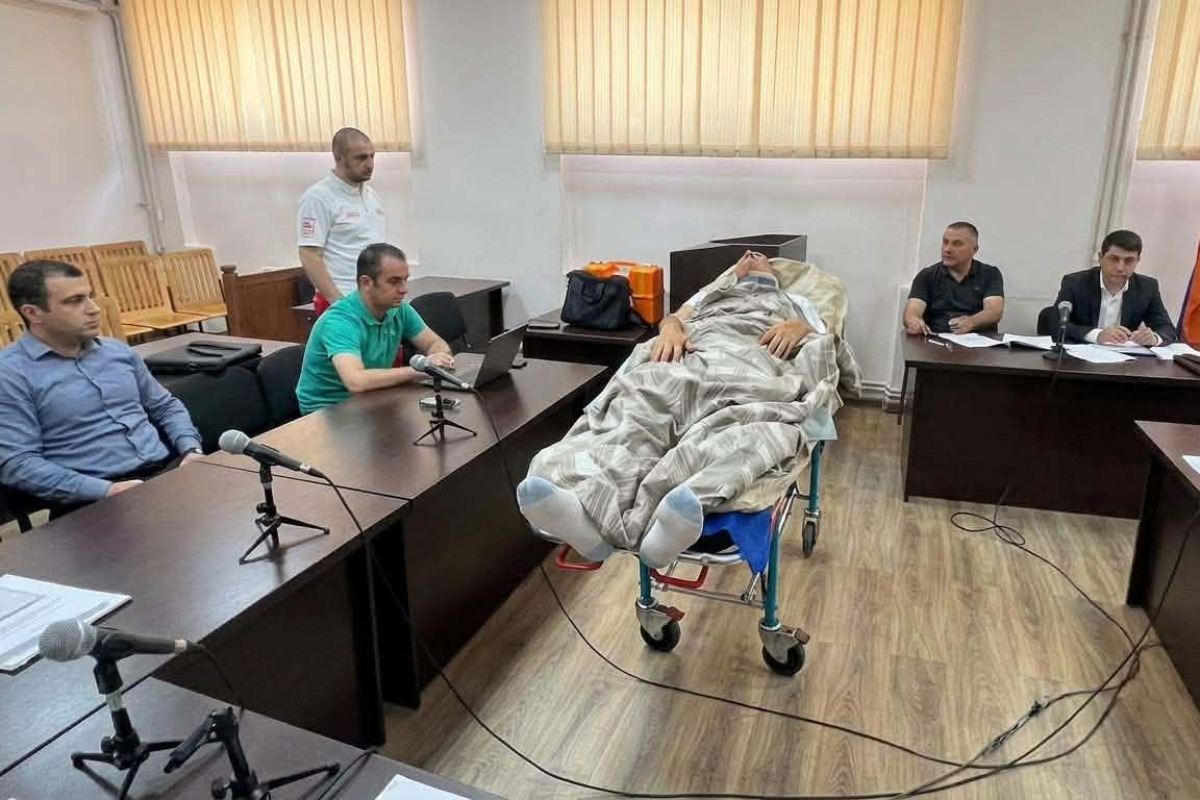

The proceedings stem from the Church leadership’s removal of Bishop Gevorg Saroyan as head of the Masyatsotn Diocese. Saroyan challenged that decision in civil court and secured an interim order requiring that he remain in office while his lawsuit was pending. The Mother See subsequently defrocked him and appointed another cleric to the position. Prosecutors allege that Karekin II and the six bishops thereby obstructed enforcement of a binding judicial decision. The Church maintains that the state is improperly attempting to exercise authority over an internal ecclesiastical and canonical matter.
The prosecution is unfolding against the backdrop of an increasingly severe confrontation between Prime Minister Nikol Pashinyan’s government and the leadership of the Armenian Apostolic Church. Pashinyan has repeatedly demanded Karekin II’s departure, while the Church has characterized the criminal proceedings against its senior hierarchy as unlawful interference in its internal affairs.
Artsakh
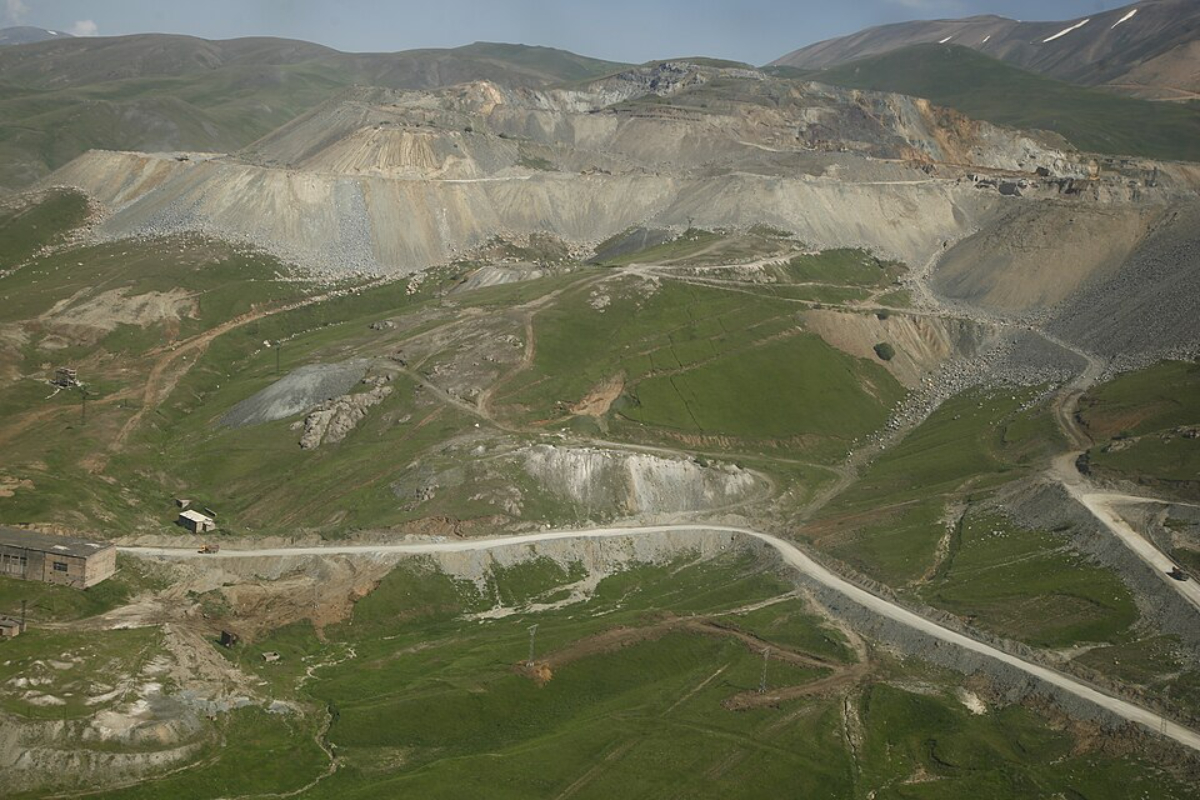
Large-scale extraction at the Sotk gold deposit has moved a step closer after Azerbaijan’s state mining company, AzerGold, carried out its first blasting operation on the section that came under Azerbaijani control following the 2020 Artsakh war.
Azerbaijani media reported that the blast was part of preparatory work for future industrial-scale mining. AzerGold says exploration activity has intensified since August 2025, with about 18,000 meters of drilling completed and recoverable reserves in the area under its control estimated at around 1.03 million ounces of gold.
Straddling the Armenia-Azerbaijan border near the village of Sotk in Gegharkunik province, the deposit has long ranked among the most significant gold resources in the South Caucasus. Mining there dates to the Soviet period, while before the 2020 war the operation was managed by Armenia-registered GeoProMining Gold, a Russian-owned company that processed Sotk ore at its facility in Ararat.
The war fundamentally altered access to the deposit. Azerbaijani forces took control of a substantial portion of the mine, leaving Armenia without access to part of an asset that had previously been operated as a single production site.
Security conditions subsequently made continued mining increasingly difficult on the Armenian side. Repeated Azerbaijani fire toward the remaining Armenian-operated area forced workers to evacuate several times and disrupted production. A mine employee was wounded in a shooting incident in May 2022, while sustained firing and security concerns eventually led GeoProMining to suspend open-pit operations in 2023.
GeoProMining estimated remaining reserves at 47.7 tons of gold in early 2021, while annual ore-production capacity stood at approximately 1.75 million tons. More than 1,650 people were employed at the operation in October 2020, a figure that later declined significantly as access and production were curtailed.
AzerGold’s latest activity now signals a transition from exploration toward commercial exploitation of the section under Azerbaijani control.
Russia
The strain in Armenia-Russia relations became increasingly public over the past week, with Moscow directing pointed messages at Yerevan over its European ambitions, the future of Russia’s military presence and Armenia’s broader geopolitical orientation.
On Sept. 8, Armenia formally challenged Russia’s continuing restrictions on Armenian goods through the Eurasian Economic Union, arguing that the measures violate the bloc’s rules.
A day earlier, on Sept. 7, Kremlin spokesman Dmitry Peskov said the central issue would be Armenia’s “choice of direction of development” and its “orientation,” as well as the question of holding a referendum on whether Armenia should pursue European Union membership or remain anchored in the Russian-led EAEU.
That framing underscored Moscow’s increasingly firm position that Armenia cannot indefinitely pursue both tracks.
Russian Foreign Minister Sergey Lavrov had added his own warning on Sept. 3, dismissing the economic attraction of the European Union and predicting that countries, including Armenia, would lose their desire to join it “very soon.” Lavrov argued that the EU was rapidly losing its competitive advantages and described European economic policy as driven by “short-sightedness, if not outright stupidity.”
Zakharova also intervened that day over reports of a possible future Armenian visa requirement for Russian citizens, warning that such a decision would hurt Armenia itself rather than Russia. Pashinyan publicly rejected the premise, saying a visa regime had never been discussed and had “never even crossed our minds.”
Pashinyan said on Sept. 3 that Armenia and Russia needed to “take stock” of what their strategic partnership now means in practice, identifying where their interests still coincide and where they no longer do. He also said the existing Russian concession over Armenia’s railway network “cannot continue for long” and requires a new solution. Pashinyan also rejected the notion that membership in the EAEU constitutes a permanent geopolitical commitment, remarking that member states had not taken an “oath of allegiance” requiring them to remain indefinitely.
Turkey
Turkey and Azerbaijan signed an updated memorandum of cooperation in Ankara this week aimed at expanding coordination between their diaspora institutions and strengthening joint outreach to communities abroad.
The agreement provides for greater exchanges of information and institutional experience, reciprocal delegation visits, and the organization of joint programs, meetings and conferences. Azerbaijani officials said the memorandum is intended to create a framework for a new phase of cooperation between the two countries in the diaspora sphere.
The document also places particular emphasis on strengthening ties between Azerbaijani and Turkish diaspora organizations operating overseas, potentially allowing Ankara and Baku to coordinate more closely on community engagement, cultural initiatives and advocacy efforts in third countries.