


Şahan Arzruni, pianist and scholar, dies at 83
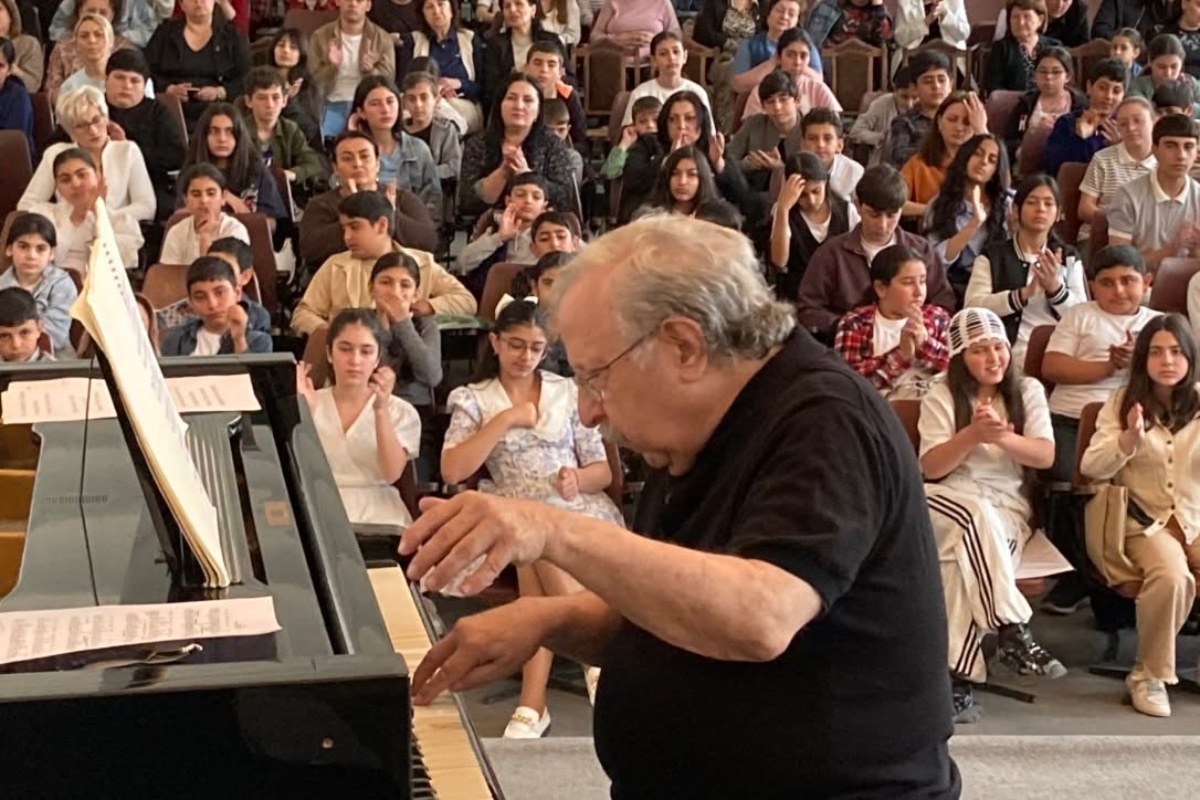
(A.W.) — Şahan Arzruni, the internationally acclaimed pianist and scholar whose career spanned performance, composition, teaching and research into Armenian musical heritage, died at his home in Manhattan on Oct. 21, 2026. He was 83.
Arzruni devoted much of his career to documenting and promoting Armenian music and introducing Armenian composers to audiences worldwide.
Born in Istanbul on June 8, 1943, to Stepan Jirayr Arzruni and Maryam Kalpak, Arzruni grew up in the city’s Armenian community. Music entered his life early: He began playing piano at the age of 4, studying with his aunt, Sirvart Kalpakian-Karamanuk, an Armenian pianist and composer who became an important influence on his development. Arzruni attended the Esayan and Getronagan schools and studied at the Istanbul Municipal Conservatory.
In 1964, Arzruni moved to the United States to continue his musical education at The Juilliard School in New York. Supported by a scholarship from the Calouste Gulbenkian Foundation, he studied there from 1964 to 1968, later pursuing doctoral studies at New York University. New York became his home and the base for an international career that encompassed concert halls, television, radio and recording studios.
As a pianist and chamber music artist, Arzruni performed throughout North and South America, Europe, the Middle East, Asia and Australia. His engagements included appearances at the Metropolitan Museum of Art, the Library of Congress and the White House, as well as command performances in several European countries. He reached audiences beyond the concert hall through appearances on “The Tonight Show Starring Johnny Carson” and “The Mike Douglas Show,” along with PBS productions including “Around the World in ’82,” “Gala of Stars” and “A Place of Dreams: Carnegie Hall at 100.” He also performed alongside comedian and pianist Victor Borge for approximately 18 years, serving as the musical foil in Borge’s comedy programs.

Arzruni’s work extended well beyond the stage. A Steinway Artist, he recorded music for numerous labels and championed Armenian composers. He hosted a five-year radio program on New York’s WNYC about piano pedagogy. He also composed, taught, lectured, produced cultural programs and wrote about music, contributing to scholarly journals and reference works, including “The New Grove Dictionary of Music and Musicians” and the “Dictionary of the Middle Ages.”
At the heart of his work was a commitment to Armenian music. “My whole point is to disseminate Armenian music to the world,” he told The Armenian Weekly in a September interview.
Arzruni researched the musical traditions of his heritage and recorded a three-record anthology of Armenian piano music. He also co-produced an eight-disc collection of Armenian instrumental and vocal music, helping preserve and circulate a repertoire that was central to his artistic and cultural mission. His research took him into academic settings as well, where he delivered papers and organized symposia at institutions including Harvard University, Columbia University and the University of Michigan.
His engagement with Armenian music encompassed both its concert repertoire and its sacred traditions. In 2001, at the invitation of the U.S. Library of Congress, he delivered a lecture on Armenian liturgical chants. His performances and recordings of Armenian composers, including Aram Khachaturian, brought this music to new audiences. In 2013, Armenia’s Ministry of Culture selected his performance of Khachaturian for a special collection recognizing outstanding Armenian musical talent.
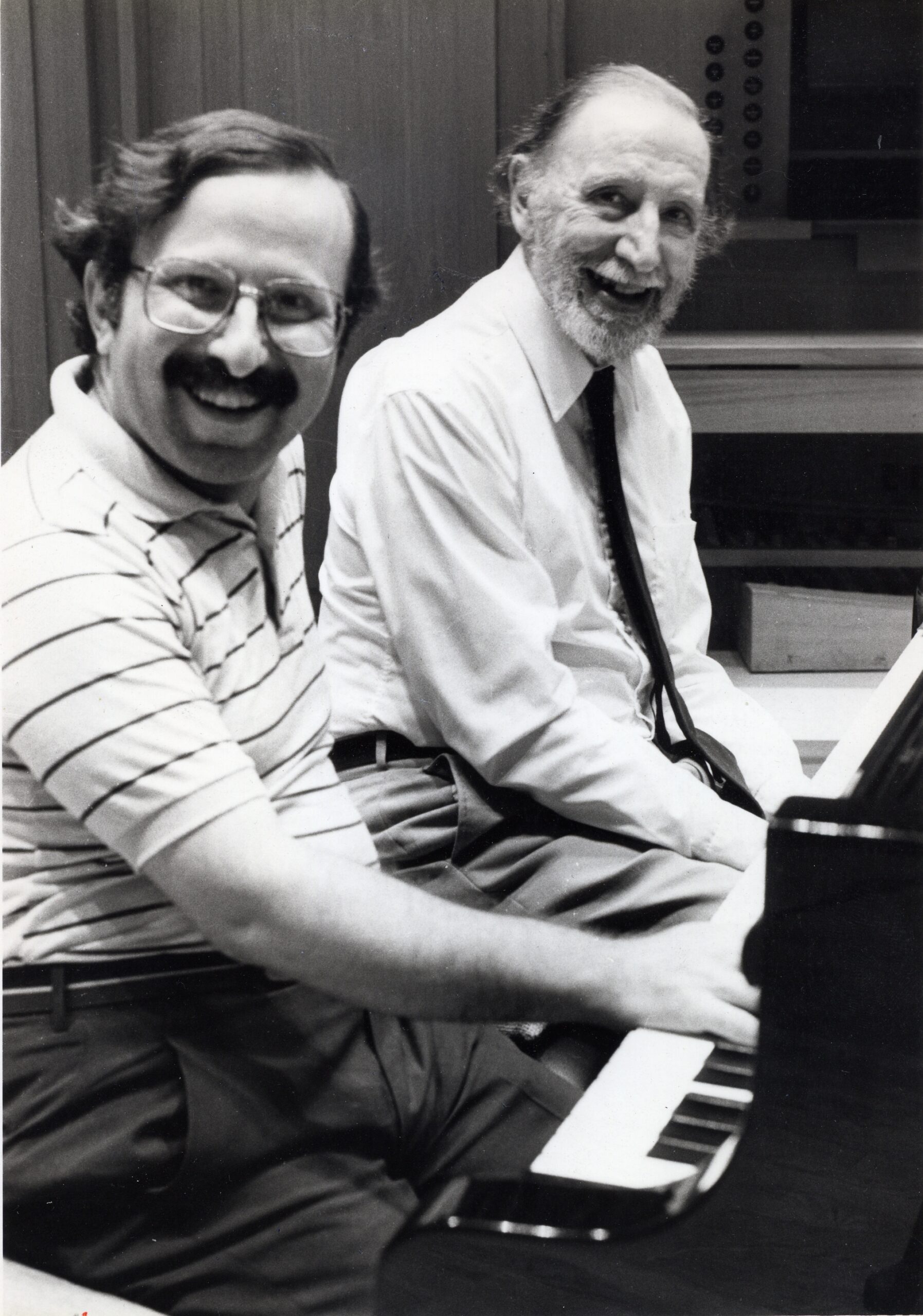
Arzruni’s work earned recognition from Armenian religious and state institutions. In 1996, he received the Sts. Sahak and Mesrob Medal and an encyclical from His Holiness Karekin I. In 2003, during celebrations marking the centennial of Aram Khachaturian’s birth, he was appointed a representative of Armenia’s Ministry of Culture in the Diaspora. A specialist in the music of Komitas, Arzruni also received the title of honorary professor at the Komitas State Conservatory in 2008. In 2016, then-President Serzh Sargsyan awarded him the Movses Khorenatsi Medal in recognition of his contributions to cultural development and ties between Armenia and the Diaspora.
Beginning in 2017, with support from the Fund for Armenian Relief, Arzruni traveled extensively throughout Armenia, visiting more than 50 locations to give performances and conduct master classes at music and art schools. His tours also took him to Artsakh.
Arzruni continued to expand the Armenian piano repertoire until late in his life. His album “By Women” featured works by Armenian women composers. It was part of a larger project to record eight collections tracing the breadth of Armenian piano music, from Komitas and his contemporaries to composers in Armenia and the Diaspora. The project also included a collection of piano works by the late Alan Hovhaness.
Pianist Şahan Arzruni performs Arno Babajanian’s “Elegy” in a video recorded by Rosie Nisanyan in 2026 for The Armenian Weekly. In a September interview, Arzruni explained that Babajanian composed the piece in 1978 after learning of Aram Khachaturian’s death, drawing on a melody by Sayat Nova.
In his September interview with The Armenian Weekly, Arzruni reflected on his lifelong engagement with Komitas’ music. “Komitas is the root of everything,” he said. Even after performing Komitas’ “Seven Dances for Piano” for five decades, he explained, he continued to discover new elements in the music.
Through his performances, recordings, scholarship and teaching, Arzruni helped preserve Armenian musical heritage and ensure that its composers continued to be heard around the world.
In accordance with his wishes, Arzruni’s ashes will be interred at the Arzruni family gravesite in Istanbul.