


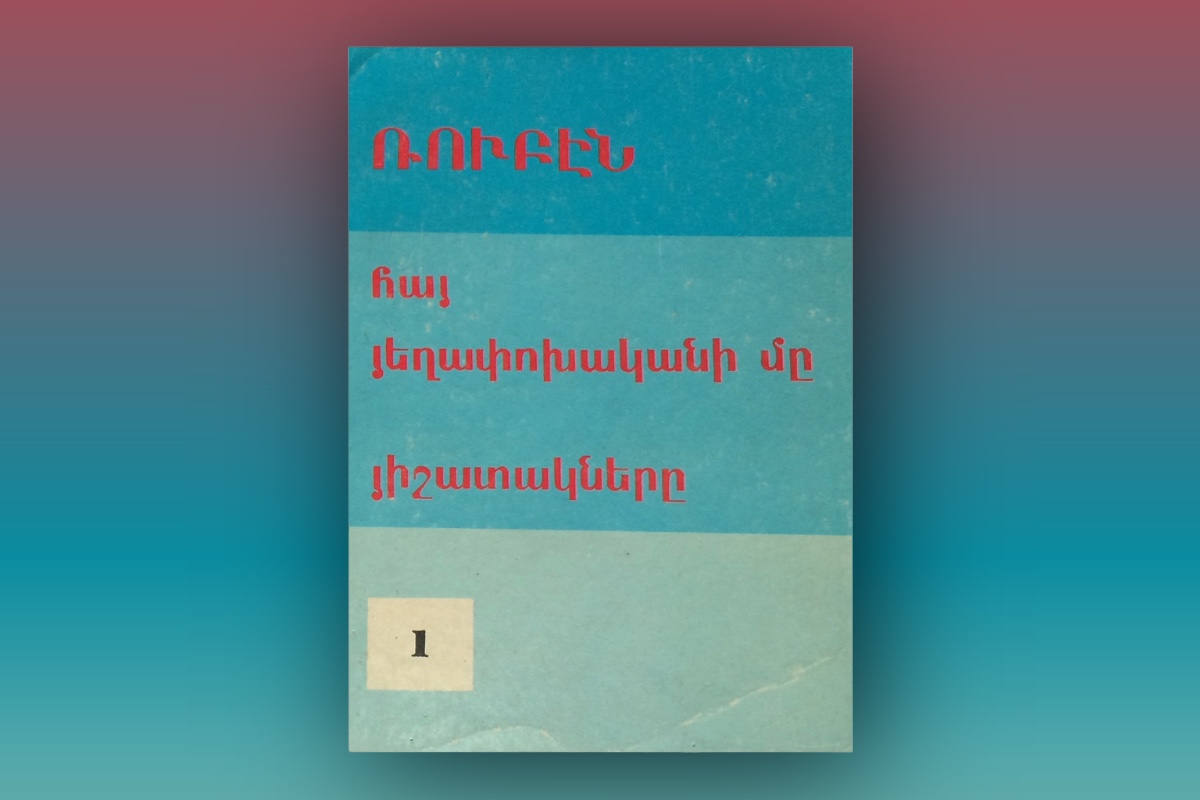
In 1973 I was at Camp Pendleton waiting to get out of the Marine Corps. The days had no shape left in them. I walked into the base library because it was quiet and because I needed something to do. On the shelf was a book I had no reason to pick up: “Armenian Freedom Fighters: The Memoirs of Rouben Der Minasian,” translated and edited by James G. Mandalian, Hairenik Association, Boston, 1963. I checked it out and took it back to the barracks.
I read it on my bunk. The text came later. What stopped me were the photographs.
The fedayees looked straight out of the plates. Bandoliers. Mountain clothes. Rifles held the way men hold them when the weapon is no longer a prop. Their eyes did not perform for the camera. They stared back with a fierce, unblinking determination, as if the picture had been taken in a pause between decisions and the next one was already made. I was a young Marine between enlistment and civilian life. I knew that look. I had seen versions of it in men who had already accepted that they might not come home. I had not expected to find it in a book about Armenians I could not have placed on a map.
I did not know their names that first night. I only knew the faces refused to look away. They were not asking to be admired. They were asking whether anyone still understood the terms.
Somewhere in those pages Mandalian reached for Theodore Roosevelt. The credit, Roosevelt said, belongs not to the critic but to the man in the arena — face marked by dust, sweat and blood — who spends himself on a worthy cause and who, if he fails, fails daring greatly, rather than stand with the timid souls who knew neither victory nor defeat. Mandalian set the line on the fedayees. On a barracks bunk the pairing did not feel borrowed. The photographs had already made the argument.

I kept reading. One scene lodged as tightly as the plates. At daybreak one man stands watch while the others sleep on blankets, rifles tucked between their legs. The bandolier stays on. No one is permitted to slip it off for comfort. They sleep in turns into the afternoon. Elsewhere Mandalian gives the lesson its blunt title: “Your rifle, your life.” It was not poetry. It was a rule for men who would be finished if they treated the weapon as baggage. In a Marine barracks that page needed no footnote. I knew what it meant to sleep with the thing that kept you alive still touching you. Rouben was teaching villagers the same law the photographs had already put in their faces: no one is coming on your schedule; the tool in your hands is the argument.
Pendleton went on processing men out of the service. Inside the book, small bands moved at night, stiffened villages and paid for hours no later treaty kept. The fedayee was not a soldier of the state. There was no state that would claim him in time. He accepted hunger, isolation and the chance that the village he was trying to arm might still refuse him in the morning. A band of ten is stronger than a crowd waiting to be saved. Loyalty is who stays when the rumor of rescue dies.
That is what has not expired.
Great powers have always had a speech for Armenia and a calendar of their own. The fedayees worked in the gap between the speech and the help. The First Republic was born from that stubbornness as much as from any diplomatic hour. The republic did not last. The ethic lasted longer than the borders.
The valleys have other names now. The structure of the problem has not. Promises still arrive with conditions. “Never again” is still a phrase, not a garrison. The fedayee’s relevance is not period dress in the mountains. It is that a people who outsource survival to other men’s goodwill will be disappointed on a timetable they do not control.
The plates do not show men waiting to be saved. They show men who had accepted the cost of not being saved on time. Armenian life — in the republic, in the diaspora, among the displaced — still divides on that question. Rouben’s scale was tens of men, not divisions: discipline, local knowledge, a village taught to hold. That is still the scale of most work that holds. The stare on that bunk was not a guarantee of victory. It was a standard: do not join the timid souls who never spent themselves because they wanted the outcome first.
The memoirs are a Dashnak commander’s testimony, written years later. They omit what they omit. They elevate the type they meant to preserve. A partisan witness can still tell the truth about courage and about the price of waiting.
When I think of emptied towns, closed corridors, hostages, Artsakh spoken of in the past tense, I think first of those plates. The eyes were not asking for a monument. They were asking whether anyone still knew the difference between memory and readiness.
I was not Armenian on that bunk in 1973. I am writing because a Hairenik book found a Marine Corps shelf and refused to stay there. The fedayees looked out as if the question were still open. It is. Their legacy is not that they won every stand. It is that they entered the arena while the critic still had a chair and the great powers still had a speech to finish.
Roosevelt’s credit still belongs to the man whose face is in the dust. Mandalian knew where to set the sentence. The eyes in those plates are still asking who is in the arena now and who is only pointing out how the strong man stumbles.