The border villages in Armenia have always been of great interest to many Armenians investing in the homeland. In my view, it is a national security issue, given the contentious borders, particularly in the eastern sections of Armenia.
The regions east of Lake Sevan, Tavush and Syunik have received increasing attention because of Azerbaijani incursions into sovereign Armenian territory and the recent transit route program with the United States. The southern border areas with Nakhichevan have been less visible to the diaspora, but the provinces of Ararat, Vayots Dzor and western Syunik are home to a significant population of Armenians living along the border.
My wife and I became acquainted with one particular village, Paruyr Sevak, located in Ararat province near Vayots Dzor, when we participated in a tree grove development project led by the Armenia Tree Project (ATP) in 2018. We were interested in learning more about a typical border village, and our relationship with ATP provided the opportunity. Paruyr Sevak was established during the Soviet era near the site where the famous patriotic poet lost his life in a car accident. The climate is very arid, and the primary source of employment is agriculture. The village’s approximately 800 residents live modestly in stone dwellings, but we quickly learned how rich they are in values, warmth and resilience. The village had no paved roads or drainage systems, a Soviet-era secondary school and a dream of establishing a preschool for children ages 3 to 5. Residents had endured sporadic Azerbaijani sniper fire and the threat of border incursions. The nearby village of Tigranashen is a sister community under the same administration, just 3 kilometers up the road that runs along the border from Khor Virap through Paruyr Sevak to the Areni region in Vayots Dzor.
Like many Armenian Americans, we visited the village for the first time in 2018, led by our emotional instinct to help but without a plan. The village’s late mayor, Edik Stepanyan, who died during the COVID-19 pandemic and was succeeded by his son, Ludvig, welcomed us with his renowned warmth. After bringing school supplies and athletic equipment from Yerevan to the schools, we sat with the mayor to hear his perspective. Edik had been the village’s mayor for nearly 30 years, and his position was much more than a job. He was a leader with a vision. He believed the key to the future of his village, and all border villages, was quality education for their children. Parents would sacrifice everything for their children to receive a proper education and enjoy a reasonable quality of life. We asked him what the most immediate need was and to share the first step of his vision. Edik responded that the students had no computers. He also said a preschool was the first step in his vision. It was June 2018, and we promised to do our best.
Through the generosity of our family and friends, we returned in October to open a professional computer lab with an upgraded network, battery backup, workstations, printers and desktop computers for the staff. Edik told us, “Many have come here, but you came back.” The trust necessary for our working model had been established. We had developed a deep affinity for the people of this village. We began serious discussions about a preschool. Edik showed us a building that looked abandoned, with rubble everywhere, but it housed a single small classroom. The room had mold and a crumbling interior, but these courageous people wanted to do something.

The project would be significant because Armenian law requires a hot meal to be provided to children in a preschool or kindergarten. There was no kitchen and no place for the children to nap during a full-day program. The two-story building was structurally sound but essentially abandoned, except for one room where rugs covered the mold and rubble. Through the grace of God, the renovated preschool and kindergarten opened a year and a half later with several classrooms, sleeping rooms, bathrooms, staff offices, a modern kitchen and a large function room. The regional government certified the school, enabling the government to fund additional teaching staff and kitchen workers. Realizing that we needed an experienced partner for this project, we joined forces with the Paros Foundation, which allocates 100% of donations to designated projects through the generosity of the foundation’s sponsors. The school opened with a traditional bread-and-salt blessing and a celebration for students, staff and parents. Our partners at the Paros Foundation led the construction effort, upgrading the building to modern standards, while the Armenia Tree Project made significant plantings to enhance the exterior. The mayor had promised to renovate the school’s original entrance into a plaza with pavers and plantings.
“Many have come here, but you came back.”
The true story of this project lies in what the village has done with the school. It has provided an education through innovation on par with what we experience in the United States. We continue to be amazed by the ownership and accountability demonstrated by the teachers and administration. The school has grown in size and quality over the past seven years and continues to amaze us.
The preschool and kindergarten projects were followed by new desks and shelving for the secondary school, a central heating system for the secondary school, where children previously wore winter coats and boots to class, and playgrounds for both schools, including soccer and basketball courts. All of this was possible because patriotic Armenians from the village and the diaspora, along with organizations such as Paros and ATP, worked together.
During the difficult days of the COVID-19 pandemic, we received word that our dear friend, Mayor Edik, had died. He was succeeded by his son, Ludvig, who immediately assumed responsibility and was later elected in a special election. We met him on our next visit and began establishing a relationship by listening to his thoughts. Ludvig was deeply grateful for the support the village had received. We responded that what we receive in friendship and fulfillment far outweighs anything we may have done. Our most recent project resulted from a dream Ludvig held.
It is common knowledge that Armenian parents make incredible sacrifices for their children to participate in cultural activities, including dance, singing and music. Ludvig explained that without a place to practice and perform, parents had to send their children elsewhere at significant expense. His idea was that with a performance space, they could attract qualified teachers and students from other villages as well. The cultural center was completed less than a year ago in an unused section of the preschool and kindergarten building. It has a large performance hall with dressing rooms and bathrooms. A few months ago, we received a video of about 30 young people practicing their dance routines. Our hearts were overjoyed.
Ludvig also shared that the government had begun to take notice of the improvements in the village and was investing in a road network with asphalt, granite curbs, sidewalks and drainage systems. The impact has been life-changing. The streets no longer become muddy after rain, and the village has taken on the appearance of an integrated community. There was more good news. An Armenian investor established a glove factory in the village that now operates at full capacity and offers diversified local employment. The government had also selected Paruyr Sevak for a new educational complex, which opened in April 2026. The combination of private and public investment had begun to transform a somewhat forgotten border community into a place where small miracles were happening.
This past year, we received word that the village was participating in a special government program that provides funding to families to build homes in border villages. One requirement was that applicants had to own property. Mayor Ludvig provided plots of land at a very reasonable price. We were informed that about 70 applications had been approved and houses were either completed, under construction or in the permitting stage. To put this in context, Paruyr Sevak is a village of about 800 people. With many of the new homes housing three generations, this could represent about a 50% increase in population over the next two years.
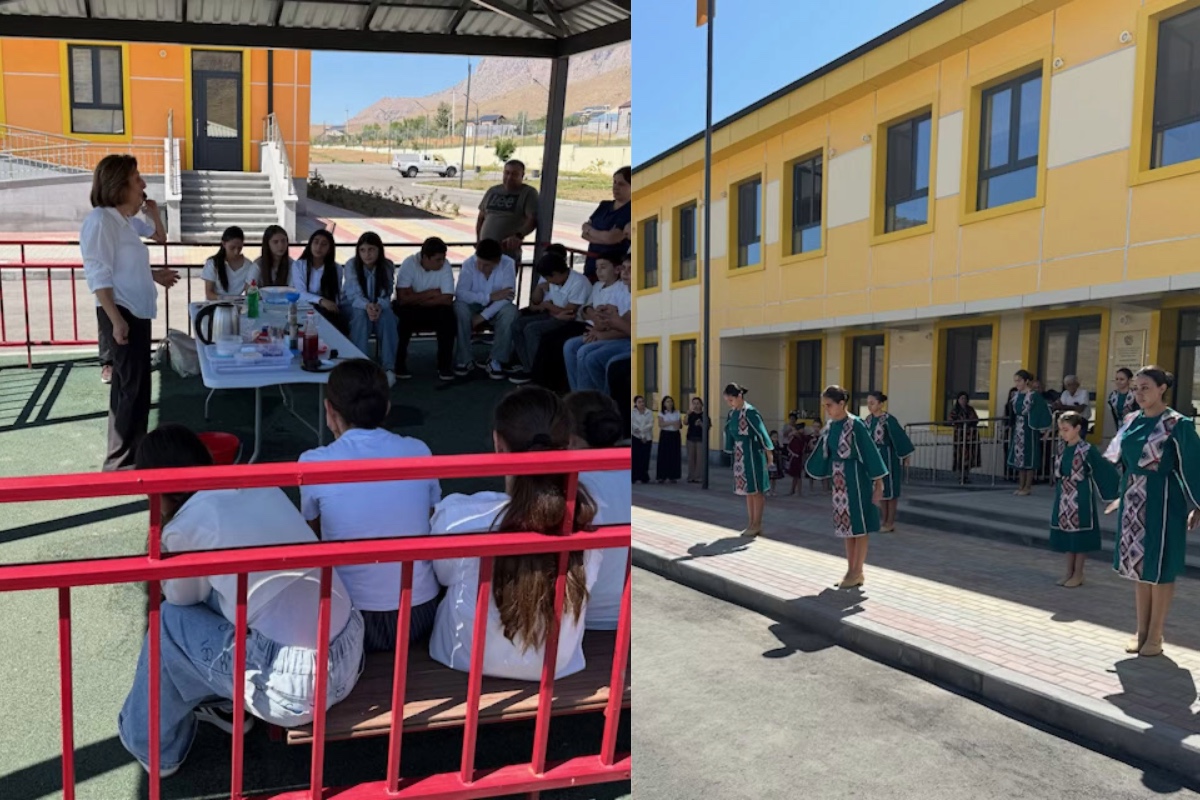
Most of the new homes are for people moving to the village from Artsakh, Yerevan or other villages, or by current residents with expanding families. It was with this incredible news of revitalization that we arrived in our beloved Paruyr Sevak a few weeks ago. Our visit included a day of touring and updates on the preschool, cultural hall, housing and glove factory. The new housing has essentially established two neighborhoods, one of which is adjacent to the new secondary school. The school is solar-powered and has all the amenities of a public school, including labs, a library and state-of-the-art classrooms. It is designed to accommodate the anticipated growth of the community.
When we arrived, the student body was waiting for us in the courtyard, where two school dance groups performed. The new facility also includes an outdoor soccer field and an indoor gymnasium. The pride expressed by the students sent us a clear message.
We ended our visit by listening to more ideas about what comes next for this remarkable community. Armenia’s border villages are filled with resilient and resourceful people who have learned to achieve results with limited resources. They are humble and grateful, yet hopeful for their future. There is nothing more gratifying than hearing these children share their dreams. We believe the partnership between Armenians in the diaspora and the incredible people of Armenia is a model that can and should be replicated. After these past few years, we consider them friends and family.
We have learned a great deal on this journey about listening and humility. The possibilities for collaboration are almost endless. For example, the mayor expects 100 new homes in total over the next three years. We began discussions about connecting families in these homes with the Armenia Tree Project’s community planting programs to bring fruit trees into their yards.
We believe the partnership between Armenians in the diaspora and the incredible people of Armenia is a model that can and should be replicated.
We have also begun discussing how diaspora Armenians can sponsor ATP’s environmental education program more frequently in local school curricula. Training our next generation to care for our land, water and air must be a strategic objective. Mayor Ludvig has additional building blocks for his community’s vision that will fuel continued dialogue. We left Armenia knowing that the proud people of Paruyr Sevak are experiencing the fruits of their labor. We are honored to be a small part of it. Have you found your village yet?