



Power and legitimacy

Preamble
For over six centuries, between the fall of the Armenian Kingdom of Cilicia in 1387 and the brief independence of 1918, the Armenian people lived without a state. Under Ottoman, Persian and Russian rule, Armenians preserved their identity not through political power but through the Church. The Armenian Apostolic Church became not only a spiritual authority but also a guardian of culture, language and education, sustaining a sense of nationhood when no state existed.
Yet, what preserves a people in captivity cannot, by itself, sustain a modern state. With the Republic of Armenia’s independence in 1991, a new principle emerged: legitimacy now rests with the people. Power derives not from divine sanction or imperial appointment but from the consent of citizens, expressed through elections, laws and accountable institutions.
Today, Armenia faces the ongoing challenge of consolidating this principle. Its society is shaped by overlapping power centers — political, military, economic, cultural and religious — each deriving legitimacy from different sources. But in a democratic state, only constitutional institutions accountable to citizens should coordinate national life. When other centers of influence overstep, they threaten the balance essential to democracy
Power and legitimacy are not the same.

Power is the ability to act; legitimacy is the right to act.
The historical role of the Church
Armenia’s modern challenges cannot be understood without its past. Under the Ottoman millet system and in Persia, Church leaders were de facto political representatives of Armenians. Independence restored political sovereignty, but Armenians inherited a tradition of ecclesiastical guardianship, not civic governance.
This history shapes both domestic and diasporan Armenian consciousness. The Church remains a central moral and cultural authority, with vast influence and resources, much of it outside the Republic’s jurisdiction. Tensions emerge when this transnational religious authority seeks to shape Armenia’s politics. The key question is governance. Who decides the nation’s priorities: the democratically elected representatives of the people or a hierarchy accountable to no electorate?
Faith itself is not the issue; the question is institutional boundaries. In a democracy, the Church’s moral voice must be respected, but its political authority must be limited.
The Church in a democratic republic
The Armenian Apostolic Church continues to provide spiritual guidance, moral education and community support. Its influence strengthens national identity and civic values. But in a democracy, its authority rests on moral and social contributions — not on political intervention.
The separation of Church and State protects both institutions. The Church thrives when it acts as conscience, not government. By inspiring virtue, civic duty and compassion, it reinforces the republic without compromising independence or accountability.
When clerical authority intrudes into politics, both faith and governance suffer. Political legitimacy comes from citizen consent and accountability; religious legitimacy comes from belief and tradition. These can coexist, but only if each respects the other’s boundaries.
If the Church observes governmental corruption, its role is moral advocacy, not political arbitration. It can highlight injustice, encourage transparency and promote ethical governance — but it cannot remove officials or dictate policy. By respecting democratic processes, the Church strengthens both public trust and civic morality.
The State and the rule of law
A sovereign, democratic Armenia depends on the consistent application of law. Its survival rests not only on security but also on political maturity, institutional transparency and civic trust. The Republic’s legitimacy requires that all citizens — clerics and laypeople alike — are equal before the law.
Recent controversies underscore this principle. Allegations of financial irregularities involving high-ranking Church figures, or clergy pressuring elected leaders to resign, highlight the dangers of blending spiritual authority with political power. Such actions undermine both faith and the democratic process. A constitutional state must reaffirm that civic responsibility applies to all, without exception.
Balancing institutions
Armenia’s endurance depends on equilibrium among its institutions. The Church must be a moral compass, not a political driver. The military must defend sovereignty, not dictate policy. Business must create prosperity, not monopolize influence. Government must coordinate among these sectors without yielding to any.
Civic education is essential. Citizens must understand that devotion to faith, culture or nation does not exempt anyone from accountability. True patriotism in a constitutional republic is expressed through law, participation and respect for the rights of others.
The Diaspora and dual legitimacies
The Armenian diaspora wields significant moral and material influence. Its institutions, shaped by host societies, often maintain Church-centered structures that predate modern statehood. While vital to identity, they can inadvertently perpetuate clerical authority incompatible with republican governance.
Diasporan support — financial or moral — is welcome, but political direction must come from citizens accountable to Armenia’s laws. Only those within the constitutional framework can legitimately set national priorities.
Toward a mature republic
A resilient Armenia rests on four pillars: the rule of law, security, political maturity and economic vitality. These allow secular and spiritual institutions to coexist with mutual respect and independence. The Church nurtures moral conscience and cultural continuity; the state ensures justice, order and prosperity.
History shows that faith can preserve a people; the future demands that reason and law preserve a state. The Church and the Republic are not adversaries — they are complementary. But their harmony requires clear boundaries, mutual respect and commitment to the public good.
Armenia must embrace the principle that power derives from legitimacy — grounded in consent, law and accountability. Only then can the promise of independence achieved in 1991 be fully realized. A state rooted in civic sovereignty, governed by law and supported by moral integrity, will stand as a beacon for Armenians everywhere — a model of how an ancient people, tempered by centuries of struggle, can unite faith and freedom to secure national endurance.


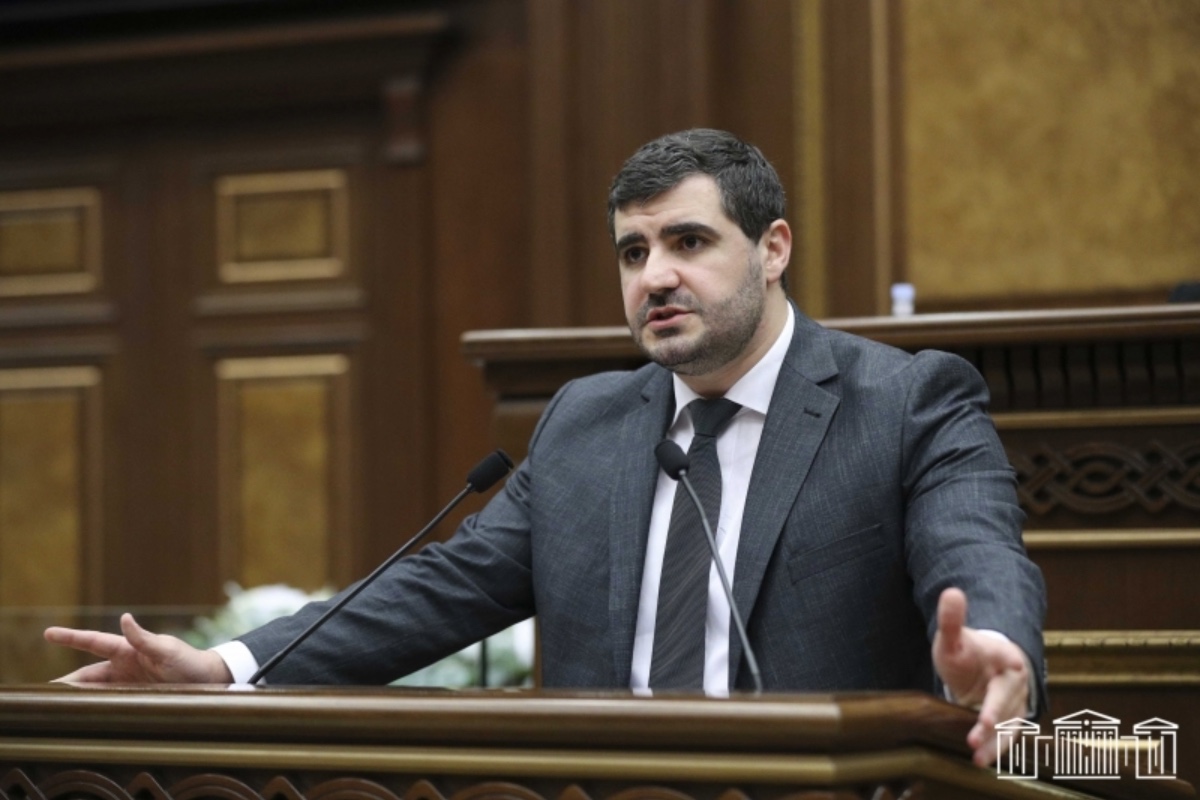
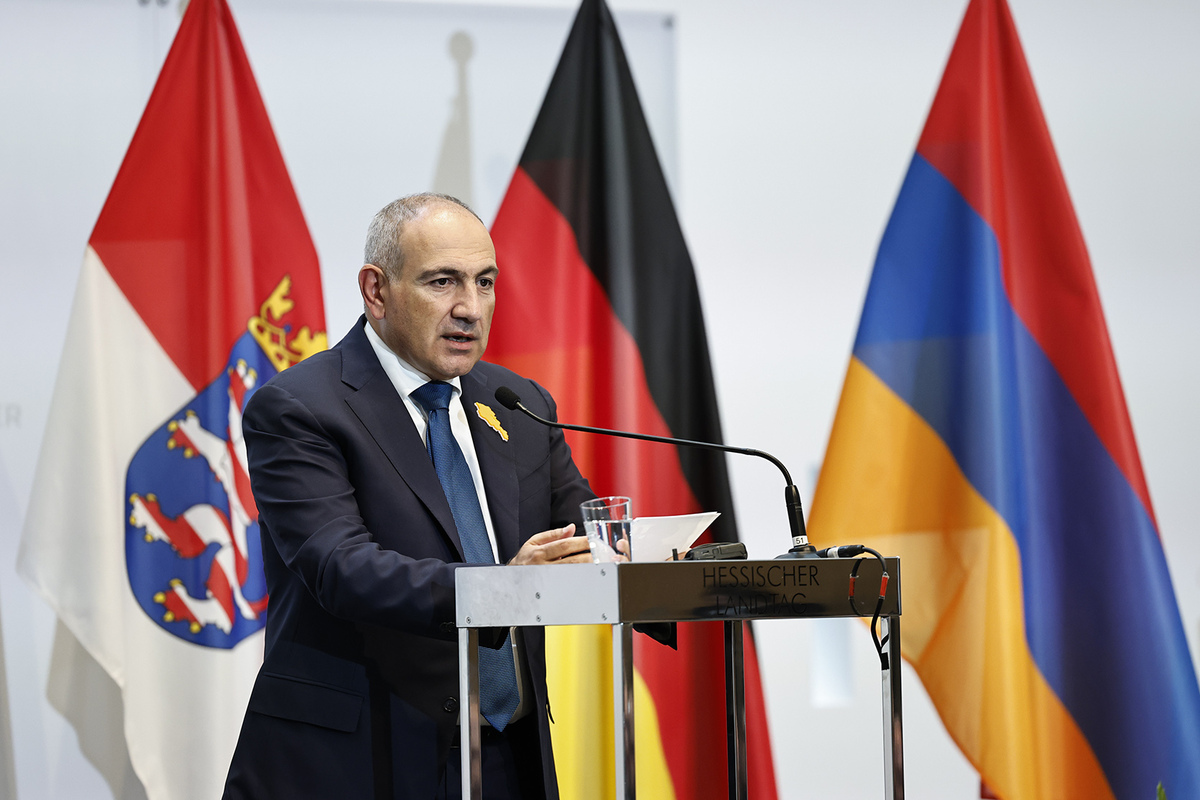

Thank you, Mr. Sarkissian, for bringing up important considerations between the relations between Church and State. I agree wholeheartedly that the Church has inappropriately involved itself in politics. Unfortunately, because of a profound yet all too common misunderstanding about the Church, you miss the mark about the actual relationship between the two vis-a-vis culture, nation, and state.
You say that the Armenian Church helped to preserve Armenian identity during the stateless periods of Armenian history. While this is true, you reason that the Church is not necessary for this function when an independent state exists. Now that we have a state, you say, “national life” ought to be coordinated “only” by constitutional institutions accountable to citizens.
This view is ahistorical. Since the arrival of the Gospel to Armenia and the birth of the Armenian Church, whether alongside Armenian kingdoms, empires, disjointed regional dynasties, or even under foreign rule, the Church has been the locus of learning and culture and the central axis of the concept of nation. Looking at our ancient forefathers, the vast majority of art, literature, architecture, and music that has reached us today was produced by and through the Church – both within and without a State. Other aspects of our culture – dress, diet, family traditions – have felt the salutary impact of our faith on our culture.
And naturally so. The Church, as the body of Christ, is an extension and continuation of the creative power of God, in whose image mankind was created. That capacity to create is a divine and eternal gift, received from the beginning of the world, unique to mankind, and independent of any human-made social contract. Culture springs from that creative grace as a collective expression of a people’s shared history, and Armenia’s history was ignited by the living fire of Christ.
You say, post-1991, a new principle has emerged, and that
“Power derives not from divine sanction, but from the consent of citizens through elections, laws, and accountable institutions.” This statement reflects the modern zeitgeist, with its enlightenment/atheistic tendency to invest nearly all power and legitimacy in mankind. As such, it contradicts the foundational Christian principle that any and all power and authority derives from God, even abusive power and exploitive authority. This is a difficult doctrine to reconcile with a good and just God, but recall that when Jesus Christ stood before Pontius Pilate just before His crucifixion, He said “You would have no authority over me if it were not given to you from above.” All power and authority results from divine sanction, and when this truth is forgotten, the result is abuse of the power and authority.
If we take the Gospel and the universal Church seriously, we cannot ignore the fact that it is the foundation for all power, authority, morality, and justice. To “derive” it from citizens is to make an idol of ourselves.
Naturally, one would think that this line of thought advocates for Theocracy. No, it does not. We pray and hope for God’s Kingdom to come, but in the meantime, we – mankind – are “in charge.” God has given mankind dominion over the Earth, and we are given authority and responsibility for its stewardship and to govern under the principle of Love.
What does the above mean for Church and State relations?
If we take the Gospel and the Church seriously, then we cannot put it on par with any human institution, democratic states constructed on the basis of social contracts notwithstanding. The Church is in this world, but it is not of this world. The Church is where Heaven and Earth overlap, just as God and Man co-existed in Jesus Christ.
That said, let’s take a moment to understand “Church” more precisely. The (universal) Church is the body of Christ and includes all Christians. The Armenian Church is the particular part of Christendom that has developed as a result of the inspiration and guidance of the Holy Spirit in the Armenian nation. The Armenian Church has its own liturgical style, sacramental customs, architectural spaces, words of prayer, and rules of governance. As with the universal Church, the Armenian Church is both divine and human. Naturally, the Church’s human component contains the capacity for sin and error.
As a result, the Church, and the Armenian Church, is the repository of both eternal Truth as well as the human response to this Truth, which often falls short of perfection. The Church, Armenian Church included, must not deceive itself into believing that it is perfect and sinless. Jesus taught humility and sacrifice, especially to the Apostles.
The Armenian Church authority and its mission in the life of the Armenian nation can be summed up in the Lord’s prayer: “Thy Kingdom come, Thy will be done on earth as it is in Heaven…”
I agree with you, Mr. Sarkissian, that the Church has no direct role in government. Its role and its work is to bring the Kingdom of God to Earth, and to guide the nation to do the will of God. The result of this activity, taken seriously, is to deeply affect the polity of the Armenian state and the members of the Diaspora at the parish level so as to enable them to live and grow into fully human, fulfilled, and complete children of God’s Kingdom. There is no stronger foundation for a nation, as we have seen throughout our history.
Here in modern times, we tend to have a condescending attitude toward faith, and Church, and God. We believe that we can explain everything through psychology, sociology, and science. That is a conceit of modernity. It is false, and, as with all hubris, leads to destruction. Modernity misunderstands the Gospel as an instrument of culture and politics when it is actually the foundation.
And this misunderstanding leads to a misguided “division of labor” between the secular and the divine, where God and Church are put in “their place” while the “secular powers” of law, security, politics, and economics lead the nation. This is a mis-ordering of Creation. When secondary things are put first, the entire system suffers and eventually collapses. Jesus Christ said: “Seek first the Kingdom of God, and all these things [security, wealth, creativity] will be given to you.” The corollary is: put “these things” first, and you will lose it all, including the Kingdom.
Moral authority and human flourishing has one foundation and one end: God. Nietzsche understood this, and he despaired when he realized that mankind had “killed God” by making an idol of itself in the “ubermensch.” Idolizing mankind led to the 20th century tragedies of Fascism, Totalitarianism, and Marxism. No modern effort to locate a moral foundation in Darwin, including those by Dawkins, Harris, Hitchins, or other New Atheists and Scientists, can account for human morality in a purely materialistic framework. More will try, but it cannot be done since morality depends on Eternity as Dostoyesvky observed: “Without God, everything is permitted.” When the material world is all there is, everything is permitted and mankind itself is objectified, instrumentalized, and expendable.
Therefore, a resilient Armenian state and nation has but one tri-une principle: faith, hope, and love. Only this principle will lead to an Armenian nation that rises to its purpose and vocation on the Earth and in the Kingdom of God.
Ameen❣️